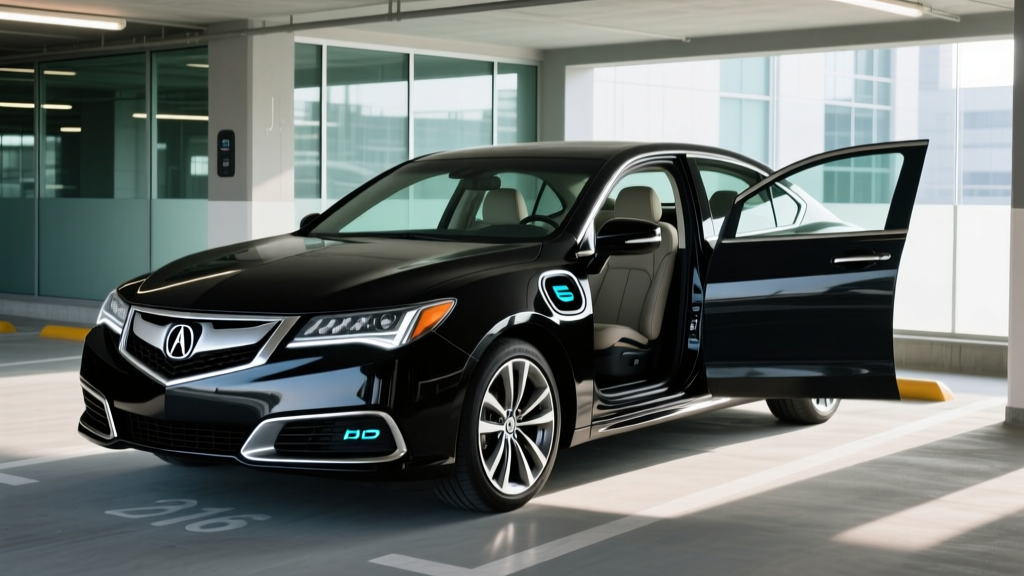
The 2016 Acura RLX Sport Hybrid occupies a fascinating niche: a flagship luxury sedan with a three-motor torque-vectoring all-wheel-drive system that was years ahead of its time. Acura discontinued the RLX after the 2021 model year, but the 2016 Sport Hybrid remains a compelling used-car proposition for buyers who want premium comfort, serious powertrain sophistication, and hybrid efficiency — without the plug-in lifestyle.
This guide breaks down the real-world fuel economy, the SH-AWD hybrid system's engineering, battery longevity expectations, and where the 2016 RLX Sport Hybrid fits against today's PHEVs and EVs in the used luxury sedan market.
2016 Acura RLX Sport Hybrid: Key Specifications
| Specification | Value |
|---|---|
| Powertrain | 3.5L V6 + 3 electric motors (SH-AWD) |
| Combined Horsepower | 377 hp |
| Transmission | 7-speed dual-clutch automatic |
| EPA MPG (City / Highway / Combined) | 28 / 32 / 30 |
| Fuel Tank Capacity | 15.8 gallons |
| Estimated Total Range | ~474 miles |
| 0–60 mph | ~5.2 seconds |
| Drivetrain | SH-AWD (torque-vectoring rear axle) |
| Hybrid Battery | 1.3 kWh lithium-ion (non-plug-in HEV) |
| Cargo Volume | 11.6 cu ft (trunk) |
| Original MSRP (Sport Hybrid Tech) | ~$61,495 |
| Used Price Range (2026 est.) | $14,000–$22,000 |
EPA Fuel Economy vs. Real-World MPG
| Driving Scenario | EPA Rating | Real-World Expectation |
|---|---|---|
| City | 28 MPG | 27–31 MPG (hybrids often exceed EPA in stop-and-go) |
| Highway | 32 MPG | 29–33 MPG (steady cruising favors the V6 efficiency) |
| Combined | 30 MPG | 28–32 MPG |
| Cold Weather (below 30°F) | — | 24–27 MPG (engine runs more for cabin heat) |
The RLX Sport Hybrid's three-motor system recaptures energy aggressively in city driving, which is where hybrids shine. According to fueleconomy.gov, the 30 MPG combined figure was competitive among 2016 luxury sedans — the non-hybrid RLX V6 FWD managed just 24 MPG combined. Owner-reported averages on Fuelly cluster around 28–30 MPG, validating the EPA estimate for mixed driving.
Highway efficiency slightly exceeds the city number (32 vs. 28), which is unusual for hybrids but reflects the RLX's 7-speed DCT allowing the V6 to operate at low RPMs during sustained cruising. In cold weather, expect a 10–15% efficiency drop as the gasoline engine runs longer to provide cabin heating and maintain battery temperature.
HEV vs. PHEV vs. EV: Where Does the RLX Sport Hybrid Fit?
The 2016 Acura RLX Sport Hybrid is a conventional hybrid (HEV). It cannot be plugged in. Its 1.3 kWh lithium-ion battery charges exclusively through regenerative braking and the gasoline engine. This is fundamentally different from a plug-in hybrid (PHEV) or a battery-electric vehicle (BEV).
| Feature | HEV (RLX Sport Hybrid) | PHEV (e.g., 2026 BMW 550e) | BEV (e.g., 2026 BMW i5) |
|---|---|---|---|
| Plug-in Charging | No | Yes (Level 2) | Yes (Level 2 + DC fast) |
| Electric-Only Range | ~1 mile at low speed | 30–40 miles | 250–350 miles |
| Total Range | ~474 miles | ~400+ miles | 250–350 miles |
| Home Charging Required | No | Recommended | Essential |
| Federal Tax Credit (§30D) | Not eligible | Up to $7,500 (if eligible) | Up to $7,500 (if eligible) |
| Fuel Cost (per mile, est.) | ~$0.12 | ~$0.06–$0.12 | ~$0.04–$0.06 |
The RLX Sport Hybrid's electric motors provide low-speed assist and torque vectoring, not meaningful electric-only driving. You will never plug this car in. If your goal is daily electric-only commuting, a PHEV like the BMW 550e or Toyota Prius Prime is the right tool. If you want zero gasoline, a BEV is the answer. The RLX Sport Hybrid is for buyers who want hybrid efficiency gains without changing their refueling habits at all.
The SH-AWD Powertrain: 377 hp and Three Electric Motors
Acura's Sport Hybrid SH-AWD (Super Handling All-Wheel Drive) is the engineering centerpiece of this car. The system pairs a 3.5-liter V6 engine (310 hp on its own) with a 7-speed dual-clutch transmission and three electric motors:
- Front motor (47 hp): Integrated between the engine and transmission, providing assist during acceleration and regenerative braking
- Twin rear motors (36 hp each): Independently drive each rear wheel, enabling torque vectoring — the system can send up to 70% of available torque to the outside rear wheel during cornering
The combined system output is 377 horsepower. The result is a luxury sedan that accelerates to 60 mph in approximately 5.2 seconds while returning 30 MPG combined — a pairing that was nearly unheard of in 2016. The torque-vectoring rear axle also gives the RLX Sport Hybrid genuinely capable handling for a large sedan, with the rear motors actively pushing the car through turns rather than simply distributing power.
The 1.3 kWh lithium-ion battery pack is mounted behind the rear seats, which reduces trunk space to 11.6 cubic feet (vs. 15.3 cu ft in the non-hybrid RLX). This is a meaningful tradeoff for buyers who need cargo capacity.
Battery Longevity, Warranty, and Replacement Cost
Original Hybrid Battery Warranty: 8 years / 100,000 miles (10 years / 150,000 miles in CARB states including CA, NY, MA, and others that follow California emissions standards)
Battery Chemistry: Lithium-ion (1.3 kWh)
Replacement Cost (2026 estimate): $2,500–$4,500 including labor
Because the 2016 RLX Sport Hybrid is now a decade old, the original 8-year/100,000-mile hybrid battery warranty has expired for most examples unless the vehicle was originally sold in a CARB state and has fewer than 150,000 miles. Buyers should verify warranty status by VIN through an Acura dealer.
The good news: Honda/Acura hybrid battery systems from this era have proven highly durable. The 1.3 kWh pack in the RLX is small and conservatively managed — it never fully charges or fully depletes, which reduces stress on the cells. Real-world reports suggest these packs routinely exceed 150,000 miles with minimal capacity loss. Unlike a BEV or PHEV, where a degraded battery means lost range, a slightly degraded HEV battery primarily affects regenerative braking efficiency — the car still drives normally on the gasoline engine.
If replacement is needed, the cost is far lower than a BEV battery swap. Independent hybrid specialists can often refurbish the pack for $2,500–$3,500, while a new OEM pack from Acura runs closer to $3,500–$4,500 installed. This is a fraction of the $10,000–$20,000+ that large BEV batteries can cost.
Reliability and Ownership Costs
The RLX Sport Hybrid shares its core V6 and hybrid components with the Honda Accord Hybrid and other Honda/Acura applications, which benefits from the brand's strong reliability track record. The 7-speed dual-clutch transmission, however, is a unique component that deserves attention:
- DCT maintenance: The dual-clutch unit requires periodic fluid service. Some owners report occasional low-speed shudder, which is often resolved with a software update or fluid change
- Rear motor unit: The twin rear electric motors are sealed units with no routine maintenance. Failures are rare but costly if they occur ($1,500–$3,000 per side)
- Brake wear: Regenerative braking significantly extends pad life — many owners report 60,000+ miles on original brake pads
Insurance premiums for the RLX Sport Hybrid are moderate for a luxury sedan. Annual insurance costs typically run $1,800–$2,400 depending on driver profile and location, per IIHS data. The RLX earned Good ratings in most crash-test categories.
Used Pricing and Tax Credit Eligibility (2026)
As of 2026, the 2016 Acura RLX Sport Hybrid typically trades between $14,000 and $22,000 depending on mileage, condition, and trim (most examples are the well-equipped Sport Hybrid with Technology Package).
Tax credit status: The RLX Sport Hybrid does not qualify for the federal §30D new clean vehicle credit — it was never a plug-in vehicle, and that credit applies only to new purchases anyway. For used purchases, the IRS used clean vehicle credit (§25E) offers up to $4,000 (30% of sale price) but applies only to qualifying plug-in EVs and fuel-cell vehicles with a battery capacity of at least 7 kWh. The RLX's 1.3 kWh conventional hybrid battery does not meet this threshold.
In short: no federal tax credits apply to this vehicle. Some states may offer minor incentives for hybrid ownership, but buyers should check their specific state's programs at afdc.energy.gov.
Pros and Cons
Pros
- 377 hp with 30 MPG combined — exceptional power-to-efficiency ratio
- SH-AWD torque vectoring provides genuine handling advantage
- No plug-in charging required — zero lifestyle change
- Premium interior with Krell audio, ventilated seats, AcuraWatch safety suite
- Proven Honda/Acura V6 and hybrid reliability
- Low battery replacement cost vs. BEV/PHEV
- Used pricing offers luxury-car value at mainstream sedan prices
Cons
- Trunk reduced to 11.6 cu ft (battery placement)
- Only ~1 mile of electric-only creeping — no real EV mode
- No federal or state tax credit eligibility
- Discontinued model — dealer parts support may narrow over time
- 7-speed DCT can exhibit low-speed hesitation
- Infotainment system (dual-screen) feels dated by 2026 standards
- Heavy at 4,387 lbs — tire wear may be higher than lighter sedans
Who Should Buy the 2016 RLX Sport Hybrid?
Choose the 2016 RLX Sport Hybrid if:
- You want a luxury sedan with strong acceleration (377 hp, 0–60 in ~5.2 sec) and hybrid efficiency
- You cannot install a home charger and don't want to rely on public charging
- You value all-weather traction from torque-vectoring AWD
- You're buying used and want premium features at a depreciated price ($14K–$22K)
Choose a PHEV (e.g., Toyota Prius Prime, BMW 550e) if:
- You can charge at home and want 25–40 miles of daily electric-only commuting
- You want to qualify for the used EV tax credit (up to $4,000 under §25E)
Choose a BEV (e.g., Tesla Model 3, Hyundai Ioniq 6) if:
- You have reliable home Level 2 charging
- You want the lowest per-mile fuel cost (~$0.04–$0.06/mi)
- You want access to HOV lanes and potential §30D new-vehicle credits
Frequently Asked Questions
How many MPG does the 2016 Acura RLX Hybrid get?
The EPA rates the 2016 RLX Sport Hybrid at 28 MPG city, 32 MPG highway, and 30 MPG combined. Real-world owners typically see 28–32 MPG in mixed driving, with city driving often matching or slightly exceeding the EPA figure thanks to regenerative braking. Cold weather can reduce efficiency to the mid-20s.
Can the 2016 RLX Sport Hybrid drive on electric power only?
Only in very limited low-speed scenarios (under ~15 mph, for roughly 1 mile or less). This is a conventional hybrid (HEV), not a plug-in hybrid. The electric motors primarily assist the gasoline engine and provide torque vectoring — they are not designed for sustained electric-only driving.
Is the 2016 Acura RLX Hybrid reliable?
Yes, generally. The Honda/Acura 3.5L V6 and hybrid system have strong long-term reliability records. The small 1.3 kWh battery is conservatively managed and typically lasts well beyond 150,000 miles. The main watch item is the 7-speed dual-clutch transmission, which benefits from regular fluid service.
What does it cost to replace the hybrid battery?
A replacement hybrid battery for the 2016 RLX Sport Hybrid costs approximately $2,500–$4,500 including labor, depending on whether you use an independent hybrid specialist or an Acura dealership. This is significantly less than BEV or PHEV battery replacements.
Does the 2016 Acura RLX Hybrid qualify for any tax credit?
No. The RLX Sport Hybrid is a conventional hybrid (HEV) with a 1.3 kWh battery. It does not qualify for the federal §30D new clean vehicle credit or the §25E used clean vehicle credit (which requires a battery of at least 7 kWh and plug-in capability). No federal tax incentives apply to this vehicle.
How does the RLX Sport Hybrid compare to the non-hybrid RLX?
The non-hybrid 2016 RLX with the 3.5L V6 produces 310 hp and achieves 24 MPG combined (20/31 city/highway) with front-wheel drive. The Sport Hybrid adds 67 hp, all-wheel drive with torque vectoring, and 6 additional MPG combined — but sacrifices 3.7 cubic feet of trunk space and carries a higher original MSRP. On the used market, the Sport Hybrid often commands only a $1,000–$3,000 premium, making it the stronger value.
Is the Acura RLX still supported with parts and service?
Acura discontinued the RLX after the 2021 model year, but Honda/Acura's parts network continues to support the platform. The V6 engine, hybrid components, and most mechanical parts remain available. Infotainment and body-specific trim may take longer to source as the model ages.