Quick Verdict: A Proven Family Hauler With Hybrid Efficiency
The 2015 Toyota Highlander Hybrid Limited remains one of the most practical three-row hybrid SUVs on the used market. Built on Toyota's well-proven Hybrid Synergy Drive system, it pairs a 3.5-liter V6 with electric motors for 280 combined horsepower and an EPA-rated 28 MPG combined. In 2026, a well-maintained example typically trades between $16,000 and $22,000 depending on mileage and condition — making it a compelling alternative to newer, pricier hybrid and electric SUVs for families who need three rows without the range anxiety or charging logistics of a full EV.
This guide covers everything a used-car buyer needs: real-world fuel economy, the hybrid battery's longevity and replacement cost, how this conventional hybrid (HEV) differs from a plug-in hybrid (PHEV) or battery-electric vehicle (BEV), and whether any tax incentives still apply.
2015 Toyota Highlander Hybrid Limited: Key Specifications
| Specification | Value |
|---|---|
| Powertrain | 3.5L V6 + 2 electric motors (HEV, no plug) |
| Combined Horsepower | 280 HP (net system output) |
| Engine | 2GR-FXE 3.5L V6, Atkinson cycle, 236 HP @ 5,800 rpm |
| Electric Motors | Front motor (167 HP) + Rear motor (67 HP) |
| Transmission | eCVT (electronically controlled continuously variable) |
| Drivetrain | AWD-i (electric on-demand rear axle, no mechanical driveshaft) |
| EPA Fuel Economy | 28 city / 28 highway / 28 combined MPG |
| Fuel Tank | 17.2 gallons (87 octane recommended) |
| Total Driving Range | ~481 miles (EPA estimate) |
| Hybrid Battery | ~1.87 kWh nickel-metal hydride (NiMH), 288V nominal |
| 0–60 MPH | ~7.8 seconds |
| Towing Capacity | 3,500 lbs (with tow prep package) |
| Seating | 7 passengers (Limited trim: 2nd-row captain's chairs) |
| Cargo Volume | 13.8 cu ft (all rows up) / 42.3 cu ft (3rd row folded) / 83.2 cu ft (max) |
| Original MSRP (Limited) | $48,890 (2015 base MSRP for Hybrid Limited) |
| Typical Used Price (2026) | $16,000–$22,000 (80K–130K miles) |
Fuel Economy: EPA Numbers vs. Real-World MPG
| Driving Scenario | EPA Rating | Real-World Expectation |
|---|---|---|
| City | 28 MPG | 26–30 MPG (hybrids often match or beat EPA in city) |
| Highway | 28 MPG | 25–28 MPG (less regenerative braking benefit at sustained speed) |
| Combined | 28 MPG | 25–29 MPG depending on driving mix and climate |
| Cold Weather (below 30°F) | — | 22–25 MPG (engine runs more to heat cabin and warm battery) |
Source: EPA Fuel Economy Guide — 2015 Toyota Highlander Hybrid
The 2015 Highlander Hybrid's flat 28/28/28 EPA rating is unusual. Most hybrids favor city driving because regenerative braking recaptures energy during stop-and-go traffic, while highway cruising relies more on the gas engine. Toyota's Hybrid Synergy Drive system in this generation is well-balanced, but owners should expect highway-heavy commutes to yield slightly lower numbers — around 25–26 MPG is common on long interstate trips at 70+ MPH.
In city and suburban driving, many owners report matching or even slightly exceeding the 28 MPG city figure, particularly in moderate temperatures (50–80°F) where the hybrid battery operates efficiently and cabin heating isn't demanding engine runtime. In extreme cold, the engine runs more frequently to generate heat and maintain battery temperature, dropping real-world economy to the low-to-mid 20s.
HEV vs. PHEV vs. EV: Which Powertrain Fits You?
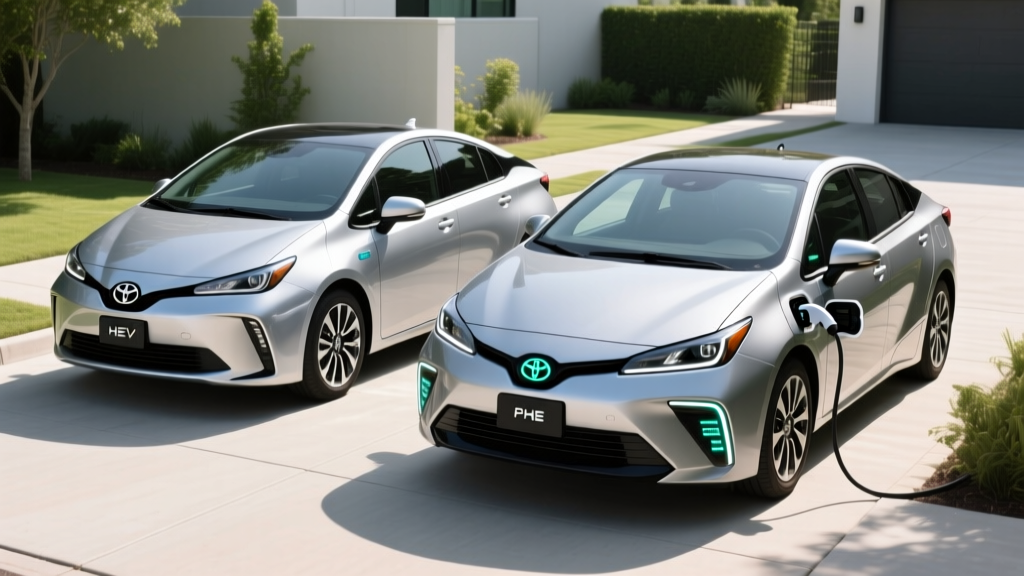
The 2015 Highlander Hybrid is a conventional hybrid (HEV). It cannot be plugged in. The small NiMH battery charges exclusively through regenerative braking and the gasoline engine. This is fundamentally different from a plug-in hybrid (PHEV) or a battery-electric vehicle (BEV). Understanding the distinction is essential before purchasing.
| Feature | HEV (This Highlander) | PHEV (e.g., RAV4 Prime) | BEV (e.g., Tesla Model X) |
|---|---|---|---|
| Plugs in to charge? | No | Yes | Yes |
| Electric-only range | ~1 mile at low speed | 25–42 miles typical | 250–350+ miles |
| Gas engine? | Yes (primary) | Yes (backup) | No |
| Battery size | ~1.9 kWh (NiMH) | 14–22 kWh (Li-ion) | 75–130 kWh (Li-ion) |
| Home charging needed? | No | Recommended (Level 2) | Essential (Level 2) |
| Federal tax credit (new) | None | Up to $7,500 (§30D, if eligible) | Up to $7,500 (§30D, if eligible) |
| Refueling | Gas station only | Gas station + plug | Plug only |
| Range anxiety | None | Minimal (gas backup) | Varies by charging access |
| Used 2015 availability | Yes (this model) | Not available in Highlander (2015) | Not applicable |
Choose the HEV (this Highlander Hybrid) if: You want better fuel economy than a gas-only SUV without changing your refueling habits. You don't have access to home charging (no garage, apartment living, no outlet nearby). You need three rows, AWD, and proven Toyota reliability at a used-market price.
Consider a PHEV instead if: You have Level 2 home charging and a short commute (under 35 miles) that could be fully electric, but you still want gas-engine flexibility for road trips. Note that Toyota never offered a plug-in Highlander — the RAV4 Prime is the closest Toyota PHEV, but it seats only five.
Consider a BEV instead if: You have reliable home Level 2 charging, want to eliminate gasoline entirely, and can accommodate a higher purchase price. Three-row electric SUVs like the Kia EV9 or Rivian R1S exist but cost significantly more on the used market.
Powertrain Deep Dive: How the Hybrid System Works
The 2015 Highlander Hybrid Limited uses Toyota's AWD-i system, which is mechanically distinct from a conventional AWD setup. There is no driveshaft connecting the front and rear axles. Instead, the gasoline engine and primary electric motor drive the front wheels through the eCVT, while a separate rear-mounted electric motor powers the rear wheels when additional traction is needed.
Engine: The 2GR-FXE 3.5-liter V6 operates on the Atkinson cycle, which sacrifices some low-end torque for greater thermal efficiency. It produces 236 HP on its own. Combined with the front electric motor (167 HP) and rear electric motor (67 HP), the net system output is 280 HP. The eCVT seamlessly blends power sources without the shift feel of a traditional automatic.
Electric-only operation: Under light loads — parking lot speeds, gentle deceleration, brief stops — the system can shut off the gas engine entirely and run on battery power alone. This electric-only mode is limited to roughly 1 mile at speeds below approximately 25 MPH. This is not a meaningful electric driving range; it's an efficiency optimization that reduces fuel consumption in stop-and-go traffic.
AWD-i behavior: The rear electric motor engages automatically when the system detects front-wheel slip (rain, snow, loose gravel) or during hard acceleration. It also provides subtle rear torque during cornering for stability. This system is adequate for light snow and wet roads but is not designed for serious off-road use or heavy towing in slippery conditions.
Hybrid Battery Longevity, Warranty, and Replacement Cost
The 2015 Highlander Hybrid uses a nickel-metal hydride (NiMH) battery pack — not the lithium-ion chemistry found in modern EVs and PHEVs. NiMH is a mature, well-understood technology that Toyota has used in hybrids since the original Prius in 1997. Its degradation profile is gradual and predictable.
Expected lifespan: Toyota's NiMH hybrid batteries routinely last 150,000–200,000+ miles before significant capacity loss. The battery doesn't "fail" catastrophically in most cases; instead, individual cells degrade unevenly, reducing the pack's overall ability to store and deliver energy. Symptoms of an aging hybrid battery include reduced fuel economy, more frequent engine cycling, and a dashboard warning light (typically a red triangle with an exclamation mark, or a specific "Check Hybrid System" message).
Replacement cost (2026):
- New OEM Toyota battery: $3,000–$4,500 installed at a dealership
- Remanufactured/reconditioned battery: $1,500–$2,500 installed at an independent hybrid specialist
- Individual cell/module replacement: $500–$1,200 (if only a few modules have failed — requires a technician with hybrid battery diagnostic equipment)
Pre-purchase inspection tip: Before buying a 2015 Highlander Hybrid, have a qualified technician run a hybrid battery health check using Toyota's Techstream diagnostic software or an equivalent OBD-II scanner with hybrid-specific capabilities. This reveals individual module voltage deltas — if any module is significantly out of balance with the rest, the pack is aging and may need attention within 1–2 years. A healthy pack should show module voltages within ~0.2V of each other under load.
Tax Credits and Incentives: What Applies in 2026?
Because the 2015 Toyota Highlander Hybrid is a conventional hybrid (HEV) and cannot be plugged in, it does not qualify for the federal §30D New Clean Vehicle Credit or the §25E Used Clean Vehicle Credit. These credits apply exclusively to battery-electric vehicles (BEVs) and plug-in hybrids (PHEVs) that meet battery sourcing, MSRP cap, and buyer income requirements as outlined on IRS.gov.
There is no federal tax credit for purchasing a conventional hybrid, new or used, under current 2026 tax law.
State-level considerations: A handful of states have historically offered rebates or HOV lane access for hybrids, but most of these programs have shifted focus to PHEVs and BEVs. Check your state's energy or environmental agency website for current programs — but do not expect a financial incentive for this specific vehicle.
Bottom line: The economic case for the 2015 Highlander Hybrid rests entirely on its fuel savings versus a gas-only Highlander, lower used-market pricing, and Toyota's reliability reputation — not on tax credits.
Ownership Costs: Fuel Savings vs. Gas-Only Highlander
To quantify the value proposition, here's a comparison of annual fuel costs between the 2015 Highlander Hybrid (28 MPG combined) and the 2015 gas-only Highlander V6 AWD (approximately 20 MPG combined), assuming 15,000 miles per year and $3.50/gallon regular unleaded (the Hybrid requires 87 octane in most conditions despite the Limited trim's premium recommendation):
| Metric | Hybrid (28 MPG) | Gas V6 AWD (20 MPG) | Difference |
|---|---|---|---|
| Annual fuel consumption | 536 gallons | 750 gallons | 214 gallons saved |
| Annual fuel cost @ $3.50/gal | $1,876 | $2,625 | $749/year savings |
| 5-year fuel cost | $9,380 | $13,125 | $3,745 saved |
| Cost per mile (fuel) | $0.125 | $0.175 | $0.050/mile saved |
At roughly $750 per year in fuel savings, the hybrid's premium on the used market (typically $1,500–$3,000 more than an equivalent gas-only 2015 Highlander) pays for itself within 2–4 years. Beyond fuel, the hybrid's regenerative braking system reduces brake pad wear — many owners report original brake pads lasting 80,000–100,000+ miles, which is a meaningful maintenance savings.
Reliability, Safety, and Known Issues
The 2015 Highlander Hybrid benefits from Toyota's long track record with hybrid powertrains. The 2GR-FXE engine is a variant of one of Toyota's most widely produced V6 engines, and the hybrid components (eCVT, power control unit, electric motors) have been refined over multiple generations.
Safety ratings: The 2015 Highlander earned the IIHS Top Safety Pick+ designation, with Good ratings in all crashworthiness tests. The NHTSA awarded it 4 out of 5 stars overall. See IIHS ratings for the 2015 Highlander.
Known issues to watch for:
- Hybrid battery cooling fan: The battery cooling fan (located behind the third-row seat area) can accumulate dust and debris, reducing cooling efficiency. Clean the fan filter annually — a clogged filter accelerates battery degradation.
- Brake actuator assembly: Some Toyota hybrids of this era have had recalls and service campaigns related to the brake actuator. Check whether any open recalls apply using the VIN at NHTSA.gov.
- Water pump (electric): The hybrid system uses an electric water pump for the inverter cooling circuit. These can fail around 100,000–130,000 miles. Replacement is $400–$700 and should be addressed promptly to prevent inverter overheating.
- 12V auxiliary battery: Like all hybrids, the Highlander has a standard 12V battery (located in the rear cargo area) that powers electronics and computers. If this battery dies, the vehicle won't start even if the hybrid battery is fully charged. Replace every 4–5 years proactively.
Who Should Buy the 2015 Highlander Hybrid Limited?
- You need three rows and AWD but want better fuel economy than a gas-only SUV
- You don't have home charging access or don't want to deal with plug-in logistics
- You value proven Toyota reliability and low cost of ownership
- Your budget is $16K–$22K and you want a well-equipped family SUV
- You drive a mix of city and highway miles where the hybrid system pays dividends
- You want electric-only driving for your commute (you need a PHEV or BEV)
- You want the latest infotainment, ADAS, or driver-assistance features (this is 2015 tech)
- You need towing above 3,500 lbs
- You want a federal tax credit (not available for conventional hybrids)
- You regularly drive in extreme off-road conditions (AWD-i is for pavement and light snow)
Frequently Asked Questions
How many MPG does the 2015 Toyota Highlander Hybrid get?
The EPA rates it at 28 city / 28 highway / 28 combined MPG. In real-world driving, expect 25–29 MPG combined depending on your driving mix. City-heavy driving tends to match or slightly exceed the EPA figure, while sustained highway driving at high speeds can dip to 25–26 MPG. Cold weather reduces efficiency to the low-to-mid 20s.
Can I plug in the 2015 Highlander Hybrid to charge it?
No. This is a conventional hybrid (HEV), not a plug-in hybrid (PHEV). It has no charging port. The hybrid battery charges exclusively through regenerative braking and the gasoline engine. You refuel it at a gas station like any other vehicle.
How far can it drive on electric power alone?
Approximately 1 mile at very low speeds (under 25 MPH) under light load. This is not a usable electric driving range — it's an efficiency feature that allows the engine to shut off during low-speed maneuvers and brief stops. If electric-only commuting is your goal, you need a PHEV (like the RAV4 Prime, with ~42 miles electric) or a BEV.
Is the hybrid battery reliable, and what does replacement cost?
Toyota's NiMH hybrid batteries are among the most proven in the industry, routinely lasting 150,000–200,000+ miles. If replacement is needed, expect $3,000–$4,500 for a new OEM battery at a dealer, or $1,500–$2,500 for a remanufactured unit at a hybrid specialist. Individual module repair can cost as little as $500–$1,200 if caught early.
Does the 2015 Highlander Hybrid qualify for any tax credit?
No. Federal §30D and §25E clean vehicle credits apply only to plug-in vehicles (BEVs and PHEVs). A conventional hybrid does not qualify for any federal tax credit. Some states may have had incentive programs for hybrids in the past, but most have ended or shifted to plug-in vehicles.
What's the difference between the Hybrid Limited and lower trims?
The Limited trim adds leather seating, a power liftgate, heated and ventilated front seats, a navigation system, blind-spot monitoring with rear cross-traffic alert, and second-row captain's chairs (7-passenger seating). Lower Hybrid trims (LE, XLE) offer cloth or SofTex seating and an 8-passenger bench configuration. The hybrid powertrain is identical across all trims — the efficiency and performance figures are the same.
How does the 2015 Highlander Hybrid compare to a modern hybrid SUV?
Newer hybrid SUVs like the 2025 Toyota Grand Highlander Hybrid (36 MPG combined) or the Kia Sorento Hybrid (35 MPG combined) offer meaningfully better fuel economy, updated safety tech (automatic emergency braking, lane-keeping assist), and modern infotainment. However, they also cost $40,000–$50,000+ new. The 2015 Highlander Hybrid at $16K–$22K used delivers about 75–80% of the utility at 40–50% of the price — a strong value proposition for budget-conscious families.