Quick Verdict: The 2015 Camry Hybrid in 2026
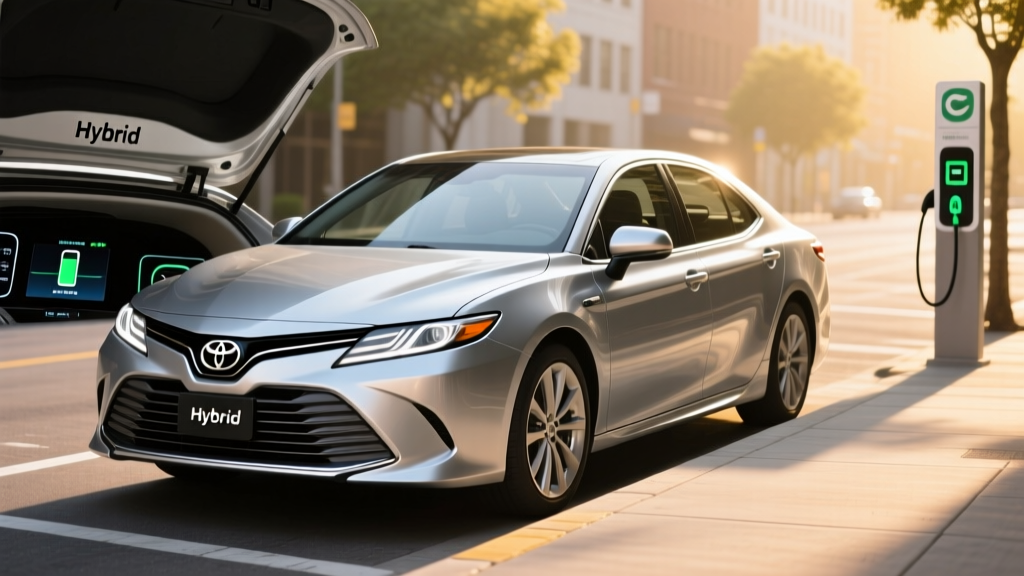
The 2015 Toyota Camry Hybrid sedan remains one of the most sensible used-hybrid purchases on the road. With an EPA-rated 41 city / 38 highway / 40 combined MPG, a proven 2.5-liter four-cylinder hybrid powertrain, and Toyota's reputation for long-haul durability, this midsize sedan delivers real-world fuel savings without requiring a plug, a lifestyle change, or a steep upfront investment. In 2026, used examples typically sell between $9,000 and $15,000 depending on mileage and condition — making the Camry Hybrid a compelling alternative to newer, pricier electrified vehicles for budget-conscious commuters.
But a 10-plus-year-old hybrid raises specific concerns: How has the nickel-metal hydride (NiMH) traction battery held up? What does replacement cost? And how does this conventional hybrid (HEV) stack up against plug-in hybrids and full EVs available today? This guide answers every question a prospective buyer needs resolved before signing the paperwork.
HEV vs PHEV vs EV: Where the 2015 Camry Hybrid Fits
Conventional Hybrid (HEV) — The 2015 Camry Hybrid is a self-charging hybrid. It has a small battery (1.6 kWh) that recharges through regenerative braking and the gasoline engine. You never plug it in. It cannot drive on electric power alone for meaningful distances. Its advantage is simplicity: no charging infrastructure needed, just fill up with gas and go.
Plug-in Hybrid (PHEV) — A PHEV like the Toyota RAV4 Prime or Chrysler Pacifica Hybrid carries a much larger battery (typically 15–20 kWh) that you plug in to charge. It offers 25–42 miles of electric-only driving before the gas engine kicks in. If you have home charging and a short commute, a PHEV can operate as an EV most days.
Battery Electric Vehicle (BEV) — A full EV like the Tesla Model 3 or Hyundai Ioniq 5 has no gas engine at all. It relies entirely on a large battery pack (60–100+ kWh) and must be plugged in to recharge. Range varies from 250 to 400+ miles, but you need reliable access to home or public charging.
The 2015 Camry Hybrid is firmly in the HEV camp. If you lack access to a charging outlet at home or work, a conventional hybrid is the most practical electrified option — you get meaningful fuel savings with zero change to your refueling habits.
Fuel Economy: EPA Ratings and Real-World MPG
The EPA rates the 2015 Toyota Camry Hybrid at 41 MPG city / 38 MPG highway / 40 MPG combined for the LE trim. The sportier SE trim, which has slightly different gearing and wider tires, is rated at 40 city / 38 highway / 40 combined. These figures come from fueleconomy.gov, the official EPA source.
| Trim | City MPG | Highway MPG | Combined MPG | Fuel Tank (gal) | Est. Total Range (mi) |
|---|---|---|---|---|---|
| LE | 41 | 38 | 40 | 15.9 | ~636 |
| XLE | 40 | 38 | 40 | 15.9 | ~636 |
| SE | 40 | 38 | 40 | 15.9 | ~636 |
Real-World MPG: What Owners Actually Report
Conventional hybrids tend to exceed their EPA city ratings in stop-and-go traffic because regenerative braking recaptures energy that a gas-only car wastes as heat. Many Camry Hybrid owners report 42–45 MPG in urban driving. Highway driving at 75+ MPH, however, often yields 35–37 MPG — below the EPA sticker — because the small battery and electric motor provide less benefit at sustained high speeds.
Seasonal variation matters too. In winter conditions with temperatures below freezing, expect a 5–10% fuel-economy drop as the engine runs more frequently to generate cabin heat and maintain battery temperature. A combined real-world average of 38–42 MPG is typical for mixed driving in moderate climates.
Powertrain Specs: Engine, Motor, and Combined Output
| Specification | 2015 Toyota Camry Hybrid |
|---|---|
| Engine | 2.5L Atkinson-cycle inline-4 |
| Engine Horsepower | 156 hp @ 5,700 rpm |
| Engine Torque | 156 lb-ft @ 4,500 rpm |
| Electric Motor | Permanent-magnet synchronous AC |
| Motor Horsepower | 105 kW (141 hp) |
| Net Combined System HP | 200 hp |
| Transmission | ECVT (electronically controlled CVT) |
| Drivetrain | Front-wheel drive |
| Traction Battery | NiMH, 1.6 kWh (usable ~1.0 kWh) |
| 0–60 MPH | ~7.6 seconds |
| Curb Weight | ~3,510 lbs |
The Camry Hybrid's 200 net combined horsepower is competitive with the four-cylinder gas-only Camry of the same year (178 hp) and provides confident highway merging. The electric motor delivers instant torque at low speeds, which makes the car feel peppier than the 0–60 time suggests in city traffic. The ECVT is smooth — there are no fixed gear ratios to shift — though some drivers notice a droning quality under hard acceleration, a common CVT trait.
Note that the 1.6 kWh NiMH battery is small by modern standards. It exists to buffer energy for regenerative braking and assist the engine, not to provide meaningful electric-only range. You might get 1–2 miles at very low speeds on battery alone, but this is not a vehicle designed for plug-in or EV-mode commuting.
Hybrid Battery Longevity, Warranty, and Replacement Cost
Original Hybrid Battery Warranty: Toyota covered the 2015 Camry Hybrid's traction battery for 8 years / 100,000 miles (10 years / 150,000 miles in California and states that follow CARB emissions standards). As of 2026, the original factory warranty has expired for all examples unless an extended warranty was purchased separately.
How Long Does the Camry Hybrid Battery Last?
Toyota's NiMH hybrid batteries have an outstanding longevity track record. Data from owner forums, repair databases, and fleet experience show that Camry Hybrid batteries commonly last 150,000 to 200,000 miles before significant capacity loss triggers a check-engine light or noticeable fuel-economy decline. Many examples exceed 200,000 miles on the original pack.
NiMH chemistry is less energy-dense than modern lithium-ion, but it is remarkably durable. It tolerates the shallow charge-discharge cycles of hybrid operation well and is less susceptible to thermal degradation. The primary failure mode is individual cell imbalance over time rather than sudden catastrophic failure.
Battery Replacement Cost
If the hybrid battery does fail, here is what to budget:
- New OEM Toyota battery: $2,000–$3,000 for the part, plus $500–$1,000 labor — total approximately $2,500–$4,000 at a dealership.
- Remanufactured battery: $1,200–$2,000 including core exchange, typically with a 1–3 year warranty from third-party suppliers.
- Individual cell/module replacement: Some independent hybrid specialists can replace only the failed modules for $500–$1,200, though this is a short-to-medium-term fix as remaining modules may degrade unevenly.
For a used 2015 Camry Hybrid, the most important step is a pre-purchase hybrid battery health check. Many Toyota dealerships and independent hybrid shops can read the battery's State of Health (SoH) via OBD-II scan tools. Ask for this before buying.
Driving, Interior, and Safety Overview
The 2015 Camry was a mid-cycle refresh year for the XV50 generation, bringing updated styling, improved interior materials, and enhanced sound insulation. The hybrid variant shares the same cabin as the gas model, meaning comfortable seating for five, a usable 15.1-cubic-foot trunk (slightly reduced from the gas model due to battery placement behind the rear seat), and straightforward physical controls.
Standard technology includes a 6.1-inch touchscreen with Bluetooth, USB, and a rearview camera. The XLE trim adds navigation, heated front seats, and a premium audio system. Apple CarPlay and Android Auto were not available in 2015 — a notable gap for 2026 buyers accustomed to smartphone integration.
Safety ratings remain strong. The 2015 Camry earned a 5-star overall rating from NHTSA and was an IIHS Top Safety Pick+ when equipped with the optional forward-collision warning system. Standard safety features include 10 airbags, stability control, and anti-lock brakes. However, modern ADAS features like lane-keeping assist, adaptive cruise control, and automatic emergency braking were not available on this generation.
Pricing in 2026: What You Will Pay
The 2015 Camry Hybrid originally started at an MSRP of approximately $27,000 for the LE trim. In the 2026 used market, expect to pay:
- High mileage (120,000+ miles): $8,000–$11,000
- Average mileage (80,000–120,000 miles): $11,000–$14,000
- Low mileage (under 80,000 miles, clean title): $13,000–$16,000
Tax Credit Eligibility
The 2015 Camry Hybrid does not qualify for the federal §30D new clean vehicle credit — that credit applies only to new EV and PHEV purchases meeting current battery-sourcing and MSRP requirements. It also does not qualify for the used clean vehicle credit (up to $4,000), because that credit requires the vehicle to be a plug-in EV or PHEV with at least 4 kWh of battery capacity. The Camry Hybrid's 1.6 kWh NiMH pack falls below that threshold.
Some states offer rebates or reduced registration fees for hybrids, but these vary widely by jurisdiction. Check your state's energy or environmental agency for current programs.
Who Should Buy the 2015 Camry Hybrid — And Who Should Look Elsewhere
Pros
- Proven 40 MPG combined in real-world mixed driving
- Exceptional hybrid battery longevity (150K–200K+ miles)
- No charging infrastructure required — just gas up and drive
- Comfortable, spacious midsize sedan with strong safety ratings
- Low cost of entry ($8K–$16K used) with excellent parts availability
- Smooth, quiet ride with adequate 200 hp acceleration
Cons
- No Apple CarPlay, Android Auto, or modern ADAS features
- Factory battery warranty has expired on all examples
- Highway MPG drops below EPA rating at sustained 75+ MPH
- No electric-only driving capability beyond 1–2 low-speed miles
- Trunk space slightly reduced by battery placement
- CVT drone under hard acceleration
Choose the 2015 Camry Hybrid if: You want maximum fuel savings without plugging in, you drive 12,000–20,000 miles per year with a mix of city and highway, you are on a sub-$15,000 vehicle budget, and you value proven reliability over cutting-edge tech.
Look at a PHEV instead if: You have access to home Level 2 charging, your daily commute is under 30 miles round-trip, and you want to drive mostly on electricity while keeping a gas backup for road trips. Consider a used Toyota Prius Prime or Ford Fusion Energi.
Look at a full EV instead if: You have reliable home charging, your daily driving is under 200 miles, you want the lowest per-mile fuel cost, and you can spend $20,000+ on a newer used vehicle. Consider a used Chevrolet Bolt EV or Tesla Model 3.
Ownership Costs: Fuel Savings vs. Gas-Only Camry
To put the fuel savings in perspective, here is a comparison using 15,000 miles driven annually and $3.40 per gallon of regular unleaded (a reasonable 2026 national average):
| Metric | 2015 Camry Hybrid (40 MPG) | 2015 Camry 2.5L Gas (28 MPG) |
|---|---|---|
| Annual fuel consumption | 375 gallons | 536 gallons |
| Annual fuel cost | $1,275 | $1,822 |
| 5-year fuel cost | $6,375 | $9,110 |
| 5-year fuel savings | $2,735 in favor of the Hybrid | |
That $2,735 savings over five years helps offset any premium paid for the hybrid at purchase. Insurance costs are comparable between the two variants, and maintenance is nearly identical — the hybrid system adds no routine maintenance items. In fact, regenerative braking extends brake pad life, and the engine's Atkinson-cycle operation reduces wear.
FAQ: Common 2015 Camry Hybrid Questions
How many MPG does the 2015 Toyota Camry Hybrid get?
The EPA rates it at 41 city / 38 highway / 40 combined MPG for the LE trim. Real-world owners typically see 38–42 MPG combined, with city driving sometimes exceeding 43 MPG and sustained highway driving dropping to 35–37 MPG.
Can I plug in the 2015 Camry Hybrid to charge it?
No. The 2015 Camry Hybrid is a conventional hybrid (HEV), not a plug-in hybrid (PHEV). Its 1.6 kWh battery charges exclusively through regenerative braking and the gasoline engine. There is no charge port and no electric-only driving mode of any practical distance.
Is the hybrid battery reliable, and what does replacement cost?
Toyota's NiMH hybrid batteries are among the most durable in the industry, commonly lasting 150,000–200,000 miles. A new OEM replacement costs $2,500–$4,000 installed. Remanufactured options run $1,200–$2,000. The original 8-year/100,000-mile warranty has expired on all 2015 models.
Does the 2015 Camry Hybrid qualify for any tax credit?
No. It does not qualify for the federal §30D new vehicle credit (it is a used conventional hybrid) or the used clean vehicle credit (which requires a plug-in vehicle with at least 4 kWh of battery capacity). Check your state for any hybrid-specific incentives.
How does it compare to a newer used hybrid or PHEV?
The 2015 Camry Hybrid's 40 MPG combined still matches or beats many newer hybrids. However, you sacrifice modern infotainment (no CarPlay/Android Auto), modern ADAS (no automatic emergency braking or lane-keeping), and the remaining factory battery warranty. If tech features and warranty coverage matter, a 2020+ Camry Hybrid or a used Prius Prime PHEV may be worth the higher price.
What should I check before buying a used 2015 Camry Hybrid?
Request a hybrid battery State of Health (SoH) scan via OBD-II, review maintenance records for regular oil changes (every 5,000–10,000 miles), check for any outstanding recalls via NHTSA's recall lookup, and verify the inverter coolant has been serviced. A pre-purchase inspection at a Toyota dealership or hybrid specialist is strongly recommended.