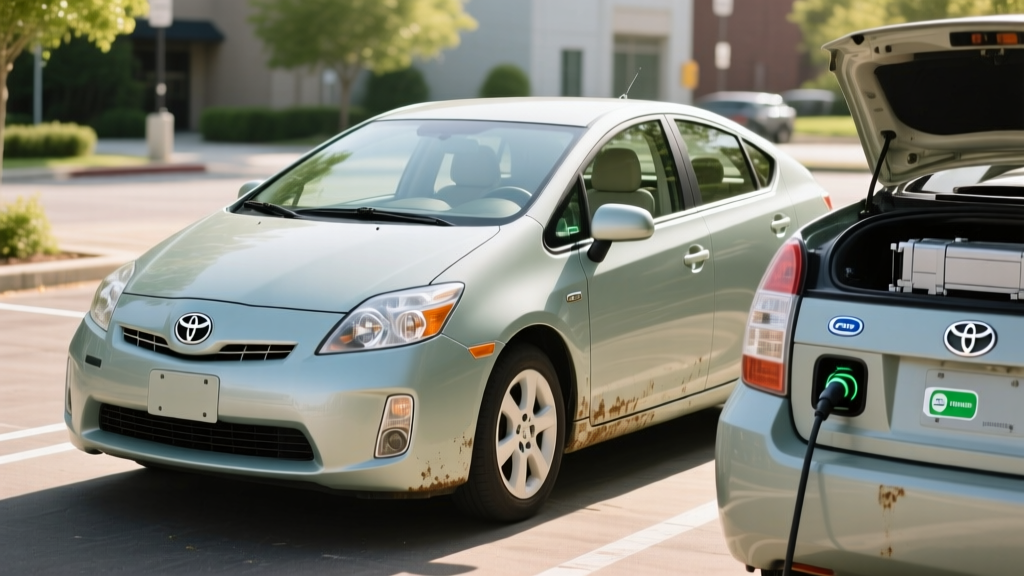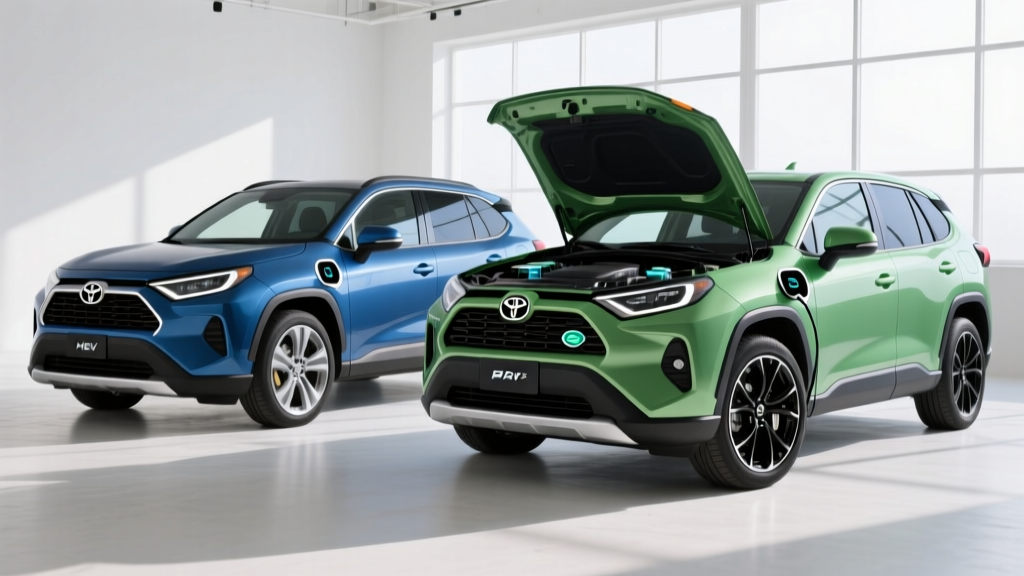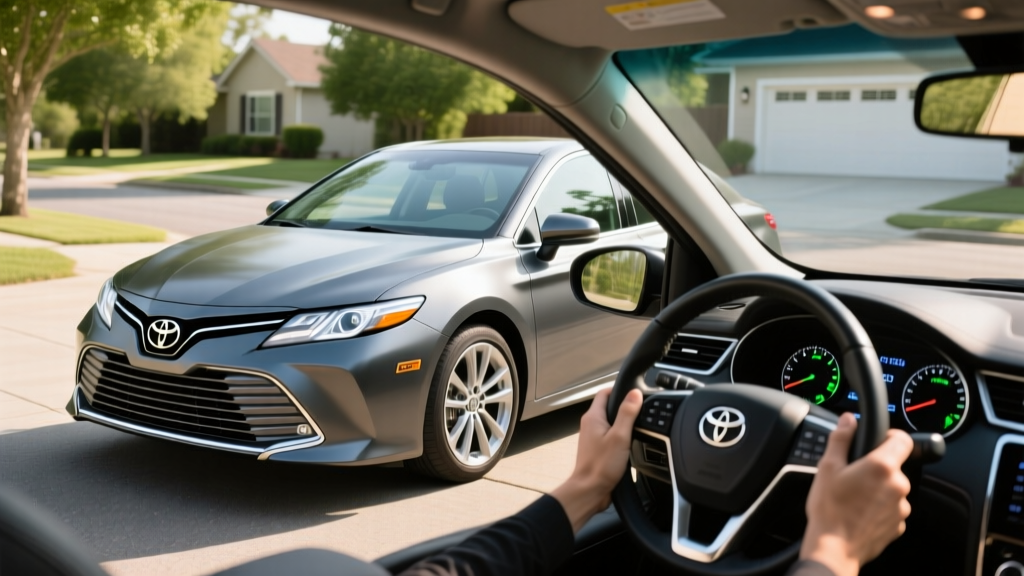
The 2015 Toyota Camry Hybrid SE sits in an unusual sweet spot for used-car shoppers in 2026: it delivers genuine hybrid fuel economy without the plug-in complexity, wrapped in Toyota's sportier SE trim with paddle shifters, sport-tuned suspension, and a leather-trimmed interior. If you're researching the 2015 Toyota Camry Hybrid SE as a potential daily driver, this guide covers every number that matters — EPA MPG, real-world efficiency, hybrid battery longevity, replacement costs, and whether this decade-old HEV still makes financial sense against modern PHEVs and EVs.
What Is the 2015 Camry Hybrid SE?
The 2015 Camry Hybrid came in three trims: LE, SE, and XLE. The SE was the mid-tier sport option, adding 17-inch alloy wheels, a sport-tuned suspension, SofTex synthetic leather seats, paddle shifters, and a rear spoiler atop the standard hybrid powertrain. This is a conventional hybrid (HEV) — it charges its battery through regenerative braking and the gasoline engine. There is no plug, no electric-only driving mode, and no need to install home charging equipment.
HEV vs. PHEV — Critical Distinction
Conventional Hybrid (HEV): The 2015 Camry Hybrid SE is a self-charging hybrid. A small nickel-metal hydride (NiMH) battery assists the gas engine and captures energy during braking. You never plug it in. Electric-only propulsion is limited to brief, low-speed coasting — roughly 1 mile at under 25 mph.
Plug-in Hybrid (PHEV): A PHEV like the Toyota RAV4 Prime carries a much larger battery (18.1 kWh) that charges via a plug and delivers 42 miles of electric-only range. PHEVs require home or public charging infrastructure to capture their full efficiency benefit.
Fuel Economy: EPA Ratings vs. Real-World MPG
The EPA rates the 2015 Camry Hybrid SE at 40 MPG city / 38 MPG highway / 40 MPG combined. (The LE trim is rated slightly higher at 43/39/41 combined due to lighter wheels and lower rolling-resistance tires.) These figures come directly from fueleconomy.gov.
| Metric | SE Trim | LE Trim | XLE Trim |
|---|---|---|---|
| City MPG | 40 | 43 | 40 |
| Highway MPG | 38 | 39 | 38 |
| Combined MPG | 40 | 41 | 40 |
| Fuel Tank (gal) | 17.0 | 17.0 | 17.0 |
| Total Range (mi) | ~680 | ~697 | ~680 |
Real-World MPG Expectations
Toyota's Hybrid Synergy Drive system excels in stop-and-go city driving where regenerative braking and electric assist do the most work. In real-world ownership:
- City driving: Many owners report exceeding the 40 MPG EPA city figure, seeing 42–46 MPG in warm-weather urban commutes.
- Highway cruising (70–80 mph): Expect 35–38 MPG. At sustained highway speeds, the 2.5L Atkinson-cycle engine does most of the work with minimal electric assist.
- Cold weather (below 32°F): MPG drops 10–15% as the engine runs longer to maintain cabin heat and the battery operates less efficiently. Expect 33–37 MPG combined in winter.
- 10-year-old battery factor: A 2015 model in 2026 has an 11-year-old hybrid battery. Moderate degradation (10–15% capacity loss) is common and may reduce city MPG by 1–3 MPG compared to a new battery. Severe degradation triggers a check-engine light and more significant efficiency loss.
Powertrain Specs and Performance
| Specification | 2015 Camry Hybrid SE |
|---|---|
| Engine | 2.5L 4-cyl Atkinson-cycle |
| Engine HP | 156 hp @ 5,700 rpm |
| Electric Motor | Permanent-magnet synchronous (105 kW / 141 hp) |
| Net Combined HP | 200 hp |
| Transmission | ECVT (electronically controlled CVT) |
| 0–60 mph | ~7.6 seconds |
| Drivetrain | Front-wheel drive |
| Hybrid Battery | NiMH, ~1.6 kWh (244.8V, 6.5 Ah) |
| Curb Weight | ~3,515 lbs |
The 200 net horsepower output was competitive for a midsize sedan in 2015 and still provides confident merging and passing today. The SE trim's sport-tuned suspension firms up the ride slightly compared to the LE and XLE, with sharper steering response and less body roll. The ECVT is smooth — there are no fixed gear ratios, just seamless power delivery. Paddle shifters on the SE simulate six "gears" for drivers who want more control on mountain descents, where engine braking assists regeneration.
Hybrid Battery Longevity and Replacement Cost
Battery Warranty and Expected Lifespan
Original warranty: Toyota covered the 2015 Camry Hybrid battery for 8 years / 100,000 miles in most states and 10 years / 150,000 miles in CARB states (California, New York, Massachusetts, and others that adopted California emissions standards). Per Toyota's official hybrid warranty documentation, coverage applies to capacity loss that triggers a malfunction indicator.
Expected lifespan: Toyota's NiMH hybrid batteries have an excellent track record. Many Camry and Prius hybrids reach 150,000–200,000+ miles on the original battery. However, at 11 years old in 2026, age-related degradation is a factor regardless of mileage. Heat exposure and frequent deep discharge cycles accelerate wear.
Battery Replacement Costs in 2026
If the hybrid battery fails or degrades significantly, here's what replacement looks like:
- New OEM Toyota battery: $2,500–$3,800 (parts) + $300–$600 (labor) = $2,800–$4,400 total at a dealership.
- Refurbished/reconditioned battery: $1,200–$2,200 installed at independent hybrid specialists. These use reconditioned modules with 1–3 year warranties.
- Individual module replacement: Some hybrid repair shops can replace only the failed cells/modules for $500–$1,200, extending battery life at lower cost.
Before purchasing a used 2015 Camry Hybrid SE, request a hybrid battery health check using Toyota's Techstream diagnostic tool or an aftermarket scan tool that reads battery block voltage variance. Healthy batteries show less than 0.3V variance between modules under load. Anything above 0.5V suggests impending failure.
Used Pricing and Tax Credit Eligibility
The 2015 Camry Hybrid SE originally carried an MSRP of approximately $29,500 (including destination). In the 2026 used market, expect to pay:
- 60,000–80,000 miles, excellent condition: $14,000–$17,000
- 80,000–120,000 miles, good condition: $11,000–$14,000
- 120,000+ miles or fair condition: $8,500–$11,000
Does It Qualify for Any Tax Credit?
No federal tax credit applies. The IRS §30D Clean Vehicle Credit is available only for new qualifying EVs and PHEVs with plug-in capability. The Camry Hybrid is a conventional HEV and was never eligible for federal purchase incentives, even when new. The federal used-EV credit (up to $4,000 under §25E) also requires plug-in capability and a minimum 7 kWh battery — the Camry Hybrid's ~1.6 kWh NiMH pack does not qualify.
Some states or local utilities offer rebates for hybrid purchases, but these are increasingly rare and typically target new PHEVs and EVs. Check your state's energy office or utility provider for current programs.
Hybrid vs. PHEV vs. EV: Which Fits You in 2026?
The used 2015 Camry Hybrid SE competes against newer used PHEVs and entry-level EVs. Here's a decision framework based on your driving situation:
Choose the 2015 Camry Hybrid SE If:
- You lack access to home or workplace charging (apartment, street parking, no garage outlet).
- You want a proven, low-risk powertrain with widespread mechanic support and affordable parts.
- Your budget is $10,000–$17,000 and you need a reliable midsize sedan today.
- You drive a mix of city and highway and value 680+ miles of total range between fill-ups.
- You don't want to think about charging, range planning, or battery preconditioning.
Consider a PHEV or EV Instead If:
- You have Level 2 home charging and a commute under 30–40 miles (a used RAV4 Prime or Prius Prime covers most trips on electricity).
- You want the lowest per-mile fuel cost — home-charged electricity at $0.13/kWh costs roughly $0.04/mile vs. $0.10–$0.12/mile in a 40 MPG hybrid at $3.50/gal.
- You qualify for the federal §30D credit on a new EV or PHEV, bringing effective pricing close to this used hybrid.
- You prioritize the latest safety tech (the 2015 Camry lacks automatic emergency braking, lane-keeping assist, and adaptive cruise control standard on most 2023+ models).
Ownership Costs and Long-Term Value
Beyond fuel, here's what owning a 2015 Camry Hybrid SE costs in 2026:
- Insurance: Typically $900–$1,400/year depending on state, driving record, and coverage level. Hybrids carry no significant insurance premium over gas equivalents.
- Maintenance: The hybrid system adds virtually no maintenance burden. There's no hybrid-specific fluid to change. Brake pads last 80,000–120,000+ miles thanks to regenerative braking reducing friction-brake use. Standard maintenance (oil changes every 10,000 miles with synthetic, coolant at 100,000 miles) runs $400–$600/year.
- Tires: The SE's 17-inch wheels use common 215/55R17 tires, typically $500–$700 for a set of four all-season replacements.
- Depreciation: Already steep — the car has absorbed most of its value loss. Expect 5–8% annual depreciation going forward, slower than new vehicles.
Frequently Asked Questions
How many MPG does the 2015 Toyota Camry Hybrid SE get?
The EPA rates it at 40 city / 38 highway / 40 combined. Real-world city driving often yields 42–46 MPG in warm weather. Highway cruising at 75+ mph typically returns 35–38 MPG. Cold weather reduces combined MPG by 10–15%.
Can I plug in the 2015 Camry Hybrid to charge?
No. This is a conventional hybrid (HEV), not a plug-in hybrid (PHEV). The battery charges exclusively through regenerative braking and the gasoline engine. There is no charging port, no electric-only range to speak of, and no need for any charging infrastructure.
How far can it drive on electric power alone?
Essentially zero meaningful distance. The hybrid system can propel the car electrically for roughly 0.5–1 mile at speeds under 25 mph under ideal conditions (flat ground, gentle acceleration, warm battery). This is not a usable electric-only mode — it's an efficiency assist during low-speed maneuvers. If electric-only commuting matters, you need a PHEV or EV.
Is the 2015 Camry Hybrid reliable?
Yes. The 2015 Camry Hybrid benefits from Toyota's fourth-generation Hybrid Synergy Drive, which had been refined across millions of Prius and Camry units by that point. The IIHS rated it a Top Safety Pick. Common issues are non-hybrid-related: water pump failures (around 80,000–120,000 miles, $400–$600 to replace), dashboard cracking on early-build cars, and occasional power window switch failures. The hybrid system itself is among the most reliable powertrains Toyota has ever produced.
What is the hybrid battery replacement cost?
A new OEM battery runs $2,800–$4,400 installed at a dealership. Refurbished batteries cost $1,200–$2,200 installed at hybrid specialists. Individual module repair can cost as little as $500–$1,200. Many 2015 Camry Hybrids are still on their original batteries at 100,000–150,000+ miles, but at 11 years old, budget for potential replacement within your ownership period.
Does the 2015 Camry Hybrid qualify for any federal tax credit?
No. The IRS §30D credit and the §25E used-EV credit both require plug-in capability and minimum battery capacity thresholds that the Camry Hybrid does not meet. It is a conventional HEV with no plug and a ~1.6 kWh battery. No federal incentives apply. Consult a tax professional or visit irs.gov for current credit rules.
How does the SE trim differ from the LE and XLE?
The SE adds sport-tuned suspension, 17-inch alloy wheels (vs. 16-inch on LE), paddle shifters, SofTex synthetic leather seats, a leather-wrapped steering wheel, and a rear spoiler. The XLE adds premium features like navigation, a JBL audio system, and heated front seats but uses a softer suspension tune. The SE is the driver-focused choice; the XLE is the comfort-focused choice.
Should I buy a 2015 Camry Hybrid SE or a newer used EV like a Chevy Bolt?
It depends entirely on charging access. If you can install a Level 2 home charger, a used Chevy Bolt EV (2017–2022, ~$12,000–$18,000 in 2026) delivers 238–259 miles of range and $0.04/mile fuel cost on home electricity — dramatically cheaper per mile than even a 40 MPG hybrid. But if you park on the street, live in an apartment without charging, or regularly drive 400+ mile trips without planning charging stops, the Camry Hybrid's no-plug, 680-mile-range simplicity remains a compelling advantage.
The 2015 Toyota Camry Hybrid SE remains a rational, data-backed choice for used-car buyers who want hybrid efficiency without the infrastructure demands of plug-in vehicles. At $11,000–$17,000 in 2026, it offers 40 MPG combined, proven reliability, and 680-mile total range — numbers that still hold up against far more expensive alternatives. Just budget for a potential hybrid battery replacement, verify battery health before purchase, and understand that this is a bridge technology: excellent for drivers who can't charge at home, but not the lowest-cost-per-mile option if you can.