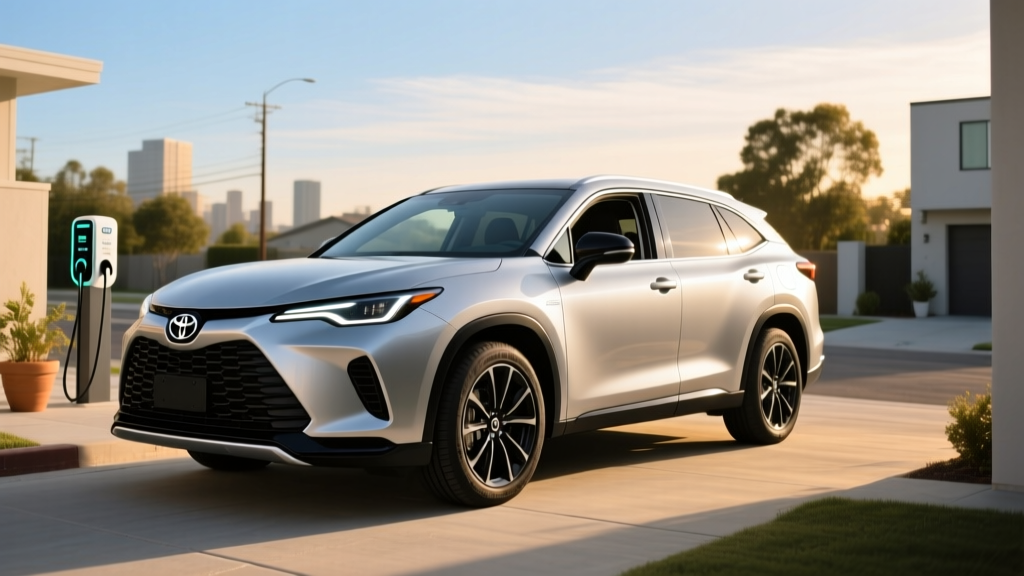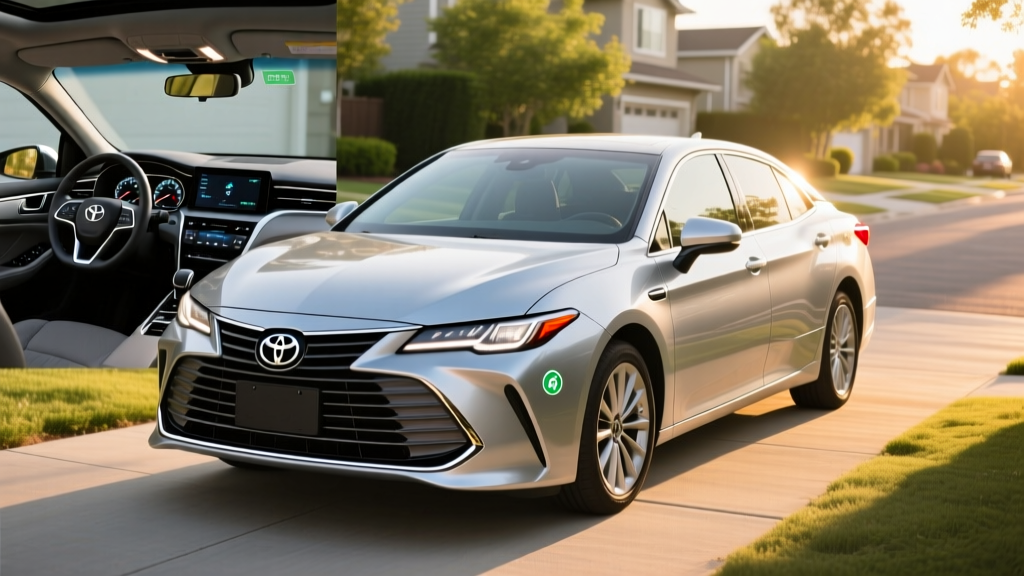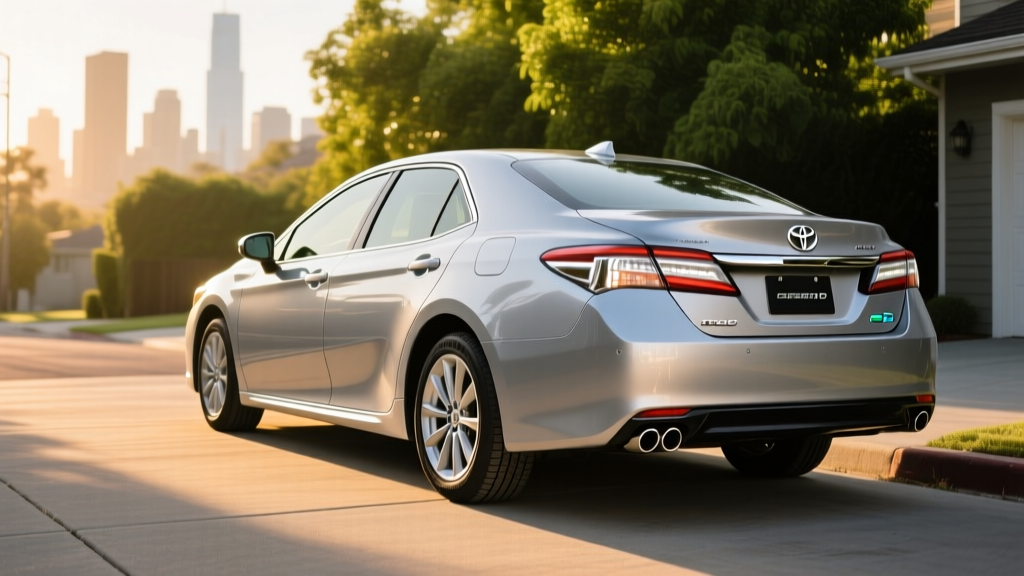
Quick Verdict: The 2015 Camry Hybrid in 2026
If you're researching the 2015 Toyota Camry Hybrid as a used-car purchase in 2026, you're looking at one of the most proven midsize hybrid sedans ever built. Now roughly 11 years old, this generation (the refreshed XV50) delivers a real-world combined 38–42 MPG, Toyota's legendary hybrid reliability, and a cabin that still feels competitive for daily commuting. With used examples trading between $9,000 and $15,000 depending on mileage and condition, it remains a compelling alternative to both newer gas-only sedans and pricier modern PHEVs or EVs.
This guide covers everything a prospective buyer needs: exact EPA fuel economy figures, real-world MPG expectations, the NiMH hybrid battery's lifespan and replacement cost, powertrain specs, and how the 2015 Camry Hybrid stacks up against going full electric or buying a modern plug-in hybrid.
EPA Fuel Economy and Real-World MPG
The 2015 Toyota Camry Hybrid is a conventional hybrid electric vehicle (HEV). It does not plug in. It charges its small battery exclusively through regenerative braking and the gasoline engine. This is a critical distinction from plug-in hybrids (PHEVs) and battery-electric vehicles (BEVs).
| Metric | LE Trim | XLE / SE Trim |
|---|---|---|
| City MPG | 43 | 40 |
| Highway MPG | 39 | 38 |
| Combined MPG | 41 | 39 |
| Fuel Tank Capacity | 17.0 gal | 17.0 gal |
| Total Driving Range | ~697 mi | ~663 mi |
Source: fueleconomy.gov
Toyota's hybrid synergy drive system excels in stop-and-go city driving, where the electric motor handles low-speed propulsion and regenerative braking recaptures energy. In practice:
- City driving: Many owners report 42–46 MPG, exceeding the EPA city estimate.
- Highway cruising (70+ mph): Expect 35–38 MPG. Hybrids lose their advantage at sustained high speeds where the gas engine does all the work.
- Cold weather (below 30°F): Expect a 5–10% MPG drop as the engine runs more frequently to maintain cabin heat and battery temperature.
- Combined real-world: 38–42 MPG is typical for mixed driving, closely tracking the EPA combined figure.
The LE trim achieves slightly better fuel economy due to lighter weight and lower-resistance tires. If maximum MPG is your priority, the LE is the trim to find.
HEV vs. PHEV vs. EV: Which Powertrain Fits You?
The 2015 Camry Hybrid is a self-charging HEV. It's important to understand what that means — and what it doesn't mean — before purchasing.
| Feature | HEV (This Car) | PHEV (e.g., Prius Prime) | BEV (e.g., Model 3) |
|---|---|---|---|
| Plugs In? | No | Yes | Yes |
| Electric-Only Range | ~1 mi at low speed | 25–44 mi | 250–350+ mi |
| Gas Engine? | Yes | Yes | No |
| Home Charging Needed? | No | Recommended | Essential |
| Federal Tax Credit (New) | None | Up to $7,500 (§30D) | Up to $7,500 (§30D) |
| Used EV Tax Credit | Not eligible | Up to $4,000 | Up to $4,000 |
| Best For | No charging access, high-mile commuters | Short commutes + road trips | Home chargers, low fuel cost |
Choose the 2015 Camry Hybrid (HEV) if: You have no access to home or workplace charging, you drive 30+ miles daily in mixed conditions, and you want maximum simplicity with no plug-in routine. This car works exactly like a gas car — you just fill it up — but uses 35–40% less fuel.
Consider a PHEV instead if: You can install a Level 2 charger at home and your daily commute is under 40 miles. A modern PHEV like the Toyota RAV4 Prime or Prius Prime would let you drive most days on electricity alone while keeping the gas engine for longer trips.
Consider a full EV instead if: You have reliable home charging, drive under 250 miles daily, and want the lowest per-mile fuel cost (roughly $0.04–0.06/mile on electricity vs. $0.10–0.12/mile in this hybrid at current gas prices).
Powertrain Specs: Engine, Motor, and Combined Output
| Specification | Detail |
|---|---|
| Gasoline Engine | 2.5L inline-4 (2AR-FXE), Atkinson cycle |
| Engine Horsepower | 156 hp @ 5,700 rpm |
| Engine Torque | 156 lb-ft @ 4,500 rpm |
| Electric Motor | Permanent-magnet synchronous (3JM) |
| Motor Output | 105 kW (141 hp) |
| Net Combined System HP | 200 hp |
| Transmission | eCVT (planetary gearset, not a belt CVT) |
| 0–60 mph | ~7.6 seconds |
| Drivetrain | Front-wheel drive |
| Hybrid Battery | 1.6 kWh (nominal), Nickel-Metal Hydride (NiMH) |
| Battery Location | Behind rear seat (reduces trunk to 13.1 cu ft vs 15.4 cu ft gas model) |
The 2AR-FXE engine uses the Atkinson cycle, which sacrifices low-end torque for greater thermal efficiency. The electric motor fills in that low-end gap, delivering smooth, immediate torque from a stop. Toyota's eCVT is a planetary gearset — not the rubber-belt CVT found in some competitors — and it's one of the most durable transmissions in the industry.
The 1.6 kWh NiMH battery is small by modern standards (a 2026 Prius Prime PHEV carries an 13.6 kWh lithium-ion pack). But in an HEV, the battery doesn't need to store much energy — it acts as a buffer, capturing braking energy and releasing it in short bursts to assist acceleration or enable brief electric-only movement at low speeds.
Hybrid Battery Lifespan, Warranty, and Replacement Cost
- Original warranty: 8 years / 100,000 miles (10 years / 150,000 miles in CARB states including CA, NY, MA, and others)
- Current status (2026): Most 2015 Camry Hybrids are now outside the original factory hybrid battery warranty unless under 100K miles in a CARB state
- Typical battery lifespan: 150,000–200,000+ miles with normal use; many original batteries still functioning at 11 years old
- Failure mode: Gradual capacity loss rather than sudden failure; MPG declines slowly as cells weaken
This is the top concern for any used hybrid buyer, and it's where the 2015 Camry Hybrid shines. Toyota's NiMH hybrid batteries have an exceptional track record. The NHTSA complaint database shows very few hybrid battery failure reports for this generation.
NiMH vs. Lithium-Ion in hybrids: The 2015 Camry uses NiMH chemistry, which is heavier and less energy-dense than modern lithium-ion but has proven remarkably durable. NiMH cells tolerate the shallow charge-discharge cycles of an HEV extremely well. Many 2004–2009 Prius NiMH packs exceeded 200,000 miles before needing replacement.
Replacement cost if the battery fails:
- New OEM Toyota battery: $2,500–$3,500 installed at a dealership
- Refurbished/reconditioned battery: $1,000–$1,800 installed at a hybrid specialist shop
- Individual cell module replacement: $500–$1,000 if only a few cells are weak (requires a shop with hybrid battery diagnostics)
Pre-purchase inspection tip: Ask a mechanic to perform a hybrid battery health check using Toyota's Techstream diagnostic software. This reads individual cell voltages and internal resistance. A healthy pack shows cell voltages within 0.2V of each other. Wider variance signals aging cells.
Used Pricing and Tax Credit Eligibility
As of early 2026, the 2015 Toyota Camry Hybrid trades on the used market in these ranges:
| Condition / Mileage | Price Range |
|---|---|
| Excellent, under 80K miles | $13,000–$15,500 |
| Good, 80K–120K miles | $10,500–$13,000 |
| Fair, 120K–160K miles | $8,500–$10,500 |
| High mileage, 160K+ | $6,500–$8,500 |
Tax credit eligibility: The 2015 Camry Hybrid does not qualify for the federal §30D new clean vehicle credit (it's a used conventional hybrid, not a PHEV or EV). It also does not qualify for the used clean vehicle credit (up to $4,000), which applies only to used BEVs and PHEVs with at least 16 kWh of battery capacity for PHEVs — far above this car's 1.6 kWh NiMH pack.
Some states offer used hybrid rebates or reduced registration fees, but these vary by jurisdiction and change frequently. Check your state's energy office or DMV for current programs.
Ownership Costs: Fuel, Maintenance, and Insurance
Here's what owning a 2015 Camry Hybrid actually costs in 2026 compared to a gas-only equivalent:
| Cost Category | 2015 Camry Hybrid (41 MPG) | 2015 Camry 2.5L Gas (28 MPG) |
|---|---|---|
| Annual Fuel (at $3.30/gal avg) | $1,207 | $1,768 |
| Annual Fuel Savings | $561/year with the hybrid | |
| Oil Changes (2x/year) | $80–$120 | $80–$120 |
| Brake Pads | Lasts longer (regen reduces wear) | Standard intervals |
| Insurance (avg) | Comparable to gas model | Baseline |
Over 5 years of ownership at 15,000 miles annually, the hybrid saves roughly $2,800 in fuel costs compared to the gas Camry. At a $2,000–$3,000 used-price premium for the hybrid trim, the payback period is approximately 3–4 years — or immediately if you find a used example priced competitively with a gas model.
Maintenance advantages of the hybrid: The regenerative braking system significantly reduces brake pad wear — many owners report original brake pads lasting 80,000–100,000 miles. The engine also sees less load during acceleration (the electric motor assists), reducing long-term engine wear. There is no conventional starter motor or alternator to replace, as the hybrid motor/generator handles both functions.
Pros and Cons of the 2015 Camry Hybrid
Pros
- Proven 41 MPG combined EPA; often exceeds in city driving
- NiMH hybrid battery with exceptional longevity track record
- No plug-in required — operates exactly like a gas car
- Smooth, quiet powertrain with adequate 200 hp
- Low brake wear thanks to regenerative braking
- Comfortable ride quality for daily commuting
- Strong resale value relative to non-hybrid competitors
Cons
- Reduced trunk space (13.1 cu ft vs 15.4 cu ft) due to battery placement
- No electric-only driving beyond ~1 mile at very low speeds
- Dated infotainment by 2026 standards (no Apple CarPlay/Android Auto)
- Highway MPG drops to 35–38 at 70+ mph
- No federal tax credit eligibility (new or used)
- Hybrid battery replacement ($1,000–$3,500) if it fails outside warranty
- Modest 7.6-second 0–60 time; not a performance sedan
Frequently Asked Questions
How many MPG does the 2015 Toyota Camry Hybrid get?
The EPA rates the LE trim at 43 city / 39 highway / 41 combined MPG. The XLE and SE trims are rated at 40/38/39 MPG. Real-world combined driving typically yields 38–42 MPG, with city driving often exceeding the EPA estimate and highway driving at 70+ mph falling slightly below.
Does the 2015 Camry Hybrid need to be plugged in?
No. The 2015 Camry Hybrid is a conventional hybrid (HEV), not a plug-in hybrid (PHEV). It charges its battery entirely through regenerative braking and the gasoline engine. You never plug it in — you just fill it with gas like any other car.
How long does the hybrid battery last in a 2015 Camry?
Toyota's NiMH hybrid batteries in this generation commonly last 150,000–200,000+ miles. At 11 years old in 2026, many original batteries are still functional. If replacement becomes necessary, expect to pay $1,000–$1,800 for a refurbished pack or $2,500–$3,500 for a new OEM battery installed at a dealer.
Is the 2015 Camry Hybrid reliable?
Yes. This generation has one of the strongest reliability records in the midsize sedan segment. The eCVT planetary gearset is virtually bulletproof, the 2AR-FXE engine is under-stressed, and the hybrid system has been refined over multiple generations. IIHS rated it a Top Safety Pick, and NHTSA awarded it 5 stars overall.
Does the 2015 Camry Hybrid qualify for any tax credit?
No. As a conventional hybrid (not a plug-in hybrid or electric vehicle), it does not qualify for the federal §30D new vehicle credit or the used clean vehicle credit. It also never qualified when new, as the Camry Hybrid has always been an HEV without plug-in capability.
Should I buy a 2015 Camry Hybrid or a newer used EV?
It depends on your charging access. If you can install a Level 2 home charger and your daily driving is under 200 miles, a used EV like a 2018–2020 Chevrolet Bolt or Nissan Leaf will cost less per mile to operate and may qualify for the up-to-$4,000 used EV tax credit. But if you lack charging access, drive long distances, or live in an area with sparse public charging infrastructure, the 2015 Camry Hybrid offers proven reliability and excellent fuel economy with zero lifestyle changes.