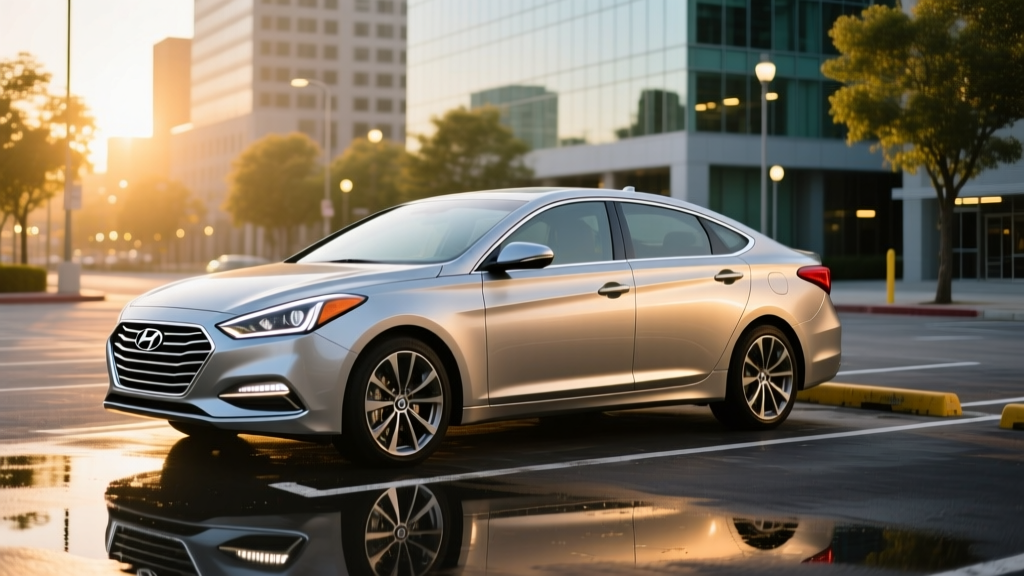
Quick Verdict: A Solid Used Hybrid Sedan With Real-World Efficiency
The 2015 Hyundai Sonata Hybrid sits in a sweet spot for used-car shoppers who want genuine fuel savings without plugging in. As a conventional hybrid electric vehicle (HEV), it requires no charging infrastructure — you simply fuel it like any gasoline car and let the hybrid system optimize efficiency. With an EPA-rated 36 MPG combined and a proven 2.0-liter four-cylinder paired with a 47-kW electric motor, this midsize sedan delivers tangible savings at the pump.
Now well into its second decade on the road, the 2015 Sonata Hybrid is available on the used market at attractive prices. But prospective buyers need hard data on battery longevity, real-world MPG, and maintenance costs before signing paperwork. This guide covers exactly what you need to know.
| Specification | 2015 Hyundai Sonata Hybrid |
|---|---|
| Powertrain | 2.0L I4 GDI + 47-kW electric motor |
| Combined Horsepower | 199 hp (system net) |
| Transmission | 6-speed automatic |
| EPA MPG (City / Highway / Combined) | 36 / 40 / 36 |
| Hybrid Battery | 1.4 kWh lithium-polymer (Li-Po) |
| Drivetrain | Front-wheel drive |
| 0–60 mph | ~8.4 seconds |
| Cargo Volume | 13.2 cu ft (trunk) |
| Original MSRP (Base) | $26,000 (2015) |
| Typical Used Price (2026) | $8,000–$13,000 |
HEV vs. PHEV vs. EV: Where Does the 2015 Sonata Hybrid Fit?
Before evaluating this specific model, it helps to understand the hybrid landscape. The 2015 Sonata Hybrid is a conventional hybrid (HEV) — meaning it cannot plug in and has no electric-only driving range to speak of. It captures energy through regenerative braking and uses its small 1.4 kWh battery to assist the gas engine during acceleration and enable brief low-speed electric creep.
Hyundai did introduce a Sonata Plug-In Hybrid (PHEV) for the 2016 model year with a larger 9.8 kWh battery and roughly 27 miles of electric-only range, but the 2015 model year was HEV-only. Here is how the three electrified categories compare for a buyer considering this car:
| Factor | HEV (2015 Sonata Hybrid) | PHEV (e.g., 2016+ Sonata PHEV) | Full EV (e.g., Ioniq 5) |
|---|---|---|---|
| Plugs in? | No | Yes (Level 1/2) | Yes (Level 1/2/DC) |
| Electric-only range | ~0.5 mi at low speed | 20–30 mi typical | 250–310+ mi EPA |
| Home charging needed? | No | Recommended | Essential |
| Fuel/energy cost per mile | ~$0.09 (gas) | ~$0.04 (electric) / $0.09 (gas) | ~$0.04 (electric) |
| Federal tax credit | None (used HEV) | None (used, expired) | Up to $7,500 (§30D, new) |
| Best for | No charging access, simple ownership | Short commutes + road trips | Home charging + lowest running cost |
Choose the 2015 Sonata Hybrid if you lack access to home or workplace charging, want a straightforward sedan with strong fuel economy, and prefer the lowest upfront cost. Look at a full EV if you can install a Level 2 charger and drive under 250 miles daily — the per-mile energy cost drops dramatically.
Fuel Economy: EPA Numbers and Real-World MPG
The EPA rates the 2015 Hyundai Sonata Hybrid at 36 MPG city, 40 MPG highway, and 36 MPG combined. The slightly unusual city-lower-than-highway figure reflects Hyundai's tuning emphasis on high-speed efficiency, though many owners report the opposite in practice.
| Driving Condition | EPA Estimate | Real-World Expectation |
|---|---|---|
| City (stop-and-go) | 36 MPG | 37–42 MPG (regen braking excels here) |
| Highway (65–75 mph) | 40 MPG | 34–38 MPG (aero drag + less regen benefit) |
| Combined | 36 MPG | 34–39 MPG |
| Cold weather (below 32°F) | — | 30–34 MPG (engine runs more for cabin heat) |
Conventional hybrids like the Sonata tend to exceed their EPA city rating in real-world urban driving because regenerative braking recovers energy that gas cars waste as heat. Highway driving, however, offers fewer regeneration opportunities, and the Sonata's aerodynamics and weight work against it at sustained high speeds. Expect roughly 35–38 MPG in mixed daily driving, with city-heavy commuters seeing 38+ regularly.
At 15,000 miles per year and $3.40/gallon gasoline, the Sonata Hybrid saves approximately $450–$600 annually compared to a non-hybrid 2015 Sonata (EPA 28 MPG combined) — meaningful compounding savings over several years of ownership.
Powertrain Details: How the Hybrid System Works
The 2015 Sonata Hybrid pairs a 2.0-liter GDI inline-four (producing 154 hp and 140 lb-ft of torque) with a 47-kW (63 hp) electric motor integrated into the transmission housing. Combined system output is rated at 199 horsepower. Unlike some hybrids that use a continuously variable transmission (CVT), Hyundai opted for a traditional 6-speed automatic, which gives the Sonata Hybrid a more natural driving feel — no rubber-band acceleration sensation.
The electric motor handles three primary functions:
- Launch assist: Fills the torque gap at low RPM before the gas engine reaches peak output
- Regenerative braking: Converts deceleration energy back into battery charge
- Low-speed electric creep: Enables very short distances (under 1 mile) on electric power alone at parking-lot speeds
The 1.4 kWh lithium-polymer (Li-Po) battery pack is positioned behind the rear seats. While small by modern EV standards, it is appropriately sized for an HEV — large enough to buffer regenerative energy and assist acceleration, small enough to avoid significant weight or cargo-space penalties. Trunk capacity drops only slightly to 13.2 cubic feet versus the gas model's 16.4 cubic feet.
Battery Longevity, Warranty, and Replacement Cost
Hyundai Hybrid Battery Warranty (Original): 8 years / 100,000 miles (10 years / 100,000 miles in CARB states including California, New York, Massachusetts, and others).
Current Status for 2015 Models: The standard 8-year/100,000-mile warranty has expired for most 2015 vehicles unless the car has unusually low mileage and was purchased late in the model year. Buyers should verify any remaining coverage with a Hyundai dealer using the VIN.
Hyundai's lithium-polymer hybrid batteries have demonstrated strong longevity in real-world use. The 1.4 kWh pack operates within a narrow state-of-charge window (roughly 40%–80% SoC) managed by the battery control module, which significantly reduces degradation compared to full EVs that regularly cycle from low to high SoC.
Based on owner reports and fleet data, Sonata Hybrid batteries commonly reach 150,000–200,000 miles before requiring replacement. Signs of battery decline include:
- Noticeably reduced fuel economy (dropping below 30 MPG combined consistently)
- The gasoline engine running more frequently than expected
- Hybrid system warning light on the dashboard
- Reduced regenerative braking feel
Battery replacement cost: A new OEM hybrid battery from Hyundai runs approximately $2,500–$3,500 including labor at a dealership. Independent hybrid specialists and refurbished battery options can reduce this to $1,500–$2,200. Given that a well-maintained 2015 Sonata Hybrid with 120,000 miles might cost $9,000–$11,000 on the used market, a battery replacement is a significant but not deal-breaking expense — especially weighed against years of fuel savings.
Reliability, Safety, and Ownership Costs
The 2015 Sonata Hybrid earns solid reliability marks. The 2.0L Nu engine is naturally aspirated (no turbo complexity), the 6-speed automatic is a proven design shared across Hyundai's lineup, and the hybrid system has fewer wear components than a conventional powertrain — no alternator, no traditional starter motor, and regenerative braking extends brake pad life significantly (many owners report 80,000+ miles on original pads).
The NHTSA awarded the 2015 Sonata a 5-star overall safety rating. The IIHS named it a Top Safety Pick with Good ratings across crashworthiness tests, though it lacked the advanced front-crash-prevention systems that became standard in later years.
Common issues reported by owners at higher mileages include:
- Hybrid system cooling fan: Occasional failure around 100,000–130,000 miles ($300–$500 repair)
- 12V auxiliary battery: Standard lead-acid battery in the trunk; replacement every 3–5 years ($150–$200)
- Brake actuator: The electro-hydraulic brake unit can develop issues past 120,000 miles ($800–$1,200)
Insurance costs for the 2015 Sonata Hybrid are generally 5–10% lower than comparable full EVs, reflecting lower repair costs and a well-established parts supply chain.
Tax Credits and Incentives: What Applies in 2026?
The 2015 Hyundai Sonata Hybrid does not qualify for the federal §30D clean vehicle tax credit (up to $7,500), which applies only to new plug-in electric vehicles meeting battery sourcing, MSRP, and buyer income requirements. Conventional hybrids (HEVs) have never been eligible for this credit.
However, used buyers should check for:
- State-level incentives: Some states offer rebates or HOV lane access for hybrid vehicles. California's Clean Air Vehicle decal program, for example, has historically included certain hybrids — verify current eligibility with your state DMV.
- Used EV credit (§25E): This credit (up to $4,000) applies to used plug-in EVs and fuel-cell vehicles, not conventional hybrids. The Sonata Hybrid does not qualify.
- Insurance discounts: Several insurers offer "green vehicle" discounts of 5–10% for hybrid owners. Check with your provider.
The IRS §30D and §25E credit pages provide official eligibility details for plug-in vehicles — but for this HEV, the value proposition rests entirely on fuel savings rather than tax incentives.
Pros
- Strong real-world city MPG (37–42)
- No plug-in charging required
- Natural 6-speed automatic feel (no CVT drone)
- Proven long-term battery durability
- Low used-market entry price ($8K–$13K)
- 5-star NHTSA safety rating
Cons
- Reduced trunk space (13.2 cu ft) due to battery
- Modest acceleration (8.4-sec 0–60)
- Highway MPG trails city MPG
- No modern ADAS features (lane-keep, adaptive cruise)
- Original hybrid warranty likely expired
- No federal tax credit eligibility
Who Should Buy the 2015 Sonata Hybrid?
This car is the right choice if you:
- Commute in stop-and-go city or suburban traffic where regenerative braking maximizes efficiency
- Cannot install a Level 2 home charger and lack reliable workplace charging
- Want a proven midsize sedan with low running costs and a sub-$12,000 purchase price
- Prefer the simplicity of a self-charging hybrid over plug-in logistics
Look elsewhere if you:
- Drive mostly highway miles at 70+ mph (a diesel or efficient gas car may match its highway MPG)
- Want electric-only commuting — consider a used PHEV like the 2016+ Sonata Plug-In or a Chevy Volt
- Need maximum cargo space — the battery intrusion cuts trunk volume by 3+ cubic feet
- Want modern driver-assistance features — the 2015 model predates widespread ADAS adoption
Frequently Asked Questions
How many MPG does the 2015 Hyundai Sonata Hybrid get?
The EPA rates it at 36 city / 40 highway / 36 combined. In real-world driving, city-heavy commuters often see 37–42 MPG thanks to regenerative braking, while sustained highway driving at 70+ mph typically yields 34–38 MPG. Cold weather can drop combined figures to 30–34 MPG.
Can the 2015 Sonata Hybrid drive on electric power only?
Only for very brief distances — roughly half a mile at parking-lot speeds under 25 mph. This is a conventional hybrid (HEV), not a plug-in, so the battery is too small (1.4 kWh) for meaningful electric-only driving. The electric motor primarily assists the gas engine and captures braking energy.
Is the 2015 Sonata Hybrid reliable, and what does battery replacement cost?
Yes, it has a strong reliability track record. The hybrid battery commonly lasts 150,000–200,000 miles. A replacement OEM battery costs $2,500–$3,500 at a dealer, or $1,500–$2,200 through independent hybrid shops using refurbished units. The original 8-year/100,000-mile hybrid warranty has likely expired for most 2015 examples.
Does the 2015 Hyundai Sonata Hybrid qualify for any tax credit?
No. Federal tax credits under §30D (new clean vehicles) and §25E (used clean vehicles) apply only to plug-in electric vehicles and fuel-cell vehicles. Conventional hybrids like the Sonata Hybrid do not qualify. Some states may offer minor incentives or HOV lane access — check your state's energy office or DMV.
How does the 2015 Sonata Hybrid compare to a full EV in 2026?
A used 2015 Sonata Hybrid costs $8,000–$13,000 with no charging infrastructure needed, saving $450–$600/year in fuel versus a gas Sonata. A new EV like the Hyundai Ioniq 5 starts around $42,000 (before potential $7,500 §30D credits) and costs roughly $0.04/mile to charge at home — far cheaper per mile but requiring a Level 2 home charger installation ($500–$2,000). The Sonata Hybrid is the pragmatic low-upfront-cost choice; a full EV is the long-term cost champion if you can charge at home.
What maintenance does the hybrid system require?
Virtually none beyond standard service. The hybrid battery, motor, and inverter are sealed units requiring no fluid changes or periodic service. Regenerative braking extends brake pad life significantly. Stick to regular oil changes (5W-20 synthetic, every 7,500 miles), cabin air filter replacement, and coolant checks on the hybrid system cooling loop.