Quick Verdict: The 2015 Civic Hybrid in a Post-Hybrid World
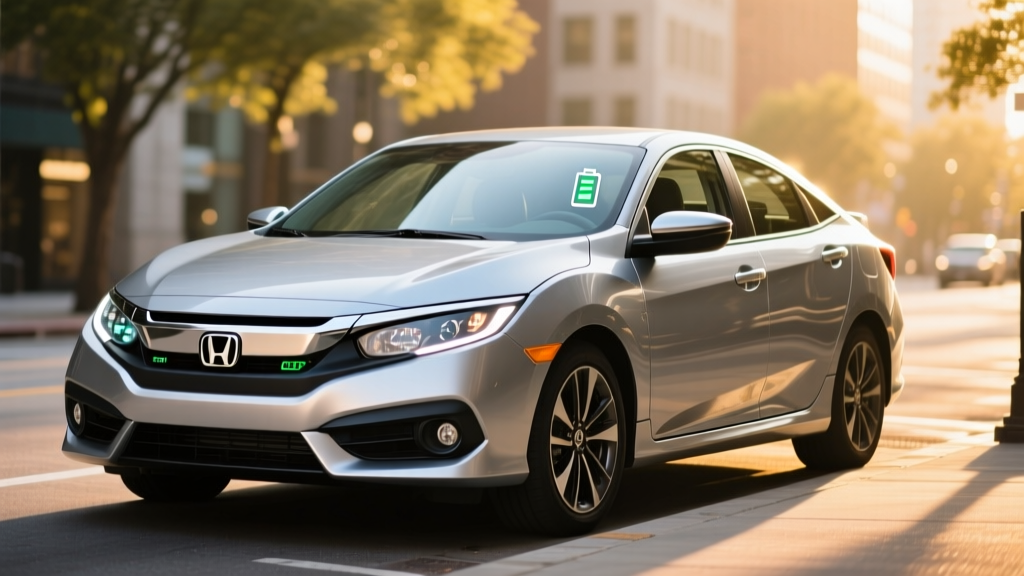
The 2015 Honda Civic Hybrid sedan occupies a specific niche in today's used-car market: a proven, mild-hybrid commuter that delivers strong real-world fuel economy without the complexity of a plug-in system or the depreciation curve of a full EV. With an EPA-estimated 44 MPG combined, a well-sorted 1.5L i-VTEC engine paired with Honda's Integrated Motor Assist (IMA), and a reputation for longevity, it remains a rational choice for budget-conscious drivers who want hybrid efficiency without a plug.
But buying a decade-old hybrid in 2026 raises legitimate questions. How has the IMA battery held up? What does replacement cost? And does this car still make sense when newer used hybrids and affordable EVs flood the market? This guide answers every question a prospective buyer needs resolved before signing the paperwork.
HEV vs. PHEV: What the 2015 Civic Hybrid Actually Is
The 2015 Honda Civic Hybrid is a conventional hybrid electric vehicle (HEV) — not a plug-in hybrid (PHEV). This distinction matters because it defines how the car operates, fuels, and qualifies for incentives.
| Feature | Conventional Hybrid (HEV) | Plug-In Hybrid (PHEV) |
|---|---|---|
| Plug-in charging | No — refuels with gas only | Yes — charges via outlet or station |
| Electric-only driving | Limited (low-speed assist only) | Typically 20–50 miles on battery alone |
| Battery size | Small (0.5–1.5 kWh) | Larger (8–25 kWh) |
| Federal tax credit (§30D) | Not eligible | Eligible if criteria met (new purchases) |
| Example | 2015 Honda Civic Hybrid | Toyota Prius Prime, Chrysler Pacifica PHEV |
The Civic Hybrid's IMA system uses a small electric motor sandwiched between the engine and transmission to assist during acceleration and enable regenerative braking. It cannot drive on electric power alone at meaningful speeds. You never plug it in — the battery recharges through regen and engine-driven generation. If you need electric-only commuting capability, a PHEV or full BEV is the appropriate choice.
Fuel Economy: EPA Ratings vs. Real-World MPG
Fuel economy is the primary reason buyers seek out the Civic Hybrid. Here is the EPA-rated breakdown from fueleconomy.gov:
| Driving Cycle | EPA Estimate |
|---|---|
| City | 44 MPG |
| Highway | 47 MPG |
| Combined | 45 MPG |
Real-World MPG: What Owners Actually Report
Hybrids often exceed their EPA city estimates in stop-and-go traffic because regenerative braking recovers energy that a gas car wastes as heat. The 2015 Civic Hybrid follows this pattern. Owner-reported data on Fuelly and similar tracking platforms shows real-world combined averages between 42 and 48 MPG, with city-dominant drivers occasionally hitting 50 MPG in warm weather.
Highway driving at sustained 75+ MPH reduces the hybrid advantage. Expect 40–44 MPG on long interstate trips, where the electric motor contributes less and aerodynamic drag dominates. Cold weather (below 35°F) typically drops observed economy by 3–5 MPG due to extended engine warm-up cycles and reduced battery efficiency.
Powertrain Specs: The IMA System Explained
The 2015 Civic Hybrid pairs a 1.5-liter i-VTEC inline-four engine with Honda's Integrated Motor Assist system. Unlike Toyota's Hybrid Synergy Drive (which can run the engine and motor independently through a planetary gearset), Honda's IMA is a parallel hybrid — the electric motor assists the engine but cannot propel the car alone at road speeds.
| Specification | Value |
|---|---|
| Engine | 1.5L i-VTEC inline-4 |
| Engine horsepower | 90 hp @ 5,500 rpm |
| Electric motor output | 20 hp (15 kW) |
| Combined system horsepower | 110 hp @ 5,500 rpm |
| Combined torque | 125 lb-ft @ 1,000–3,500 rpm |
| Transmission | CVT (Continuously Variable) |
| IMA battery type | Nickel-Metal Hydride (NiMH) |
| IMA battery capacity | 0.5 kWh (nominal) |
| Drivetrain | Front-wheel drive |
| 0–60 mph | ~10.5 seconds |
The 110 combined horsepower is modest by 2026 standards, and the 10.5-second 0–60 time reflects the car's efficiency-first tuning. Highway merging requires planning, and passing at speed demands a full-throttle downshift from the CVT. This is a commuter car optimized for 45 MPG, not performance.
Battery Longevity, Warranty, and Replacement Cost
Battery lifespan is the number-one concern for any used-hybrid buyer. The 2015 Civic Hybrid uses a nickel-metal hydride (NiMH) IMA battery — a mature chemistry that degrades more gracefully than early lithium-ion packs but still loses capacity over time and charge cycles.
Original Battery Warranty
Honda warranted the IMA battery for 8 years / 80,000 miles in most states, and 10 years / 150,000 miles in California Air Resources Board (CARB) states (CA, CT, ME, MA, NJ, NY, OR, RI, VT, WA). By 2026, every 2015 Civic Hybrid has aged past the 8-year federal warranty and is approaching or past the 10-year CARB threshold.
Battery Replacement Cost
If the IMA battery fails or degrades to the point of triggering the IMA warning light, replacement options include:
- OEM Honda replacement: $2,000–$3,500 installed at a dealership (part + labor)
- Aftermarket refurbished pack: $800–$1,500 from hybrid battery specialists (Bumblebee Batteries, Hybrid Automotive, etc.)
- Individual cell replacement (DIY-capable): $150–$400 for a set of replacement NiMH D-cells, though this requires technical skill and carries safety risk
Many 2015 Civic Hybrids still run on their original IMA batteries at 120,000–180,000 miles. NiMH degradation is gradual — you'll notice reduced regen effectiveness and slightly lower MPG before a full failure. A grid-charge recalibration (available as an aftermarket procedure) can sometimes restore partial capacity to a weakened pack.
How to Evaluate the IMA Battery Before Buying
When inspecting a used 2015 Civic Hybrid, check for:
- No IMA warning light on the dashboard at startup or during a 20-minute test drive
- Regen bars on the instrument cluster showing charge accumulation during braking
- Auto-stop function — the engine should shut off at stops and restart seamlessly when you lift off the brake
- OBD-II scan for stored IMA-related diagnostic trouble codes (DTCs), even if no light is currently illuminated
- Service records documenting any prior IMA battery replacement or recalibration
Pricing and Tax Credit Eligibility
The 2015 Honda Civic Hybrid originally carried an MSRP of approximately $24,735 (base, before destination). In the 2026 used market, examples range from $6,500 to $12,000 depending on mileage, condition, and battery health.
Federal Tax Credit Status
The 2015 Civic Hybrid does not qualify for the federal §30D Clean Vehicle Credit. Per IRS guidelines, the §30D credit applies only to new qualifying plug-in electric vehicles (PHEVs and BEVs) — conventional hybrids like the Civic Hybrid are excluded. There is no federal tax credit available for purchasing a used conventional hybrid.
For the separate Used Clean Vehicle Credit (§25E), which offers up to $4,000 (30% of sale price, capped) on pre-owned plug-in vehicles priced under $25,000, the Civic Hybrid also does not qualify because it is not a plug-in vehicle. Only used PHEVs and BEVs are eligible.
State Incentives
A handful of states offer rebates or HOV lane access for hybrid vehicles, but these programs have largely wound down or shifted focus to plug-in vehicles. Check your state's energy or DMV website for current programs. Most state incentives in 2026 prioritize BEVs and PHEVs over conventional HEVs.
Who Should Buy This Hybrid — and Who Should Look Elsewhere
Pros
- Proven 44–48 MPG real-world combined economy
- No plug-in charging required — ideal for apartment dwellers or those without garage access
- Low purchase price on the used market ($6,500–$12,000)
- Honda reliability reputation; parts availability is excellent
- Low insurance costs compared to EVs and PHEVs
- Simple maintenance — no high-voltage system to service beyond the IMA battery
Cons
- Modest 110 hp — underpowered for highway merging
- IMA battery warranty expired; replacement is an out-of-pocket risk
- No electric-only driving capability
- No federal or state tax credit eligibility
- CVT drone under hard acceleration
- Older infotainment — no Apple CarPlay/Android Auto (introduced in 2016 Civic)
Choose the 2015 Civic Hybrid If:
- You commute in stop-and-go city traffic and want 45+ MPG without plugging in
- Your budget is under $12,000 and you want a low-risk, fuel-efficient daily driver
- You lack access to home or workplace charging (apartment, street parking)
- You drive 10,000–15,000 miles/year and want to minimize fuel spend without a large upfront investment
Look at a PHEV or Full EV If:
- You have home Level 2 charging access and want electric-only commuting (consider a used Toyota Prius Prime or Chevy Volt)
- You qualify for the §30D or §25E tax credit on a plug-in vehicle and want the financial offset
- You want stronger acceleration and modern tech (a used Tesla Model 3 or Chevy Bolt EV starts around $14,000–$18,000 in 2026)
- You drive mostly highway miles where the hybrid advantage shrinks
Hybrid vs. PHEV vs. EV: Which Powertrain Fits Your Commute?
The 2015 Civic Hybrid sits at one end of the electrification spectrum. Here is how the three powertrain types compare for common buyer scenarios:
| Factor | HEV (Civic Hybrid) | PHEV (e.g., Prius Prime) | BEV (e.g., Bolt EV) |
|---|---|---|---|
| Home charging needed | No | Recommended | Required |
| Fuel cost per mile | ~$0.08–$0.10 | ~$0.04 (electric) / $0.09 (gas) | ~$0.03–$0.06 |
| Used price range (2026) | $6,500–$12,000 | $16,000–$25,000 | $12,000–$20,000 |
| Maintenance complexity | Low | Moderate | Low (fewer moving parts) |
| Federal credit (used) | None | Up to $4,000 (§25E) | Up to $4,000 (§25E) |
| Best for | No-charging-access commuters | Garage-owning short commuters | Home-charging daily drivers |
If your primary constraint is lack of charging access, the Civic Hybrid remains one of the most cost-effective ways to reduce fuel consumption. If you can charge at home, a used PHEV or BEV will deliver lower per-mile energy costs and may qualify for the §25E used clean vehicle credit.
Frequently Asked Questions
How many MPG does the 2015 Honda Civic Hybrid get?
The EPA rates the 2015 Civic Hybrid at 44 MPG city, 47 MPG highway, and 45 MPG combined. Real-world owner reports cluster between 42 and 48 MPG combined, with city-dominant drivers sometimes exceeding 50 MPG in warm weather. Highway-only driving at 75+ MPH typically yields 40–44 MPG.
Does the 2015 Civic Hybrid need to be plugged in?
No. The 2015 Civic Hybrid is a conventional hybrid (HEV), not a plug-in hybrid (PHEV). The IMA battery recharges through regenerative braking and engine-driven generation. You fuel it exclusively at a gas station.
How far can the 2015 Civic Hybrid drive on electric power alone?
It cannot. Honda's IMA system is a parallel-assist hybrid — the electric motor supplements the gasoline engine during acceleration and enables engine auto-stop at idle. It does not provide standalone electric propulsion at road speeds. If electric-only driving matters to you, look at a PHEV like the Toyota Prius Prime (25–40 miles electric-only) or a full BEV.
Is the 2015 Honda Civic Hybrid reliable?
The 2015 Civic Hybrid benefits from Honda's strong reliability reputation and the proven maturity of NiMH battery chemistry. The 1.5L i-VTEC engine and CVT are well-understood by independent mechanics. The primary reliability risk is IMA battery degradation at high mileage (150,000+ miles), which is a $800–$3,500 repair depending on whether you choose aftermarket refurbished or OEM replacement.
What does it cost to replace the IMA battery?
An OEM Honda IMA battery replacement runs $2,000–$3,500 installed at a dealership. Aftermarket refurbished NiMH packs from hybrid specialists cost $800–$1,500. DIY cell-level replacement is possible for $150–$400 in parts but requires technical skill. Most 2015 examples still on original batteries show gradual capacity loss rather than sudden failure.
Does the 2015 Civic Hybrid qualify for any tax credit?
No. The federal §30D Clean Vehicle Credit and the §25E Used Clean Vehicle Credit both require a plug-in electric vehicle (PHEV or BEV). The Civic Hybrid, as a conventional HEV, does not qualify for any federal tax credit. Some state-level programs historically included HEVs, but most have shifted to plug-in vehicles by 2026.
How does the 2015 Civic Hybrid compare to the Toyota Prius of the same era?
The contemporary Toyota Prius (third generation, 2010–2015) delivers slightly higher EPA fuel economy (50 MPG combined vs. 45 MPG) and uses Toyota's more sophisticated Hybrid Synergy Drive, which enables brief electric-only driving at low speeds. However, the Civic Hybrid offers a more conventional driving feel, a larger trunk (12.5 cu ft vs. the Prius hatch's different cargo profile), and often lower used-car pricing. Both have strong reliability records.
What should I check before buying a used 2015 Civic Hybrid?
Prioritize: (1) IMA battery health — no warning lights, functioning auto-stop, and clean OBD-II scan; (2) CVT operation — smooth acceleration without shuddering or slipping; (3) service history — especially any prior IMA battery work; (4) standard pre-purchase inspection covering suspension, brakes, and timing chain condition. Budget $1,000–$2,000 in reserve for potential IMA battery service if the pack is original and over 130,000 miles.
Sources: EPA Fuel Economy — 2015 Honda Civic Hybrid, IRS §30D Clean Vehicle Credit, IRS §25E Used Clean Vehicle Credit.