The Genesis GV80 Goes Electrified: Where Production Stands
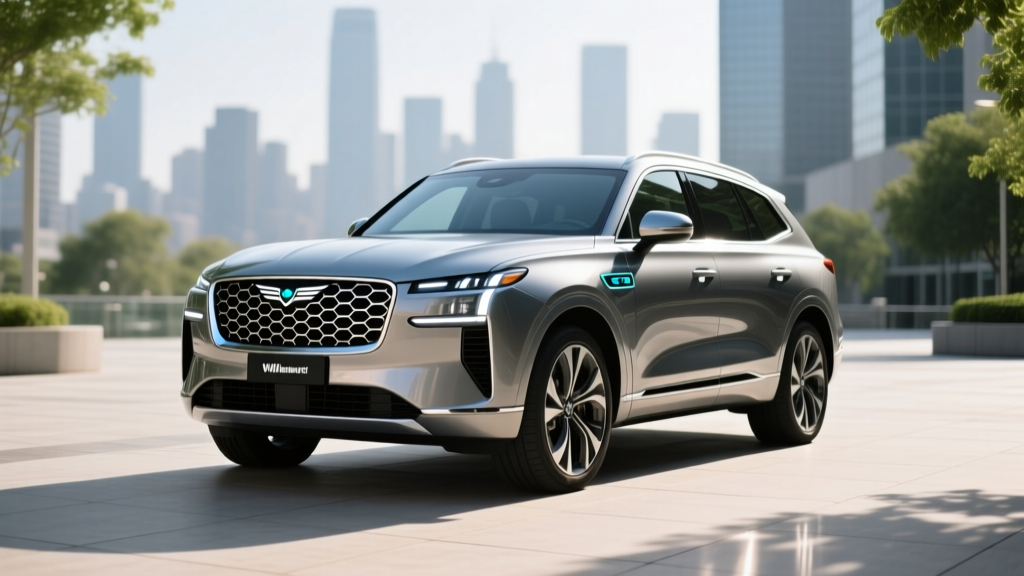
Genesis has confirmed that a hybrid variant of its midsize GV80 luxury SUV is in development, but as of early 2026, Genesis GV80 hybrid production has not yet begun for the U.S. market. The current GV80 lineup — refreshed for the 2025 model year with a redesigned interior and updated powertrains — continues to sell exclusively with turbocharged gasoline engines (the 2.5T inline-four and 3.5T V6). However, Hyundai Motor Group's broader electrification strategy, which includes hybrid and plug-in hybrid options across its Genesis luxury division, signals that an electrified GV80 is a matter of when, not if.
This guide breaks down everything confirmed and reasonably projected about the GV80 hybrid, including expected powertrain configurations, fuel economy targets, pricing, and how it would stack up against rivals like the BMW X5 xDrive50e and Volvo XC90 Recharge. We'll also clarify the critical differences between a conventional hybrid (HEV) and a plug-in hybrid (PHEV) so you know exactly what you'd be buying.
HEV vs. PHEV: Which GV80 Hybrid Might We Get?
Hyundai Motor Group currently deploys two distinct hybrid architectures across its brands (Hyundai, Kia, Genesis). The GV80 could receive one or both:
Conventional Hybrid (HEV)
- No plug required — the battery charges via regenerative braking and the engine
- Smaller battery: typically 1.5–2.5 kWh
- Electric motor assists the gas engine; cannot drive on electric power alone for meaningful distances
- Primary benefit: improved MPG, especially in city driving
- No federal tax credit eligibility under §30D
Plug-In Hybrid (PHEV)
- Plugs in to charge — Level 1 (120V) or Level 2 (240V) capable
- Larger battery: typically 13–25+ kWh usable
- Can drive 25–45+ miles on electric-only power before the engine engages
- Functions as a conventional hybrid once the battery is depleted
- May qualify for up to $7,500 federal tax credit (subject to §30D rules)
Given that the competing BMW X5 xDrive50e and Volvo XC90 Recharge are both PHEVs, industry analysts widely expect Genesis to prioritize a GV80 PHEV for the U.S. market, potentially followed by a conventional HEV for buyers who lack home charging access. Hyundai Motor Group's TMED-II (Transmission-Mounted Electric Device) hybrid system, already deployed in the Hyundai Tucson PHEV and Kia Sorento PHEV, provides a proven architecture that could be scaled up for the GV80's larger platform.
Projected Powertrain and Performance Specs
While Genesis has not published final specifications, we can make informed projections based on the group's existing hybrid systems and the GV80's current powertrain lineup.
| Spec | GV80 PHEV (Projected) | Current GV80 2.5T (Gas) |
|---|---|---|
| Engine | 1.6L Turbo I-4 + Electric Motor | 2.5L Turbo I-4 |
| Combined Horsepower | ~290–340 hp (est.) | 300 hp |
| Combined Torque | ~350–400 lb-ft (est.) | 311 lb-ft |
| Battery (Usable) | ~18–25 kWh (NMC est.) | N/A |
| Electric-Only Range | ~30–40 miles (est.) | N/A |
| 0-60 mph | ~6.5–7.5 sec (est.) | 6.6 sec |
| Drivetrain | AWD (standard) | AWD (standard) |
| Towing Capacity | TBD (gas model: 6,000 lbs) | 6,000 lbs |
The 1.6L turbocharged four-cylinder is Hyundai Motor Group's workhorse hybrid engine, used in everything from the Tucson PHEV to the Kia Sportage PHEV. In the heavier GV80, expect a larger electric motor and possibly a higher-output battery pack to maintain the luxury acceleration feel Genesis buyers expect. Combined output in the 290–340 hp range would slot between the current 2.5T (300 hp) and 3.5T V6 (375 hp) gas models.
Fuel Economy: Projected MPG and MPGe
Fuel economy is the headline reason buyers consider hybrids. Here's how a GV80 hybrid would likely compare to the current gas-only lineup and key competitors:
| Model | City MPG | Highway MPG | Combined MPG/MPGe |
|---|---|---|---|
| Genesis GV80 2.5T (2025, gas) | 21 | 25 | 22 |
| Genesis GV80 3.5T (2025, gas) | 18 | 23 | 20 |
| GV80 PHEV (projected) | TBD | TBD | ~50–60 MPGe (est.) |
| BMW X5 xDrive50e (PHEV) | — | — | 56 MPGe / 22 MPG (gas-only) |
| Volvo XC90 Recharge (PHEV) | — | — | 58 MPGe / 27 MPG (gas-only) |
| Lincoln Aviator Grand Touring (PHEV) | — | — | 56 MPGe / 23 MPG (gas-only) |
Source: fueleconomy.gov (EPA) for current-production models. GV80 PHEV figures are projected and not EPA-certified.
Battery, Charging, and Electric-Only Range
For the PHEV variant — the most likely U.S. configuration — battery capacity and charging logistics are central to the ownership experience.
Expected Battery and Charging Specs
- Battery chemistry: Likely NMC (nickel manganese cobalt), consistent with Hyundai Motor Group's PHEV lineup
- Usable capacity: Estimated 18–25 kWh (comparable to the BMW X5 xDrive50e's ~25.7 kWh pack)
- Electric-only range: Projected 30–40 miles EPA — sufficient for most daily commutes
- Level 1 charging (120V): ~8–12 hours for a full charge (overnight from a standard outlet)
- Level 2 charging (240V): ~2.5–4 hours with a home wallbox (7.2 kW onboard charger expected)
- DC fast charging: Most PHEVs in this class do not support DC fast charging — the battery is too small to justify the hardware cost. Expect AC charging only.
Charging Infrastructure Considerations
PHEV ownership works best when you can charge at home. A Level 2 home charger installation typically costs $500–$2,000 depending on your electrical panel capacity and the distance from the panel to your garage or driveway. Most GV80 PHEV buyers will already have access to a 240V outlet or can justify the installation given the vehicle's luxury price point. Public charging is optional for PHEVs — the gasoline engine provides full range once the battery depletes, eliminating range anxiety entirely.
Pricing, Trims, and Tax Credit Eligibility
Genesis has not announced pricing for a GV80 hybrid, but we can estimate based on the current GV80 lineup and competitor positioning.
| Model / Trim | Est. MSRP | Federal Tax Credit |
|---|---|---|
| GV80 2.5T (2025, gas) | $59,150 | None |
| GV80 3.5T (2025, gas) | $73,550 | None |
| GV80 PHEV (projected) | $65,000–$75,000 | Up to $7,500 (§30D)* |
| BMW X5 xDrive50e (PHEV) | $74,400 | Up to $7,500 (§30D)* |
| Volvo XC90 Recharge (PHEV) | $76,850 | Up to $7,500 (§30D)* |
*Federal tax credit eligibility under IRS §30D depends on multiple factors including buyer income limits (AGI caps: $150K single / $300K joint), vehicle MSRP caps ($80,000 for SUVs), battery component sourcing, and critical mineral requirements. Rules are subject to change. Consult a tax professional and verify current eligibility at irs.gov before purchasing. Point-of-sale transfer may be available, reducing your purchase price at the dealer.
Battery Warranty, Reliability, and Replacement Cost
Hybrid battery longevity is consistently a top concern for buyers spending $65,000+ on a luxury SUV. Here's what to expect:
Reliability Track Record
Hyundai Motor Group's hybrid systems have proven reliable in models like the Tucson PHEV, Sorento PHEV, and Santa Fe Hybrid. The TMED-II architecture is now in its second generation with years of real-world data. The primary risk factor for the GV80 is its weight — at roughly 4,800–5,000 lbs, the hybrid system will work harder than in lighter crossovers, which could accelerate wear on components like the transmission-mounted motor and clutch packs.
Battery Replacement Cost
If the hybrid battery fails outside of warranty, replacement costs for PHEV battery packs in this class typically range from $8,000 to $15,000 including labor. However, hybrid battery failures within the first 10 years are statistically rare. Most degradation is gradual — you may see electric-only range shrink from 35 miles to 28 miles over a decade, not a sudden failure. Individual cell module replacement (rather than the full pack) may also be an option, reducing cost.
Genesis GV80 Hybrid vs. Full EV vs. Gas: Which Fits You?
Deciding between a GV80 hybrid, a fully electric SUV, or sticking with gas depends on your driving patterns, charging access, and priorities.
Choose the GV80 PHEV If:
- You can charge at home (garage or driveway with 240V)
- Your daily commute is under 35 miles
- You take road trips and don't want to plan around chargers
- You want lower running costs without full EV commitment
- You want potential $7,500 tax credit eligibility
Choose a Full EV (e.g., Genesis GV70 EV) If:
- You have reliable home charging
- You want zero tailpipe emissions and minimal maintenance
- Your daily driving is under 250 miles
- You want the lowest per-mile fuel cost
- You're comfortable with public DC fast charging on road trips
Stick With the Gas GV80 If:
- You cannot charge at home (apartment, street parking)
- You frequently tow near the 6,000-lb limit
- You want proven V6 power and don't mind 18–22 MPG
- You plan to keep the vehicle under 5 years
- Hybrid premium pricing doesn't pencil out for your mileage
What Genesis Has Said About GV80 Hybrid Production
Genesis executives have acknowledged the brand's intent to offer electrified options across its lineup, including hybrid and PHEV variants, alongside full battery-electric models like the GV60 and Electrified GV70. The GV80, as the brand's volume-selling SUV in the U.S., is a logical candidate for hybrid power.
Hyundai Motor Group's investment in hybrid production capacity — including a dedicated hybrid transmission plant in South Korea — supports the timeline for a GV80 PHEV arriving by the 2027 model year, though Genesis has not confirmed a specific date. U.S. market timing may also be influenced by tariff considerations and battery sourcing requirements tied to §30D tax credit eligibility.
Frequently Asked Questions
How many MPG will the Genesis GV80 hybrid get?
Official EPA figures are not yet available since the GV80 hybrid is still in development. Based on comparable luxury PHEVs like the BMW X5 xDrive50e (56 MPGe combined) and Volvo XC90 Recharge (58 MPGe), we project the GV80 PHEV will achieve approximately 50–60 MPGe combined when factoring in electric-only driving. In gas-only mode (battery depleted), expect roughly 22–26 MPG combined, similar to the current GV80 2.5T.
How far can the GV80 PHEV go on electric power alone?
Projected electric-only range is 30–40 miles EPA. This is consistent with competitors in the segment: the BMW X5 xDrive50e achieves 38 miles, and the Volvo XC90 Recharge achieves 32 miles. Real-world electric range will vary with temperature — expect a 20–30% reduction in cold weather (below 30°F) due to cabin heating demands and reduced battery efficiency.
Will the GV80 hybrid qualify for the $7,500 federal tax credit?
It depends on battery sourcing and your income at the time of purchase. Under current IRS §30D rules, the vehicle must meet critical mineral and battery component sourcing thresholds, the buyer's AGI must not exceed $150K (single) or $300K (joint), and the MSRP must be under $80,000 for SUVs. Hyundai Motor Group has been working to localize battery production in the U.S., which improves the odds of eligibility — but this cannot be confirmed until the vehicle is certified. Always verify at fueleconomy.gov and consult a tax professional.
Is the Genesis GV80 hybrid reliable? What about battery replacement cost?
Hyundai Motor Group's hybrid systems have a solid reliability record, and the expected 10-year/100,000-mile battery warranty provides strong protection. Out-of-warranty battery replacement would likely cost $8,000–$15,000, but full battery failures within the first decade are uncommon. Gradual capacity loss (reduced electric-only range) is more typical than catastrophic failure.
Does the GV80 hybrid need to be plugged in?
If Genesis offers a conventional HEV variant, no — it charges its small battery through regenerative braking and the engine. If it's a PHEV (the more likely U.S. offering), plugging in is optional but strongly recommended to maximize electric-only driving and fuel savings. A PHEV that is never plugged in functions as a heavy conventional hybrid and may get slightly worse MPG than a dedicated HEV due to the extra battery weight.
When will the Genesis GV80 hybrid be available in the U.S.?
Genesis has not confirmed a specific launch date. Based on Hyundai Motor Group's product cadence and hybrid production investments, a 2027 model year introduction (arriving in late 2026 or early 2027) appears most likely. We'll update this article as Genesis provides official timing and specifications.