Quick Verdict: A Proven 3-Row Hybrid for the Used Market
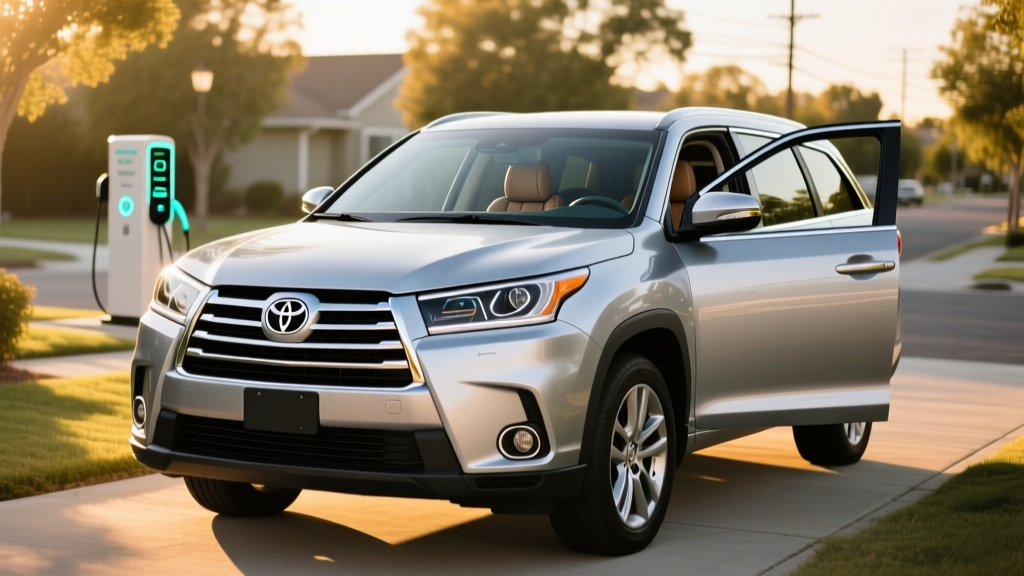
The 2015 Toyota Highlander Hybrid Limited remains one of the most dependable three-row hybrid SUVs on the used market. With an EPA-rated 28 MPG combined, standard all-wheel drive, and Toyota's long-running hybrid synergy drive system, it occupies a practical sweet spot for families who want fuel savings without plug-in infrastructure. As a conventional hybrid (HEV)—not a plug-in hybrid (PHEV)—it requires zero behavior change: you fuel it like any gas car and let the hybrid system handle the rest.
In 2026, the used Highlander Hybrid Limited is a strong candidate for buyers who need three rows, want all-wheel drive, and aren't ready to commit to a full battery-electric vehicle (BEV). But with newer PHEVs and BEVs offering more electric-only driving, is a decade-old HEV still the right call? This guide breaks down every number that matters.
Spec Table: 2015 Highlander Hybrid Limited at a Glance
| Specification | Value |
|---|---|
| Powertrain | 3.5L V6 + 2 electric motors (AWD-i) |
| Combined Horsepower | 280 hp (net system) |
| Engine Output | 236 hp @ 5,600 rpm (gas engine alone) |
| Electric Motor Output | Front: 114 kW / Rear: 50 kW |
| Transmission | eCVT (electronically controlled CVT) |
| Drivetrain | AWD-i (electronic on-demand AWD) |
| EPA MPG (City / Hwy / Combined) | 27 / 28 / 28 |
| Fuel Tank Capacity | 17.2 gallons |
| Total Driving Range | ~482 miles |
| Hybrid Battery Type | NiMH (Nickel-Metal Hydride), ~1.9 kWh |
| 0-60 mph | ~7.8 seconds |
| Cargo Volume (behind 3rd / 2nd / 1st row) | 13.8 / 42.3 / 83.2 cu ft |
| Towing Capacity | 3,500 lbs |
| Original MSRP (2015 Limited) | ~$47,780 |
| Used Price Range (2026 market) | $14,000 – $20,000 |
Fuel Economy: EPA Numbers and Real-World MPG
| Driving Condition | EPA Estimate | Real-World Expectation |
|---|---|---|
| City | 27 MPG | 27–30 MPG (hybrids excel in stop-and-go) |
| Highway | 28 MPG | 25–27 MPG (less regen benefit at sustained speed) |
| Combined | 28 MPG | 26–29 MPG depending on driving mix |
The 2015 Highlander Hybrid's EPA ratings of 27 city / 28 highway / 28 combined were competitive at launch and remain respectable for a three-row, AWD SUV. According to fueleconomy.gov, owners report an average of approximately 27.5 MPG in mixed driving, which aligns closely with the EPA sticker.
Here's where real-world conditions matter:
- City driving: Hybrids shine in stop-and-go traffic. Expect 28–30 MPG because regenerative braking recaptures energy and the engine shuts off at stops. Many owners report beating the EPA city estimate.
- Highway driving: At 70+ mph, the hybrid advantage diminishes. The V6 runs more often, and aerodynamic drag dominates. Expect 25–27 MPG on sustained highway trips.
- Cold weather: In sub-freezing temperatures, the engine runs more frequently to maintain cabin heat and battery temperature. Expect a 10–15% drop, bringing combined MPG down to roughly 24–25.
- Mountainous terrain: Climbing passes will drop instantaneous MPG significantly, but regenerative braking on descents recovers some energy.
Compared to the gas-only 2015 Highlander V6 AWD (rated at 18 city / 24 highway / 20 combined), the hybrid delivers a meaningful 40% improvement in city driving and a 40% combined MPG gain. Over 15,000 miles per year at $3.50/gallon, that's roughly $670 in annual fuel savings.
Powertrain Deep Dive: How the Hybrid System Works
The 2015 Highlander Hybrid uses Toyota's proven Hybrid Synergy Drive system, pairing a 3.5-liter V6 engine with two electric motors and an electronically controlled continuously variable transmission (eCVT). This is a full hybrid system—meaning the vehicle can propel itself on electric power alone at very low speeds (typically under 25 mph for short distances), but it is not a plug-in vehicle.
How it operates:
- Launch and low speed: The front electric motor provides initial torque, with the gas engine engaging seamlessly as demand increases.
- Normal cruising: The system continuously blends engine and motor power for optimal efficiency. The eCVT keeps the engine in its most efficient RPM range.
- Deceleration and braking: Regenerative braking captures kinetic energy and stores it in the NiMH hybrid battery.
- AWD-i engagement: The rear electric motor (50 kW) powers the rear wheels when slip is detected or during hard acceleration. There is no mechanical driveshaft connecting the front and rear axles—it's fully electronic.
The net system output of 280 horsepower gives the Highlander Hybrid confident passing power and merging ability. The 0-60 mph time of approximately 7.8 seconds is adequate for a family SUV, though not sporty. The eCVT eliminates shift shock but produces the characteristic "rubber band" drone under hard acceleration that some drivers find unrefined.
Hybrid Battery: Chemistry, Lifespan, and Replacement Cost
The 2015 Highlander Hybrid uses a Nickel-Metal Hydride (NiMH) battery pack with approximately 1.9 kWh of capacity. This is a small battery by modern standards—by comparison, a current PHEV like the RAV4 Prime carries an 18.1 kWh lithium-ion pack. But the Highlander's NiMH battery isn't designed for electric-only range; it exists to buffer regenerative energy and assist the gas engine during acceleration.
NiMH characteristics in this application:
- Durability: NiMH chemistry is well-proven in Toyota hybrids. The Prius, Camry Hybrid, and Highlander Hybrid have demonstrated battery lifespans frequently exceeding 150,000–200,000 miles before significant degradation.
- Failure mode: Unlike lithium-ion batteries that gradually lose capacity, NiMH packs tend to function well for years and then develop individual cell failures. Often, replacing a single module (rather than the entire pack) restores full function.
- Age consideration: A 2015 model is now 11 years old. Many units will still be on their original hybrid battery, but buyers should budget for eventual replacement.
Battery replacement costs (2026 estimates):
- Toyota dealership (new OEM pack): $3,500 – $5,000 installed
- Refurbished/remanufactured pack: $1,500 – $2,500 installed (independent hybrid specialists)
- Individual module replacement: $300 – $800 if only one or two cells have failed (available at hybrid specialty shops)
For used-car buyers, request a hybrid battery health check before purchase. A Toyota dealer can run a diagnostic that shows battery internal resistance and charge/discharge performance. Some independent hybrid shops offer this service for $50–$100.
Hybrid vs PHEV vs Full EV: Which Fits Your Situation?
Choose the 2015 Highlander Hybrid (HEV) if:
- You need three rows and AWD on a used-car budget ($14K–$20K)
- You can't charge at home (apartment, street parking)
- You want zero behavior change—just fuel it and drive
- You drive 12,000–18,000 miles/year in mixed conditions
- Proven long-term reliability is your top priority
Consider a PHEV or full EV instead if:
- You have home Level 2 charging and want electric-only daily driving
- Your daily commute is under 35 miles (PHEV covers it on electric)
- You want access to HOV lanes or current federal tax credits
- You're willing to pay $40K+ for a newer vehicle
- You want the lowest per-mile operating cost possible
The 2015 Highlander Hybrid makes the most sense as a pragmatic used purchase. You're getting a fuel-efficient, three-row SUV with Toyota reliability at a fraction of a new vehicle's price. The trade-off: no electric-only driving, no current tax credits, and older infotainment and driver-assistance technology.
If you can charge at home and have a higher budget, a current PHEV like the Toyota RAV4 Prime (42 miles electric-only, 94 MPGe) or a full EV like the Kia EV9 (three rows, 279 miles EPA range) offers a fundamentally different ownership experience with dramatically lower fueling costs. But these vehicles cost $45,000–$65,000+ new.
Tax Credits and Incentives: What Applies in 2026?
As a used conventional hybrid purchased in 2026, the 2015 Highlander Hybrid Limited does not qualify for the federal §30D new clean vehicle credit (which applies only to new BEVs and PHEVs meeting battery-sourcing requirements). Here's the full incentive picture:
- Federal new-vehicle credit (§30D): Not applicable. This credit is for new plug-in vehicles only, with MSRP caps ($80,000 for SUVs), buyer income limits ($150K single / $300K joint), and critical-mineral/battery-component sourcing requirements. See IRS.gov §30D rules.
- Federal used-EV credit (§25E): Not applicable. This $4,000 credit (up to 30% of sale price) applies only to used BEVs and PHEVs, not conventional hybrids.
- State incentives: Varies by jurisdiction. A handful of states offer minor incentives for used hybrids, but most state-level programs focus on plug-in vehicles. Check your state's energy or environmental agency website.
- No HOV lane access: In most states, conventional hybrids no longer qualify for carpool lane stickers (unlike some PHEVs and BEVs).
The bottom line: you're buying this vehicle for its fuel savings and reliability, not for incentives. The value proposition is purely operational—lower fuel costs and Toyota's historically low maintenance costs.
Reliability, Maintenance, and Long-Term Ownership
The 2015 Highlander Hybrid benefits from one of the most thoroughly proven hybrid drivetrains in automotive history. Toyota's Hybrid Synergy Drive has been in production since 1997 (Prius), and the Highlander Hybrid variant has been sold since 2006. By 2015, this was a mature, well-debugged system.
Known reliability strengths:
- eCVT durability: Toyota's planetary-gear eCVT has no belts, no clutch packs, and no traditional friction components. Failures are extremely rare and the unit is generally considered more reliable than conventional automatic transmissions.
- Brake life: Regenerative braking significantly reduces wear on the friction brakes. Many owners report original brake pads lasting 80,000–100,000 miles.
- Engine longevity: The 2GR-FXE 3.5L V6 is a well-regarded Toyota engine. With regular oil changes, 200,000+ miles without major engine work is common.
Watch items for a 2015 model:
- Hybrid battery age: At 11 years old, the original NiMH pack may be nearing end of life. Budget $2,000–$4,000 for replacement if it hasn't been done.
- Hybrid inverter coolant pump: Some Toyota hybrids from this era have had inverter coolant pump failures. Verify service history and that the pump has been inspected.
- 12V auxiliary battery: Like all hybrids, the Highlander has a standard 12V battery that powers electronics. These typically need replacement every 4–5 years and cost $150–$250.
- AWD-i rear motor: Generally reliable, but if the vehicle has been driven through deep water or heavy salt exposure, the rear motor and its wiring should be inspected.
Toyota's reputation for low cost of ownership holds for this model. Annual maintenance costs (oil changes, tire rotations, cabin air filters) typically run $400–$600 per year at an independent shop, with no premium for the hybrid system beyond occasional inverter coolant service.
Limited Trim: What You Get for the Money
The Limited was the top trim for the 2015 Highlander Hybrid, and it came well-equipped even by 2026 standards. Standard equipment included:
- Leather-trimmed seats with heated and ventilated front seats
- Driver memory settings (seat, mirrors)
- 8-inch touchscreen with navigation (Entune Audio Plus)
- JBL premium audio system (12 speakers)
- Power liftgate
- Blind Spot Monitor with Rear Cross-Traffic Alert
- Pre-Collision System (forward collision warning with automatic braking)
- Lane Departure Alert
- Auto-leveling HID headlights
- 19-inch alloy wheels
- Tri-zone automatic climate control
What it lacks vs. 2026 vehicles: No Apple CarPlay or Android Auto (the 2015 Entune system uses a proprietary interface), no adaptive cruise control, no wireless charging, no USB-C ports, and the safety suite is basic compared to Toyota's current Safety Sense 3.0. The infotainment system will feel dated, though aftermarket solutions (like CarPlay adapter boxes) exist for $200–$400.
Pros and Cons
Pros
- Proven hybrid system with exceptional reliability track record
- 28 MPG combined in a 3-row, 7-passenger AWD SUV
- No plug-in required—zero infrastructure or behavior change
- Strong used-market value retention
- Limited trim is well-equipped with leather, nav, JBL audio
- eCVT and regenerative braking extend brake and transmission life
- 3,500-lb towing capacity adequate for small trailers and boats
Cons
- NiMH hybrid battery likely nearing replacement at 11 years old
- No electric-only driving capability (HEV, not PHEV)
- Dated infotainment: no CarPlay, Android Auto, or modern apps
- No current federal or state tax incentives for conventional hybrids
- Older ADAS tech: no adaptive cruise, basic collision system
- Highway MPG (25–27 real-world) less impressive than city
- Used prices ($14K–$20K) are firm due to strong demand
Frequently Asked Questions
How many MPG does the 2015 Highlander Hybrid Limited get?
The EPA rates it at 27 city / 28 highway / 28 combined. In real-world driving, expect 27–30 MPG in city conditions (where hybrids excel) and 25–27 MPG on sustained highway trips. Cold weather can drop combined MPG to 24–25. Owner-reported averages on fueleconomy.gov cluster around 27.5 MPG combined.
Does the 2015 Highlander Hybrid plug in?
No. The 2015 Highlander Hybrid is a conventional hybrid (HEV), not a plug-in hybrid (PHEV). It recharges its small NiMH battery entirely through regenerative braking and the gas engine. You never plug it in—you simply refuel at a gas station like any other vehicle.
Is the hybrid battery reliable and what does replacement cost?
Toyota's NiMH hybrid batteries are among the most durable in the industry, frequently lasting 150,000–200,000 miles. However, a 2015 model is now 11 years old, and age-related degradation is a factor regardless of mileage. A new OEM replacement costs $3,500–$5,000 at a dealer; a refurbished pack runs $1,500–$2,500 at an independent hybrid specialist. The original warranty was 8 years/100,000 miles (10 years/150,000 miles in CARB states), which has likely expired by now.
Does the 2015 Highlander Hybrid qualify for any tax credit?
No. The federal §30D clean vehicle credit and the §25E used-EV credit both apply only to plug-in vehicles (BEVs and PHEVs). The 2015 Highlander Hybrid is a conventional hybrid with no plug-in capability, so it does not qualify for any current federal EV tax credits. State incentives vary, but most programs also focus on plug-in vehicles.
Should I buy this or a newer PHEV three-row SUV?
It depends on budget and charging access. If you can spend $45,000+ and charge at home, a PHEV like the Chrysler Pacifica Hybrid (32 miles electric-only) or a BEV like the Kia EV9 offers lower operating costs and modern tech. If your budget is $15,000–$20,000 and you need three rows with AWD and no charging hassle, the 2015 Highlander Hybrid Limited is one of the best options available. Factor in a potential $2,000–$4,000 hybrid battery replacement if the original pack hasn't been serviced.
How does the AWD-i system compare to mechanical AWD?
The AWD-i system uses a dedicated rear electric motor (50 kW) instead of a mechanical driveshaft. This means there's no parasitic drivetrain loss when AWD isn't needed, which contributes to the Highlander Hybrid's strong fuel economy. However, AWD-i is a light-duty system designed for rain, snow, and low-traction starts—not off-road use or heavy towing in slippery conditions. It engages automatically and transparently, but it won't match the capability of a traditional mechanical AWD system in deep snow or mud.
Sources: EPA fuel economy data from fueleconomy.gov, Toyota manufacturer specifications, IRS clean vehicle credit guidelines at IRS.gov.