Quick Verdict: A Frugal Commuter With a Known Battery Caveat
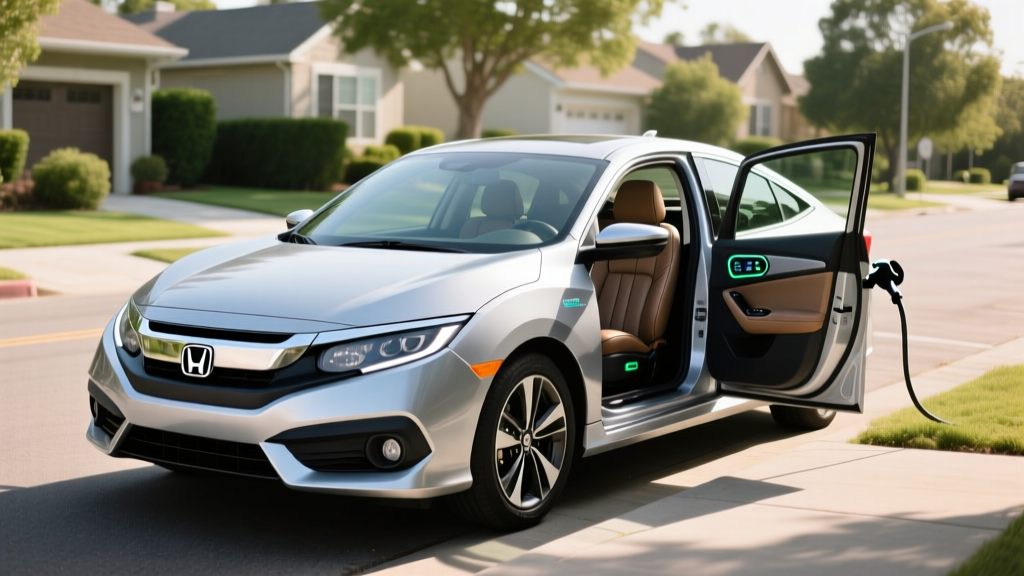
The 2015 Honda Civic Hybrid is a conventional hybrid electric vehicle (HEV) — not a plug-in — that pairs a 1.5-liter four-cylinder engine with Honda's Integrated Motor Assist (IMA) system to deliver an EPA-estimated 45 MPG combined. For 2026 used-car shoppers hunting a fuel-sipping commuter, it remains a compelling option at auction and private-party prices typically between $8,000 and $13,000 depending on mileage and condition. But the IMA battery pack is now 11 years old, and understanding its remaining life, replacement cost, and warranty status is the single most important factor in your purchase decision.
This guide covers everything a data-driven buyer needs: exact fuel economy figures, how the Civic Hybrid's powertrain works, real-world MPG expectations, battery longevity data, and how it stacks up against modern hybrids, PHEVs, and full EVs available today.
HEV vs PHEV vs EV: Where the 2015 Civic Hybrid Fits
Before diving into specs, it is essential to distinguish what the 2015 Civic Hybrid is — and what it is not.
| Feature | 2015 Civic Hybrid (HEV) | Plug-In Hybrid (PHEV) | Battery Electric (BEV) |
|---|---|---|---|
| Needs to plug in? | No — regenerative braking charges battery | Yes — for electric-only range | Yes — sole energy source |
| Electric-only driving | Limited low-speed assist only | 20–50 miles typical | 200–400+ miles |
| Gas engine | 1.5L I4 + electric motor assist | Gas engine + larger electric motor | None |
| Battery size | ~0.5 kWh (NiMH) | 10–20 kWh (Li-ion) | 50–100+ kWh (Li-ion) |
| Federal tax credit (new) | None (expired) | Up to $7,500 (§30D, if eligible) | Up to $7,500 (§30D, if eligible) |
| Fuel cost per mile | ~$0.08–0.10 | ~$0.04–0.06 (electric mode) | ~$0.03–0.05 |
The 2015 Civic Hybrid is a conventional hybrid (HEV). You never plug it in. The small nickel-metal hydride (NiMH) battery pack charges through regenerative braking and the gas engine. The electric motor assists during acceleration and enables brief engine-off coasting, but it cannot propel the car on electricity alone at meaningful speeds or distances.
This matters because buyers sometimes confuse the Civic Hybrid with plug-in competitors like the Toyota Prius Prime or Honda Clarity Plug-In Hybrid (which debuted later). The Civic Hybrid has zero electric-only range in the PHEV sense. If you want electric-only commuting, you need a PHEV or BEV — not this car.
Fuel Economy: EPA Ratings and Real-World MPG
The 2015 Civic Hybrid's headline number is its fuel efficiency. Here is the official EPA breakdown, sourced from fueleconomy.gov:
| Metric | Value |
|---|---|
| EPA City | 44 MPG |
| EPA Highway | 47 MPG |
| EPA Combined | 45 MPG |
| Fuel tank capacity | 13.2 gallons |
| Total driving range | ~594 miles (EPA combined) |
| Annual fuel cost (15,000 mi) | ~$1,250 (at $3.30/gal regular) |
Real-World MPG: What Owners Actually Report
Honda's IMA system is relatively mild compared to Toyota's Hybrid Synergy Drive, so real-world results vary based on driving style and conditions:
- City driving (stop-and-go): 42–48 MPG. Hybrids thrive here — regenerative braking recovers energy, and the electric motor handles low-speed acceleration where gas engines are least efficient.
- Highway cruising (65–75 mph): 40–46 MPG. The Civic Hybrid's aerodynamic profile helps, but the small battery provides less assist at sustained high speeds.
- Cold weather (below 32°F): Expect a 5–10% drop, landing around 38–42 MPG combined. The engine runs longer to reach operating temperature, and NiMH battery efficiency decreases in cold.
- Mixed real-world average (owner-reported): Most drivers on Fuelly and similar tracking sites report 41–46 MPG combined over thousands of miles.
For context, the 2015 non-hybrid Civic EX with a 1.8L engine and CVT gets an EPA 33 MPG combined — meaning the hybrid delivers roughly a 36% improvement in fuel economy for city-heavy commuters.
Powertrain Specs: How the IMA System Works
| Specification | 2015 Honda Civic Hybrid |
|---|---|
| Engine | 1.5L i-VTEC inline-4 |
| Engine horsepower | 110 hp @ 6,000 rpm |
| Electric motor output | 20 hp (15 kW) |
| Combined system output | 110 hp (net) |
| Torque | 125 lb-ft (gas) + 58 lb-ft (motor assist) |
| Transmission | Continuously Variable (CVT) |
| Battery type | Nickel-Metal Hydride (NiMH) |
| Battery capacity | ~0.5 kWh (nominal) |
| Drivetrain | Front-wheel drive |
| 0–60 mph | ~10.3 seconds |
| Curb weight | ~2,855 lbs |
Honda's Integrated Motor Assist (IMA) places a thin electric motor between the engine and transmission. Unlike Toyota's power-split hybrid system, which can drive the wheels with the electric motor alone at low speeds, IMA primarily assists the gas engine during acceleration and recovers energy during braking. The engine still does most of the work.
The result is a car that drives almost identically to a standard Civic — smooth, predictable, with modest acceleration. The 10.3-second 0–60 time is adequate for merging but won't win any stoplight races. The CVT keeps the engine in its efficient sweet spot, though it produces the characteristic "drone" under hard acceleration that some drivers find grating.
Battery Life, Warranty, and Replacement Cost
Original battery warranty: Honda covered the IMA battery for 10 years / 150,000 miles in CARB states (California, New York, Massachusetts, and others adopting CARB emissions standards) and 8 years / 100,000 miles in all other states.
Current status (2026): The 2015 Civic Hybrid is now 11 model years old. Most original battery warranties have expired unless the vehicle was registered in a CARB state, had under 150,000 miles, and the battery was replaced under warranty within that window.
How Long Do IMA Batteries Last?
NiMH batteries in Honda's IMA system have a well-documented track record. Key data points:
- Typical lifespan: 10–15 years or 120,000–180,000 miles before significant capacity loss triggers an IMA warning light.
- Failure mode: Unlike a total "brick," IMA batteries degrade gradually. The car remains drivable on the gas engine alone, but fuel economy drops to roughly 35–38 MPG, and you lose regenerative braking benefits.
- Common trigger: The IMA system warning light on the dashboard indicates the battery can no longer hold sufficient charge. At this point, the hybrid system is essentially disabled.
Battery Replacement Cost (2026 Estimates)
| Option | Cost Range | Notes |
|---|---|---|
| New OEM Honda IMA battery | $2,000–$2,800 (parts + labor) | Available through Honda dealers; may have limited availability for 2015 models |
| Remanufactured / aftermarket | $1,000–$1,600 (parts + labor) | Companies like BumbleBee Batteries and Dorman offer compatible units |
| Used salvage battery | $300–$600 + installation | Risky — remaining life unknown; may last 1–3 years |
| DIY cell replacement (grid charger + balancer) | $200–$400 (parts only) | Advanced DIY only; requires electrical knowledge and safety precautions |
For most used buyers, a remanufactured battery at $1,000–$1,600 installed is the pragmatic choice. It restores full hybrid functionality and typically comes with a 1–3 year warranty from the supplier. Factor this into your purchase price negotiation — if the IMA light is on, deduct at least $1,500 from the asking price.
Pricing, Tax Credits, and Total Cost of Ownership
Used Market Pricing (2026)
The 2015 Civic Hybrid was discontinued after the 2015 model year — Honda shifted its hybrid strategy to the Accord Hybrid and later the Clarity line. Current used-market pricing:
- Private party (80k–120k miles, clean title): $8,500–$11,500
- Dealer retail (under 100k miles, certified): $10,000–$13,500
- High-mileage or IMA-light-on examples: $5,500–$7,500
Federal Tax Credit Status
The 2015 Civic Hybrid does not qualify for any federal tax credit when purchased used. Key points:
- The original IRS §30D hybrid tax credit for conventional HEVs expired years ago and was modest even when active (typically $0–$1,500 for mild hybrids).
- The current §30D Clean Vehicle Credit (up to $7,500) applies only to new qualifying BEVs and PHEVs meeting battery sourcing, MSRP caps, and buyer income limits — not to used HEVs.
- The used-EV credit (§25E, up to $4,000) applies to used BEVs and PHEVs under $25,000 — conventional hybrids like the Civic Hybrid are excluded.
5-Year Ownership Cost Estimate
Assuming purchase at $10,000, 15,000 miles/year, $3.30/gal regular, and one IMA battery replacement:
| Cost Category | 5-Year Total |
|---|---|
| Purchase price | $10,000 |
| Fuel (75,000 mi @ 44 MPG avg) | $5,625 |
| Insurance (avg $1,100/yr) | $5,500 |
| Maintenance (oil, brakes, tires) | $2,800 |
| IMA battery replacement (if needed) | $1,400 |
| Total 5-year cost | ~$25,325 |
| Cost per mile | ~$0.34/mile (including purchase) |
Compare this to a 2015 Civic EX (non-hybrid, 33 MPG combined): fuel alone would be ~$7,500 over 75,000 miles — roughly $1,875 more. The hybrid's fuel savings offset the potential battery replacement cost within the first 3–4 years of ownership.
Reliability and What to Inspect Before Buying
The 2015 Civic Hybrid earns strong reliability marks overall, but it has specific items to verify:
Known Strengths
- The 1.5L i-VTEC engine is proven durable well past 200,000 miles with basic maintenance.
- The CVT in the 2015 model year is more reliable than Honda's earlier CVT generations (2006–2011 had higher failure rates).
- Brakes last significantly longer than on non-hybrids — regenerative braking handles most deceleration, so expect 80,000–120,000 miles from original pads and rotors.
Pre-Purchase Inspection Checklist
- IMA system status: Verify no IMA warning light. Ask for a battery state-of-health reading from a Honda scan tool.
- 12V auxiliary battery: Like all hybrids, the Civic has a standard 12V battery that powers electronics. A dead 12V battery can prevent the car from starting even if the IMA pack is healthy.
- CVT fluid: Honda recommends CVT fluid replacement at specific intervals. Confirm service records.
- Timing chain: The 1.5L uses a timing chain (not belt), which is generally lifetime — but listen for rattling on cold start, which indicates tensioner wear.
- Recall status: Check the VIN at nhtsa.gov/recalls for any open recalls, particularly related to the CVT software and airbag inflators (Takata recall affected many Honda models of this era).
2015 Civic Hybrid vs Modern Alternatives in 2026
Pros
- Proven 44–47 MPG in real-world driving
- Low entry price ($8k–$13k used)
- Cheap insurance and maintenance
- No plug-in required — works anywhere
- Strong parts availability and mechanic familiarity
Cons
- IMA battery likely near end-of-life (budget $1,000–$1,600)
- Sluggish 10.3s 0–60 time
- No electric-only driving capability
- Outdated infotainment (no Apple CarPlay/Android Auto)
- No federal tax credit available
- Discontinued model — no new examples available
How It Compares to Current Options
| Vehicle | Type | EPA Combined | Price Range | Key Advantage |
|---|---|---|---|---|
| 2015 Civic Hybrid | HEV | 45 MPG | $8k–$13k (used) | Lowest entry cost |
| 2026 Toyota Prius LE | HEV | 57 MPG | ~$29,000 (new) | 12 MPG better, modern tech, full warranty |
| 2026 Toyota Prius Prime | PHEV | 52 MPG + 44 mi electric | ~$34,000 (new) | Electric-only commute, §30D eligible |
| 2026 Hyundai Elantra Hybrid | HEV | 54 MPG | ~$27,500 (new) | Strong warranty, CarPlay/Android Auto |
| 2026 Chevrolet Equinox EV | BEV | 319 mi range (113 MPGe) | ~$35,000 (new, after credit) | Zero gas, lowest fuel cost, §30D eligible |
If your budget allows $27,000+, a new 2026 Prius or Elantra Hybrid delivers meaningfully better fuel economy, a full factory warranty, modern safety features (automatic emergency braking, lane-keeping), and current infotainment. But at $10,000 all-in, the 2015 Civic Hybrid is hard to beat for pure cost-per-mile commuting.
Who Should Buy the 2015 Civic Hybrid?
Choose the 2015 Civic Hybrid if:
- You need the cheapest possible fuel-efficient commuter under $12,000
- You drive 10,000–20,000 miles/year in mixed city/highway conditions
- You cannot install a home charger (apartment, street parking) — making PHEVs and EVs impractical
- You're comfortable budgeting $1,000–$1,600 for an eventual IMA battery replacement
- You want a simple, well-understood car that any mechanic can service
Look elsewhere if:
- You want electric-only commuting (consider a used Chevrolet Volt or new Prius Prime)
- You prioritize modern safety tech — the 2015 Civic lacks AEB, blind-spot monitoring, and lane-keeping
- You want a warranty-backed purchase (buy new or certified pre-owned with remaining coverage)
- You drive primarily highway miles at 75+ mph — the hybrid advantage shrinks, and a clean diesel or efficient gas car may match its economy
Frequently Asked Questions
How many MPG does the 2015 Civic Hybrid get?
The EPA rates it at 44 city / 47 highway / 45 combined MPG. Real-world owners typically report 41–46 MPG combined, with city driving occasionally exceeding 48 MPG and cold-weather highway driving dipping to 38–40 MPG.
Does the 2015 Civic Hybrid need to be plugged in?
No. It is a conventional hybrid (HEV), not a plug-in. The battery charges through regenerative braking and the gas engine. You fuel it like any other car at a gas station.
How far can it drive on electric power alone?
Effectively zero miles. The IMA system provides electric motor assist to the gas engine but cannot propel the car on electricity alone at normal driving speeds. This is fundamentally different from a PHEV like the Prius Prime, which offers 44 miles of electric-only range.
Is the 2015 Civic Hybrid reliable?
Yes, with one caveat. The powertrain (engine, CVT, electronics) is durable and well-documented to reach 200,000+ miles. The main reliability concern is the IMA NiMH battery, which is now 11 years old and likely approaching or past its useful life. Budget for a $1,000–$1,600 remanufactured replacement if the IMA light appears.
What does an IMA battery replacement cost in 2026?
A remanufactured IMA battery installed by an independent shop runs $1,000–$1,600. A new OEM battery from Honda costs $2,000–$2,800 but may have limited availability. Salvage yard batteries ($300–$600) are a gamble on remaining lifespan.
Does the 2015 Civic Hybrid qualify for any tax credit?
No. The original hybrid tax credits expired long ago, and current federal incentives (§30D for new clean vehicles, §25E for used EVs) do not cover conventional hybrids. Only plug-in hybrids and battery-electric vehicles qualify. Check IRS.gov for current rules.
Is the 2015 Civic Hybrid a good buy in 2026?
For budget-conscious commuters who need maximum MPG at minimum purchase price and cannot plug in at home, yes — it remains one of the cheapest cost-per-mile vehicles available on the used market. Just factor in the IMA battery replacement cost and lack of modern safety tech when making your decision.