Quick Verdict: The 2015 Camry Hybrid's Efficiency Still Holds Up
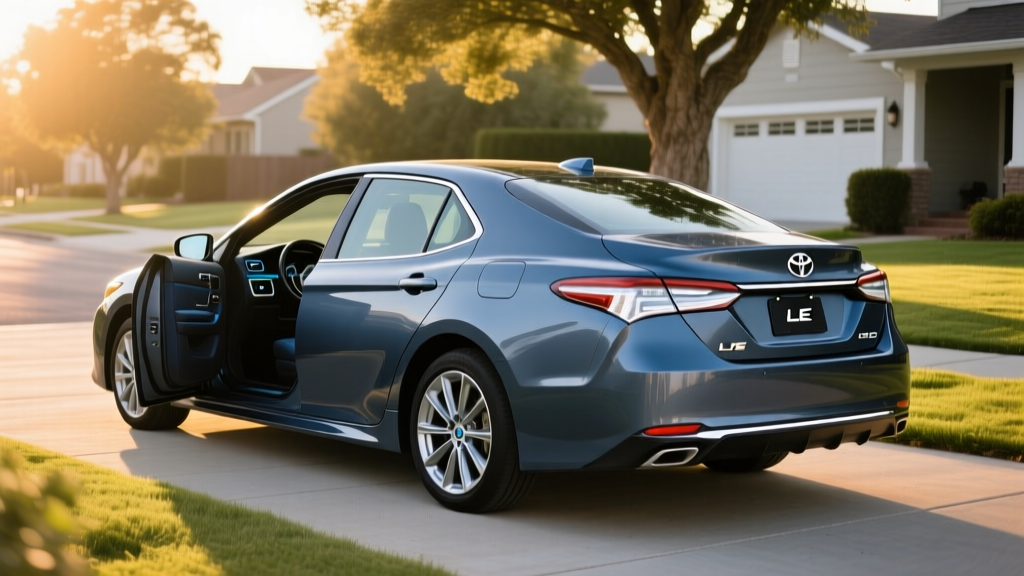
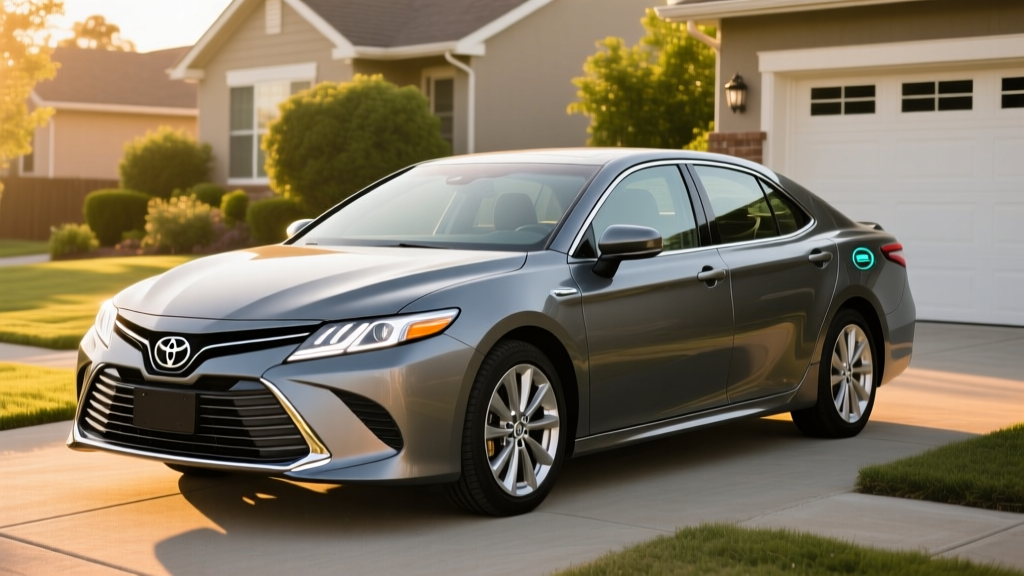
The 2015 Toyota Camry Hybrid remains one of the most fuel-efficient midsize sedans ever sold, and its EPA ratings still compete with newer hybrids a decade later. Whether you're shopping the used market or already own one and want to understand what you're driving, this guide covers the exact numbers, real-world expectations, and long-term ownership costs that matter in 2026.
The short answer on fuel economy: the EPA rates the 2015 Camry Hybrid LE at 40 MPG city / 38 MPG highway / 40 MPG combined. The XLE and SE trims drop slightly to 40/37/38 MPG due to heavier wheels and additional equipment. But as we'll show, real-world city driving often exceeds those stickers — while highway-only road trips may fall a few MPG short.
EPA Ratings vs. Real-World MPG: What Owners Actually See
The EPA's test cycles don't always mirror your commute. Toyota's Hybrid Synergy Drive system excels in stop-and-go traffic, where the electric motor handles low-speed propulsion and regenerative braking recaptures energy that a gas-only car would waste as heat.
| Trim | City MPG | Highway MPG | Combined MPG | Fuel Tank | Total Range |
|---|---|---|---|---|---|
| LE | 40 | 38 | 40 | 17.2 gal | ~688 mi |
| XLE | 40 | 37 | 38 | 17.2 gal | ~654 mi |
| SE | 40 | 37 | 38 | 17.2 gal | ~654 mi |
- City-heavy commuting (under 45 mph): 42–47 MPG is common. The electric motor dominates, and the 2.5L Atkinson-cycle engine shuts off frequently.
- Mixed driving (50/50 city/highway): 38–42 MPG — closely matching the EPA combined figure.
- Highway-only road trips (70–80 mph): Expect 34–37 MPG. Hybrids lose their advantage at sustained high speeds where aerodynamic drag dominates and the gas engine runs continuously.
- Cold weather (below 30°F): Plan for a 5–10% drop (roughly 36–38 MPG combined). The engine runs more often to heat the cabin and warm the hybrid battery to optimal operating temperature.
According to fueleconomy.gov, owners who track their fuel consumption report averages between 37 and 44 MPG — a spread that reflects driving style, climate, and terrain more than any mechanical variability.
HEV vs. PHEV vs. EV: Where the 2015 Camry Hybrid Fits
The 2015 Camry Hybrid is a conventional hybrid electric vehicle (HEV). This is a critical distinction that buyers sometimes confuse with plug-in hybrids or full battery-electric vehicles. Here's how these three powertrain types differ:
| Feature | HEV (Camry Hybrid) | PHEV (e.g., Prius Prime) | BEV (e.g., Tesla Model 3) |
|---|---|---|---|
| Plugs in to charge? | No — charges via engine + regen | Yes — Level 1 or Level 2 | Yes — Level 1, 2, or DC fast |
| Electric-only driving | Very short distances (<1 mi at low speed) | 25–44 mi (model dependent) | 250–400+ mi |
| Gas engine | Yes — primary power source | Yes — kicks in after battery depletes | No |
| Fuel/energy cost per mile | ~$0.09–0.11 (at $3.50/gal) | ~$0.04 electric / $0.09 gas | ~$0.03–0.05 (home charging) |
| Tailpipe emissions | Low (not zero) | Low (zero in EV mode) | Zero (upstream varies) |
| Federal tax credit (new) | None | Up to $7,500 (§30D) | Up to $7,500 (§30D) |
The Camry Hybrid's advantage is simplicity: you never plug it in, never think about charging infrastructure, and never experience range anxiety. You simply fill up at any gas station and drive. Its trade-off is that it cannot run on grid electricity — you're always burning gasoline, even if far less than a conventional Camry.
- Choose this HEV if: You want maximum MPG without changing your fueling habits, you lack access to home or workplace charging, or you frequently drive long distances in areas with sparse charging infrastructure.
- Choose a PHEV if: You have reliable Level 2 charging at home and most daily trips are under 30 miles — you'd drive on electricity most days and use gas only for road trips.
- Choose a full EV if: You have home charging, want the lowest per-mile fuel cost, and your typical trips fall within 250+ miles (or you're willing to plan DC fast-charging stops on road trips).
Powertrain Specs: How the Hybrid System Works
The 2015 Camry Hybrid pairs a 2.5-liter four-cylinder Atkinson-cycle gasoline engine with an electric motor and a nickel-metal hydride (NiMH) hybrid battery pack. Toyota's Hybrid Synergy Drive uses a planetary gearset (e-CVT) to seamlessly blend power from both sources.
| Specification | Value |
|---|---|
| Gas engine | 2.5L 4-cyl Atkinson-cycle |
| Engine horsepower | 156 hp @ 5,700 rpm |
| Engine torque | 156 lb-ft @ 4,500 rpm |
| Electric motor output | 105 kW (141 hp) |
| Net combined system horsepower | 200 hp |
| Transmission | e-CVT (planetary gearset) |
| Hybrid battery type | NiMH (Nickel-Metal Hydride) |
| Hybrid battery capacity | ~1.6 kWh (nominal) |
| 0–60 mph | ~7.6 seconds |
| Drivetrain | Front-wheel drive |
| Curb weight | ~3,495–3,585 lbs |
The ~1.6 kWh battery is small by modern standards — a PHEV like the 2026 Prius Prime carries an 11.3 kWh pack, and full EVs run 60–100+ kWh. But the Camry Hybrid's battery isn't designed for electric-only range. It serves as an energy buffer: capturing regenerative braking energy and deploying it to assist acceleration or enable brief engine-off coasting. This "assist" architecture is what enables 40 MPG combined from a 3,500-lb sedan.
Battery Longevity, Warranty, and Replacement Costs
Hybrid battery lifespan is the single most common concern among used hybrid buyers — and it's a fair one. A failed hybrid battery in a 2015 Camry is not a cheap repair. Here's what the data shows.
- Standard states: 8 years / 100,000 miles (whichever comes first)
- CARB states (CA, NY, MA, and others adopting California emissions standards): 10 years / 150,000 miles
For a 2015 model in 2026, the original factory warranty has expired in most cases (the vehicle is 11 years old). However, many batteries continue functioning well beyond warranty limits.
Real-world battery longevity: Toyota's NiMH hybrid batteries have an exceptional track record. Data from fleet operators and owner surveys indicate that most Camry Hybrid batteries last 150,000–200,000+ miles before significant degradation or failure. The NiMH chemistry is less energy-dense than modern lithium-ion but is remarkably durable and tolerant of the shallow charge-discharge cycles that hybrids use.
Replacement cost in 2026:
| Option | Cost Range | Warranty | Notes |
|---|---|---|---|
| New OEM Toyota battery | $3,000–$4,000 (parts + labor) | 1–3 years | Dealership installation; highest reliability assurance |
| Refurbished/remanufactured battery | $1,500–$2,500 | 1–3 years | Replaced weak cells; variable quality by supplier |
| Used/salvage battery | $500–$1,200 | 30–90 days typical | Highest risk; unknown remaining life |
| Individual cell replacement | $300–$800 | Varies | Requires specialized shop; replaces only failed modules |
If you're buying a used 2015 Camry Hybrid in 2026, request a hybrid battery health check from a Toyota dealer or a hybrid-specialist shop. They can read the battery's State of Health (SoH) via the OBD-II port and check for voltage imbalance between modules — a leading indicator of impending failure.
2026 Used Market Pricing and Tax Credit Reality
The 2015 Camry Hybrid is long out of production, so pricing is entirely in the used market. As of early 2026, typical asking prices range from $12,000 to $18,000 depending on mileage, condition, trim, and region. Low-mileage LE examples in excellent condition command the top of that range.
Federal tax credit eligibility: The 2015 Camry Hybrid does not qualify for the federal §30D new clean vehicle credit — that credit applies only to new plug-in vehicles (PHEVs and BEVs) meeting battery sourcing, MSRP, and buyer income requirements. Conventional hybrids like the Camry HEV have never qualified for §30D.
Used EV credit (§25E): The used clean vehicle credit of up to $4,000 (30% of sale price, max $4,000) also does not apply to conventional hybrids — it's restricted to used BEVs and PHEVs with a minimum 7 kWh battery capacity. The Camry Hybrid's ~1.6 kWh NiMH pack falls far short of that threshold.
Some states offer their own incentives for hybrid purchases, but these vary widely and change frequently. Check your state's energy or environmental agency website for current programs.
Reliability and Total Cost of Ownership
Toyota's Camry Hybrid has consistently earned top reliability marks. The 2015 model year received a "Better Than Average" predicted reliability rating from Consumer Reports and strong marks from IIHS, which named it a Top Safety Pick when equipped with optional forward collision warning.
Ownership cost advantages over the gas-only 2015 Camry:
- Fuel savings: At $3.50/gallon and 12,000 miles/year, the hybrid (40 MPG combined) costs ~$1,050/year in fuel vs. ~$1,456/year for the gas Camry LE (28 MPG combined) — a savings of roughly $406/year.
- Brake wear: Regenerative braking reduces mechanical brake use significantly. Many Camry Hybrid owners report original brake pads lasting 80,000–100,000+ miles.
- No additional maintenance: The hybrid system requires no routine service beyond what a gas Camry needs. There's no plug to change, no turbo to worry about, and the e-CVT has no traditional transmission fluid service interval.
Ownership cost considerations:
- Insurance: Typically 5–10% higher than the gas Camry due to the hybrid battery replacement risk in collision claims.
- Tires: The hybrid's added weight (~150 lbs over the gas model) and instant electric torque can accelerate tire wear slightly.
- Hybrid battery risk: Budget $2,000–$4,000 as a contingency if the vehicle has over 120,000 miles and no documented battery replacement.
- 40 MPG combined EPA — real-world city often higher
- No plug-in charging required
- Proven long-term reliability (NiMH battery durable)
- Smooth, quiet low-speed electric driving
- Strong resale value for a 10-year-old sedan
- ~688 miles total range on a single tank
- No electric-only range to speak of
- No federal or state EV/PHEV tax credits
- Hybrid battery replacement is costly if needed
- Highway MPG drops to 34–37 at 75+ mph
- 2015 infotainment is dated (no Apple CarPlay/Android Auto)
- Acceleration adequate but not quick (~7.6 sec 0–60)
Frequently Asked Questions
How many MPG does the 2015 Camry Hybrid get?
The EPA rates the 2015 Camry Hybrid LE at 40 city / 38 highway / 40 combined MPG. The XLE and SE trims are rated at 40/37/38. Real-world city driving often yields 42–47 MPG, while sustained highway driving at 75+ mph typically returns 34–37 MPG.
Does the 2015 Camry Hybrid need to be plugged in?
No. The 2015 Camry Hybrid is a conventional HEV (hybrid electric vehicle). Its small battery charges through regenerative braking and the gasoline engine. You never plug it in — you simply fill up at a gas station as you would with any car.
Is the 2015 Camry Hybrid reliable?
Yes. Toyota's Hybrid Synergy Drive and NiMH battery have an excellent reliability record. Most Camry Hybrid batteries last 150,000–200,000+ miles. The powertrain has fewer wear components than a conventional automatic transmission (no traditional gearbox, no starter motor, no alternator). Toyota's hybrid-specific warranty was 8 years/100,000 miles (10 years/150,000 in CARB states), though this has expired on 2015 models.
How much does it cost to replace the hybrid battery?
A new OEM Toyota battery costs $3,000–$4,000 installed. Refurbished batteries range from $1,500–$2,500. Individual cell/module replacement can cost $300–$800 at a specialist shop. Most batteries last well beyond 150,000 miles, so replacement is not guaranteed to be necessary.
Does the 2015 Camry Hybrid qualify for any tax credit?
No. The federal §30D new vehicle credit and §25E used vehicle credit apply only to plug-in vehicles (PHEVs and BEVs) meeting specific battery capacity, sourcing, MSRP, and income requirements. Conventional hybrids like the Camry HEV do not qualify for either credit. Some states may offer their own hybrid incentives — check your state's energy agency.
How does the 2015 Camry Hybrid compare to the 2026 Camry Hybrid?
The current-generation Camry Hybrid (2025+ redesign) uses Toyota's fifth-generation hybrid system with a lithium-ion battery, achieving up to 51 MPG combined (LE FWD). It also features modern infotainment with wireless Apple CarPlay and Android Auto, Toyota Safety Sense 3.0, and available all-wheel drive. However, 2026 models start around $30,000+ MSRP — roughly double the used cost of a 2015 model. The 2015 remains an excellent value proposition if you prioritize fuel savings over the latest tech.
Hybrid vs. PHEV vs. EV — which should I buy?
If you lack home charging access or frequently drive long distances in areas with limited charging infrastructure, the Camry Hybrid (HEV) is ideal — it requires zero behavior change. If you have reliable home Level 2 charging and a short commute, a PHEV lets you drive on electricity daily while keeping a gas engine for road trips. If you have home charging, want the lowest per-mile cost, and rarely exceed 250 miles between stops, a full BEV delivers the greatest fuel savings and zero tailpipe emissions.