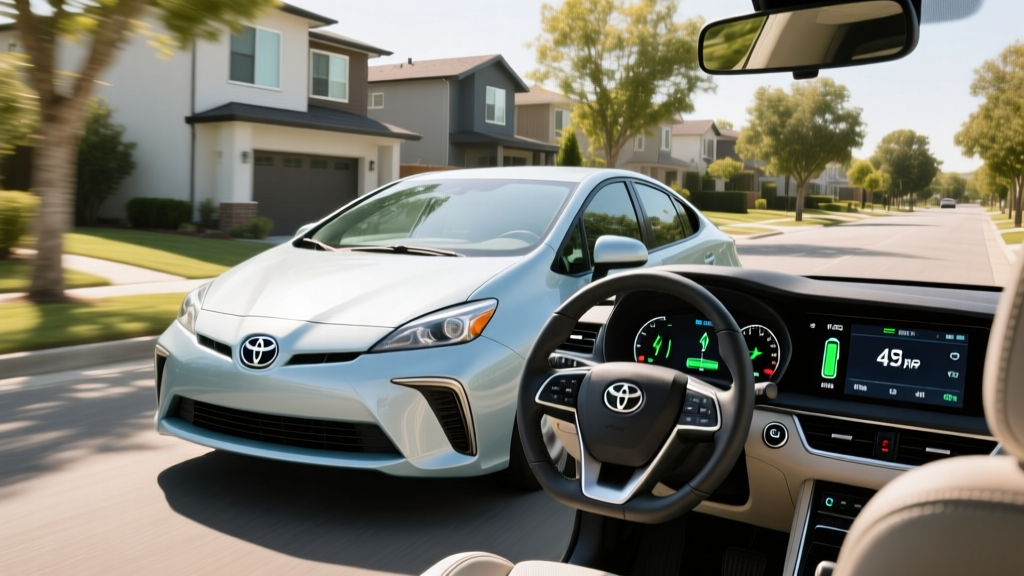
The 2014 Toyota Prius remains one of the most recognizable nameplates in the hybrid segment, and more than a decade after its debut, it continues to populate used-car lots and commuter driveways across the US. For buyers searching for a prius hybrid 2014 model in today's market, the questions have shifted from "is it efficient?" to "how long will the battery last?" and "does it still make financial sense versus a newer hybrid or full EV?"
This guide covers the third-generation Prius (model years 2010–2015) with a focus on the 2014 model year — its EPA fuel economy, real-world MPG behavior, hybrid battery longevity and replacement costs, powertrain specs, and how it stacks up against modern alternatives. Whether you're considering a used Prius as a budget commuter or weighing it against a new PHEV or BEV, the data below will frame your decision.
HEV vs. PHEV: Where the 2014 Prius Fits
The 2014 Prius is a conventional hybrid electric vehicle (HEV). It pairs a gasoline engine with an electric motor and a small nickel-metal hydride (NiMH) battery pack that recharges through regenerative braking and the engine. You never plug it in — there is no charging port, no electric-only range to manage, and no dependence on charging infrastructure.
Toyota did offer a plug-in variant called the Prius Plug-in Hybrid (later renamed Prius Prime) during this generation. The 2014 Prius Plug-in featured a 4.4 kWh lithium-ion battery, roughly 11 miles of electric-only range, and a standard J1772 charging port (Level 2, approximately 2–3 hours for a full charge, no DC fast charging). However, the standard 2014 Prius discussed throughout this guide is the conventional HEV.
2014 Prius HEV vs. 2014 Prius Plug-In Hybrid
| Specification | 2014 Prius HEV | 2014 Prius Plug-In |
|---|---|---|
| Powertrain Type | Conventional Hybrid (HEV) | Plug-In Hybrid (PHEV) |
| Battery Chemistry | NiMH | Lithium-Ion |
| Battery Capacity | 1.3 kWh | 4.4 kWh |
| Plug-In Required? | No | Yes (J1772, Level 2 only) |
| Electric-Only Range | N/A | ~11 miles (EPA) |
| EPA Combined MPG / MPGe | 50 MPG | 95 MPGe (electric) / 50 MPG (hybrid) |
| DC Fast Charge | No | No |
2014 Prius Fuel Economy: EPA Ratings and Real-World MPG
The 2014 Toyota Prius carries an EPA-estimated 51 MPG city / 48 MPG highway / 50 MPG combined rating, per fueleconomy.gov. These figures made it one of the most efficient non-plug-in vehicles available at the time, and they remain competitive even against 2026 hybrid offerings.
| Driving Condition | EPA Estimate | Real-World Expectation |
|---|---|---|
| City | 51 MPG | 48–54 MPG (hybrids often exceed EPA in stop-and-go) |
| Highway | 48 MPG | 42–47 MPG (sustained high speeds reduce regen advantage) |
| Combined | 50 MPG | 45–50 MPG (varies with climate, terrain, driving style) |
| Cold Weather (below 32°F) | — | 38–44 MPG (engine runs more for cabin heat and warm-up) |
Why real-world MPG varies: Hybrids like the Prius benefit enormously from regenerative braking and low-speed electric assist, which is why city MPG actually exceeds highway MPG — the opposite of a conventional gas car. In practice, owners who drive mostly urban and suburban routes often report matching or slightly exceeding the 50 MPG combined figure. Highway-dominant commutes at 75+ mph, aggressive acceleration, and cold-weather operation all pull real-world numbers into the low-to-mid 40s. A 12-year-old vehicle with a degraded hybrid battery may see a 2–5 MPG drop until the battery is replaced or reconditioned.
Powertrain and Performance Specs
The 2014 Prius uses Toyota's Hybrid Synergy Drive system, pairing a 1.8-liter Atkinson-cycle four-cylinder gasoline engine with a permanent-magnet electric motor through a planetary gearset (eCVT). There is no traditional belt-and-pulley CVT or stepped automatic transmission.
| Specification | 2014 Toyota Prius |
|---|---|
| Engine | 1.8L 4-cyl Atkinson cycle (98 hp) |
| Electric Motor | Permanent-magnet AC synchronous (80 hp / 60 kW) |
| Combined Net Horsepower | 134 hp |
| Transmission | eCVT (planetary gearset) |
| 0–60 mph | ~9.8 seconds |
| Drivetrain | Front-wheel drive |
| Curb Weight | ~3,042 lbs |
| Fuel Tank | 11.9 gallons |
| Total Driving Range | ~595 miles (at 50 MPG combined) |
| Emissions Certification | SULEV / PZEV (varies by state) |
The 134 combined horsepower figure is modest by 2026 standards, and the 9.8-second 0–60 time reflects the Prius's efficiency-first engineering. Acceleration is adequate for merging and city driving, but passing at highway speeds requires planning. The eCVT is mechanically simple and has proven extremely durable — there are no belts to slip, no clutch packs to wear, and far fewer moving parts than a conventional automatic.
Hybrid Battery Longevity, Warranty, and Replacement Cost
Battery lifespan is the single largest concern for anyone buying a 2014 Prius in 2026. The original NiMH hybrid battery was warranted for 8 years / 100,000 miles (10 years / 150,000 miles in California and states that adopted CARB emissions standards). That factory coverage has expired for virtually all 2014 models by now.
2014 Prius Hybrid Battery: What to Expect
- Original Warranty: 8 yr / 100,000 mi (10 yr / 150,000 mi in CARB states)
- Typical Lifespan: 120,000–200,000 miles before significant degradation or failure
- Degradation Symptoms: Reduced MPG (2–5 MPG drop), more frequent engine cycling, dashboard warning lights
- OEM Replacement (Toyota dealer): $2,000–$3,500 including labor
- Aftermarket / Reconditioned Battery: $800–$1,800 depending on source and warranty
- Individual Module Replacement: $200–$600 (replacing only failed modules — requires a specialist)
At 12 years old, many 2014 Prius examples are on their original battery, and some are approaching or have exceeded the typical 150,000-mile threshold where NiMH cell imbalance becomes more common. When buying used, check for:
- Service records showing a battery replacement or reconditioning
- A hybrid battery health check via an OBD-II scanner (apps like Dr. Prius or Hybrid Assistant can read individual module voltages and internal resistance)
- Dashboard warning lights — a red triangle or "Check Hybrid System" message indicates active battery faults
The good news: the Prius hybrid battery is one of the most serviced and well-understood components in the automotive aftermarket. Independent hybrid specialists exist in most metro areas, and replacement costs have dropped significantly as the supply of reconditioned and aftermarket packs has grown.
2014 Prius Pricing and Tax Credit Eligibility
As a used vehicle, the 2014 Prius is no longer eligible for the federal §30D new clean vehicle credit (up to $7,500 for qualifying new EVs and PHEVs). However, it may qualify for the Used Clean Vehicle Credit under IRC §25E, which provides up to $4,000 or 30% of the sale price (whichever is less) for eligible pre-owned plug-in electric vehicles.
Critical caveat: The §25E used credit applies only to plug-in vehicles — battery electric vehicles (BEVs) and plug-in hybrids (PHEVs). The conventional 2014 Prius HEV does not qualify because it has no plug. The 2014 Prius Plug-in Hybrid may qualify if it meets all IRS requirements, including a sale price of $25,000 or less, buyer income caps ($75,000 single / $150,000 joint), and purchase from a licensed dealer. See IRS.gov §25E guidelines for current eligibility rules.
| 2014 Prius Trim | Original MSRP | 2026 Used Price Range (approx.) | Federal Tax Credit |
|---|---|---|---|
| Prius Two | $24,200 | $8,000–$12,000 | None (HEV) |
| Prius Three | $25,560 | $9,000–$13,500 | None (HEV) |
| Prius Four | $27,230 | $10,000–$14,500 | None (HEV) |
| Prius Five | $29,430 | $11,000–$15,500 | None (HEV) |
| Prius Plug-In (Base) | $29,990 | $9,000–$14,000 | Possibly up to $4,000 (§25E) |
Used prices vary widely based on mileage, condition, battery health, and regional demand. The Prius retains value well compared to conventional sedans of the same vintage, largely due to its reputation for reliability and low operating costs.
Reliability, Maintenance, and Long-Term Ownership Costs
The third-generation Prius (2010–2015) has an extensive reliability track record. Toyota's hybrid system is among the most proven in the industry, with hundreds of thousands of high-mileage examples on the road. The IIHS rated the 2014 Prius a Top Safety Pick with Good ratings in most crash-test categories.
Common maintenance items at this age:
- Hybrid battery cooling fan: Clean or replace (~$150–$300). A clogged filter causes the battery to overheat and degrade faster.
- Inverter coolant pump: Check for recalls — Toyota issued a recall for the 2010–2014 Prius inverter coolant pump. Verify it was addressed.
- EGR (exhaust gas recirculation) system: The EGR valve and cooler can clog with carbon buildup past 100,000 miles, potentially causing head gasket stress. Cleaning costs ~$300–$500.
- Brake actuator: The electro-hydraulic brake actuator has a known failure rate on Gen 3 models. Replacement runs $1,200–$2,000 at a dealer. Listen for unusual buzzing from the brake pump at startup.
- 12V auxiliary battery: Located in the rear cargo area, this small AGM battery powers electronics and typically lasts 4–6 years. Replacement: $200–$350.
- Standard wear items: Tires, brake pads (last exceptionally long due to regen braking — often 80,000+ miles), cabin air filter, engine oil (0W-20 synthetic, every 10,000 miles).
For a 2014 Prius with 120,000–160,000 miles and a healthy hybrid battery, annual maintenance costs typically run $400–$800 — significantly less than a comparable-age conventional sedan when you factor in the Prius's absence of a traditional transmission, timing belt, or starter motor.
Who Should Choose the 2014 Prius — and Who Shouldn't
Reasons to Buy
- Proven 50 MPG combined efficiency with no plug-in requirement
- Low annual maintenance and fuel costs (~$1,000–$1,400/yr at 15,000 mi)
- Massive aftermarket support for hybrid battery service
- Strong cargo versatility (hatchback with ~39.6 cu ft seats folded)
- Low entry price ($8,000–$15,000) vs. a new hybrid or EV
Reasons to Look Elsewhere
- Hybrid battery replacement risk ($1,500–$3,500) on an aging pack
- No electric-only driving — 100% gasoline dependent
- Modest performance (9.8 sec 0–60, 134 hp)
- Aging interior tech (no Apple CarPlay/Android Auto natively)
- No eligibility for new-vehicle federal tax credits
Decision Framework: Is the 2014 Prius Right for You?
Choose the 2014 Prius HEV if: You want a sub-$15,000 commuter with 50 MPG, no charging hassle, and don't mind budgeting $1,500–$3,000 for a potential hybrid battery replacement within your ownership window.
Choose the 2014 Prius Plug-In if: You have a short commute (under 11 miles each way) with home charging access, and want a taste of electric driving without range anxiety — while potentially qualifying for the $4,000 used-EV credit.
Choose a newer hybrid (2022+ Prius, Corolla Hybrid, Hyundai Elantra Hybrid) if: You want current safety tech (automatic emergency braking, lane-keeping), modern infotainment, and a remaining factory hybrid battery warranty.
Choose a full EV (Chevrolet Bolt, Nissan LEAF, Tesla Model 3) if: You have reliable home charging, want zero gasoline costs, and are ready to commit to electric-only driving with 200+ miles of range.
Frequently Asked Questions
How many MPG does the 2014 Toyota Prius hybrid get?
The EPA rates the 2014 Prius at 51 MPG city, 48 MPG highway, and 50 MPG combined. Real-world results typically range from 45 to 54 MPG depending on driving conditions. City driving often exceeds the EPA estimate due to regenerative braking, while sustained highway speeds and cold weather pull numbers into the low-to-mid 40s.
Does the 2014 Prius need to be plugged in?
No. The standard 2014 Prius is a conventional hybrid (HEV). Its battery recharges through regenerative braking and the gasoline engine. There is no plug and no charging port. Only the 2014 Prius Plug-in Hybrid variant requires plugging in.
How long does the 2014 Prius hybrid battery last?
Toyota's NiMH hybrid batteries in the Gen 3 Prius typically last 120,000 to 200,000 miles, or roughly 10 to 15 years depending on climate and usage patterns. Hot climates accelerate degradation. At 12 years old, many 2014 Prius examples are nearing or past the point where battery replacement or reconditioning becomes likely.
What does it cost to replace a 2014 Prius hybrid battery?
A new OEM battery from a Toyota dealer costs $2,000–$3,500 installed. Aftermarket or reconditioned batteries run $800–$1,800. Individual module replacement by a hybrid specialist can cost as little as $200–$600 if only a few cells have failed.
Does the 2014 Prius qualify for any federal tax credit?
The standard 2014 Prius HEV does not qualify for any federal tax credit — it has no plug. The 2014 Prius Plug-in Hybrid may qualify for the Used Clean Vehicle Credit (§25E), which provides up to $4,000 or 30% of the sale price, subject to income limits, a $25,000 sale-price cap, and dealer-sale requirements. Always verify current rules on IRS.gov.
Is the 2014 Prius reliable at high mileage?
Yes, with proper maintenance. The hybrid powertrain and eCVT are mechanically robust, and the 1.8L engine is under-stressed. Known issues include EGR clogging, brake actuator failure, and eventual hybrid battery degradation — all of which are well-documented and serviceable. Many 2014 Prius examples have exceeded 250,000 miles with the original powertrain.
Hybrid vs. PHEV vs. EV — which should I choose?
A conventional hybrid (HEV) like the standard 2014 Prius is best if you want maximum MPG with zero lifestyle change — no charging, no range planning. A plug-in hybrid (PHEV) like the Prius Plug-in adds 10–15 miles of electric driving for short commutes but requires home charging access to realize the benefit. A full EV (BEV) eliminates gasoline entirely and offers the lowest per-mile fuel cost, but demands reliable home or workplace charging and a higher upfront investment. Your choice depends on charging access, commute distance, and budget.