Quick Verdict: A Proven Hybrid Sedan for Budget-Conscious Commuters
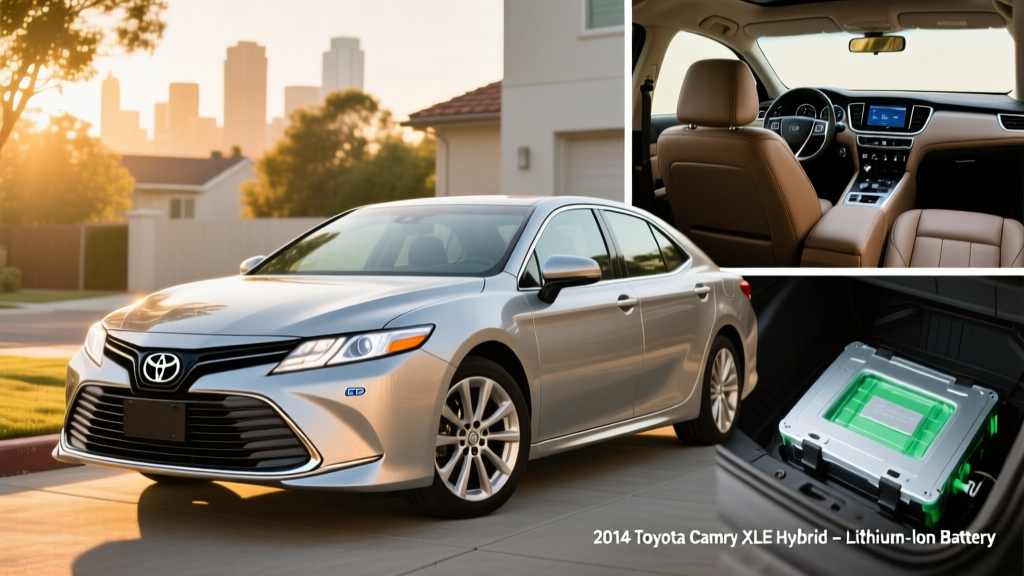
The 2014 Toyota Camry XLE Hybrid sits in a specific niche in 2026: a used midsize sedan that delivers genuine fuel savings without requiring a plug, a charging routine, or any change in driving habits. With an EPA-estimated 40 MPG combined and Toyota's reputation for hybrid durability, the XLE trim — the luxury-oriented variant — adds leather, premium audio, and advanced safety features over the base LE Hybrid.
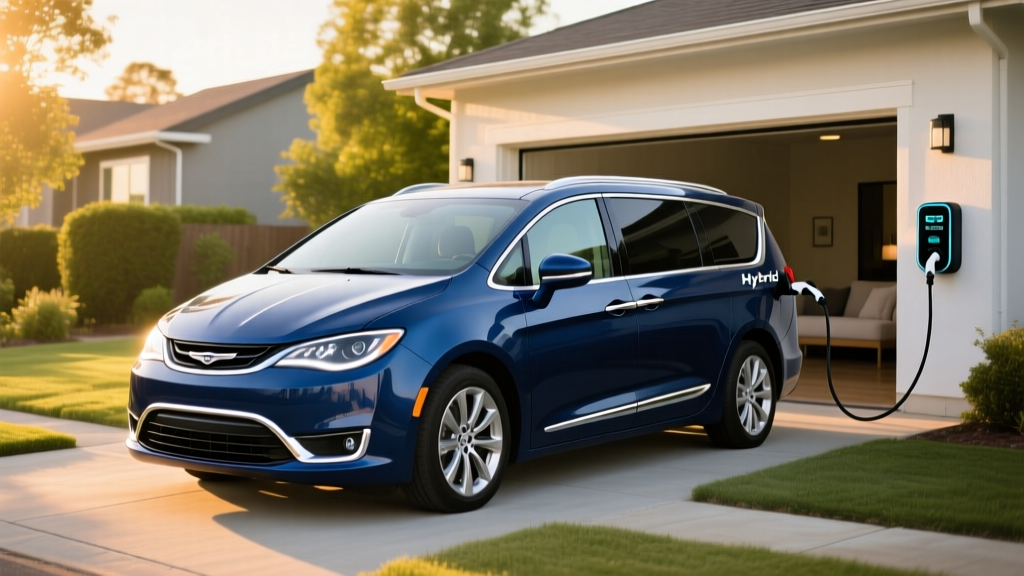
This is a conventional hybrid electric vehicle (HEV), not a plug-in hybrid (PHEV). You never plug it in. The battery recharges through regenerative braking and the gasoline engine. For used-car shoppers comparing this against a full EV like a used Nissan Leaf or a newer PHEV like the Toyota RAV4 Prime, the Camry Hybrid's appeal is simplicity: no range anxiety, no home charger installation, no plug-in tax-credit paperwork.
But at 12 years old, the critical question is battery health. Let's break down every number that matters.
Fuel Economy: EPA Ratings vs. Real-World MPG
| Metric | EPA Estimate | Real-World Expectation |
|---|---|---|
| City MPG | 40 MPG | 38–44 MPG (hybrids excel in stop-and-go) |
| Highway MPG | 38 MPG | 34–37 MPG (aerodynamic drag reduces electric assist) |
| Combined MPG | 40 MPG | 36–41 MPG depending on driving mix |
| Fuel Tank Capacity | 17.0 gallons | ~610–680 miles per tank |
| Annual Fuel Cost (15k mi) | ~$1,350* | Varies by local gas prices |
*Based on $3.60/gal regular unleaded and 15,000 miles/year (45% city / 55% highway). Source: fueleconomy.gov
Compared to the gas-only 2014 Camry 4-cylinder (28 MPG combined per the EPA), the hybrid saves roughly 150 gallons per year at 15,000 miles — about $540 annually at current fuel prices. Over five years of ownership, that's approximately $2,700 in fuel savings.
Powertrain and Performance Specifications
| Specification | Value |
|---|---|
| Engine | 2.5L 4-cylinder Atkinson-cycle |
| Engine Horsepower | 156 hp @ 5,700 rpm |
| Engine Torque | 156 lb-ft @ 4,500 rpm |
| Electric Motor Output | 105 kW (141 hp) |
| Net Combined System Horsepower | 200 hp |
| Transmission | ECVT (electronically controlled CVT) |
| Drivetrain | Front-wheel drive |
| 0–60 mph | ~7.6 seconds |
| Hybrid Battery Capacity | 1.6 kWh (NiMH, sealed) |
| Hybrid Battery Chemistry | Nickel-Metal Hydride (NiMH) |
| Curb Weight | ~3,595 lbs |
The 200 combined horsepower puts the Camry Hybrid ahead of most midsize hybrid competitors from its era — the 2014 Honda Accord Hybrid, for example, produces 196 hp combined. The 200 hp figure is the net system output, meaning Toyota accounts for the fact that peak engine and peak motor output don't occur simultaneously.
The ECVT is not a belt-driven CVT like those in some competitors. It uses a planetary gearset to blend power from the engine and two motor-generators, which is why Toyota hybrids from this era have proven exceptionally durable — there are no belts, cones, or friction surfaces to wear.
HEV vs. PHEV vs. EV: Which Powertrain Fits You?
| Factor | HEV (This Camry) | PHEV (e.g., Used Prius Prime) | BEV (e.g., Used Model 3) |
|---|---|---|---|
| Plug-in Required? | No | Yes (for EV range) | Yes (always) |
| Electric-Only Range | ~1 mile (low-speed only) | 25–42 miles typical | 200–350 miles |
| Total Range | ~650 miles | ~550–650 miles | 200–350 miles |
| Home Charging Needed? | No | Recommended (120V ok) | Yes (240V ideal) |
| Federal Tax Credit (Used) | Not eligible | Up to $4,000 (§25E) | Up to $4,000 (§25E) |
| Fuel/Charging Cost per Mile | ~$0.09 | ~$0.05–$0.09 | ~$0.03–$0.05 |
| Maintenance Complexity | Low (proven) | Moderate | Low (fewer moving parts) |
Choose the 2014 Camry Hybrid if: You don't have access to home charging (apartment, street parking), you want a simple ownership experience with no plug-in routine, you drive a mix of city and highway, and you want a proven, low-risk used car with widely available parts.
Choose a PHEV instead if: You have home charging access, your daily commute is under 30 miles round-trip, and you want to drive mostly on electricity while keeping a gas engine for road trips.
Choose a full EV instead if: You have reliable Level 2 home charging, your daily driving is under 200 miles, you want the lowest per-mile fuel cost, and you're comfortable with public DC fast charging for road trips.
XLE Trim: What You Get Over the LE Hybrid
The XLE was the top trim for the 2014 Camry Hybrid, and it adds meaningful comfort and technology features over the base LE Hybrid:
- Interior: SofTex (synthetic leather) heated front seats, leather-wrapped steering wheel, dual-zone automatic climate control
- Audio/Tech: 6.1-inch touchscreen with Entune Audio Plus, navigation (on some builds), Bluetooth streaming, HD Radio, SiriusXM
- Exterior: 17-inch alloy wheels, chrome exterior accents, fog lights, auto-on/off headlights
- Safety: Blind Spot Monitor with Rear Cross-Traffic Alert (standard on XLE, optional on LE), 10 airbags, Star Safety System (VSC, traction control, ABS, EBD, BA, Smart Stop)
- Convenience: Smart Key with push-button start, auto-dimming rearview mirror, HomeLink universal transceiver
The XLE Hybrid originally carried an MSRP of approximately $31,475 (including destination), compared to $26,975 for the LE Hybrid. In the 2026 used market, expect to pay $9,000–$14,000 for an XLE Hybrid depending on mileage, condition, and region, based on Kelley Blue Book and Edmunds valuations for examples with 80,000–130,000 miles.
Battery Health, Warranty, and Replacement Cost
The 1.6 kWh NiMH battery in the 2014 Camry Hybrid is one of the most proven hybrid batteries Toyota has built. Unlike the lithium-ion packs in modern EVs, NiMH chemistry degrades more gradually and predictably. Based on long-term owner data and repair-shop surveys, these batteries commonly reach 150,000–200,000 miles before significant capacity loss triggers a check-engine light or noticeable fuel-economy decline.
Battery replacement cost (2026):
- New OEM battery (Toyota dealer): $3,000–$4,000 including parts and labor
- Remanufactured battery: $1,500–$2,500 installed
- Refurbished/used battery: $800–$1,500 installed
- Individual module replacement: Some independent hybrid specialists can replace only the failed modules within the battery pack for $500–$1,000, though this is a temporary fix if the rest of the pack is aging
Before purchasing a used 2014 Camry Hybrid, request a hybrid battery health check from a Toyota dealer or a qualified hybrid specialist. A scan tool can read the battery's state of health (SoH) and individual module voltages. Look for module voltage variance of less than 0.2V — wider gaps indicate imbalance and impending failure.
Also inspect the 12V auxiliary battery (a standard lead-accent battery in the trunk). This battery powers the car's electronics and must be in good condition for the hybrid system to boot. Replacement is $150–$250.
Tax Credits and Incentives in 2026
The 2014 Toyota Camry Hybrid is a conventional HEV, not a plug-in vehicle. This means it does not qualify for the following federal incentives:
- §30D New Clean Vehicle Credit ($7,500): Not eligible — this is a used HEV, not a new plug-in vehicle
- §25E Previously-Owned Clean Vehicle Credit (up to $4,000): Not eligible — this credit requires the vehicle to be a qualified plug-in EV or fuel cell vehicle with a battery capacity of at least 7 kWh. The Camry Hybrid's 1.6 kWh NiMH battery does not meet the threshold, and HEVs are excluded from this credit per IRS guidelines.
Some states and local utilities have offered incentives for hybrid purchases historically, but most current-state incentive programs prioritize plug-in vehicles. Check your state energy office or utility provider for any active HEV rebates, though these are increasingly rare in 2026.
The economic case for the used Camry Hybrid rests entirely on fuel savings and low maintenance costs — not tax incentives.
Reliability and Ownership Costs
The 2014 Camry Hybrid benefits from Toyota's strongest reliability reputation. Key data points:
- NHTSA Safety Rating: 5-Star Overall (see NHTSA.gov)
- IIHS Rating: Top Safety Pick+ (when equipped with optional front crash prevention)
- Consumer Reports: The 2014 Camry Hybrid has historically scored Above Average to Average in predicted reliability across most categories
- Common issues to watch: Dashboard cracking (cosmetic, widespread on 2012–2014 Camrys), water pump seepage at higher mileage, and occasional brake actuator recalls — verify recall status via NHTSA VIN lookup
| Category | 5-Year Cost |
|---|---|
| Purchase Price (avg.) | $11,500 |
| Fuel (15k mi/yr, $3.60/gal) | $6,750 |
| Insurance (avg.) | $6,000 |
| Maintenance & Repairs | $3,000–$4,500 |
| Potential Hybrid Battery Replacement | $0–$3,500 (if needed) |
| Depreciation (5-year) | ~$5,000 |
| Estimated Total | $32,250–$37,250 |
For comparison, a gas-only 2014 Camry LE with similar mileage would cost roughly $4,500 more in fuel over the same period but would likely have a lower initial purchase price ($7,500–$10,000). The hybrid's fuel savings typically offset its higher purchase price within 3–4 years of average driving.
Pros and Cons
Pros
- 40 MPG combined with no plug-in required
- 200 hp — adequate passing power and highway merging
- Proven Hybrid Synergy Drive with 200k+ mile potential
- 5-Star NHTSA safety rating
- XLE trim adds leather, heated seats, blind-spot monitoring
- No home charger installation needed
- Widely available parts and hybrid-savvy repair shops
- Strong real-world city MPG (often exceeds EPA)
Cons
- Original hybrid battery warranty has expired on all examples
- Potential $1,500–$4,000 battery replacement cost
- No federal tax credit eligibility (HEV, not PHEV)
- Dated infotainment (6.1-inch screen, no Apple CarPlay/Android Auto)
- Dashboard cracking is a known cosmetic issue
- Highway MPG drops to mid-30s under sustained speed
- CVT driving feel may not suit enthusiasts
- NiMH battery is heavier and less energy-dense than modern Li-ion
Frequently Asked Questions
How many MPG does the 2014 Toyota Camry XLE Hybrid get?
The EPA rates the 2014 Camry Hybrid at 40 MPG city, 38 MPG highway, and 40 MPG combined. In real-world driving, city-heavy commuters often see 42–45 MPG thanks to the electric motor's low-speed efficiency, while highway-dominant driving typically yields 34–37 MPG.
Does the 2014 Camry Hybrid need to be plugged in?
No. This is a conventional hybrid (HEV), not a plug-in hybrid (PHEV). The 1.6 kWh NiMH battery charges exclusively through regenerative braking and the gasoline engine. You fuel it like any other car — with gasoline at a gas station.
How far can the 2014 Camry Hybrid drive on electric power alone?
Under one mile at very low speeds (under 25 mph) with a fully charged hybrid battery and light throttle input. The EV mode button allows brief electric-only operation, but the small 1.6 kWh NiMH battery is not designed for sustained electric driving. This is fundamentally different from a PHEV, which can drive 25–40+ miles on electricity alone.
Is the 2014 Camry Hybrid reliable, and what does a battery replacement cost?
Yes, the 2014 Camry Hybrid is one of the most reliable hybrid vehicles on the used market. The Hybrid Synergy Drive powertrain has been proven across millions of Toyota vehicles. The NiMH battery typically lasts 150,000–200,000 miles. If replacement is needed, expect to pay $1,500–$4,000 depending on whether you choose a remanufactured or new OEM battery. Independent hybrid specialists often offer the best value.
Does the 2014 Toyota Camry Hybrid qualify for any tax credit?
No. As a conventional hybrid (HEV) with a 1.6 kWh battery, the 2014 Camry Hybrid does not qualify for the federal §30D new vehicle credit or the §25E used clean vehicle credit. Both credits require plug-in capability and a minimum battery capacity of 7 kWh for used vehicles. The economic benefit comes from fuel savings — approximately $540 per year compared to the gas-only Camry — not from tax incentives.
What should I check before buying a used 2014 Camry Hybrid?
Request a hybrid battery health scan to check individual module voltages and state of health. Verify all open recalls through the NHTSA recall lookup using the VIN. Check for dashboard cracking (a known cosmetic issue). Confirm the 12V auxiliary battery is recent. And review maintenance records — especially for coolant changes, which are important for the hybrid system's inverter cooling loop.
How does the XLE Hybrid compare to the LE Hybrid?
Mechanically, the XLE and LE Hybrid are identical — same 200 hp powertrain, same 40 MPG combined, same 1.6 kWh NiMH battery. The XLE adds SofTex heated seats, dual-zone climate control, blind-spot monitoring, rear cross-traffic alert, 17-inch alloy wheels, Smart Key, and upgraded audio. If comfort and safety tech matter to you, the XLE is worth the used-market premium of roughly $1,000–$2,000 over the LE.