Quick Verdict: The Original Crosstrek Hybrid in 2026
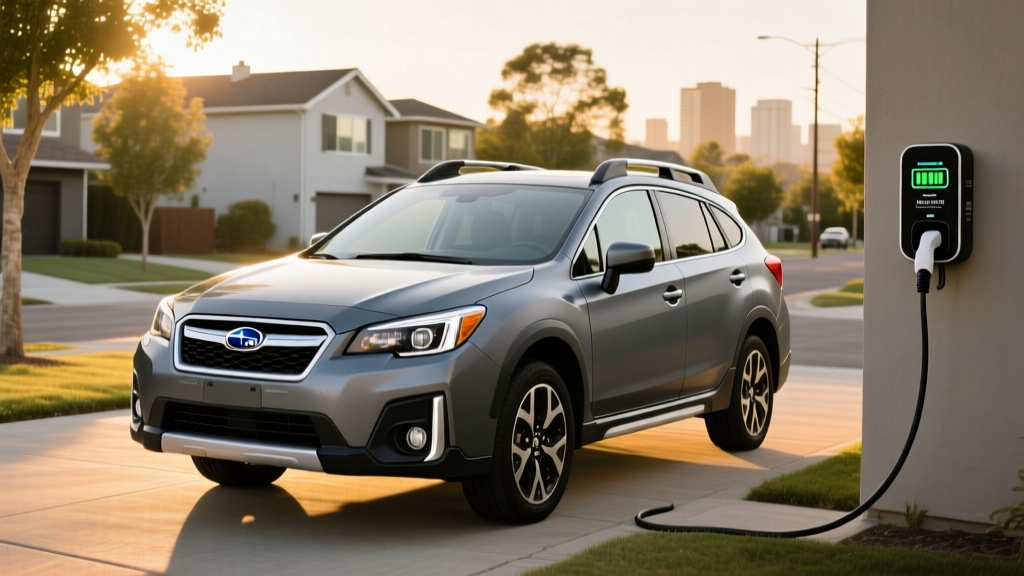
The 2014 Subaru Crosstrek Hybrid was Subaru's first production hybrid, a conventional (non-plug-in) HEV that paired a 2.0-liter flat-four with a small electric motor. It was only sold for two model years (2014–2015) before Subaru pulled it from the lineup. If you're researching one today as a used purchase, the short answer is: the fuel economy gains over the gas Crosstrek are modest, the hybrid battery is aging, and the cargo-space penalty from the NiMH pack is real. But for the right buyer — someone who wants standard AWD, decent ground clearance, and slightly better city MPG without plugging in — it can still be a sensible used find if the price and battery health check out.
EPA Fuel Economy and Real-World MPG
The 2014 Subaru Crosstrek Hybrid carries an EPA rating of 31 MPG combined, broken down as:
| Driving Cycle | EPA MPG |
|---|---|
| City | 29 MPG |
| Highway | 33 MPG |
| Combined | 31 MPG |
Source: fueleconomy.gov
How Many MPG Does the 2014 Crosstrek Hybrid Actually Get?
Owner-reported data on Fuelly and Subaru forums clusters around 28–32 MPG combined in mixed driving. City-heavy commutes with frequent stops can push toward 33–34 MPG, where the hybrid system's regenerative braking and electric assist shine. Sustained highway driving at 75+ mph, especially in headwinds or mountain terrain, can drop to 26–28 MPG. In cold climates (sub-30°F), expect a 2–4 MPG hit from extended engine warm-up and reduced battery efficiency.
Compared to the non-hybrid 2014 Crosstrek with the CVT (rated at 29 MPG combined: 26 city / 34 highway), the hybrid gains roughly 3 MPG in the city but actually loses 1 MPG on the highway. The extra weight of the hybrid system (about 300 lbs) and the battery pack hurts highway efficiency. The real-world advantage is most noticeable in stop-and-go urban driving.
Powertrain Specs: Engine, Motor, and Combined Output
| Component | Specification |
|---|---|
| Engine | 2.0L DOHC flat-4 (FB20) |
| Engine HP | 148 hp @ 6,000 rpm |
| Electric Motor | Integrated motor assist (10 kW / ~13 hp) |
| Combined System HP | ~160 hp (estimated net) |
| Transmission | Lineartronic CVT |
| Drivetrain | Symmetrical AWD (standard) |
| Hybrid Battery | Nickel-metal hydride (NiMH), 13.5 kW output / ~0.5 kWh usable |
| 0–60 mph | ~10.0 seconds (estimated) |
| Curb Weight | ~3,470 lbs (roughly 300 lbs more than gas CVT model) |
The electric motor in this system is small — at 10 kW, it functions primarily as a torque-fill assist during acceleration and as a generator during regenerative braking. It cannot propel the car on electric power alone for any meaningful distance. You may notice brief EV-mode creep at very low speeds (under 20 mph, light throttle, battery sufficiently charged), but this lasts only a few hundred feet at most. Think of it as a mild hybrid with AWD, not a vehicle you can drive electrically.
Battery Health, Warranty, and Replacement Cost
Is the 2014 Crosstrek Hybrid Reliable? What About Battery Replacement?
The 2.0L FB20 engine and the Lineartronic CVT in this generation have a mixed reliability record. The FB20 is generally durable if oil changes were performed on schedule (every 6,000–7,500 miles with 0W-20 synthetic). The CVT in early 2010s Subarus had some reports of valve-body issues, though the hybrid variant's added electric motor assist can reduce some CVT strain.
The NiMH hybrid battery is the primary concern for a 12-year-old vehicle. NiMH chemistry degrades more slowly than early lithium-ion, but capacity loss is inevitable. Symptoms of a weakening hybrid battery include:
- Noticeable drop in city MPG (falling below 26 MPG consistently)
- More frequent engine cycling on and off
- Reduced regenerative braking feel
- Hybrid system warning light on the dash
Battery replacement cost: A new OEM NiMH hybrid battery from Subaru runs approximately $2,000–$3,500 installed at a dealer. Independent hybrid specialists and refurbished/reconditioned battery packs can bring this down to $1,200–$2,000. Given that a clean 2014 Crosstrek Hybrid trades for $8,000–$13,000 in the used market (depending on mileage and condition), a battery replacement represents a significant percentage of the vehicle's value. Get the battery state-of-health (SoH) checked via an OBD-II scan tool that reads hybrid battery data before purchasing.
Cargo Space and Practicality Trade-Offs
The hybrid battery pack sits beneath the cargo floor, which reduces rear cargo volume compared to the standard gas Crosstrek:
- Gas Crosstrek: 22.3 cu ft behind rear seats / 51.9 cu ft with seats folded
- Hybrid Crosstrek: ~20.5 cu ft behind rear seats / ~50.0 cu ft with seats folded (estimated, as Subaru did not publish a separate hybrid cargo figure — the raised load floor reduces usable depth by roughly 1–2 inches)
The spare tire is also eliminated in the hybrid, replaced by a tire repair kit. For most daily use, the difference is negligible, but it matters if you regularly haul bulky gear or need a full-size spare for remote-area driving.
Pricing, Tax Credits, and Used-Buying Economics
The 2014 Crosstrek Hybrid originally carried an MSRP of approximately $26,770 (including destination). That was roughly $3,500–$4,000 more than a comparably equipped gas Crosstrek 2.0i Premium with CVT.
Does the 2014 Subaru Crosstrek Hybrid Qualify for Any Tax Credit?
No. The federal §30D new clean vehicle credit does not apply to used purchases of this age, and even when new, the 2014 Crosstrek Hybrid's small NiMH battery and conventional hybrid architecture did not qualify for the full $7,500 credit (the credit amount was tied to battery capacity, and this pack was far too small).
The §25E used clean vehicle credit (up to $4,000 or 30% of sale price, whichever is less) is available for qualifying used EVs and PHEVs purchased from a dealer for $25,000 or less. However, the 2014 Crosstrek Hybrid is a conventional HEV, not a PHEV or BEV. Conventional hybrids do not qualify for §25E. See the IRS used vehicle credit page for eligibility details.
| Condition / Mileage | Estimated Price Range |
|---|---|
| Excellent, under 80K miles | $11,000–$13,000 |
| Good, 80K–120K miles | $8,500–$11,000 |
| Fair, 120K+ miles | $6,500–$8,500 |
| With known battery issues | $5,000–$7,000 (factor in replacement) |
Hybrid vs. PHEV vs. Full EV: Which Should You Choose?
If you're cross-shopping the 2014 Crosstrek Hybrid, you're likely considering alternatives in the $8K–$15K used range. Here's how the three electrified paths compare for a buyer in 2026:
| Factor | Conventional Hybrid (HEV) e.g., 2014 Crosstrek Hybrid | Plug-In Hybrid (PHEV) e.g., used Prius Prime, RAV4 Prime | Full EV (BEV) e.g., used Bolt EV, Model 3 |
|---|---|---|---|
| Plugs in? | No — self-charging | Yes — Level 1/2 | Yes — Level 1/2/DC |
| Electric-only range | None (brief low-speed creep) | 20–42 miles (model dependent) | 150–350 miles (model dependent) |
| Fuel/energy cost per mile | ~$0.12–$0.15 | ~$0.04–$0.12 (depends on EV vs gas ratio) | ~$0.03–$0.06 (home charging) |
| Home charging needed? | No | Recommended for benefit | Essential |
| Tax credit eligibility (used) | None | Potentially §25E ($4,000) | Potentially §25E ($4,000) |
| Maintenance complexity | Engine + hybrid system | Engine + larger hybrid system | No engine — lowest maintenance |
| Best for | No charging access, want simplicity | Short commute + home charging, road trips | Home charging access, daily driving under 200 mi |
The 2014 Crosstrek Hybrid makes sense if:
- You lack access to home or workplace charging (apartment, street parking)
- You want AWD and 8.7 inches of ground clearance for snow or light trails
- Your commute is city-heavy where the hybrid system provides the most benefit
- You find one at a strong price with verified battery health
Look elsewhere if:
- You have home charging — a used PHEV or BEV will deliver dramatically lower per-mile costs and may qualify for the §25E used vehicle credit
- You mostly drive highway miles — the hybrid advantage is minimal here, and a used gas Crosstrek or a used diesel might be equally efficient
- Cargo space is a priority — the battery pack intrusion matters for some buyers
- The hybrid battery shows signs of degradation and the seller won't negotiate accordingly
Pros and Cons at a Glance
- Standard symmetrical AWD — excellent in snow and rain
- 8.7 inches of ground clearance for a compact crossover
- Modest city MPG improvement over gas model (~3 MPG)
- No plug-in requirement — works with any lifestyle
- Subaru's EyeSight driver-assist (optional on some trims)
- NiMH battery degrades more gracefully than early Li-ion
- Only ~2 MPG combined improvement over gas Crosstrek CVT
- Highway MPG is actually 1 MPG worse than gas model
- Hybrid battery is 12 years old — replacement risk is real
- No federal or state tax credit eligibility (new or used)
- Reduced cargo volume from battery pack
- No spare tire (repair kit only)
- Only produced for 2 model years — limited parts availability long-term
- CVT reliability concerns in this generation
Frequently Asked Questions
How far can the 2014 Subaru Crosstrek Hybrid go on electric only?
Effectively zero miles in any practical sense. The hybrid system may allow very brief, low-speed electric-only movement (under ~20 mph, light throttle) for a few hundred feet — such as creeping through a parking lot. This is not usable electric-only range. The gasoline engine is always the primary power source. If you want meaningful electric-only driving, you need a PHEV or a full BEV.
Is the 2014 Crosstrek Hybrid a plug-in?
No. It is a conventional self-charging hybrid (HEV). There is no charging port. The battery recharges through regenerative braking and the gasoline engine. You fuel it exclusively at a gas station.
What is the battery replacement cost for the 2014 Crosstrek Hybrid?
An OEM replacement NiMH hybrid battery from a Subaru dealer typically costs $2,000–$3,500 installed. Refurbished or reconditioned packs from independent hybrid shops range from $1,200–$2,000. Given the vehicle's used value, this is a significant expense — always verify battery health before purchase.
Does the 2014 Crosstrek Hybrid qualify for the §25E used clean vehicle credit?
No. The §25E credit applies only to qualifying used battery electric vehicles (BEVs) and plug-in hybrids (PHEVs) purchased from a licensed dealer for $25,000 or less, subject to buyer income caps. Conventional hybrids (HEVs) like the 2014 Crosstrek Hybrid are not eligible. See IRS §25E guidelines.
How does the 2014 Crosstrek Hybrid compare to a used Toyota Prius or RAV4 Hybrid?
The Prius delivers significantly better fuel economy (50+ MPG combined) but lacks AWD and ground clearance. A used Toyota RAV4 Hybrid (2016+) offers comparable AWD capability with 32–33 MPG combined and Toyota's strong hybrid reliability track record, but typically costs more on the used market. The Crosstrek Hybrid's advantage is its lower used pricing and Subaru's AWD system, which is among the best in the compact crossover segment for low-traction conditions.
Should I buy a 2014 Crosstrek Hybrid in 2026?
Only if three conditions are met: (1) the hybrid battery passes a state-of-health scan, (2) the price reflects the battery's age and the modest fuel savings over the gas model, and (3) you specifically need AWD with ground clearance and have no charging access. If you have home charging, a used PHEV or BEV will save you more money per mile and may qualify for tax credits. If you just want a used Crosstrek, the gas 2.0i model avoids the aging-battery risk entirely and is only 2–3 MPG behind in real-world city driving.