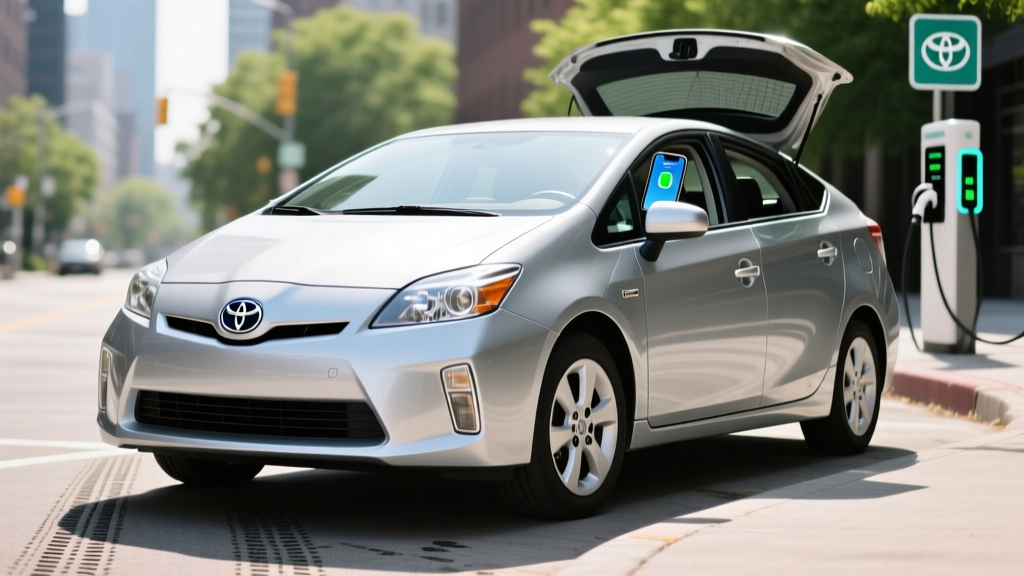
The 2014 Toyota Prius hybrid remains one of the most recognizable nameplates in the hybrid segment, even more than a decade after it rolled off the assembly line. As a third-generation Prius (2010–2015), this model year represents the mature, refined version of Toyota's Hybrid Synergy Drive system — and it's now flooding the used-car market at bargain prices. But with a hybrid battery that's aging into its second decade, prospective buyers need hard data on real-world MPG, battery longevity, and replacement costs before signing any paperwork.
This guide breaks down everything a 2026 used-car shopper needs to know about the 2014 Prius hybrid, from EPA fuel economy figures to powertrain specs, battery warranty status, and how it stacks up against modern hybrids, PHEVs, and full EVs.
2014 Prius Hybrid: EPA Fuel Economy and Real-World MPG
The 2014 Toyota Prius is a conventional hybrid electric vehicle (HEV) — it does not plug in. The gasoline engine and regenerative braking system charge the hybrid battery, so there is no electric-only driving range to report. What you get instead is exceptional fuel economy across all driving conditions.
| Metric | EPA Estimate |
|---|---|
| City MPG | 51 MPG |
| Highway MPG | 48 MPG |
| Combined MPG | 50 MPG |
| Annual Fuel Cost (est.) | ~$1,150 |
| Fuel Tank Capacity | 11.9 gallons |
| Total Driving Range | ~595 miles |
Powertrain Specs: Engine, Motor, and Combined Output
The 2014 Prius uses Toyota's third-generation Hybrid Synergy Drive, pairing a 1.8-liter Atkinson-cycle four-cylinder gasoline engine with two electric motor-generators (MG1 and MG2) through a planetary gearset e-CVT transmission.
| Component | Specification |
|---|---|
| Gasoline Engine | 1.8L 4-cyl Atkinson cycle (2ZR-FXE) |
| Engine Horsepower | 98 HP @ 5,200 RPM |
| Electric Motor (MG2) | 80 HP (60 kW) |
| Net Combined System HP | 134 HP |
| Transmission | e-CVT (planetary gearset) |
| Drivetrain | Front-wheel drive |
| 0–60 MPH | ~9.8 seconds |
| Hybrid Battery | 1.3 kWh (usable ~0.9 kWh), Nickel-Metal Hydride (NiMH) |
The 1.3 kWh NiMH battery pack is small by modern standards — it exists to buffer energy between the engine, regenerative braking, and the electric motor, not to provide meaningful electric-only range. The Prius can creep at low speeds (under ~25 MPH) on electric power alone for roughly one mile under ideal conditions, but this is not a usable EV mode in any practical sense.
HEV vs PHEV vs EV: Where the 2014 Prius Fits
Understanding where the 2014 Prius sits in the electrified-vehicle landscape is essential for buyers cross-shopping options.
Conventional Hybrid (HEV)
2014 Prius = this category
- No plug — refuels with gas only
- Small battery (~1.3 kWh)
- 50 MPG combined
- No electric-only range
- No federal tax credit
Plug-In Hybrid (PHEV)
Example: Prius Prime
- Plugs in to charge
- Larger battery (~13.6 kWh in 2025 Prime)
- 25–44 miles electric-only range
- Gas engine for longer trips
- May qualify for §30D credit (up to $3,750)
Battery Electric (BEV)
Example: Tesla Model 3
- Plugs in — no gas engine
- Large battery (60–82 kWh)
- 250–360 miles EPA range
- Requires charging infrastructure
- Up to $7,500 §30D credit (if eligible)
The 2014 Prius is the right tool for drivers who want maximum fuel efficiency with zero lifestyle change — no home charger installation, no range planning, no charging apps. You simply fill up at any gas station and go.
Battery Longevity, Warranty Status, and Replacement Cost
This is the single most important section for any used 2014 Prius buyer. The NiMH battery pack in the third-gen Prius has proven remarkably durable, but at 12 years old, degradation and failure are real considerations.
Expected Battery Lifespan
Toyota's NiMH hybrid batteries are among the longest-lasting in the industry. Data from fleet operators and owner surveys show:
- Average lifespan: 150,000–200,000 miles before significant degradation
- Capacity loss at 150K miles: Typically 15–25% (noticeable as slightly reduced city MPG)
- Failure rate before 100K miles: Under 2% (per Toyota service data)
- Common failure trigger: Individual cell imbalance rather than full-pack death
Battery Replacement Options and Costs (2026)
| Option | Cost Range | Notes |
|---|---|---|
| New OEM Toyota battery | $2,000–$2,500 (parts + labor) | Best longevity; available through dealerships |
| Remanufactured battery | $1,000–$1,500 (parts + labor) | Rebuilt with tested cells; 1–3 year warranty typical |
| Individual cell replacement | $300–$600 | Requires diagnostic to identify bad cells; specialist shops |
| Used/salvage battery | $500–$800 | Risky — unknown remaining life; avoid unless tested |
Before purchasing any 2014 Prius, request a hybrid battery health check from a Toyota dealer or qualified hybrid specialist. A Techstream scan can reveal individual cell voltage deltas — if cells vary by more than 0.3V, the pack is degrading and replacement is likely within 12–24 months.
Reliability Ratings and Ownership Costs
The 2014 Prius benefits from Toyota's legendary reliability and the simplicity of the hybrid powertrain. There is no traditional starter motor, no alternator, no accessory belt, and no conventional transmission to fail. The e-CVT planetary gearset has no clutch packs or bands — it's essentially bulletproof with basic fluid changes.
Key reliability data points:
- J.D. Power dependability: Third-gen Prius consistently ranks above average in long-term dependability studies
- Consumer Reports: Historically rated the 2014 Prius as "Better Than Average" for overall reliability
- Common issues: Head gasket concerns on high-mileage examples (200K+ miles), EGR valve clogging, 12V auxiliary battery failure (standard lead-acid, ~$200 replacement)
- Brake pad life: 80,000–100,000+ miles thanks to regenerative braking handling most deceleration
Estimated Annual Ownership Costs
For a 2014 Prius driven 12,000 miles per year at 50 MPG with gas at $3.20/gallon:
- Annual fuel cost: ~$768 (240 gallons × $3.20)
- Insurance: $800–$1,200/year (varies by state, driver profile)
- Maintenance: $300–$500/year (oil changes every 10K miles, tire rotation, cabin filter)
- Total estimated annual operating cost: ~$1,870–$2,470
Compare that to a 2014 non-hybrid midsize sedan averaging 28 MPG combined: annual fuel cost would be ~$1,371 — a difference of roughly $600 per year in fuel savings alone with the Prius.
Tax Credits and Incentives: What Applies in 2026?
Because the 2014 Toyota Prius is a conventional hybrid (HEV) — not a plug-in hybrid or battery electric vehicle — it does not qualify for the federal §30D New Clean Vehicle Credit. That credit applies only to new plug-in vehicles meeting battery sourcing, MSRP, and buyer income requirements per IRS guidelines.
As a used vehicle purchase in 2026, here's what applies:
- Federal used EV credit (§25E): Does NOT apply — this credit covers used BEVs and PHEVs only, not conventional hybrids
- Federal new hybrid credit: No such credit exists for conventional HEVs
- State incentives: Some states offer minor rebates or HOV lane access for hybrids, but most state-level incentives have shifted to PHEVs and BEVs. Check your state's energy office for current programs.
- Bottom line: The 2014 Prius offers no tax credit advantage — its value proposition is purely fuel savings and low operating costs
2014 Prius Trims and Used Market Pricing (2026)
The 2014 Prius was offered in five trim levels. Here's what to expect on the used market as of early 2026:
| Trim | Original MSRP | 2026 Used Price Range (80K–130K mi) | Key Features |
|---|---|---|---|
| Two (base) | $24,200 | $7,000–$9,500 | Bluetooth, auto climate, keyless start |
| Three | $25,695 | $8,000–$10,500 | Nav, backup camera, Entune audio |
| Four | $28,230 | $9,000–$11,500 | Leatherette, heated seats, JBL audio |
| Five | $30,005 | $9,500–$12,000 | LED headlights, SofTex, alloy wheels |
| Persona Series | $26,950 | $8,500–$11,000 | Limited-edition color/accent package |
At these prices, the 2014 Prius occupies a compelling sweet spot: a proven, ultra-efficient hybrid for under $10,000 that can deliver 50 MPG with minimal maintenance.
Pros and Cons: The Honest Assessment
Pros
- 50 MPG combined — still class-leading for a non-plug-in vehicle
- Proven reliability with 200K+ mile examples common
- Very low annual fuel cost (~$770/year)
- Spacious hatchback cargo area (21.6 cu ft rear seats up)
- Affordable used pricing ($7K–$12K)
- Regenerative braking extends brake pad life significantly
- No charging infrastructure needed
Cons
- Hybrid battery is 12 years old — replacement likely needed ($1K–$2.5K)
- Slow acceleration (9.8 sec 0–60) — not ideal for highway merging
- Dated interior materials and infotainment by 2026 standards
- No plug-in capability or electric-only range
- No federal or state tax credits available
- Highway MPG drops noticeably above 70 MPH
- Road noise and ride comfort lag modern competitors
Who Should Buy the 2014 Prius Hybrid?
Decision Framework
Choose the 2014 Prius if:
- You want sub-$10,000 transportation with 50 MPG and no charging hassle
- Your commute is mostly city/suburban stop-and-go driving
- You lack access to home or workplace EV charging
- You drive 15,000+ miles/year and want to minimize fuel spend
- You're comfortable budgeting $1,000–$2,500 for a potential battery replacement
Consider a PHEV (like a used Prius Prime) if:
- You have home Level 2 charging and a short commute (<25 miles)
- You want some electric-only driving to eliminate daily gas use
- You're willing to pay $15,000–$22,000 for a newer used PHEV
Consider a full EV if:
- You have reliable home charging and drive under 250 miles/day
- You want zero tailpipe emissions and minimal maintenance
- You qualify for the §30D federal tax credit (up to $7,500 on eligible new EVs)
Frequently Asked Questions
How many MPG does the 2014 Prius hybrid get?
The EPA rates the 2014 Toyota Prius at 51 MPG city, 48 MPG highway, and 50 MPG combined. Real-world city driving often matches or slightly exceeds the EPA city figure thanks to regenerative braking. Highway driving at speeds above 70 MPH typically yields 42–45 MPG. Cold weather reduces efficiency by 5–10%.
Does the 2014 Prius have any electric-only range?
No usable electric-only range. The 2014 Prius is a conventional hybrid (HEV), not a plug-in hybrid. It can creep on electric power at very low speeds for roughly one mile, but this is not a practical EV mode. For electric-only driving, look at the Prius Prime (PHEV), which offers 25–44 miles of electric range depending on model year.
Is the 2014 Prius hybrid reliable?
Yes — the third-generation Prius is among the most reliable vehicles Toyota has built. The hybrid powertrain has fewer wear components than a conventional car (no starter, alternator, accessory belt, or traditional transmission). The main reliability concern at this age is hybrid battery degradation, which typically occurs between 150,000–200,000 miles. Pre-purchase battery diagnostics are essential.
How much does it cost to replace the hybrid battery?
A new OEM Toyota hybrid battery costs $2,000–$2,500 installed. Remanufactured batteries range from $1,000–$1,500 installed. Individual cell replacement at a hybrid specialist runs $300–$600. Given the 2014 Prius's used value of $7,000–$12,000, a battery replacement is economically justified — it extends the vehicle's useful life by another 5–8 years.
Does the 2014 Prius qualify for any tax credit?
No. The 2014 Toyota Prius is a conventional hybrid (HEV) and does not qualify for the federal §30D New Clean Vehicle Credit or the §25E Used Clean Vehicle Credit. Both credits apply only to plug-in vehicles (PHEVs and BEVs). No federal tax incentive exists for conventional hybrids. Check your state's energy office for any remaining state-level hybrid incentives, though most have been discontinued in favor of plug-in vehicle programs.
What should I check before buying a used 2014 Prius?
Prioritize these inspections: (1) hybrid battery health scan via Toyota Techstream — check cell voltage delta; (2) EGR valve and cooler inspection for clogging; (3) head gasket condition on examples over 180,000 miles; (4) 12V auxiliary battery age; (5) brake pad thickness (should have significant life remaining due to regen braking). A pre-purchase inspection at a Toyota dealership or hybrid specialist is strongly recommended.
Sources: U.S. EPA fueleconomy.gov, IRS §30D Clean Vehicle Credits, Toyota Motor North America press archives.