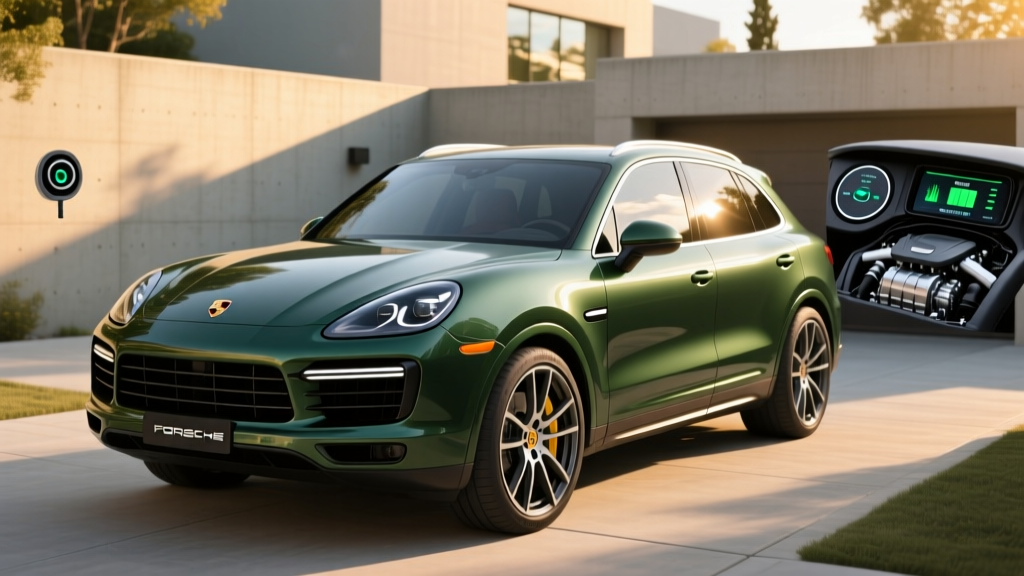
The 2014 Porsche Cayenne S Hybrid occupies an unusual place in the luxury SUV market. Built before Porsche pivoted to the plug-in E-Hybrid architecture, this model is a conventional hybrid (HEV) — meaning it charges its battery solely through regenerative braking and the gasoline engine, with no plug required. For used-car shoppers in 2026 eyeing a performance SUV with modest efficiency gains and Porsche badge prestige, the Cayenne S Hybrid demands a careful look at real costs, battery longevity, and what ownership actually entails over a decade after its debut.
2014 Porsche Cayenne Hybrid at a Glance
| Specification | 2014 Cayenne S Hybrid |
|---|---|
| Powertrain Type | Conventional Hybrid (HEV) — no plug |
| Engine | 3.0L Supercharged V6 + Electric Motor |
| Combined Horsepower | 380 HP (333 HP engine + 47 HP motor) |
| Combined Torque | 428 lb-ft |
| Transmission | 8-speed Tiptronic automatic |
| 0–60 mph | 6.1 seconds |
| Hybrid Battery | ~1.7 kWh NiMH (nickel-metal hydride) |
| EPA MPG (City / Hwy / Combined) | 20 / 24 / 21 |
| Drivetrain | All-wheel drive (AWD) |
| Original MSRP | ~$67,700 |
| 2026 Used Price Range | $14,000–$22,000 |
Fuel Economy: EPA Numbers vs Real-World MPG
The EPA rates the 2014 Cayenne S Hybrid at 20 MPG city, 24 MPG highway, and 21 MPG combined. These figures apply to the conventional hybrid model, which Porsche designated the "Cayenne S Hybrid" for the 2012–2014 model years before switching to the plug-in E-Hybrid nameplate for 2015 and beyond.
| Driving Condition | EPA Estimate | Real-World Expectation |
|---|---|---|
| City (stop-and-go) | 20 MPG | 19–21 MPG (regen braking helps) |
| Highway (70+ mph) | 24 MPG | 21–23 MPG (aero drag, heavy SUV) |
| Combined | 21 MPG | 19–22 MPG depending on mix |
| Cold weather (below 32°F) | — | 17–19 MPG (engine runs more for heat) |
Unlike some hybrids that dramatically exceed their EPA city ratings (the Toyota Prius, for instance, often beats its sticker in town driving), the Cayenne S Hybrid's heavy 4,800-pound curb weight and supercharged V6 limit city-side gains. The electric motor assists primarily during acceleration and low-speed maneuvers, and the system can briefly coast in electric-only "sailing" mode at speeds up to about 97 mph when the driver lifts off the throttle — but this is coasting, not sustained electric propulsion.
Expect roughly 19–22 MPG in mixed daily driving. Owners who do mostly highway commuting at moderate speeds may see 23 MPG. Those with aggressive driving habits or frequent cold-weather short trips should budget for 17–19 MPG.
Conventional Hybrid (HEV) vs Plug-In Hybrid (PHEV): What Changed
It is critical to understand that the 2014 Cayenne S Hybrid is a conventional hybrid (HEV), not a plug-in hybrid (PHEV). It has no charging port, no electric-only driving range to speak of, and cannot be plugged into any external power source. The small 1.7 kWh NiMH battery recharges exclusively through regenerative braking and engine-driven generation.
| Feature | 2014 Cayenne S Hybrid (HEV) | 2015+ Cayenne S E-Hybrid (PHEV) |
|---|---|---|
| Plug-in capable | No | Yes (Level 2, J1772) |
| Battery size | ~1.7 kWh NiMH | ~10.8 kWh lithium-ion |
| Electric-only range | Coasting/sailing only | ~14 miles (EPA) |
| Combined HP | 380 HP | 416 HP |
| EPA combined MPG | 21 MPG | 47 MPGe (hybrid mode: 22 MPG) |
| Requires plugging in | No | Recommended for full benefit |
| Federal tax credit (new) | None | Qualified when new (expired) |
If you need electric-only commuting capability, the 2014 model will not deliver it. You would need to look at the 2015+ Cayenne S E-Hybrid or the later Cayenne E-Hybrid variants for plug-in functionality. For 2026 buyers, newer PHEV SUVs like the BMW X5 xDrive50e or Toyota RAV4 Prime offer substantially more electric range (30–40 miles) and modern battery chemistry.
Powertrain and Driving Impressions
The heart of the Cayenne S Hybrid is a 3.0-liter supercharged V6 producing 333 HP, paired with a 47 HP electric motor integrated into the 8-speed Tiptronic transmission housing. Combined output is 380 HP and 428 lb-ft of torque, delivered through Porsche's all-wheel-drive system.
The supercharger provides immediate low-end response — there is no turbo lag — and the electric motor fills in torque gaps during gear changes. The result is a 0–60 mph time of 6.1 seconds, which remains genuinely quick for a luxury SUV of this era. The parallel-hybrid system can shut off the engine during deceleration and coasting (Porsche called this "sailing mode"), disconnecting the drivetrain to reduce drag and improve efficiency at steady highway speeds.
Driving dynamics are closer to a sports sedan than most SUVs in this class. The steering is precise, body roll is well-controlled, and the Cayenne's weight is managed competently. However, the 4,800-pound mass is always present under hard braking and quick direction changes. The hybrid system adds roughly 180 pounds compared to the non-hybrid Cayenne S, but the weight distribution is only marginally affected.
Battery Longevity, Warranty, and Replacement Cost
Original hybrid battery warranty: 8 years / 100,000 miles (federal emissions-related hybrid component warranty, per EPA/CARB requirements).
2026 status: All 2014 models are now outside the original warranty period. Any battery failure is an out-of-pocket expense.
The 2014 Cayenne S Hybrid uses a nickel-metal hydride (NiMH) battery pack, not the lithium-ion chemistry found in newer hybrids and EVs. NiMH batteries are well-understood and generally robust, but they are heavier and lower in energy density. After 12 years of service, degradation is expected, though the small battery size means the impact on fuel economy is modest — you may lose 1–2 MPG if the battery's state of health has declined significantly.
Battery replacement cost: A new OEM hybrid battery from Porsche typically runs $3,500–$5,500 for the part alone, with labor adding $500–$1,000. Total replacement cost ranges from approximately $4,000 to $6,500 at a Porsche dealer. Independent hybrid specialists may source refurbished or aftermarket NiMH packs for $2,000–$3,500 installed, though availability for this specific model has narrowed as the vehicle ages.
Before purchasing a used 2014 Cayenne S Hybrid, request a hybrid battery health check through a Porsche diagnostic scan. The system logs state-of-health data that can reveal cell imbalance or capacity loss. A pre-purchase inspection by a technician familiar with Porsche hybrid systems is strongly recommended.
Reliability and Common Issues
The 2014 Cayenne sits in the middle of Porsche's reliability spectrum — better than some German competitors of the era, but not at the level of Lexus or Acura. The supercharged 3.0L V6 (shared with Audi and Volkswagen) is generally stout, though several known issues deserve attention:
- Water pump and thermostat housing: Plastic housings can crack and leak coolant. Budget $800–$1,500 for replacement if not already addressed.
- Transfer case (AWD): Some owners report shuddering or failure in the transfer case. Repair costs range from $2,000–$4,000.
- Air suspension: Air springs and compressors wear with age and mileage. Expect $1,500–$3,000 per corner if air struts fail.
- Hybrid system electronics: The power electronics and inverter are generally reliable, but any failure is expensive. The hybrid system warning light should trigger an immediate diagnostic scan.
- PCV valve and oil separator: Common failure point on the 3.0T supercharged engine; replacement is relatively affordable at $300–$600.
For 2026 buyers, maintenance history matters more than mileage. A well-serviced example with 90,000 miles is preferable to a neglected one with 60,000. Budget $2,000–$4,000 annually for maintenance and repairs on a vehicle of this age and complexity.
Pricing and Tax Credit Eligibility in 2026
The 2014 Cayenne S Hybrid originally carried an MSRP of approximately $67,700. In the 2026 used market, examples typically trade between $14,000 and $22,000, depending on mileage, condition, service history, and battery health.
Federal tax credit: The 2014 Cayenne S Hybrid does not qualify for the federal §30D new clean vehicle tax credit — that credit applies only to new vehicle purchases and the conventional hybrid never qualified regardless, as it lacks plug-in capability. For used vehicles, the §25E used clean vehicle credit (up to $4,000 or 30% of sale price) requires the vehicle to be a qualified plug-in electric or fuel-cell vehicle with at least 7 kWh of battery capacity. The Cayenne S Hybrid's 1.7 kWh NiMH pack falls far short of this threshold, making it ineligible for any federal EV or hybrid tax credit.
Some states offer incentives for used hybrid purchases, but these vary widely by jurisdiction. Check your state's energy or environmental agency for current programs.
Who Should Buy This Hybrid — and Who Shouldn't
Pros
- Porsche performance: 380 HP, 0–60 in 6.1s, sports-sedan handling
- No plug-in required — operates like a normal gas car
- Modest MPG improvement over non-hybrid Cayenne (~1–2 MPG gain)
- Depreciation has already occurred — entry-level luxury SUV pricing
- Proven supercharged V6 with strong low-end torque
Cons
- 21 MPG combined is poor by 2026 hybrid standards
- No electric-only driving range
- No federal tax credit eligibility
- Expensive out-of-warranty repairs (battery, air suspension, transfer case)
- 12-year-old NiMH battery nearing end of service life
- Higher insurance costs vs mainstream hybrids
Choose the 2014 Cayenne S Hybrid if: You want Porsche-badge performance in an SUV, you don't have access to plug-in charging, you accept higher maintenance costs as the price of ownership, and you find a well-maintained example with documented service records. This is an enthusiast's hybrid — the efficiency gains are secondary to the driving experience.
Look elsewhere if: Your primary goal is fuel savings. A 2026 Toyota RAV4 Hybrid achieves 40 MPG combined for roughly $33,000 new, with a full warranty and modern safety tech. If you want electric-only commuting, consider a used PHEV like the 2018+ Cayenne E-Hybrid (16+ miles electric range) or a mainstream option like the Toyota RAV4 Prime (42 miles electric).
Hybrid vs PHEV vs EV: Which Fits You?
| Factor | Conventional Hybrid (HEV) | Plug-In Hybrid (PHEV) | Battery Electric (BEV) |
|---|---|---|---|
| Plug-in required | No | Optional (but recommended) | Yes — mandatory |
| Electric-only range | None (assist only) | 15–45 miles typical | 200–400+ miles |
| Fuel cost per mile | Moderate | Low (on electric) / Moderate (on gas) | Lowest (home charging) |
| Upfront cost (2026) | $25K–$50K | $35K–$70K | $30K–$80K+ |
| Tax credit potential | None (federal) | Up to $7,500 (§30D, new) | Up to $7,500 (§30D, new) |
| Best for | No plug access, moderate mileage | Short commute + road trips | Home charging + daily driving |
The 2014 Cayenne S Hybrid serves a narrow band: buyers who value the Porsche driving experience, lack home charging infrastructure, and view fuel savings as a bonus rather than the primary purchase motivation. If efficiency is your top priority, this is not the right vehicle. If driving engagement and badge prestige matter most, and you accept the ownership costs of a 12-year-old German luxury SUV, it can be a rewarding choice.
Frequently Asked Questions
How many MPG does the 2014 Porsche Cayenne Hybrid get?
The EPA rates it at 20 city / 24 highway / 21 combined MPG. Real-world driving typically yields 19–22 MPG combined, with cold weather and aggressive driving reducing that to 17–19 MPG.
Can the 2014 Cayenne Hybrid drive on electric power only?
No. This is a conventional hybrid (HEV), not a plug-in. The electric motor assists the gasoline engine and enables brief engine-off coasting, but it cannot propel the vehicle on electricity alone at any meaningful distance or speed.
What is the battery replacement cost for a 2014 Cayenne Hybrid?
Expect $4,000–$6,500 at a Porsche dealer for a new OEM NiMH hybrid battery including labor. Independent shops may offer refurbished packs for $2,000–$3,500 installed, though availability is limited.
Does the 2014 Cayenne Hybrid qualify for any tax credit?
No. It does not qualify for the federal §30D new vehicle credit (it's a used conventional hybrid) or the §25E used clean vehicle credit (battery capacity is only 1.7 kWh, far below the 7 kWh minimum). Check your state for any local hybrid incentives.
Is the 2014 Cayenne Hybrid reliable?
Average for a German luxury SUV of this era. The supercharged V6 and hybrid system are generally durable, but air suspension, transfer case, coolant system, and aging electronics can generate costly repairs. A thorough pre-purchase inspection and complete service history are essential.
Should I buy a 2014 Cayenne Hybrid or a newer PHEV?
If budget allows, a 2019+ Porsche Cayenne E-Hybrid offers 16+ miles of electric-only range, a modern lithium-ion battery, updated infotainment, and better efficiency. If your budget is firmly under $25,000, the 2014 HEV can work — but factor in potential battery and suspension repairs.