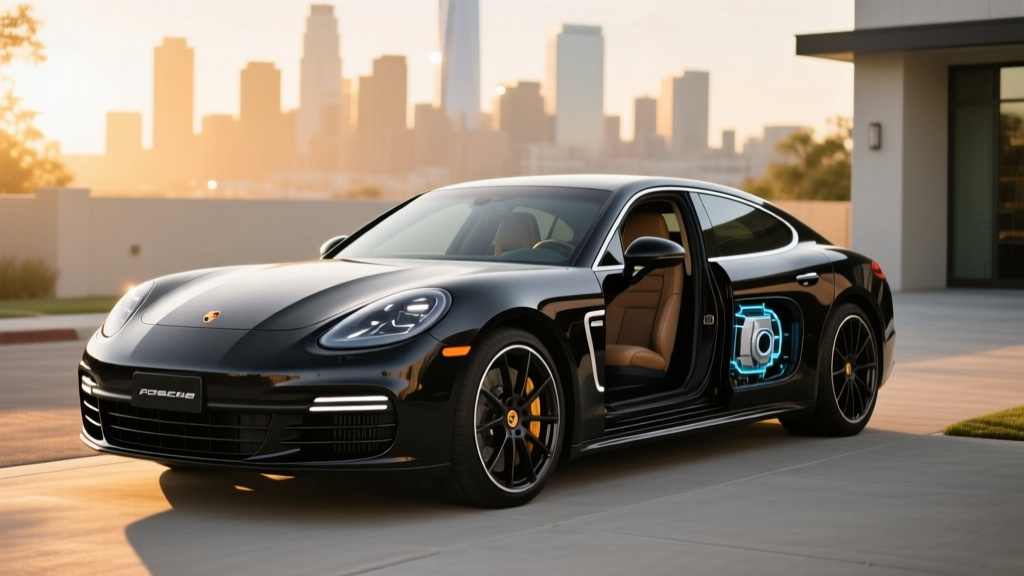
The 2014 Porsche Panamera S E-Hybrid was Porsche's first plug-in hybrid, a bold experiment that paired a supercharged V6 with an electric motor to deliver 416 combined horsepower and a then-impressive electric-only driving mode. More than a decade later, this luxury PHEV shows up on the used market at tempting prices — often under $25,000. But buying a 12-year-old plug-in hybrid in 2026 requires a clear-eyed look at battery degradation, real-world efficiency, and maintenance costs. This guide covers everything you need to know before signing the paperwork.
What the 2014 Panamera S E-Hybrid Actually Is
Before evaluating this car, it's essential to distinguish between hybrid types, because Porsche's naming has caused confusion for years.
HEV vs. PHEV — Where the Panamera S E-Hybrid Fits
| Feature | Conventional Hybrid (HEV) | Plug-In Hybrid (PHEV) |
|---|---|---|
| Plug-in charging | No — charges via regen & engine | Yes — plug in to charge battery |
| Electric-only range | Typically 0–2 miles at low speed | 10–50+ miles depending on model |
| Battery size | 1–2 kWh | 8–30+ kWh |
| Tax credit eligible (new) | No | Was eligible under prior rules |
The 2014 Panamera S E-Hybrid is a PHEV. It has a 9.4 kWh lithium-ion battery pack, a charging port, and an EPA-rated 16 miles of electric-only range. Do not confuse it with the earlier "Panamera S Hybrid" (2012–2013), which was a conventional HEV with no plug and no electric-only mode.
Powertrain, Horsepower, and Performance Specs
The 2014 Panamera S E-Hybrid uses a parallel hybrid architecture combining a 3.0-liter supercharged V6 with an electric motor integrated into the 8-speed Tiptronic S automatic transmission.
| Specification | Value |
|---|---|
| Engine | 3.0L supercharged V6 (333 HP / 325 lb-ft) |
| Electric motor | 95 HP (70 kW) / 229 lb-ft |
| Combined system output | 416 HP / 435 lb-ft torque |
| Transmission | 8-speed Tiptronic S automatic |
| Drivetrain | Rear-wheel drive (RWD only for S E-Hybrid) |
| Battery capacity | 9.4 kWh lithium-ion (liquid-cooled) |
| EPA electric-only range | 16 miles |
| EPA combined range (gas + electric) | ~430 miles |
| 0–60 mph | 5.5 seconds |
| Top speed | 167 mph |
| Curb weight | ~4,685 lbs |
| Fuel tank | 21.1 gallons |
The combined 416 HP makes this a genuinely quick sedan. The electric motor provides instant torque off the line, and the supercharged V6 fills in seamlessly as speeds climb. However, the nearly 4,700-pound curb weight — roughly 300 lbs heavier than the non-hybrid Panamera S — is noticeable in corners and under hard braking.
Fuel Economy: EPA Ratings vs. Real-World MPG
The EPA rated the 2014 Panamera S E-Hybrid at 50 MPGe combined when factoring in electric driving, and 25 MPG combined (23 city / 29 highway) when running on gasoline alone. Here's the full breakdown:
| Mode | City | Highway | Combined |
|---|---|---|---|
| Gasoline only (charge-sustaining) | 23 MPG | 29 MPG | 25 MPG |
| Combined gas + electric (MPGe) | — | — | 50 MPGe |
| Electric-only energy consumption | 46 kWh/100 mi | ||
Real-World Fuel Economy: What Owners Actually See
Real-world MPG depends entirely on how often you charge and how far you drive between charges. Based on owner-reported data from fueleconomy.gov and enthusiast forums:
- Short commutes with daily charging (under 20 mi): 60–90 MPG equivalent — most driving done on electricity, gas engine rarely starts.
- Mixed driving with occasional charging: 28–35 MPG — the electric assist helps in city traffic, but highway driving is mostly gas-powered.
- Long highway trips without charging: 22–26 MPG — essentially operates as a conventional hybrid once the battery is depleted. The supercharged V6 is not especially efficient at sustained speeds.
- Cold weather (below 40°F): Expect 15–20% range loss on electric mode (down to ~10–12 miles electric) and 2–3 MPG less on gas due to cabin heating and battery thermal management.
Charging: How Long, What Connector, and Can It Fast Charge?
The 2014 Panamera S E-Hybrid charges via a SAE J1772 connector (the standard AC charging plug for non-Tesla EVs/PHEVs in North America). There is no DC fast charging capability — this is strictly an AC-charging vehicle.
| Charging Level | Power (kW) | Full Charge Time (0–100%) | Practical Notes |
|---|---|---|---|
| Level 1 (120V household outlet) | ~1.2 kW | ~8 hours | Overnight on a standard outlet; sufficient for daily top-ups |
| Level 2 (240V, Porsche-supplied charger) | ~3.6 kW | ~2.5 hours | Requires 240V outlet; full charge during workday or evening |
| DC Fast Charging | Not supported | N/A | No CCS or CHAdeMO port |
The onboard charger is limited to approximately 3.6 kW, which means even on a Level 2 station capable of 7.2 kW or higher, the car will only draw 3.6 kW. This is a common limitation on early PHEVs — the small battery doesn't justify a larger onboard charger from the manufacturer's perspective, but it does mean you can't take advantage of faster public Level 2 chargers.
Practical tip: Most owners charge at home overnight on Level 1 or Level 2. With a 9.4 kWh battery, even 120V charging adds roughly 4–5 miles of electric range per hour, which is enough to replenish a daily commute.
Battery Health, Warranty, and Replacement Cost
For any used PHEV, the high-voltage battery is the single biggest financial risk. Here's what to know about the Panamera S E-Hybrid's battery in 2026:
Battery Warranty — Now Expired for Most Vehicles
Porsche originally provided an 8-year / 100,000-mile warranty on the hybrid battery pack, guaranteeing it would retain at least 70% of its original capacity. For a 2014 model, this warranty expired in 2022 at the latest. Unless you find a certified pre-owned example with an extended warranty, you are on your own for battery replacement costs.
Expected Battery Degradation
The 9.4 kWh lithium-ion pack in the 2014 Panamera S E-Hybrid uses NMC (nickel-manganese-cobalt) chemistry, which was standard for the era. Based on industry data and owner reports for similar-age PHEV batteries:
- Average degradation at 10–12 years: 15–30% capacity loss, depending on climate, charging habits, and mileage.
- Best case (garage-kept, moderate climate, regular charging): ~85% State of Health (SoH), yielding ~13–14 miles electric range.
- Worst case (hot climate, frequent deep discharge, high mileage): ~65–70% SoH, yielding ~10–11 miles electric range.
- Complete failure (cell imbalance, coolant leak into pack): Rare but possible; renders electric mode inoperable.
Battery Replacement Cost
A new replacement high-voltage battery from Porsche for this model typically costs between $8,000 and $12,000 including parts and labor at a dealership. Independent hybrid-battery specialists may offer refurbished packs for $4,000–$7,000. Cell-level repair (replacing individual degraded modules) is possible at some specialist shops for $2,000–$4,000 but availability varies by region.
Before buying: Ask the seller for a battery diagnostic report showing current SoH percentage. A Porsche dealer or a shop with PIWIS (Porsche Integrated Workshop Information System) can pull this data. If the SoH is below 75%, budget for eventual replacement or negotiate the price down accordingly.
Reliability and Common Issues
The 2014 Panamera S E-Hybrid is mechanically complex — a supercharged engine, an electric motor, a high-voltage battery, liquid cooling for the battery, and an 8-speed automatic all working in concert. Reliability is mixed:
- Powertrain: The 3.0L supercharged V6 (shared with Audi and the VW Touareg of the era) is generally robust, though water pump and thermostat housing failures are known issues around 80,000–100,000 miles.
- Hybrid system: The electric motor and power electronics have proven reliable, but the battery cooling system's coolant lines can develop leaks. A coolant leak into the battery pack is catastrophic and expensive.
- Air suspension: If equipped (optional on S E-Hybrid), the air struts are a known wear item at 80,000+ miles. Replacement runs $1,500–$2,500 per corner.
- Transmission: The ZF 8-speed Tiptronic is stout but requires fluid changes at ~60,000-mile intervals. Neglected examples can develop shudder or rough shifts.
- 12V battery: Like many PHEVs and EVs, the 12V auxiliary battery can fail if the car sits uncharged for extended periods. A dead 12V battery will prevent the car from starting even if the high-voltage pack is full.
For a vehicle of this age, a pre-purchase inspection (PPI) at a Porsche specialist is non-negotiable. Budget $200–$400 for the PPI — it may save you thousands.
Pricing and Tax Credit Eligibility in 2026
Used Market Pricing
As of early 2026, the 2014 Panamera S E-Hybrid trades in the used market at approximately:
- 80,000–120,000 miles: $16,000–$22,000
- 50,000–80,000 miles: $22,000–$28,000
- Under 50,000 miles (excellent condition): $28,000–$35,000
Original MSRP was approximately $93,200 (base) and could exceed $110,000 with options. Depreciation has been steep — typical for luxury German PHEVs of this era.
Federal Tax Credit — Not Eligible
Under current IRS §30D rules, the federal clean vehicle tax credit applies only to new qualifying vehicles purchased new, or to used EVs/PHEVs under the separate §25E used clean vehicle credit. Here's the breakdown:
- New vehicle credit (§30D): Not applicable — this model is long discontinued.
- Used vehicle credit (§25E): The used clean vehicle credit provides up to $4,000 (or 30% of the sale price, whichever is lower) for eligible used EVs and PHEVs. However, the vehicle must have a sale price of $25,000 or less, must be at least two model years old, and the buyer must meet income caps ($75,000 single / $150,000 joint). The Panamera S E-Hybrid may qualify if you find one priced at or below $25,000 from a licensed dealer. Confirm eligibility with a tax professional and check the IRS's current qualified vehicle list.
- State incentives: Most state PHEV incentives target new purchases. Check your state's energy office for any used-EV rebate programs.
Who Should Buy the 2014 Panamera S E-Hybrid — and Who Shouldn't
Pros
- 416 HP with smooth electric torque — genuinely quick and refined
- 16 miles electric range covers many short commutes gas-free
- Porsche build quality, materials, and ride comfort
- Heavy depreciation means luxury performance for a mainstream price
- Can charge at home on a standard 120V outlet
Cons
- Original battery warranty expired — replacement costs $4K–$12K
- Complex powertrain = expensive repairs out of warranty
- Only 3.6 kW AC charging — no DC fast charge
- Heavy curb weight affects handling vs. non-hybrid Panamera
- Limited cargo space due to battery placement
- Insurance costs remain elevated for Porsche nameplate
Decision Framework: Is This the Right Electrified Car for You?
Choose the 2014 Panamera S E-Hybrid if: You want a luxury performance sedan with short electric-only commuting capability, you can charge at home, you have a trusted Porsche specialist for maintenance, and you accept the risk of a degraded high-voltage battery.
Choose a newer PHEV (e.g., 2022+ Toyota RAV4 Prime, BMW 330e) if: You want remaining factory warranty, better electric range (30–42 mi), modern infotainment, and lower maintenance risk.
Choose a full EV (BEV) if: Your commute is under 250 miles round-trip, you have reliable home charging, and you want to eliminate gas-engine maintenance entirely.
Choose a conventional hybrid (HEV) if: You cannot charge at home, you want simplicity, and you prioritize reliability over performance — a Toyota Camry Hybrid or Honda Accord Hybrid delivers 45–50+ MPG with far lower risk.
Frequently Asked Questions
How many MPG does the 2014 Panamera S E-Hybrid get?
The EPA rates it at 25 MPG combined (23 city / 29 highway) on gasoline alone, and 50 MPGe combined when factoring in electric driving. Real-world MPG varies widely: owners who charge daily and drive short distances report 60–90 MPG equivalent, while long highway trips without charging yield 22–26 MPG.
How far can the 2014 Panamera S E-Hybrid go on electric only?
The EPA rated it at 16 miles electric-only when new. In 2026, expect 10–14 miles depending on battery degradation, ambient temperature, and driving style. Highway speeds and cold weather reduce this further.
Is the 2014 Panamera S E-Hybrid reliable?
Reliability is moderate. The powertrain is generally robust, but the hybrid battery, air suspension (if equipped), and coolant system are known wear items at this age. A pre-purchase inspection at a Porsche specialist is essential, and you should budget $2,000–$4,000 annually for maintenance and unexpected repairs.
What does a replacement hybrid battery cost?
A new OEM battery from Porsche costs $8,000–$12,000 installed. Refurbished packs from independent specialists run $4,000–$7,000. Cell-level module repair may be available for $2,000–$4,000 depending on the issue and shop availability.
Does the 2014 Panamera S E-Hybrid qualify for any tax credit?
It does not qualify for the new vehicle credit (§30D). It may qualify for the used clean vehicle credit (§25E) — up to $4,000 — if the sale price is $25,000 or less, the buyer meets income limits ($75K single / $150K joint), and the vehicle is purchased from a licensed dealer. Verify current eligibility at IRS.gov and consult a tax professional.
Can the 2014 Panamera S E-Hybrid DC fast charge?
No. It supports only AC charging via a J1772 connector at up to 3.6 kW (Level 2) or 1.2 kW (Level 1). There is no DC fast charging port.
Hybrid vs. PHEV vs. full EV — which should I choose?
If you can charge at home and your daily driving is under 30 miles, a PHEV like this Panamera lets you commute on electricity while keeping a gas engine for longer trips. A full EV eliminates gas entirely but requires reliable charging access and a higher upfront budget. A conventional hybrid (HEV) is the lowest-risk, lowest-complexity option if you cannot plug in at home.