Quick Verdict: A Luxury Hybrid Bargain on the Used Market
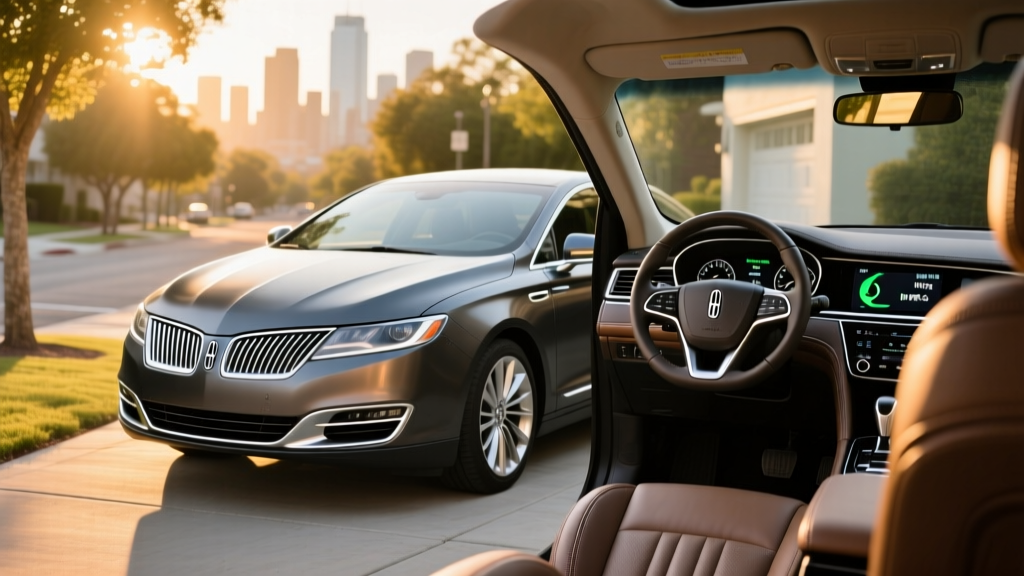
The 2014 Lincoln MKZ Hybrid occupies a specific niche in 2026's used-car landscape: a midsize luxury sedan that delivers genuine fuel savings without the complexity of a plug-in hybrid or the range considerations of a full EV. Built on the Ford Fusion Hybrid platform but wrapped in Lincoln's premium interior, it returns an EPA-estimated 38 MPG combined while offering a genuinely quiet, comfortable ride. With used examples now trading between $8,000 and $14,000 depending on mileage and condition, it's one of the most affordable entry points into hybrid ownership — provided you understand what you're buying.
This guide covers everything a prospective buyer needs: real-world fuel economy, powertrain specifications, battery longevity and replacement costs, and how the MKZ Hybrid stacks up against modern alternatives.
HEV vs PHEV vs EV: What the 2014 MKZ Hybrid Actually Is
Before diving into specs, it's critical to understand what this car is — and what it isn't.
Conventional Hybrid (HEV) — What the MKZ Hybrid Is
The 2014 Lincoln MKZ Hybrid is a conventional hybrid electric vehicle (HEV). It pairs a gasoline engine with an electric motor and a small battery pack that recharges through regenerative braking and the engine itself. You never plug it in. You simply fill it with gasoline and drive. The hybrid system seamlessly switches between electric and gas power to optimize efficiency, particularly in stop-and-go city driving.
Plug-In Hybrid (PHEV) — What It Is Not
A PHEV has a larger battery (typically 10–25 kWh) that you plug in to charge, offering 20–40 miles of electric-only driving before the gas engine kicks in. Lincoln did not offer a plug-in version of the MKZ in 2014. If plug-in capability is important to you, you'd need to look at alternatives like the 2014 Ford Fusion Energi (the MKZ's PHEV platform sibling) or a modern PHEV like the Toyota RAV4 Prime.
Battery Electric Vehicle (BEV) — The Full-Electric Alternative
A BEV runs entirely on electricity with no gasoline engine. In 2026, used BEVs like the Chevrolet Bolt EV or Nissan Leaf offer 150–250+ miles of range but require access to home or public charging infrastructure. The MKZ Hybrid asks nothing of your electrical panel — it works with the existing gas station network.
Fuel Economy: EPA Ratings and Real-World MPG
The 2014 Lincoln MKZ Hybrid carries EPA ratings that remain competitive more than a decade after its release. According to fueleconomy.gov, the official figures are:
| Driving Condition | EPA Estimated MPG | Real-World Expectation |
|---|---|---|
| City | 38 MPG | 36–42 MPG (hybrids often exceed EPA in city) |
| Highway | 37 MPG | 33–37 MPG (less regen benefit at steady speed) |
| Combined | 38 MPG | 35–40 MPG depending on driving mix |
Real-World MPG Insight
Like most hybrids, the MKZ Hybrid tends to match or slightly exceed its EPA city rating in real-world stop-and-go traffic, where regenerative braking and electric-only low-speed operation do the most work. Highway driving at 70+ MPH yields lower returns because the gasoline engine does most of the work at sustained speeds. In cold weather (below 30°F), expect a 5–10% MPG reduction as the engine runs more frequently to provide cabin heat and the battery operates less efficiently. Owners reporting to Fuelly and similar tracking sites consistently log lifetime averages in the 35–40 MPG range, validating the EPA sticker as realistic rather than optimistic.
For context, the non-hybrid 2014 MKZ with the 2.0L EcoBoost engine returns just 22 city / 33 highway / 26 combined MPG. The hybrid's 38 MPG combined represents a 46% improvement in fuel economy — a meaningful difference at any gas price.
Powertrain Specs: Engine, Motor, and Combined Output
| Specification | 2014 Lincoln MKZ Hybrid |
|---|---|
| Engine | 2.0L Atkinson-cycle inline-4 |
| Engine Power | 141 hp @ 6,000 rpm |
| Electric Motor | Permanent-magnet AC synchronous |
| Motor Power | 118 hp (88 kW) |
| Combined System Output | 188 hp |
| Transmission | eCVT (planetary gearset, not a belt CVT) |
| Hybrid Battery | 1.4 kWh lithium-ion (usable capacity ~1.0 kWh) |
| Drivetrain | Front-wheel drive |
| 0–60 MPH | ~8.4 seconds |
| Fuel Tank | 13.5 gallons |
| Total Range | ~513 miles (EPA combined) |
| Towing Capacity | Not rated for towing |
The 2.0L Atkinson-cycle engine sacrifices some peak power for thermal efficiency — the hallmark of hybrid powertrains. The eCVT is Toyota-derived (Ford licensed the Hybrid Synergy Drive architecture) and uses a planetary gearset rather than the rubber-belt design found in some competitors. This matters: planetary eCVTs are among the most durable transmissions ever put in a passenger car, with no belts to wear and no traditional friction clutches.
The 1.4 kWh lithium-ion battery pack is small by modern standards — a 2026 PHEV might carry 15–25 kWh — but it's appropriately sized for a conventional hybrid. Its job isn't to provide extended electric-only range; it's to buffer energy for acceleration assist and regenerative braking. This means shallow charge-discharge cycles, which is exactly what maximizes lithium-ion battery longevity.
Battery Reliability, Warranty, and Replacement Cost
Hybrid battery anxiety is the single most common concern among used hybrid buyers. Here's what the data shows for the 2014 MKZ Hybrid.
Original Battery Warranty
- Hybrid Battery: 8 years / 100,000 miles (whichever comes first) — extends to 10 years / 150,000 miles in California Air Resources Board (CARB) states
- Hybrid System Components: 8 years / 100,000 miles
- Powertrain (engine, transmission): 6 years / 70,000 miles
For a 2014 model in 2026, the original factory battery warranty has expired for most vehicles (12 years old). However, the durability record is strong.
Real-World Battery Longevity
The Ford/Lincoln hybrid system has one of the best battery longevity records in the industry. The Fusion Hybrid and MKZ Hybrid share the same powertrain, and fleet data from taxi services — which routinely push these vehicles past 200,000 miles — shows original hybrid batteries frequently lasting 150,000–200,000+ miles before significant degradation. The shallow cycling strategy (the battery management system never allows a full charge or full discharge) is the primary reason.
Battery Replacement Cost in 2026
If you do need a replacement, here's what to expect:
- OEM new battery (Ford/Lincoln dealer): $2,500–$3,500 including labor
- Remanufactured battery (independent hybrid specialist): $1,500–$2,200 including labor
- Used/salvage battery: $800–$1,200 plus installation
Several independent hybrid battery shops now offer remanufactured units with 3-year warranties, making replacement far more affordable than it was a decade ago. Given the vehicle's current used value of $8,000–$14,000, a $2,000 battery replacement is a meaningful percentage of the car's worth — something to factor into your purchase decision and negotiation.
Pre-Purchase Battery Health Check
Before buying any used 2014 MKZ Hybrid, request a hybrid battery health report. A Ford dealer can pull State of Health (SoH) data via the OBD-II port, or you can use an aftermarket scan tool like an OBDLink adapter with the FORScan app to read battery parameters yourself. Look for:
- Individual cell voltage balance (cells should be within 0.2V of each other)
- Battery temperature readings (no hot spots indicating failing modules)
- Charge/discharge cycle behavior during a test drive
Who Should Buy the 2014 MKZ Hybrid — And Who Shouldn't
Pros
- 38 MPG combined — genuine fuel savings vs gas-only luxury sedans
- Smooth, quiet ride quality with Lincoln's premium sound insulation
- No charging infrastructure needed — works with existing gas stations
- Proven, durable hybrid powertrain with strong longevity data
- Low used-market pricing ($8K–$14K) makes it an affordable hybrid entry point
- Generous rear-seat legroom (44.4 inches) for the midsize class
- Planetary eCVT is virtually maintenance-free
Cons
- Modest 188 hp — acceleration is adequate but not quick (8.4s 0–60)
- MyLincoln Touch infotainment is dated and laggy by 2026 standards
- Hybrid battery warranty has expired on most 2014 examples
- Not eligible for any federal or state EV/PHEV tax credit
- No plug-in or electric-only driving capability
- Trunk space reduced by battery pack (11.1 cu ft vs 15.4 cu ft in gas MKZ)
- Ford's SYNC/MyLincoln Touch had reliability complaints in this era
Choose the 2014 MKZ Hybrid If:
- You want luxury-sedan comfort with strong fuel economy on a tight budget
- You lack access to home or workplace charging (apartment, street parking)
- Your commute is city-heavy with lots of stop-and-go traffic
- You want a proven hybrid without the learning curve of a PHEV or EV
- You drive 10,000–15,000 miles/year and want to reduce fuel costs by ~40%
Look Elsewhere If:
- You want electric-only driving — consider a used PHEV like the Chevrolet Volt or a modern PHEV
- You prioritize quick acceleration — the MKZ Hybrid is comfortable, not sporty
- You want current infotainment tech (Apple CarPlay, Android Auto) — this generation predates them
- You need a large trunk — the hybrid battery cuts cargo space by ~28%
Pricing and Tax Credit Eligibility in 2026
As a used conventional hybrid, the 2014 Lincoln MKZ Hybrid's market pricing in 2026 breaks down roughly as follows:
| Condition / Mileage | Approximate Price Range |
|---|---|
| Excellent (<80K miles, clean history) | $12,000–$14,000 |
| Good (80K–130K miles) | $9,500–$12,000 |
| Fair (130K–180K miles) | $7,500–$9,500 |
| High mileage (180K+ miles) | $5,500–$7,500 |
Tax Credit Status
The 2014 Lincoln MKZ Hybrid does not qualify for the federal §30D Clean Vehicle Credit. That credit applies only to new plug-in electric vehicles (BEVs and PHEVs meeting battery sourcing, MSRP cap, and buyer income requirements as defined by the IRS). Conventional hybrids like the MKZ Hybrid are excluded.
The Used Clean Vehicle Credit (up to $4,000 or 30% of sale price, whichever is less) similarly applies only to used plug-in vehicles (BEVs and PHEVs), not conventional hybrids. There is no federal incentive for purchasing a used HEV in 2026.
Some states or local utilities offer rebates for hybrid purchases, but these vary by jurisdiction and are increasingly rare for conventional hybrids. Check your state's energy office or utility provider for current programs.
Maintenance Costs and Ownership Economics
One of the MKZ Hybrid's strongest arguments is low running costs. Here's how it compares to the gas-only 2014 MKZ (2.0L EcoBoost) on annual fuel expense:
| Cost Factor | MKZ Hybrid (38 MPG) | MKZ Gas (26 MPG) |
|---|---|---|
| Annual fuel cost (12,000 mi/yr @ $3.40/gal) | $1,074 | $1,569 |
| 5-year fuel cost | $5,368 | $7,846 |
| 5-year fuel savings (hybrid vs gas) | $2,478 saved | |
| Oil changes (full synthetic, 7,500 mi interval) | ~$320/5 yr | ~$320/5 yr |
| Brake pad replacement | Less frequent (regen braking saves pads) | Standard interval |
The hybrid's regenerative braking system significantly extends brake pad life — many hybrid owners report original brake pads lasting 80,000–100,000+ miles. Combined with the eCVT's lack of traditional transmission fluid changes, the MKZ Hybrid's maintenance costs are often lower than its gas-only counterpart despite the more complex powertrain.
Frequently Asked Questions
How many MPG does the 2014 Lincoln MKZ Hybrid get?
The EPA rates it at 38 MPG city, 37 MPG highway, and 38 MPG combined. Real-world owners typically report 35–42 MPG depending on driving conditions. City driving tends to yield the best results because regenerative braking and electric assist do the most work in stop-and-go traffic.
Does the 2014 MKZ Hybrid need to be plugged in?
No. This is a conventional hybrid (HEV), not a plug-in hybrid (PHEV). The battery charges itself through regenerative braking and the gasoline engine. You simply fill it with gas and drive — no charging cable, no home charger installation, no public charging network required.
How far can the 2014 MKZ Hybrid drive on electric power alone?
At very low speeds (under ~25 MPH), the MKZ Hybrid can operate on electric power alone for roughly 1–2 miles depending on battery state of charge. However, this is not designed for extended electric-only driving — it's a feature that assists during parking-lot maneuvers and initial acceleration from stops. For meaningful electric-only range, you need a PHEV.
Is the 2014 Lincoln MKZ Hybrid reliable?
The powertrain — shared with the Ford Fusion Hybrid — has an excellent reliability record. The planetary eCVT transmission is essentially bulletproof, and the hybrid battery commonly lasts 150,000–200,000+ miles. The main reliability concerns are non-powertrain: the MyLincoln Touch infotainment system had known issues in this era, and some owners reported problems with the push-button gear selector. Mechanically, it's one of the more dependable luxury sedans of its vintage.
What does a replacement hybrid battery cost?
In 2026, expect to pay $2,500–$3,500 for a new OEM battery at a Ford/Lincoln dealer, or $1,500–$2,200 for a remanufactured battery from an independent hybrid specialist. Used/salvage batteries run $800–$1,200. Given the vehicle's used value, a remanufactured battery with a warranty is the most cost-effective choice if replacement is needed.
Does the 2014 MKZ Hybrid qualify for any tax credit?
No. The federal §30D Clean Vehicle Credit and the Used Clean Vehicle Credit apply only to plug-in vehicles (BEVs and PHEVs). Conventional hybrids like the MKZ Hybrid are not eligible for federal tax incentives. Check your state and local utility for any remaining hybrid incentives, though these have become rare.
Hybrid vs PHEV vs EV — which should I choose?
Choose the MKZ Hybrid (HEV) if you want fuel savings without changing your refueling habits and lack home charging access. Choose a PHEV if you have home charging and want 20–40 miles of daily electric commuting with gas backup for road trips. Choose a full EV if you have reliable home charging, want zero tailpipe emissions, and your daily driving fits within available range. The MKZ Hybrid is the lowest-commitment option — no lifestyle change required.
How does the 2014 MKZ Hybrid compare to a modern hybrid like the 2026 Toyota Camry Hybrid?
The 2026 Camry Hybrid returns up to 52 MPG combined (LE trim) — a 37% improvement over the MKZ's 38 MPG. It also offers modern infotainment with wireless CarPlay/Android Auto, current safety tech (automatic emergency braking, lane-keeping), and a full factory warranty. However, a used 2026 Camry Hybrid will cost $28,000–$35,000 versus $8,000–$14,000 for the MKZ. The fuel savings gap (~$200/year at 12,000 mi/yr) takes many years to offset the price difference, making the MKZ a strong value play for budget-conscious buyers.
Sources: EPA fuel economy data via fueleconomy.gov; IRS clean vehicle credit rules via irs.gov; NHTSA safety and recall data via nhtsa.gov.