Quick Verdict: The 2022 Prius Remains a Benchmark Hybrid
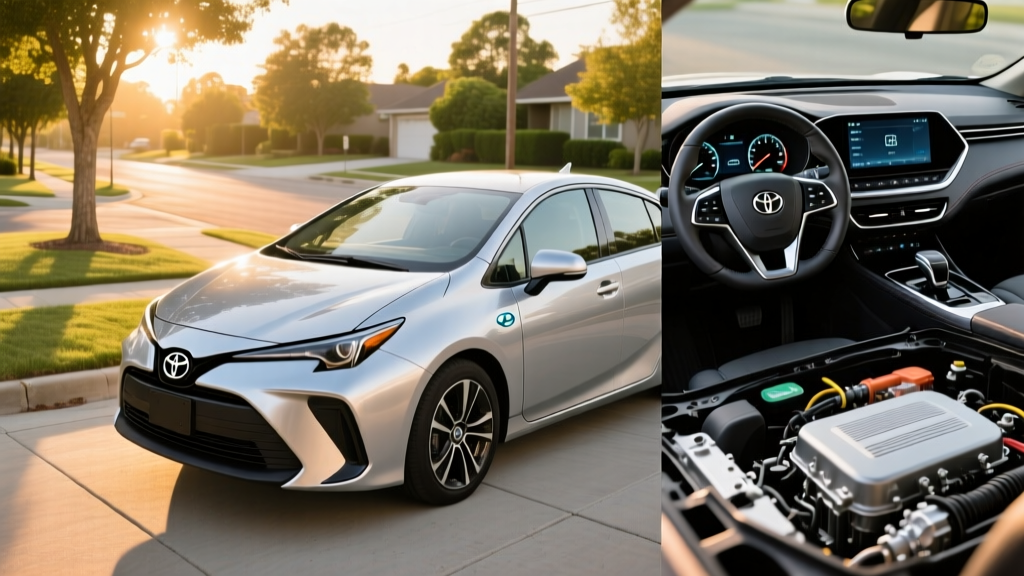
The 2022 Toyota Prius hybrid occupies a specific niche in 2026's used-car market: it's the last model year of the fourth-generation Prius before Toyota's dramatic redesign for 2023. That means buyers get a proven, mature platform with a decade of real-world reliability data behind its nickel-metal hydride (NiMH) and lithium-ion battery packs — at prices that have settled into the $18,000–$26,000 range depending on trim and mileage. The conventional Prius HEV delivers an EPA-estimated 54 MPG combined (58 city / 53 highway) on the Eco trim, while the Prius Prime PHEV variant adds 25 miles of electric-only driving. Neither requires a lifestyle change, a home charger, or range-anxiety management. If your goal is maximum fuel savings with zero plug-in infrastructure, the 2022 Prius is still one of the most rational vehicles money can buy.
| Spec | Prius HEV (Eco) | Prius HEV (LE/XLE) | Prius Prime (PHEV) |
|---|---|---|---|
| Powertrain | 1.8L 4-cyl + 2 electric motors | 1.8L 4-cyl + 2 electric motors | 1.8L 4-cyl + 2 electric motors |
| Combined Horsepower | 121 hp | 121 hp | 121 hp |
| EPA City / Hwy / Combined MPG | 58 / 53 / 56 | 54 / 50 / 52 | 54 / 50 / 52 (hybrid mode) |
| MPGe (EV mode, Prime only) | — | — | 133 MPGe |
| EV-Only Range (Prime) | — | — | 25 miles |
| Total Range (Prime) | — | — | ~640 miles |
| Traction Battery | 0.75 kWh NiMH (LE) / 0.75 kWh Li-ion (XLE) | 0.75 kWh NiMH / Li-ion | 8.8 kWh Li-ion |
| Charging (Prime) | N/A | N/A | Level 2: ~2 hrs (no DC fast charge) |
| 0–60 mph | ~9.8 sec | ~9.8 sec | ~10.2 sec |
| Cargo Volume | 24.6 cu ft (rear seats up) | 24.6 cu ft | 19.8 cu ft (battery intrusion) |
| Original MSRP (base) | $25,075 | $25,075–$29,570 | $29,200 |
| Battery Warranty | 10 yr / 150,000 mi | 10 yr / 150,000 mi | 10 yr / 150,000 mi |
HEV vs. PHEV: Which 2022 Prius Fits Your Driving?
Toyota sold the 2022 Prius in two distinct electrified flavors, and confusing them is the most common mistake shoppers make. Here's the clear distinction:
| Factor | Prius HEV (Conventional Hybrid) | Prius Prime (Plug-In Hybrid) |
|---|---|---|
| Needs to be plugged in? | No — charges via regenerative braking and engine | Yes, to access 25 mi EV-only range (operates as HEV if unplugged) |
| Electric-only driving | Very short low-speed bursts only | 25 miles at full highway speed |
| Battery size | 0.75 kWh (small buffer) | 8.8 kWh (substantial EV buffer) |
| Best for | Drivers without home/work charging access | Drivers with home charging and short commutes |
| Cargo penalty | None | ~5 cu ft lost to larger battery pack |
| Used price premium (2026 market) | Baseline | +$1,500–$3,000 over equivalent HEV trim |
The bottom line: If you can plug in at home nightly and your daily round-trip commute is under 25 miles, the Prime lets you burn almost zero gasoline on weekdays while retaining full hybrid flexibility for road trips. If charging access is uncertain or your commute is long, the standard HEV delivers outstanding efficiency without any behavioral change.
Fuel Economy: EPA Numbers and Real-World MPG
| Trim | City MPG | Highway MPG | Combined MPG |
|---|---|---|---|
| Prius Eco (LE w/ lightweight wheels) | 58 | 53 | 56 |
| Prius LE / XLE / Limited | 54 | 50 | 52 |
| Prius Prime (hybrid mode, battery depleted) | 54 | 50 | 52 |
| Prius Prime (charge-depleting, EV mode) | 133 MPGe combined | ||
Source: fueleconomy.gov
Real-World MPG vs. EPA Sticker
The Prius is one of the few vehicles where real-world fuel economy frequently exceeds the EPA estimate in city driving. Toyota's Hybrid Synergy Drive recovers kinetic energy during deceleration and stop-and-go traffic — exactly the conditions where the EPA city cycle spends the most time. Many owners report 58–62 MPG in warm-weather urban commuting on the Eco trim.
However, highway driving tells a different story. At sustained 70–80 mph speeds, the 1.8L Atkinson-cycle engine operates outside its most efficient load range, and the Prius's tall, hatchback body generates more aerodynamic drag than a sleek sedan. Expect 46–50 MPG on the highway at 75 mph — roughly 4–6 MPG below the EPA highway figure. Cold weather (below 35°F) reduces efficiency by 8–12% due to engine warm-up enrichment, cabin heating demand, and increased battery internal resistance.
- City (warm weather, mixed traffic): 56–62 MPG
- Highway (70 mph cruise, flat terrain): 48–52 MPG
- Highway (80 mph, headwinds/hills): 44–48 MPG
- Winter combined (30°F, short trips): 46–50 MPG
- Tank range (11.4-gallon tank): 520–640 miles typical
Prius Prime PHEV: 25 Miles Electric, 640 Miles Total
The 2022 Prius Prime carries an 8.8 kWh lithium-ion battery pack (approximately 6.7 kWh usable to protect longevity). That delivers an EPA-rated 25 miles of electric-only range at speeds up to 84 mph in EV mode. Once the battery is depleted, the Prime seamlessly transitions to standard hybrid operation at 52 MPG combined — meaning total range stretches to roughly 640 miles on a full charge plus a full 11.4-gallon tank.
Charging the Prime
The Prime uses a standard J1772 connector for Level 1 (120V) and Level 2 (240V) AC charging. It does not support DC fast charging — a limitation worth understanding before purchase.
- Level 1 (120V household outlet, 12A): ~5.5 hours from empty to full
- Level 2 (240V, 16A/3.3 kW onboard charger): ~2 hours from empty to full
- DC Fast Charge: Not available — the 8.8 kWh battery is too small to justify DC hardware, and the 3.3 kW onboard charger caps AC input
For most Prime owners, a standard 120V outlet in the garage is sufficient — plug in at night, wake up to 25 miles of EV range. A dedicated Level 2 charger is a luxury, not a necessity, for this battery size.
Powertrain and Performance: Adequate, Not Exciting
The 2022 Prius uses Toyota's fourth-generation Hybrid Synergy Drive: a 1.8-liter Atkinson-cycle four-cylinder engine (96 hp, 105 lb-ft) paired with two motor-generators and a planetary gearset acting as an electronically controlled continuously variable transmission (eCVT). Combined system output is 121 horsepower.
The 0–60 mph time of approximately 9.8 seconds (10.2 for the heavier Prime) won't impress at drag strips, but the electric motors deliver instant torque from a standstill, making the Prius feel more responsive in city traffic than the horsepower figure suggests. The eCVT eliminates shift shock entirely — acceleration is a smooth, linear surge. Where the powertrain falls short is highway merging at altitude or climbing steep grades under load; you'll hear the engine drone at high RPM while the planetary gearset holds the engine at its power peak.
Handling is competent but comfort-oriented. The double-wishbone rear suspension (a fourth-gen improvement over the previous torsion beam) absorbs bumps well, but the low-rolling-resistance tires prioritize efficiency over grip. This is a commuting appliance in the best sense of the word.
Reliability and Battery Longevity: The Prius Advantage
The 2022 Prius benefits from two decades of Toyota hybrid refinement. The Hybrid Synergy Drive has no traditional automatic transmission to fail, no starter motor, no alternator, and the regenerative braking system dramatically extends pad and rotor life (many owners report 80,000+ miles on original brakes).
- Federal emissions warranty (hybrid battery): 8 years / 100,000 miles (mandatory minimum)
- Toyota's hybrid battery warranty: 10 years / 150,000 miles (all 50 states)
- Typical replacement cost (OEM new): $2,200–$3,500 installed
- Refurbished/reconditioned battery: $800–$1,600 installed
- Individual module replacement (independent shops): $300–$600 per failed module
- Expected lifespan with normal use: 150,000–200,000+ miles before significant degradation
The 2022 model's hybrid battery is still under Toyota's 10-year/150,000-mile warranty through at least 2032 — a significant advantage for used buyers.
NiMH vs. Li-ion in the 2022 Prius
Toyota offered two battery chemistries in the 2022 Prius HEV depending on trim: the LE trim uses a nickel-metal hydride (NiMH) pack, while XLE and Limited trims use a lithium-ion (Li-ion) pack. Both are rated at 0.75 kWh and deliver identical performance. The NiMH pack is slightly heavier but has a longer track record; the Li-ion pack is lighter and more energy-dense. In practice, both have demonstrated exceptional longevity in Toyota's hybrid fleet. The Prius Prime uses only Li-ion due to its larger 8.8 kWh capacity requirement.
According to NHTSA and long-term fleet data, catastrophic hybrid battery failure before 100,000 miles is rare. More commonly, individual modules degrade unevenly after 150,000+ miles, causing the battery management system to limit capacity. Independent hybrid specialists can replace individual modules for a fraction of a full pack swap.
Pricing, Tax Credits, and Ownership Costs
As a used vehicle in 2026, the 2022 Prius no longer qualifies for the IRS §30D new clean vehicle credit (that applies only to new purchases). However, buyers may be eligible for the Used Clean Vehicle Credit under IRS §25E:
- Credit amount: 30% of the sale price, up to a maximum of $4,000
- Vehicle requirements: Must be purchased from a licensed dealer, sale price must be $25,000 or less, model year must be at least two years old (2022 qualifies in 2026)
- Buyer income caps: $75,000 single / $112,500 head of household / $150,000 joint (modified AGI)
- Frequency limit: Once per buyer every three years
- Transfer at point of sale: Yes — the credit can be applied as a down-payment reduction at the dealer
Note: The Prius HEV (conventional hybrid) does not qualify for the used EV credit — only the Prius Prime PHEV qualifies, as §25E requires the vehicle to have at least 4 kWh of battery capacity and be capable of external charging. Verify eligibility with a tax professional and the IRS §25E guidance before purchase.
Typical Used Pricing (2026 Market)
- 2022 Prius LE (30k–50k mi): $18,500–$21,500
- 2022 Prius XLE (30k–50k mi): $20,000–$23,500
- 2022 Prius Limited (30k–50k mi): $22,000–$25,000
- 2022 Prius Prime LE (30k–50k mi): $22,000–$25,000 (may fall under $25K credit cap)
- 2022 Prius Prime XLE (30k–50k mi): $24,000–$27,000
Insurance costs are favorable — the Prius is consistently among the cheapest vehicles to insure due to its low power output, excellent safety record, and high parts availability. Expect $90–$140/month for a 35-year-old driver with a clean record, varying by state.
Who Should Buy the 2022 Prius — And Who Shouldn't
- Class-leading 52–56 MPG combined (EPA), often exceeded in city driving
- Proven hybrid system with 20+ years of reliability data
- Hybrid battery warranty still active through 2032
- No plug-in required (HEV) — works with any lifestyle
- Low maintenance costs (no transmission fluid changes, extended brake life)
- Excellent cargo versatility with hatchback design (24.6 cu ft)
- Toyota Safety Sense 2.0 standard (AEB, adaptive cruise, lane keeping)
- Prius Prime eligible for up to $4,000 used-vehicle tax credit
- Sluggish acceleration (9.8 sec 0–60) — highway merging requires planning
- Noticeable engine drone under hard acceleration (eCVT drone)
- Dated infotainment (7-inch screen, no wireless CarPlay on LE)
- All-wheel-drive (Prius AWD-e) was discontinued after 2021 model year
- Prius Prime cargo area reduced to 19.8 cu ft due to battery
- Prime cannot DC fast charge (irrelevant for most, limiting for some)
- Rear-seat headroom tight for passengers over 6'2"
- You don't have reliable access to a plug (apartment, street parking)
- Your commute is 30+ miles each way and mostly highway
- You want maximum cargo space and lowest purchase price
- You plan to keep the car 10+ years and 150,000+ miles
- You can plug in at home every night (even a 120V outlet works)
- Your daily driving is under 30 miles round-trip
- You want to minimize gasoline use without range anxiety on road trips
- The purchase price is $25,000 or less (to qualify for the $4,000 used credit)
- You have Level 2 home charging and your daily driving is under 200 miles
- You want to eliminate oil changes, spark plugs, and emissions tests entirely
- You're eligible for the full $7,500 new-vehicle credit on a BEV
- Your annual mileage is under 6,000 miles (fuel savings won't offset hybrid premium)
- You prioritize driving dynamics and acceleration over efficiency
Frequently Asked Questions
How many MPG does the 2022 Toyota Prius hybrid get?
The 2022 Prius Eco trim achieves an EPA-estimated 58 city / 53 highway / 56 combined MPG. The LE, XLE, and Limited trims are rated at 54 city / 50 highway / 52 combined. In real-world city driving, many owners exceed the EPA city figure, reaching 58–62 MPG in warm weather. Highway driving at 75+ mph typically yields 46–50 MPG.
How far can the 2022 Prius Prime go on electric only?
The 2022 Prius Prime delivers an EPA-rated 25 miles of electric-only range at speeds up to 84 mph. After the battery is depleted, it operates as a standard hybrid at 52 MPG combined, giving a total range of approximately 640 miles.
Is the 2022 Prius reliable, and what does battery replacement cost?
The 2022 Prius is among the most reliable vehicles in its class, backed by two decades of Toyota hybrid refinement. The hybrid battery is covered by a 10-year / 150,000-mile warranty (still active on all 2022 models through 2032). If replacement is needed after warranty, expect $2,200–$3,500 for an OEM pack or $800–$1,600 for a refurbished unit. Many Prius batteries last 180,000–200,000+ miles with normal use.
Does the 2022 Prius qualify for any tax credit?
The conventional Prius HEV does not qualify for federal EV tax credits when purchased used. The Prius Prime PHEV may qualify for the IRS §25E Used Clean Vehicle Credit — up to $4,000 (30% of sale price) — if purchased from a dealer for $25,000 or less, and the buyer meets income caps ($75K single / $150K joint). Consult a tax professional and review IRS §25E guidelines before purchase.
Does the 2022 Prius hybrid need to be plugged in?
No. The conventional Prius HEV charges its small 0.75 kWh battery entirely through regenerative braking and the gasoline engine. You never plug it in. Only the Prius Prime PHEV variant benefits from plug-in charging to access its 25-mile electric-only range — and even the Prime functions perfectly as a standard hybrid if you never plug it in.
What's the difference between the 2022 Prius and the redesigned 2023+ Prius?
Toyota completely redesigned the Prius for the 2023 model year with a new fifth-generation platform, a more powerful 194-hp hybrid system (220 hp with AWD), dramatically improved styling, a lower roofline, and a modernized interior with larger screens. The 2023+ model achieves 57 MPG combined (Eco) while being significantly quicker (0–60 in ~7.2 seconds). However, 2023+ models command a substantial price premium on the used market — often $8,000–$12,000 more than a comparable 2022. The 2022 represents the value pick for buyers who prioritize fuel savings over performance and styling.