Quick Verdict: A Bargain-Bin Hybrid With Real Efficiency
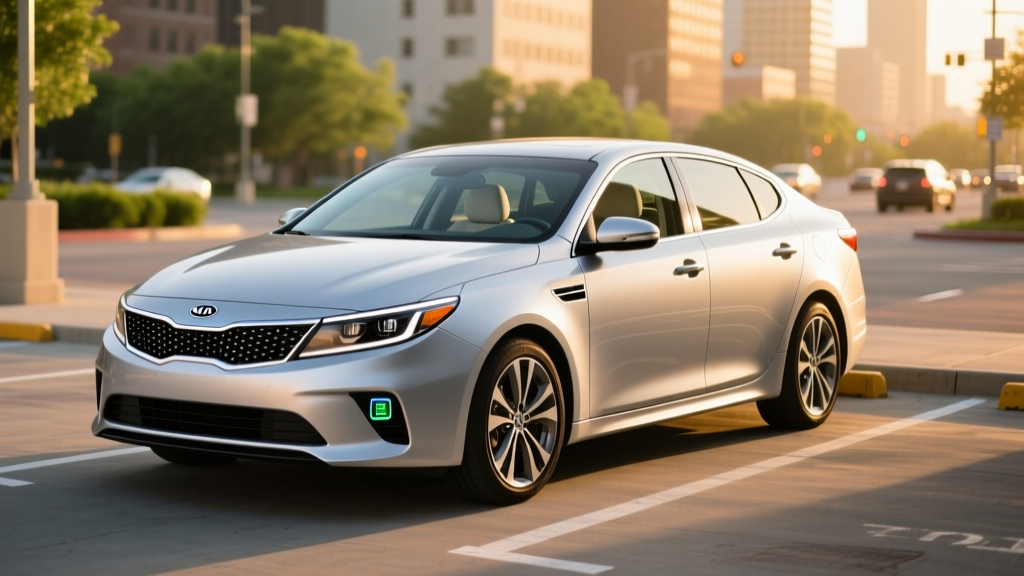
If you're shopping the used-car market for a fuel-sipping midsize sedan, the 2014 Kia Optima Hybrid sedan deserves a second look. Rated at 35 MPG combined by the EPA, it undercuts the Toyota Camry Hybrid of the same era on price while delivering comparable real-world efficiency. But as a decade-old hybrid, the critical questions shift from sticker specs to battery health, replacement costs, and whether this HEV still makes financial sense in 2026 versus a newer plug-in hybrid or a full battery-electric vehicle.
This guide breaks down everything a used buyer needs to know — EPA and real-world MPG, the hybrid powertrain, battery longevity, warranty coverage, and how the Optima Hybrid stacks up against modern alternatives.
HEV vs PHEV: What the 2014 Optima Hybrid Actually Is
The 2014 Kia Optima Hybrid is a conventional hybrid electric vehicle (HEV). It does not plug in. There is no charging port, no electric-only driving mode of meaningful distance, and no eligibility for federal plug-in tax credits. Kia did not offer a plug-in hybrid (PHEV) variant of this generation Optima — the PHEV didn't arrive until the 2017 model year.
| Attribute | HEV (2014 Optima Hybrid) | PHEV (e.g., 2026 Toyota Prius Prime) | BEV (e.g., 2026 Tesla Model 3) |
|---|---|---|---|
| Plugs in? | No | Yes | Yes |
| Electric-only range | ~0.5 mi at low speed | 35–45 mi | 250–360 mi |
| Total range | ~600 mi | ~580 mi (gas + electric) | 250–360 mi |
| Federal tax credit (§30D) | Not eligible | Up to $7,500 (if eligible) | Up to $7,500 (if eligible) |
| Home charging needed | No | Recommended (Level 2) | Required (Level 2 ideal) |
| Used-market price range (2026) | $6,000–$10,000 | $18,000–$30,000+ | $15,000–$35,000+ |
The distinction matters because many used-car listings blur "hybrid" and "plug-in hybrid." The 2014 Optima Hybrid is strictly an HEV: a small lithium-polymer battery pack is recharged solely by regenerative braking and the gasoline engine. You fuel it like any conventional car and never need to think about charging infrastructure.
Fuel Economy: EPA Ratings and Real-World MPG
The EPA rated the 2014 Kia Optima Hybrid at 36 MPG city / 34 MPG highway / 35 MPG combined, per fueleconomy.gov. These figures were competitive for the 2014 model year, trailing the Toyota Camry Hybrid (41/38/40) but edging out the Ford Fusion Hybrid (44/41/42) in highway driving and undercutting both on used-market price by 2026.
| Driving Cycle | EPA Rating | Real-World Expectation |
|---|---|---|
| City | 36 MPG | 34–38 MPG (hybrids often beat EPA in stop-and-go) |
| Highway | 34 MPG | 30–33 MPG (sustained 70+ mph reduces regen benefit) |
| Combined | 35 MPG | 32–36 MPG depending on driving mix |
Real-world note: Hybrid systems thrive in city driving where regenerative braking recaptures energy at every stoplight. Expect the Optima Hybrid to match or slightly exceed its 36 MPG city rating in urban commutes. Highway-heavy drivers will see numbers dip toward 30–33 MPG, as the electric motor provides less assistance at sustained speeds and the 2.4-liter engine carries most of the load. Cold-weather operation further reduces efficiency by 5–10% as the engine runs longer to heat the cabin and warm the battery.
Powertrain Specs: Engine, Motor, and Combined Output
The 2014 Optima Hybrid pairs a 2.4-liter four-cylinder gasoline engine with a 35 kW electric motor sandwiched between the engine and a six-speed automatic transmission. This is a parallel hybrid architecture — both the engine and motor can drive the wheels, and the transmission provides fixed gear ratios rather than the CVT found in the Camry Hybrid.
| Gasoline engine | 2.4L GDI inline-4 |
| Engine horsepower | 169 hp @ 6,000 rpm |
| Engine torque | 156 lb-ft @ 4,250 rpm |
| Electric motor output | 35 kW (47 hp) |
| Combined system horsepower | 199 hp |
| Combined system torque | 195 lb-ft |
| Transmission | 6-speed automatic |
| Hybrid battery | 1.4 kWh lithium-polymer (nominal) |
| 0–60 mph | ~8.8 seconds |
| Drivetrain | Front-wheel drive |
| Curb weight | ~3,558 lbs |
The 199 combined horsepower is adequate for highway merging and passing. The six-speed automatic is a differentiator: unlike the CVTs in most competitors, it delivers familiar shift feel, though it occasionally hunts for gears during gentle acceleration. The 1.4 kWh battery pack is small — roughly 1/50th the capacity of a modern long-range BEV — but sufficient for short electric-only bursts at low speeds and regenerative energy buffering.
Battery Longevity, Warranty, and Replacement Cost
For any used hybrid buyer, the traction battery is the single biggest financial risk. Here's what you need to know about the 2014 Optima Hybrid's pack.
Battery Warranty (Original)
Kia covered the 2014 Optima Hybrid's lithium-polymer battery with a 10-year / 100,000-mile warranty (extended to 10 years/150,000 miles in California Air Resources Board states). This warranty was transferable to second owners for the hybrid system components, though the full 10/100k coverage applied only to the original purchaser. For second and subsequent owners, federal emissions warranty requirements provided coverage for 8 years / 80,000 miles.
By 2026, a 2014 model is 12 years old. The original factory battery warranty has expired for nearly every vehicle on the road, meaning any battery failure is an out-of-pocket expense.
Real-World Battery Degradation
The 1.4 kWh lithium-polymer pack in the 2014 Optima Hybrid was conservative in its chemistry and thermal management. Owner forums and long-term reports suggest most packs retain sufficient capacity to maintain near-original MPG figures through 120,000–150,000 miles. However, at 12 years of age, calendar degradation — not just mileage — becomes a factor. Cells lose capacity over time regardless of use, and you may notice slightly reduced electric-assist responsiveness and marginally lower city MPG on high-mileage examples.
Battery Replacement Cost
If the hybrid battery fails, expect to pay between $2,000 and $3,500 for a replacement, depending on whether you source a new OEM pack from a Kia dealer, a refurbished unit from a hybrid specialist, or a used pack from a salvage yard. Labor typically adds $300–$600. Independent hybrid shops have become more common, and refurbished packs often carry their own 1–3 year warranties. Given that a clean 2014 Optima Hybrid sells for $6,000–$10,000 in 2026, a battery replacement represents a significant percentage of the vehicle's value — factor this into your purchase decision.
Is the 2014 Optima Hybrid Reliable?
The 2014 model year was the third year of Kia's first-generation Optima Hybrid (introduced for 2011, refreshed for 2014). By this third year, most early software and clutch-actuator issues had been addressed. The 2.4L GDI engine is generally durable, though it requires timely oil changes — GDI engines are prone to carbon buildup on intake valves if maintenance is neglected.
Key reliability considerations for a used 2014 Optima Hybrid:
- Hybrid system: The electric motor and power electronics have proven robust. Failures are rare compared to battery degradation.
- Transmission: The 6-speed automatic is conventional and generally reliable, though some owners report rough shifts at low speeds — often resolved with a software update or fluid change.
- Brakes: Regenerative braking significantly extends pad life. Many owners report original brake pads lasting 80,000+ miles.
- 12V battery: Like all hybrids, the Optima has a conventional 12V auxiliary battery for accessories. These fail every 3–5 years like any car battery and are inexpensive to replace.
- Known issues: Some 2011–2014 Optima Hybrids were included in recalls for hybrid system software updates. Verify recall completion via NHTSA's recall lookup using the VIN before purchasing.
Tax Credits and Incentives: What Applies in 2026?
Because the 2014 Kia Optima Hybrid is a conventional HEV that does not plug in, it does not qualify for the federal §30D Clean Vehicle Credit (up to $7,500), which applies only to plug-in vehicles with sufficient battery capacity. It also does not qualify for the used-EV credit (§25E, up to $4,000), which similarly requires a plug-in vehicle.
There are no federal tax credits available for purchasing a used conventional hybrid in 2026. Some states or local utilities may offer minor incentives for hybrid ownership, but these vary widely by jurisdiction and are typically aimed at new plug-in vehicles. Check your state's energy office or utility provider for any current programs, but do not count on incentives when budgeting for this purchase.
Who Should Buy the 2014 Optima Hybrid — And Who Shouldn't
Pros
- Low used-market entry price ($6,000–$10,000)
- 35 MPG combined real-world; better in city driving
- No charging infrastructure required
- Comfortable midsize cabin with good trunk space (~10.4 cu ft, slightly reduced by battery)
- Regenerative braking extends brake pad life significantly
- Conventional 6-speed automatic (familiar feel, no CVT drone)
Cons
- Original battery warranty has expired — replacement risk is on you
- No electric-only driving capability of meaningful distance
- No federal tax credit eligibility
- Highway MPG trails Camry Hybrid by 4–6 MPG
- 2014-era infotainment and safety tech feels dated
- Lithium-polymer battery chemistry is less common — fewer aftermarket replacement options than NiMH packs in Toyotas
Decision Framework
Choose the 2014 Optima Hybrid if:
- You want maximum MPG per dollar on a tight budget (under $10K)
- You drive primarily in city or suburban stop-and-go traffic
- You have no access to home or workplace charging
- You want to avoid range anxiety and charging-planning entirely
Choose a used PHEV or BEV instead if:
- You have Level 2 charging access at home and a daily commute under 40 miles (a used PHEV like the 2018+ Prius Prime can run mostly on electricity)
- You want to benefit from the federal used-EV credit (§25E, up to $4,000 on qualifying used plug-in vehicles under $25,000)
- You plan to keep the vehicle 5+ years and want lower per-mile fuel costs
Choose a newer gas-only sedan if:
- You drive mostly highway miles (the MPG advantage of a hybrid narrows at sustained speed)
- You want the latest safety and infotainment technology on a budget
Total Cost of Ownership: 2014 Optima Hybrid vs. Alternatives
At $6,000–$10,000 used and 35 MPG, the Optima Hybrid's fuel cost is roughly $1,430 per year assuming 12,000 miles driven and $3.50/gallon regular unleaded. Compare that to a non-hybrid 2014 Optima (28 MPG combined, ~$1,800/year) — the hybrid saves approximately $370 annually in fuel. Over a 5-year ownership period, that's roughly $1,850 in fuel savings, which helps offset the battery replacement risk.
However, a used PHEV like a 2018 Toyota Prius Prime (available for $15,000–$19,000 in 2026, potentially eligible for the $4,000 used-EV credit) can run 25 miles on electricity daily, cutting fuel costs by 50–70% for commuters who charge at home. The math shifts depending on your electricity rate, commute distance, and charging access.
Frequently Asked Questions
How many MPG does the 2014 Kia Optima Hybrid get?
The EPA rates it at 36 city / 34 highway / 35 combined MPG. Real-world results typically range from 32–38 MPG depending on your driving mix. City-heavy commuters often match or slightly exceed the 36 MPG city rating, while highway-dominated driving yields 30–33 MPG.
Can the 2014 Optima Hybrid drive on electric power only?
Only at very low speeds (under ~25 mph) and for less than half a mile. This is a conventional hybrid — the electric motor assists the gasoline engine but cannot sustain driving on its own. If you want meaningful electric-only range, you need a plug-in hybrid (PHEV) or a battery-electric vehicle (BEV).
Does the 2014 Kia Optima Hybrid plug in?
No. It is a conventional hybrid (HEV) with no charging port. The battery recharges through regenerative braking and the gasoline engine. You never need to plug it in — just fill it with regular unleaded gasoline.
Does it qualify for any federal tax credit?
No. The federal §30D Clean Vehicle Credit and the §25E used-EV credit both require plug-in vehicles (PHEVs or BEVs). Conventional hybrids like the 2014 Optima Hybrid are not eligible for any federal purchase incentive as of 2026. Check your state for any local programs, but do not expect significant incentives.
Is the hybrid battery reliable, and what does replacement cost?
The 1.4 kWh lithium-polymer pack has generally held up well through 120,000–150,000 miles, but at 12 years old, calendar degradation is a factor. The original 10-year/100,000-mile warranty has expired. Replacement costs range from $2,000 to $3,500 depending on whether you choose a new OEM, refurbished, or salvaged pack. Have a hybrid-qualified mechanic perform a battery health check before purchase.
How does it compare to the Toyota Camry Hybrid of the same era?
The 2014 Camry Hybrid delivers superior fuel economy (41/38/40 EPA) and benefits from Toyota's well-established NiMH battery ecosystem with abundant aftermarket replacement options. However, used Camry Hybrids command a premium — typically $9,000–$13,000 in 2026 versus $6,000–$10,000 for the Optima Hybrid. If budget is the priority, the Kia offers strong value; if maximum MPG and proven long-term parts availability matter most, the Toyota wins.
What should I check before buying a used 2014 Optima Hybrid?
Prior to purchase: (1) Run the VIN through NHTSA's recall database to confirm all recalls were completed. (2) Have a hybrid-qualified mechanic perform a battery state-of-health test. (3) Check maintenance records for regular oil changes (critical for GDI engines). (4) Verify the hybrid system warning light is not illuminated. (5) Test-drive in both EV-assist and engine-only modes to check for rough transitions.
Sources: EPA fuel economy data via fueleconomy.gov; recall and safety data via NHTSA; federal tax credit rules via IRS §30D and §25E guidance.