Quick Verdict: A Performance Hybrid Ahead of Its Time
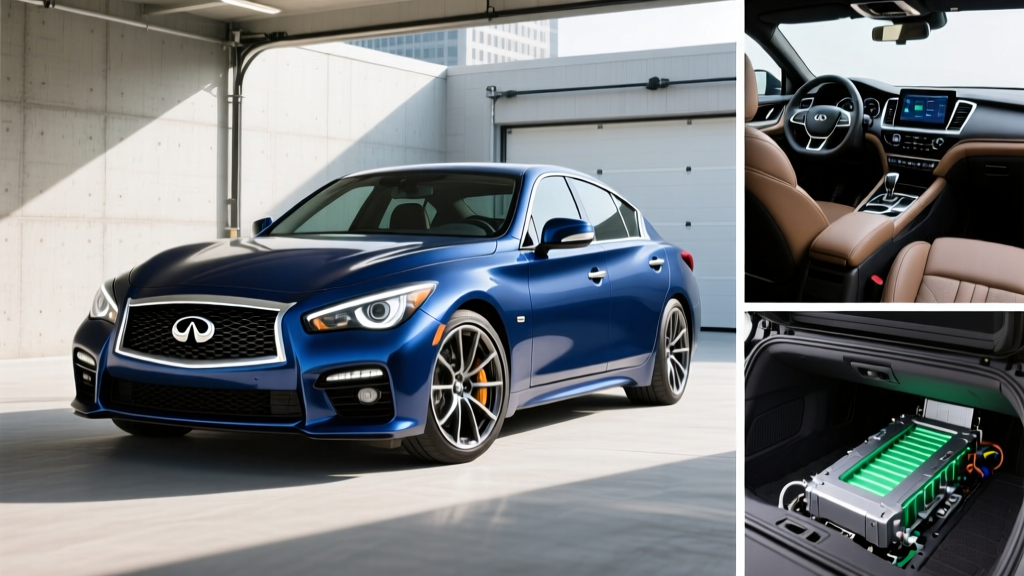
The 2014 Infiniti Q50 Hybrid Sport occupies a specific niche in the used luxury sedan market: a rear-wheel-drive sport sedan that pairs a twin-turbo V6 with an electric motor for 354 combined horsepower while returning an EPA-estimated 29 MPG combined. Infiniti marketed it under the "Q" badge for the first time in 2014 (replacing the G37), and the Hybrid Sport trim sat at the top of the lineup with sport-tuned suspension, 19-inch wheels, and a more aggressive exterior package.
In 2026, this car is firmly a used-market proposition. Infiniti discontinued the Q50 Hybrid after the 2018 model year, so you'll find these on dealer lots and private-party sales typically between $8,000 and $16,000 depending on mileage and condition. For buyers weighing a used luxury hybrid against a new subcompact EV or a conventional gas sedan, the Q50 Hybrid Sport offers legitimate performance credentials and reasonable efficiency — but battery age, parts availability, and the absence of any federal tax credit for used hybrid purchases require careful evaluation.
Powertrain Breakdown: 354 HP From a V6 Plus Electric Motor
The 2014 Q50 Hybrid Sport uses Infiniti's Direct Response Hybrid system, which is a conventional parallel hybrid (HEV) — not a plug-in hybrid. You never plug this car in. The system recovers energy during braking and deceleration, stores it in a lithium-ion battery pack, and deploys it to assist acceleration or enable brief electric-only driving at low speeds.
| Component | Specification |
|---|---|
| Engine | 3.5L V6 (VQ35HR), 302 hp @ 6,800 rpm, 258 lb-ft torque |
| Electric Motor | 50 kW (67 hp), 214 lb-ft torque |
| Combined System Output | 354 hp |
| Transmission | 7-speed automatic with manual shift mode |
| Hybrid Battery | 1.4 kWh lithium-ion (approx. 0.9 kWh usable) |
| Drivetrain | Rear-wheel drive (AWD available on non-Sport trims) |
| 0–60 mph | ~5.1 seconds (RWD) |
| Curb Weight | ~3,968 lbs |
The 1.4 kWh battery pack is small by modern standards — for comparison, a 2026 Toyota Prius Prime PHEV carries 13.6 kWh. That small capacity means electric-only operation is limited to roughly 1–2 miles at speeds under 25 mph, typically in stop-and-go traffic or while maneuvering in a parking lot. This is normal for a conventional HEV: the electric motor's primary role is torque-fill during acceleration and regenerative braking, not extended EV driving.
Fuel Economy: EPA Ratings vs. Real-World MPG
| Driving Scenario | EPA Estimate | Real-World Expectation |
|---|---|---|
| City | 29 MPG | 27–32 MPG (hybrids often exceed EPA in city due to regen braking) |
| Highway | 30 MPG | 26–29 MPG (hybrid advantage diminishes at sustained high speed) |
| Combined | 29 MPG | 26–30 MPG depending on driving mix |
The EPA rated the 2014 Q50 Hybrid at 29/30/29 MPG (city/highway/combined) for the rear-wheel-drive model, per fueleconomy.gov. The all-wheel-drive Hybrid (available on Premium trim, not Sport) drops to 27/28/27 MPG.
What makes this interesting in practice is the city-driving advantage. Conventional hybrids recover energy every time you brake, so stop-and-go urban driving actually improves efficiency relative to the highway figure. Owners who commute in heavy traffic frequently report matching or slightly exceeding the 29 MPG city estimate. Highway driving at 75+ mph, where the electric motor contributes minimally and aerodynamic drag dominates, tends to drop real-world numbers into the mid-to-high 20s.
For context, the non-hybrid 2014 Q50 3.7 (328 hp V6) was rated at 20/29/23 MPG. The Hybrid Sport gives up only a small amount of peak power (354 hp vs. 328 hp for the 3.7, but with substantially more torque) while gaining roughly 6 MPG combined — a meaningful improvement for a performance sedan.
HEV vs. PHEV vs. Full EV: Where the Q50 Hybrid Fits in 2026
| Factor | 2014 Q50 Hybrid (HEV) | 2026 PHEV Example (e.g., BMW 330e) | 2026 Full EV (e.g., Tesla Model 3 RWD) |
|---|---|---|---|
| Plug-in Required? | No — gas only | Yes, for EV range benefit | Yes, exclusively |
| Electric-Only Range | ~1–2 mi at low speed | 20–30 mi typical | 250–350 mi EPA |
| Fuel/Energy Cost | Gasoline (~$3.50/gal) | Gas + electricity | Electricity only |
| Federal Tax Credit (New) | None | Up to $3,750–$7,500 (§30D) | Up to $7,500 (§30D) |
| Used Purchase Tax Credit | None (not a PHEV/EV) | None (used PHEV credit applies to PHEVs/EVs only under §25E) | Up to $4,000 (§25E used EV credit) |
| Maintenance Complexity | Engine + hybrid system | Engine + larger hybrid system + charging | No engine, minimal drivetrain maintenance |
The Q50 Hybrid Sport is a conventional HEV. It has no plug, no meaningful electric-only range, and no eligibility for federal electrified-vehicle tax credits — whether purchased new (when it was sold) or used today. If your goal is to reduce fuel consumption without changing your refueling habits, a conventional hybrid like this one delivers that seamlessly. If you want electric-only commuting range or access to tax incentives, you need a PHEV or full BEV.
Hybrid Battery Longevity: Warranty, Degradation, and Replacement Cost
Original Hybrid Battery Warranty: Infiniti covered the Q50 Hybrid's lithium-ion battery pack for 8 years / 100,000 miles (96 months), which was standard for hybrid vehicles at the time. In California Air Resources Board (CARB) states, the warranty extended to 10 years / 150,000 miles.
2026 Reality: A 2014 model year vehicle is now 12 years old. The original hybrid battery warranty has expired for all 2014 Q50 Hybrids, even in CARB states. Any battery failure is an out-of-pocket expense.
Lithium-ion hybrid batteries in conventional HEVs typically last 10–15 years or 150,000–200,000 miles before significant degradation, based on industry data from Toyota, Honda, and Infiniti hybrid platforms. The Q50 Hybrid's 1.4 kWh pack operates in a relatively shallow state-of-charge window (roughly 20–80% SoC), which reduces stress on the cells compared to a full EV battery that cycles through a wider range. This shallow-cycling strategy is a key reason conventional hybrid batteries often outlast their warranty periods.
Battery replacement cost: A new OEM hybrid battery pack for the Q50 Hybrid runs approximately $2,500–$4,000 for the part, plus $500–$1,000 in labor, putting total replacement in the $3,000–$5,000 range. Third-party refurbished or reconditioned packs are available for $1,500–$2,500 installed through independent hybrid specialists. Given that a clean 2014 Q50 Hybrid Sport trades for $8,000–$16,000 in 2026, a battery replacement represents a significant percentage of the vehicle's value — a critical factor in your purchase decision.
Pre-purchase battery check: Before buying a used Q50 Hybrid, have a qualified technician perform a hybrid battery health diagnostic. This measures individual cell voltages, internal resistance, and capacity retention. Any cell imbalance exceeding 0.2V between modules is a warning sign. Some Infiniti/Nissan dealers can pull this data through the CONSULT diagnostic tool; independent hybrid shops can also perform the test.
Reliability, Ownership Costs, and Common Issues
The 2014 Q50 Hybrid's overall reliability record is mixed. The VQ35HR engine is a proven, durable Nissan/Infiniti powerplant with a long production history. The hybrid system itself — the electric motor, inverter, and battery management — has been generally reliable across Infiniti's hybrid lineup (M35h, Q50 Hybrid, Q70 Hybrid). However, several non-hybrid issues affect the model year:
- Steering system: The 2014 Q50 introduced Infiniti's Direct Adaptive Steering (DAS), an electronic steer-by-wire system on certain trims. Early DAS units had reliability complaints and were subject to recalls. The Hybrid Sport trim came with conventional hydraulic power steering as standard, avoiding this issue — but verify the specific vehicle's configuration.
- Brake feel: Hybrid regenerative braking blends with friction brakes, and some owners report a non-linear pedal feel. This is normal for hybrids but takes adjustment.
- Infotainment: The dual-screen InTouch system in the 2014 Q50 is slow by 2026 standards and lacks Apple CarPlay/Android Auto. This is a quality-of-life issue, not a reliability one.
- Tire and brake wear: The Sport trim's 19-inch wheels and performance tires mean higher replacement costs ($200–$300 per tire) compared to the base 17-inch setup.
Insurance costs for a 12-year-old luxury sport sedan are generally moderate — expect $1,200–$1,800 annually depending on your profile and state. Registration fees are low given the vehicle's depreciated value. The main ownership-cost variable is whether the hybrid battery needs replacement during your ownership.
Pricing in 2026: What You'll Pay on the Used Market
The 2014 Infiniti Q50 Hybrid Sport originally carried an MSRP of approximately $44,700 (including destination). In the 2026 used market, expect the following ranges based on condition and mileage:
| Condition | Mileage Range | Estimated Price (2026) |
|---|---|---|
| Excellent / Low Miles | Under 80,000 mi | $13,000–$16,000 |
| Good / Average Miles | 80,000–130,000 mi | $10,000–$13,000 |
| Fair / High Miles | 130,000+ mi | $8,000–$10,000 |
Tax credit eligibility: The 2014 Q50 Hybrid Sport does not qualify for any federal electrified-vehicle tax credit. The IRS §30D New Clean Vehicle Credit and the §25E Previously-Owned Clean Vehicle Credit apply only to plug-in electric vehicles (PHEVs and BEVs) that meet battery capacity, sourcing, MSRP, and income requirements. Conventional hybrids (HEVs) like this one have never qualified for the federal EV credit. Some states historically offered rebates for hybrids, but most state-level hybrid incentives have ended or shifted exclusively to plug-in vehicles. Check your state's current energy office or DMV website for any remaining programs.
Who Should Buy the 2014 Q50 Hybrid Sport — And Who Shouldn't
Reasons to Buy
- 354 hp and ~5.1-second 0–60 with 29 MPG combined is a compelling performance-efficiency balance
- No plug-in charging required — works with your existing gas-station routine
- Sport suspension, 19-inch wheels, and premium interior at a fraction of original MSRP
- VQ35 engine is proven and well-supported by the aftermarket
- Lower fuel cost vs. non-hybrid Q50 3.7 (saves ~$400–$600/year at 12,000 mi/yr, $3.50/gal)
Reasons to Pass
- Hybrid battery warranty is expired; replacement costs $3,000–$5,000
- No federal or state tax credit eligibility for used conventional hybrid purchases
- Outdated infotainment with no smartphone integration
- Fuel savings vs. a modern 4-cylinder turbo are modest in absolute dollars
- If you want true electric commuting, a used PHEV or BEV offers more electrification benefit
Choose the Q50 Hybrid Sport if: You want a used luxury sport sedan with above-average fuel economy, you don't have access to home charging (making a PHEV or EV impractical), and you can verify hybrid battery health before purchase.
Look elsewhere if: You want plug-in electric range, tax credit eligibility, modern infotainment, or the lowest possible long-term maintenance risk. A used 2018+ Toyota Camry Hybrid (starting ~$16,000) offers 52 MPG combined with a newer design and likely remaining battery warranty. A used Chevrolet Volt (PHEV, ~$10,000–$14,000) gives you 53 miles of electric range plus a gas engine for longer trips.
Frequently Asked Questions
How many MPG does the 2014 Infiniti Q50 Hybrid Sport get?
The EPA rates the RWD Q50 Hybrid at 29 MPG city, 30 MPG highway, and 29 MPG combined. Real-world results typically range from 26–32 MPG depending on driving conditions. City driving with frequent stops tends to yield higher MPG due to regenerative braking, while sustained highway driving at high speeds pushes numbers toward the mid-20s.
Does the 2014 Q50 Hybrid need to be plugged in?
No. The Q50 Hybrid is a conventional hybrid (HEV), not a plug-in hybrid (PHEV). It charges its small lithium-ion battery exclusively through regenerative braking and the gasoline engine. You refuel it with gasoline only, exactly like a conventional car.
How far can the Q50 Hybrid drive on electric power alone?
Approximately 1–2 miles at speeds under 25 mph, such as in heavy traffic or parking lots. The 1.4 kWh battery is too small for meaningful electric-only commuting. This is standard behavior for conventional hybrids — the electric system is designed for acceleration assist and efficiency optimization, not extended EV driving.
Is the hybrid battery reliable and what does replacement cost?
Infiniti's hybrid battery packs have a generally good longevity record, often lasting 10–15 years with proper operation. However, a 2014 model is now 12 years old and the original 8-year/100,000-mile warranty has expired. A new OEM replacement battery costs approximately $3,000–$5,000 installed; refurbished options run $1,500–$2,500. Always get a hybrid battery health diagnostic before purchasing a used example.
Does the 2014 Q50 Hybrid qualify for any tax credit?
No. Conventional hybrids (HEVs) do not qualify for the federal §30D New Clean Vehicle Credit or the §25E Previously-Owned Clean Vehicle Credit. These credits are reserved for plug-in electric vehicles (PHEVs and BEVs) that meet specific battery capacity, critical-mineral sourcing, MSRP caps, and buyer income requirements as defined by the IRS. Some states may offer separate incentives, but most have shifted to plug-in vehicles only.
How does the Q50 Hybrid compare to a modern hybrid like the Toyota Camry Hybrid?
A current-generation Toyota Camry Hybrid delivers 52 MPG combined — nearly double the Q50 Hybrid's 29 MPG — with a lower starting price, modern infotainment, and a full hybrid battery warranty. The trade-off is that the Camry Hybrid is a front-wheel-drive family sedan with 225 hp, not a 354-hp rear-wheel-drive sport sedan. They serve different priorities: the Q50 Hybrid Sport is for buyers who prioritize driving dynamics and luxury, while the Camry Hybrid maximizes fuel savings and ownership simplicity.
What should I check before buying a used 2014 Q50 Hybrid Sport?
Prioritize these items: (1) hybrid battery health diagnostic showing cell balance and capacity retention, (2) service records confirming regular engine oil changes and transmission fluid service, (3) confirmation of whether the vehicle has Direct Adaptive Steering or conventional steering and any related recall work, (4) brake pad and rotor condition (regenerative braking reduces wear, but 12-year-old components may need replacement regardless), and (5) a pre-purchase inspection by a technician familiar with Infiniti/Nissan hybrid systems.