Quick Verdict: A Proven Midsize Hybrid for Budget-Conscious Buyers
The 2014 Hyundai Sonata Hybrid Limited remains one of the more compelling used hybrid sedans on the market over a decade after its debut. With an EPA-rated 36 MPG combined, a well-appointed Limited cabin, and Hyundai's generous 10-year/100,000-mile hybrid battery warranty (transferable to second owners in many states), this car bridges the gap between fuel-sipping efficiency and everyday practicality. In 2026, clean examples routinely sell between $7,500 and $11,000 — a fraction of what a new hybrid commands — making it a smart entry point for drivers not yet ready to commit to a plug-in hybrid or full battery-electric vehicle.
But buying a 12-year-old hybrid raises legitimate questions: How does real-world fuel economy stack up? What happens if the lithium-polymer battery pack fails? And how does this car compare to the PHEV and EV options now flooding the market? This guide answers all of that with hard numbers.
EPA Fuel Economy vs. Real-World MPG
| Driving Cycle | EPA Rating | Real-World Expectation |
|---|---|---|
| City | 36 MPG | 34–38 MPG (hybrids often exceed EPA in stop-and-go) |
| Highway | 40 MPG | 35–38 MPG (sustained 70+ mph reduces regen benefit) |
| Combined | 36 MPG | 33–37 MPG depending on driving mix |
The 2014 Sonata Hybrid uses a 2.4-liter Atkinson-cycle four-cylinder engine paired with a 35 kW electric motor integrated into the 6-speed automatic transmission. Combined system output is 199 horsepower. Unlike some competitors (notably the Toyota Camry Hybrid of the same era, which used a CVT), Hyundai opted for a traditional stepped automatic — a choice that gives the Sonata a more natural driving feel at the expense of a few MPG in city traffic.
HEV vs. PHEV vs. EV: Where Does the Sonata Hybrid Fit?
A common source of confusion is the distinction between a conventional hybrid (HEV) and a plug-in hybrid (PHEV). The 2014 Sonata Hybrid is a conventional HEV — it does not have a charge port, cannot be plugged in, and has no meaningful electric-only driving range. The battery recharges exclusively through regenerative braking and the gasoline engine.
| Factor | HEV (This Car) | PHEV (e.g., 2026 Tucson PHEV) | BEV (e.g., 2026 Ioniq 6) |
|---|---|---|---|
| Plug-in required? | No | Yes (for EV range) | Yes |
| Electric-only range | ~1 mile at low speed | 30–40 miles typical | 250–360 miles |
| Fuel/energy cost per mile | ~$0.10–0.12 | ~$0.04 (electric) / ~$0.11 (gas) | ~$0.03–0.05 |
| Home charging needed? | No | Recommended | Essential |
| Federal tax credit (new) | None | Up to $7,500 (§30D) | Up to $7,500 (§30D) |
| Used purchase price (2026) | $7,500–$11,000 | $22,000–$35,000 | $18,000–$40,000+ |
- You lack access to home or workplace charging
- Your budget is under $12,000
- You want better fuel economy without changing your refueling habits
- You drive a mix of city and highway miles
- You can install a Level 2 charger at home
- Your daily commute is under 35 miles round-trip
- You want to drive mostly on electricity with a gas backup
- You have reliable home charging
- You want the lowest per-mile energy cost
- You're ready to plan around DC fast charging on road trips
Powertrain, Battery, and Performance Specs
| Engine | 2.4L Atkinson-cycle I4 (169 hp / 156 lb-ft) |
| Electric Motor | 35 kW (47 hp) permanent-magnet synchronous |
| Combined System Output | 199 hp |
| Transmission | 6-speed automatic (no CVT) |
| Hybrid Battery | 1.4 kWh (usable ~0.9 kWh), Lithium-Polymer |
| Battery Location | Behind rear seat (trunk intrusion ~2.5 cu ft) |
| 0–60 mph | ~8.5 seconds |
| Curb Weight | ~3,496 lbs |
| Cargo Volume | 14.0 cu ft (vs. 16.4 cu ft in gas Sonata) |
| Fuel Tank | 17.2 gallons |
| EPA Combined MPG | 36 MPG |
| Original MSRP (Limited) | $31,350 (including destination) |
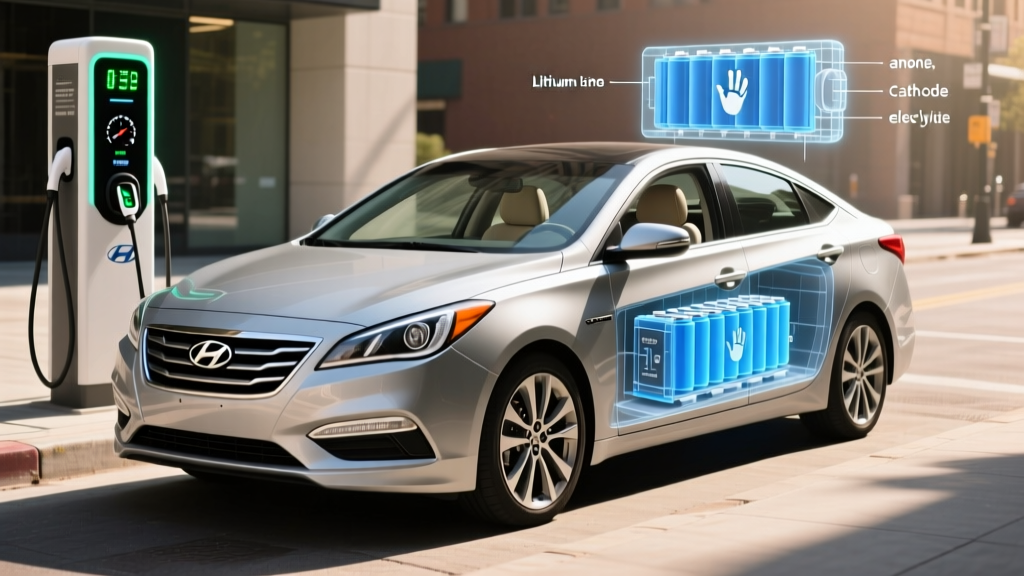
The 1.4 kWh lithium-polymer battery pack is small by modern standards — for comparison, a 2026 Toyota Prius Prime PHEV carries an 13.6 kWh pack. This small capacity means the Sonata Hybrid can only creep along on electric power at very low speeds for roughly a mile. Its real job is to assist the gas engine during acceleration and capture energy during braking, which is where the MPG gains come from.
The 6-speed automatic is a differentiator. Where the Camry Hybrid and Ford Fusion Hybrid of this era used planetary-gear eCVTs (smoother but drone-prone under hard acceleration), the Sonata shifts through actual gears. Some drivers prefer this; fuel economy gives back 1–2 MPG versus a comparable eCVT system in city driving.
Limited Trim: What You Get for the Money
The Limited was the top-tier trim for the 2014 Sonata Hybrid, and even by 2026 standards its equipment list holds up well for the used-car price bracket:
- Leather seating surfaces with heated front and rear seats
- 8-inch touchscreen navigation with backup camera
- Infinity premium audio (7 speakers + external amplifier)
- Panoramic sunroof
- LED daytime running lights and fog lights
- 17-inch alloy wheels with low-rolling-resistance tires
- Dual-zone automatic climate control
- Blue Link telematics (note: Hyundai discontinued Blue Link support for 2014 models — this feature is non-functional)
The loss of Blue Link connectivity is worth flagging. Remote start, stolen-vehicle tracking, and remote lock/unlock via the app no longer function. If these features matter to you, factor in an aftermarket solution.
Battery Reliability, Warranty, and Replacement Cost
As of 2026, a 2014 Sonata Hybrid is 12 years old. That means the original 10-year hybrid battery warranty has expired in most cases regardless of mileage. This makes battery condition the single most important factor in a used purchase.
How Long Do These Batteries Actually Last?
Hyundai's lithium-polymer chemistry in this generation has proven reasonably durable. Data from owner forums and repair databases (including RepairPal and hybrid-specialty shops) suggests most 2014 Sonata Hybrid battery packs reach 140,000–180,000 miles before showing meaningful capacity loss. Unlike a full EV battery, a hybrid battery doesn't need to retain high capacity to function — it just needs to buffer enough energy for assist and regen cycles. "Failure" typically means one or more cells can no longer hold a charge, triggering a check-engine light (P0A80 or similar).
Battery Replacement Cost
| Option | Cost Range | Warranty |
|---|---|---|
| New OEM battery (Hyundai dealer) | $2,800–$3,600 (parts + labor) | 3 years / unlimited miles |
| Remanufactured battery (e.g., GreenTech, Dorman) | $1,600–$2,400 | 1–3 years depending on supplier |
| Used/salvage battery | $600–$1,200 | 30–90 days typical |
| Individual cell replacement (specialty shop) | $800–$1,400 | Varies |
Before purchasing, request a hybrid battery health report from a Hyundai dealer or a hybrid-specialist shop. This scan tool readout shows individual cell voltages and internal resistance — far more informative than a simple test drive. If cells are within 0.2V of each other, the pack is healthy.
Tax Credit Eligibility
The 2014 Hyundai Sonata Hybrid does not qualify for the federal §30D new clean vehicle tax credit — that credit applies only to new vehicle purchases and has specific MSRP caps, income limits, and battery-sourcing requirements under current IRS rules.
For used hybrid purchases, the §25E Used Clean Vehicle Credit offers up to $4,000 (30% of the sale price, capped at $4,000) — but it applies only to plug-in electric vehicles and fuel-cell vehicles, not conventional hybrids. The 2014 Sonata Hybrid, as an HEV with no plug, is ineligible.
Some states offer their own incentives for used hybrid purchases, but these vary widely and change frequently. Check your state's energy or DMV website for current programs.
Ownership Costs: What to Budget in 2026
Beyond the purchase price, here's what ownership looks like for a 2014 Sonata Hybrid Limited at roughly 100,000–130,000 miles:
- Annual fuel cost: ~$1,200–$1,500 (15,000 miles/year at $3.30/gallon average, 36 MPG)
- Insurance: $900–$1,400/year depending on state, age, and driving record — comparable to a gas Sonata
- Maintenance: Standard gas-engine maintenance (oil, filters, spark plugs at ~100K). No hybrid-specific routine maintenance required. The hybrid battery cooling fan filter (behind the rear seat) should be cleaned annually — a $15 DIY job.
- Tires: The OEM low-rolling-resistance tires (typically 215/55R17) cost $130–$180 each. Replacing with standard all-season tires may reduce MPG by 1–2 MPG.
Pros and Cons at a Glance
Pros
- Strong real-world MPG (33–37 combined) without plugging in
- Natural-feeling 6-speed automatic (no CVT drone)
- Limited trim well-equipped: leather, nav, pano roof, heated seats
- Low used-car entry price ($7,500–$11,000)
- Large 17.2-gallon tank = 570+ mile range
- Comfortable ride quality for a midsize sedan
Cons
- Trunk space reduced to 14.0 cu ft (battery intrusion)
- Original hybrid battery warranty likely expired
- No federal tax credit eligibility (HEV, not PHEV/EV)
- Blue Link telematics discontinued — no app connectivity
- Modest 199 hp — adequate but not quick
- Infotainment feels dated by 2026 standards (no Apple CarPlay/Android Auto)
Frequently Asked Questions
How many MPG does the 2014 Hyundai Sonata Hybrid actually get?
The EPA rates it at 36 city / 40 highway / 36 combined. Real-world data from owners shows 33–37 MPG combined is typical, with city driving sometimes exceeding the EPA estimate (up to 38–40 MPG in warm-weather stop-and-go) and sustained highway driving at 75+ mph dropping to 33–35 MPG. Over a full tank, expect roughly 570–620 miles of range.
Can I plug in the 2014 Sonata Hybrid to charge it?
No. This is a conventional hybrid (HEV), not a plug-in hybrid (PHEV). There is no charge port. The 1.4 kWh battery recharges entirely through regenerative braking and the gasoline engine. Hyundai did not offer a plug-in Sonata until the 2016 model year (a completely different vehicle generation).
Is the 2014 Sonata Hybrid reliable, and what does battery replacement cost?
Overall reliability is average to above-average for the segment. The 2.4L Atkinson-cycle engine is under-stressed and long-lived. The main risk is the hybrid battery: replacement runs $1,600–$3,600 depending on whether you choose remanufactured or new OEM. Most packs last 140,000–180,000 miles. Always get a hybrid battery health scan before purchasing.
Does this car qualify for any federal tax credit?
No. The §30D new vehicle credit and §25E used vehicle credit both require a plug-in electric vehicle or fuel-cell vehicle. The 2014 Sonata Hybrid is a conventional HEV and does not qualify for any federal tax incentive. Check your state's programs for possible local incentives.
Hybrid vs. PHEV vs. EV — which should I buy?
If you cannot charge at home and want lower fuel costs with zero lifestyle change, the Sonata Hybrid (HEV) is the right pick. If you can install a Level 2 charger and your commute is under 35 miles, a PHEV lets you drive mostly on electricity with a gas backup. If you have reliable home charging and want the lowest per-mile cost, a full EV is the best long-term play — but expect to spend $18,000+ even on a used model. See our EPA side-by-side comparison tool for direct fuel-cost math.
What should I look for when buying a used 2014 Sonata Hybrid?
Prioritize: (1) a hybrid battery health scan showing balanced cell voltages, (2) complete service records confirming regular oil changes, (3) no history of inverter or hybrid-system warning lights, and (4) functioning regenerative braking (you should feel deceleration when lifting off the accelerator). Also check for the standard Sonata recalls — Hyundai issued recalls for certain 2011–2014 Sonatas related to engine connecting-rod bearings; verify recall completion via the NHTSA recall lookup.