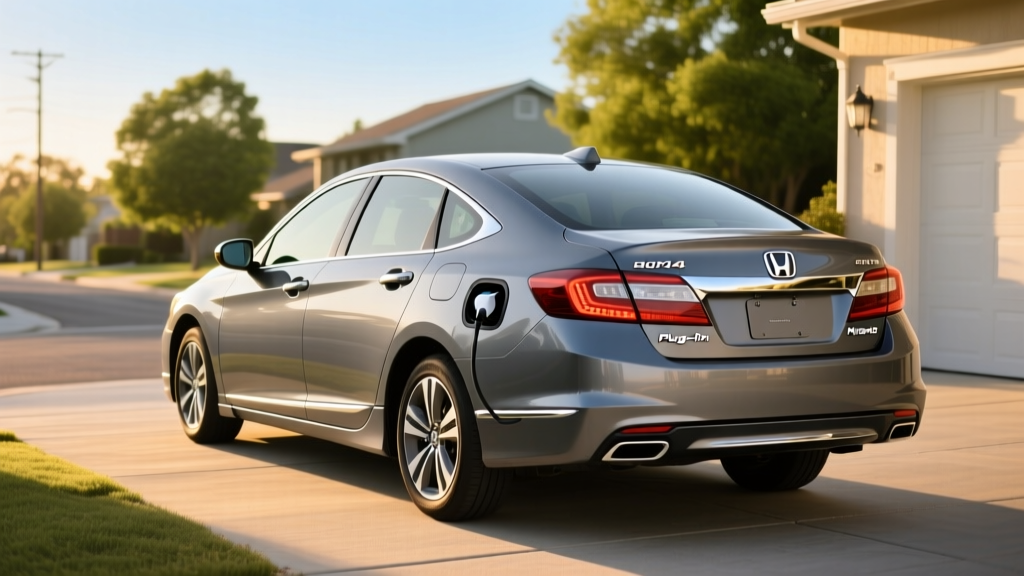
The 2014 Honda Accord Plug-In Hybrid sedan was Honda's first entry into the plug-in hybrid (PHEV) market in the United States, sold exclusively in California and Oregon during its brief production run. More than a decade later, this rare sedan remains an interesting case study in early PHEV engineering — and a potential bargain on the used market for buyers who understand its limitations. With just 13 miles of EPA-rated electric-only range and a 6.7 kWh battery pack, the Accord PHEV falls far short of modern plug-in hybrids, but its Honda Accord bones and proven hybrid powertrain keep it relevant for budget-conscious commuters.
This guide covers everything a prospective used buyer needs to know: real-world MPG, electric range, battery health expectations, charging logistics, and how this discontinued PHEV stacks up against today's options in 2026.
HEV vs. PHEV: What the 2014 Accord Plug-In Actually Is
Before diving into specs, it's critical to understand the distinction between a conventional hybrid (HEV) and a plug-in hybrid (PHEV), because Honda sold both versions of the Accord simultaneously.
| Feature | Accord Hybrid (HEV) | Accord Plug-In Hybrid (PHEV) |
|---|---|---|
| Battery Size | 1.3 kWh (lithium-ion) | 6.7 kWh (lithium-ion) |
| Plug-In Charging | No — self-charging via regen | Yes — Level 1 and Level 2 |
| Electric-Only Range | Less than 1 mile at low speed | 13 miles (EPA rated) |
| EPA Combined MPG (gas mode) | 47 MPG | 46 MPG (charge-sustaining) |
| MPGe (electric + gas) | N/A | 115 MPGe |
| DC Fast Charging | No | No |
| Trunk Space | 15.8 cu ft | 13.3 cu ft (battery intrusion) |
The PHEV variant uses a larger battery and a more powerful electric motor than the standard Accord Hybrid, enabling genuine electric-only driving for short commutes. However, once the battery depletes, it operates identically to a conventional hybrid — the gasoline engine and regenerative braking sustain the charge. You never have to plug it in, but you lose the efficiency and cost advantage if you don't.
Powertrain Specs: Engine, Motor, and Combined Output
| Specification | Detail |
|---|---|
| Engine | 2.0L inline-4 Atkinson-cycle |
| Engine Horsepower | 143 hp @ 6,200 rpm |
| Electric Motor Output | 166 hp (124 kW) |
| Combined System Output | 196 hp |
| Transmission | Electric CVT (e-CVT) |
| Drivetrain | Front-wheel drive |
| Battery Capacity | 6.7 kWh (lithium-ion) |
| Usable Battery Capacity | ~5.0 kWh (estimated) |
| EV-Mode Top Speed | ~62 mph |
| 0-60 mph | ~7.6 seconds (estimated) |
Honda's two-motor hybrid system in the 2014 Accord PHEV operates primarily in series-hybrid mode at lower speeds: the gasoline engine drives a generator, which powers the electric traction motor that turns the wheels. At highway speeds, a lock-up clutch connects the engine directly to the wheels for efficiency. This architecture is smooth and avoids the rubber-band feel of older Toyota e-CVTs, though it lacks the punchy acceleration of modern PHEVs like the Toyota RAV4 Prime or the Chrysler Pacifica Hybrid.
Fuel Economy and Electric Range: EPA Numbers vs. Reality
Fuel economy is where early PHEVs get complicated, because the numbers depend entirely on how often you charge and how far you drive between charges.
| Mode | EPA City | EPA Highway | EPA Combined |
|---|---|---|---|
| Electric + Gas (blended) | 115 MPGe | ||
| Gas Only (charge-sustaining) | 47 MPG | 46 MPG | 46 MPG |
Electric-Only Range: EPA-rated at 13 miles. In real-world driving with moderate temperatures and flat terrain, expect 10–12 miles. In cold weather (below 40°F) or with aggressive acceleration, that drops to 8–9 miles. Highway-speed EV driving depletes the pack even faster.
Total Combined Range: Approximately 500–520 miles on a full tank plus full charge, based on the 12.7-gallon fuel tank and 46 MPG charge-sustaining mode.
For context, 13 miles of electric range was modest even in 2014. The contemporary Ford Fusion Energi offered 19 miles, and the Chevrolet Volt delivered 38 miles. By 2026 standards — where PHEVs like the Toyota Prius Prime achieve 44 miles of EV range — the Accord PHEV's electric envelope is quite limited. That said, if your one-way commute is under 10 miles and you charge at home and at work, you could theoretically drive months without visiting a gas station.
Real-world MPG note: Conventional and plug-in hybrids frequently exceed their EPA city ratings in stop-and-go driving, where regenerative braking recaptures energy most effectively. Owners report 48–52 MPG in city driving when the battery is depleted. Highway driving at 75+ mph tends to return 40–43 MPG, below the EPA highway estimate. These figures are consistent across fueleconomy.gov user reports.
Charging: Levels, Times, and Connector Details
The 2014 Accord Plug-In Hybrid uses a standard J1772 connector for AC charging. It does not support DC fast charging — a limitation shared with most PHEVs of its era and many PHEVs even today.
| Charging Level | Power | Time (0–100%) | Notes |
|---|---|---|---|
| Level 1 (120V household outlet) | ~1.4 kW | ~5 hours | Included portable cord; adequate for overnight |
| Level 2 (240V home/public station) | ~3.3 kW (onboard charger max) | ~1.5 hours | Requires J1772 station; 16A circuit minimum |
| DC Fast Charge | N/A | N/A | Not supported |
The onboard charger is limited to 3.3 kW, meaning even a 7.2 kW or 11.5 kW Level 2 station will only deliver 3.3 kW to the car. This is standard for PHEVs with small batteries — there's no benefit to installing a high-power home charger specifically for this vehicle, though a standard 240V Level 2 unit (like a ChargePoint Home Flex set to 16A) will fully replenish the pack in about 90 minutes.
For home charging setup, a dedicated 240V/20A circuit with a NEMA 6-20 outlet and a compatible Level 2 EVSE is the most cost-effective path. Installation by a licensed electrician typically runs $400–$1,200 depending on panel proximity and local permit requirements. Since the battery is small, even Level 1 charging from a standard 120V outlet is practical for overnight top-ups.
Battery Health, Degradation, and Warranty
Original Warranty: Honda covered the IMA lithium-ion battery pack for 8 years / 100,000 miles (10 years / 150,000 miles in CARB states including California). The broader powertrain warranty was 5 years / 60,000 miles.
Current Status (2026): A 2014 model is now 12 years old. Original battery warranties have expired for most examples unless the vehicle has exceptionally low mileage and is registered in a CARB state.
Honda's lithium-ion pack in the Accord PHEV has proven reasonably durable, but all batteries degrade with time and charge cycles. Based on owner reports and data from hybrid battery refurbishers, expect a 12-year-old Accord PHEV battery to retain approximately 70–80% of its original capacity if it hasn't been replaced. That translates to roughly 9–11 miles of real-world electric range instead of the original 13.
Battery replacement cost: A new OEM replacement battery from Honda was historically priced around $2,000–$3,000 for the PHEV pack (parts only). Refurbished or reconditioned packs from third-party hybrid battery specialists typically cost $1,200–$2,000 installed. Given the vehicle's used market value, a battery replacement can represent a significant percentage of the car's worth — a key factor in any purchase decision.
Before buying, request a battery health diagnostic from a Honda dealer or qualified hybrid technician. The car's onboard diagnostic system can report the high-voltage battery's state of health (SoH), and a test drive in EV mode will quickly reveal whether the pack holds a meaningful charge.
Used Pricing and Tax Credit Eligibility
The 2014 Honda Accord Plug-In Hybrid originally carried an MSRP of approximately $39,780 (before destination). It qualified for a $7,500 federal tax credit under the original §30D rules when new, along with a $2,500 California Clean Vehicle Rebate (CVRP), bringing the effective price below $30,000 for eligible buyers.
As of 2026, this model is available only on the used market. Pricing varies by condition, mileage, and battery health:
| Condition | Mileage Range | Estimated Used Price (2026) |
|---|---|---|
| Excellent (battery replaced or verified healthy) | 60,000–90,000 mi | $10,000–$13,000 |
| Good (average wear, battery functional) | 90,000–130,000 mi | $7,500–$10,000 |
| Fair (high mileage or degraded battery) | 130,000+ mi | $5,000–$7,500 |
Federal tax credit on used PHEVs: Under current IRS §25E rules (the Used Clean Vehicle Credit), buyers may qualify for up to $4,000 or 30% of the sale price (whichever is lower) on a used PHEV purchased from a licensed dealer. However, the vehicle must have a sale price of $25,000 or less (which all used Accord PHEVs meet), and the buyer must fall within income limits ($75,000 single / $150,000 joint filers). The credit applies at the point of sale through a registered dealer. Always verify current IRS rules and dealer participation before finalizing a purchase.
Reliability and Common Issues
The 2014 Accord platform is widely regarded as one of Honda's most reliable generations. The hybrid powertrain adds complexity, but Honda's two-motor system has fewer failure-prone components than some competitors. Key reliability notes:
- Hybrid system: The IMA (Integrated Motor Assist) system and e-CVT have proven durable. Unlike belt-driven CVTs, Honda's e-CVT uses a planetary gearset with no belts or bands to wear out.
- 12V auxiliary battery: Like all hybrids and EVs, the Accord PHEV has a conventional 12V battery that powers accessories and computers. This is a common failure point around years 4–6 and is an inexpensive replacement.
- Brake actuator: Some owners report issues with the regenerative brake actuator, which can produce a grinding noise or reduced regen feel. Honda issued service bulletins for this on some model years.
- Air conditioning compressor: The electric A/C compressor is driven by the high-voltage system. Failures are uncommon but expensive ($1,500–$2,500) when they occur.
- Infotainment: The 2014 HondaLink system is dated by modern standards — no Apple CarPlay or Android Auto. Aftermarket head unit replacement is a common owner upgrade.
Overall, the Accord PHEV's mechanical reliability is strong, but at 12 years old, age-related wear on suspension components, seals, and electronics should be expected. A pre-purchase inspection by a technician familiar with Honda hybrids is strongly recommended.
Who Should Buy This PHEV — And Who Shouldn't
Pros
- Excellent fuel economy (46 MPG combined) even without plugging in
- Smooth, quiet electric driving for short trips
- Honda Accord comfort, space, and driving dynamics
- No range anxiety — gas engine covers long trips seamlessly
- Low used prices; potential $4,000 used-EV tax credit
- Proven hybrid reliability with widely available parts
Cons
- Only 13 miles of electric range (8–10 in cold weather)
- No DC fast charging; 3.3 kW Level 2 max
- Reduced trunk space vs. gas Accord (13.3 vs. 15.8 cu ft)
- Outdated infotainment; no smartphone integration
- Original battery warranty expired; replacement costs $1,200–$3,000
- Sold only in CA and OR; limited availability elsewhere
Hybrid vs. PHEV vs. Full EV: Which Fits You?
Choose the 2014 Accord PHEV if: Your daily commute is under 15 miles round-trip, you have access to home charging (even a standard 120V outlet), you want Honda Accord comfort and reliability, and you want a sub-$12,000 vehicle that sips fuel even on long road trips.
Choose a conventional hybrid (HEV) like the Accord Hybrid or Toyota Camry Hybrid if: You don't have access to plug-in charging, you want similar fuel economy without the complexity of a larger battery, or you prefer a wider selection of used vehicles at similar prices.
Choose a full EV (BEV) if: You have reliable home Level 2 charging, your daily driving is under 200 miles, you want zero tailpipe emissions, and your budget allows $20,000+ for a modern used EV like a Chevrolet Bolt, Nissan Leaf, or Tesla Model 3.
Frequently Asked Questions
How many MPG does the 2014 Honda Accord Plug-In Hybrid get?
The EPA rates it at 46 MPG combined (47 city / 46 highway) when operating in charge-sustaining (gas-only) mode. In blended electric-gas mode with regular charging, it achieves 115 MPGe. Real-world city driving often yields 48–52 MPG thanks to regenerative braking, while sustained highway driving at 75+ mph may return 40–43 MPG.
How far can the 2014 Accord PHEV go on electric only?
The EPA rates it at 13 miles of electric-only range. Real-world range is typically 10–12 miles in moderate conditions, dropping to 8–9 miles in cold weather or at highway speeds. The electric motor can propel the car up to approximately 62 mph before the gas engine engages.
Does the 2014 Accord Plug-In Hybrid qualify for any tax credit in 2026?
It no longer qualifies for the new-vehicle §30D credit (the car is discontinued). However, under the IRS §25E Used Clean Vehicle Credit, buyers purchasing from a registered dealer for $25,000 or less may qualify for up to $4,000 or 30% of the sale price, subject to income limits and dealer registration requirements.
Is the 2014 Honda Accord Plug-In Hybrid reliable?
Yes, with caveats. The Accord platform and Honda's hybrid system have strong reliability records. The primary risk on a 12-year-old PHEV is high-voltage battery degradation. A battery health check before purchase is essential. Budget $1,200–$3,000 for a potential battery replacement within your ownership period.
What is the battery replacement cost?
An OEM replacement pack from Honda was historically priced at $2,000–$3,000 (parts). Third-party refurbished packs typically cost $1,200–$2,000 installed. Labor adds $300–$600 at a Honda dealer. Given the vehicle's current market value, battery replacement is a significant expense to factor into your purchase decision.
Can I charge the 2014 Accord PHEV at a public charging station?
Yes, at any public Level 2 station with a J1772 connector. However, the car's 3.3 kW onboard charger means it will charge slowly compared to modern EVs. It cannot use DC fast chargers (CCS, CHAdeMO, or NACS). Public Level 2 charging is practical for destination top-ups but not for quick replenishment.
How does the Accord PHEV compare to modern PHEVs?
Modern PHEVs like the 2026 Toyota Prius Prime (44 miles EV range, 127 MPGe) and the Hyundai Tucson PHEV (33 miles EV range) offer substantially more electric range, faster charging, and current technology. The Accord PHEV's advantage is price — you can buy one for under $12,000, versus $33,000+ for a new PHEV. If your needs are modest and your budget is tight, the Accord PHEV still delivers meaningful fuel savings.
The 2014 Honda Accord Plug-In Hybrid sedan is a product of its era — an earnest first attempt at plug-in technology from a manufacturer that has since pivoted toward more capable systems. For used-car shoppers in 2026 who want a fuel-efficient, reliable midsize sedan with a small electric buffer for short commutes, it remains a viable option at the right price and with a healthy battery. Just go in with eyes open about its 13-mile electric limitation, expired warranty, and the real cost of eventual battery replacement.