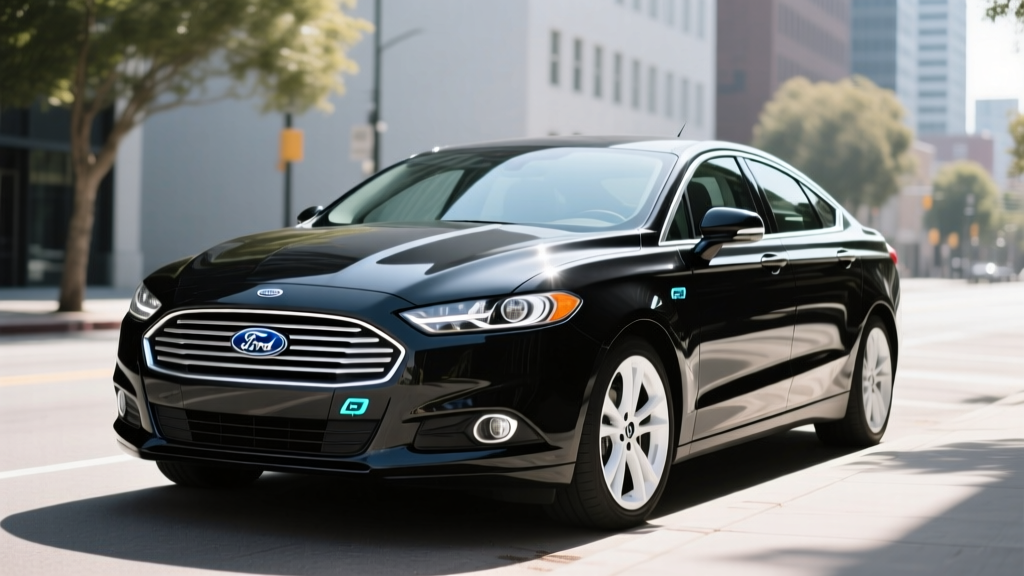
The 2014 Ford Fusion Hybrid was one of the most fuel-efficient midsize sedans of its era, and more than a decade later, it remains a popular choice on the used market for buyers who want hybrid efficiency without plug-in complexity. With an EPA-estimated 42 MPG combined, a proven Atkinson-cycle powertrain, and a cabin that still feels modern, the Fusion Hybrid occupies a specific niche: the no-compromise, no-plug-required daily commuter. This guide covers everything a 2026 used-car buyer needs to know — from real-world fuel economy to high-voltage battery health, replacement costs, and whether this first-generation hybrid still makes financial sense today.
2014 Ford Fusion Hybrid: Quick Verdict
The 2014 Fusion Hybrid is a conventional hybrid electric vehicle (HEV), meaning it charges its small battery through regenerative braking and the gasoline engine — you never plug it in. Ford paired a 2.0-liter Atkinson-cycle four-cylinder engine with an AC synchronous electric motor and a 1.4 kWh lithium-ion battery pack routed through a planetary gearset eCVT. The result is seamless electric-assist driving around town, where hybrids shine brightest, and a combined output of 188 horsepower. For used buyers in 2026, the Fusion Hybrid is best understood as a low-risk, high-MPG commuter that avoids the charging infrastructure questions of a full EV or PHEV.
| Specification | Value |
|---|---|
| Powertrain | 2.0L Atkinson-cycle I4 + AC electric motor |
| Combined Horsepower | 188 hp |
| Transmission | eCVT (planetary gearset) |
| Battery Chemistry / Capacity | Lithium-ion / 1.4 kWh |
| EPA MPG (City / Hwy / Combined) | 44 / 41 / 42 |
| Fuel Tank Capacity | 13.5 gallons |
| Total Range (EPA est.) | ~567 miles |
| 0-60 mph | ~8.1 seconds |
| Drivetrain | Front-wheel drive |
| Original MSRP (Base S / SE / Titanium) | $27,280 / $28,430 / $32,600 |
| Avg. Used Price (2026 est.) | $7,500 – $12,000 |
Fuel Economy: EPA Ratings vs. Real-World MPG
The EPA rates the 2014 Ford Fusion Hybrid at 44 MPG city, 41 MPG highway, and 42 MPG combined. That city-dominant rating is typical of conventional hybrids: the electric motor handles low-speed acceleration and stop-and-go traffic, where internal combustion engines are least efficient, while the gas engine takes over at sustained highway speeds where aerodynamic drag dominates.
| Driving Scenario | EPA MPG | Real-World Expectation |
|---|---|---|
| City (stop-and-go) | 44 | 42–47 MPG (hybrids often beat EPA in city) |
| Highway (65–75 mph) | 41 | 36–40 MPG (aero drag, less regen opportunity) |
| Combined | 42 | 38–44 MPG (depends on driving mix) |
| Cold weather (below 32°F) | N/A | 34–38 MPG (engine runs more for cabin heat) |
In real-world ownership, the Fusion Hybrid tends to exceed its EPA city rating in warm-weather urban driving — many owners report 45-47 MPG on short city commutes with frequent stops that maximize regenerative braking. Highway efficiency drops noticeably above 70 mph, where the small 1.4 kWh battery provides minimal assist and the 2.0L engine carries the full load. Cold weather is the biggest efficiency killer: below freezing, the engine must run continuously to provide cabin heat (this model lacks a heat pump), dragging combined economy into the mid-30s. According to fueleconomy.gov, owner-reported averages cluster around 39-41 MPG combined, which is consistent with a mixed city/highway driving profile.
HEV vs. PHEV vs. Full EV: Which Powertrain Fits You?
The 2014 Fusion was sold in three electrified variants, and understanding the difference is critical before shopping:
| Feature | Fusion Hybrid (HEV) | Fusion Energi (PHEV) | Fusion Gas (2.5L I4) |
|---|---|---|---|
| Plug-in Required? | No | Yes (Level 1/2 only) | |
| Battery Capacity | 1.4 kWh | 7.6 kWh | |
| Electric-Only Range | ~1 mile (low speed) | 19 miles (EPA) | |
| EPA Combined MPG / MPGe | 42 MPG | 38 MPG (gas) / 88 MPGe (elec) | |
| Total Range | ~567 miles | ~550 miles | |
| Combined HP | 188 | 188 | |
| Cargo Space | 12.0 cu ft | 8.2 cu ft (battery intrusion) | |
| DC Fast Charging | No | No (Level 2 max) |
Choose the Fusion Hybrid (HEV) if you want maximum simplicity — no plug, no range calculations, no charging time. It's the right pick for apartment dwellers without home charging access, high-mileage commuters, and anyone who wants hybrid efficiency without changing their fueling habits.
Choose the Fusion Energi (PHEV) if you have home Level 2 charging and a commute under 19 miles, where you can drive electric-only most days and only burn gas on longer trips. The trade-off is significantly reduced trunk space (8.2 cu ft vs. 12.0) due to the larger battery pack, and slightly lower gas-only MPG (38 vs. 42).
Choose a full BEV (such as a used Tesla Model 3 or Chevrolet Bolt) if you have reliable home charging, want zero tailpipe emissions, and are ready to plan around DC fast charging on road trips. A BEV eliminates oil changes and dramatically reduces brake wear but requires a bigger upfront investment and charging infrastructure access.
Powertrain Deep Dive: How the Fusion Hybrid Drives
Ford's hybrid system in the 2014 Fusion uses a power-split architecture similar in concept to Toyota's Hybrid Synergy Drive. The 2.0-liter Atkinson-cycle inline-four produces 141 hp and 129 lb-ft of torque on its own, while the AC synchronous electric motor adds 118 hp and 117 lb-ft. Because these power sources overlap through the planetary gearset rather than simply adding together, the combined system output is 188 horsepower.
The eCVT is not a traditional belt-and-cone continuously variable transmission — it's a gearset that seamlessly blends engine and motor power with no fixed gear ratios and no rubber band effect. Acceleration from 0-60 mph takes approximately 8.1 seconds, which is adequate for merging and passing but noticeably slower than the 2.0L EcoBoost gas Fusion (around 7.2 seconds). The electric motor provides instant torque off the line, making the car feel quicker in city driving than the 0-60 time suggests.
Regenerative braking captures energy during deceleration and feeds it back into the 1.4 kWh lithium-ion pack. The transition from regenerative to friction braking is one of the smoother implementations of its era, though you may notice a slight change in pedal feel during hard stops. The hybrid system also enables an EV mode button that forces electric-only driving at speeds up to about 25 mph for roughly one mile — useful for creeping through a parking garage or residential street, but not a practical commuting mode.
Battery Health, Warranty, and Replacement Cost
The high-voltage lithium-ion battery in the 2014 Fusion Hybrid is a 1.4 kWh pack located behind the rear seats. Unlike the larger batteries in full EVs, this pack undergoes relatively shallow charge-discharge cycles — the hybrid system's computer keeps the state of charge (SoC) within a narrow window (typically 40-60%) to minimize degradation. This buffer strategy is why hybrid batteries routinely outlast their warranties.
Battery Warranty Coverage (Original)
Ford warranted the 2014 Fusion Hybrid's high-voltage battery for 8 years or 100,000 miles (whichever comes first), with a capacity retention threshold. In California Air Resources Board (CARB) states, the warranty extends to 10 years or 150,000 miles. By 2026, most 2014 models are past the standard warranty window unless they were originally sold in a CARB state and have under 150,000 miles.
Replacement cost: If the hybrid battery fails out of warranty, expect to pay $2,000–$3,500 for a remanufactured replacement pack (installed) or $3,500–$5,000 for a new OEM unit from Ford. Independent hybrid specialists in most metro areas now offer reconditioned packs at the lower end of that range. Complete battery failure on the Fusion Hybrid is uncommon — more typical is gradual capacity loss that reduces electric-assist availability and drops fuel economy by 2-4 MPG over 150,000+ miles. A pre-purchase hybrid battery health scan (available at any Ford dealer or hybrid specialist) can reveal cell imbalance or capacity degradation before you buy.
The 12V auxiliary battery (a standard lead-agid unit) is separate and powers the vehicle's electronics. It typically needs replacement every 4-5 years at a cost of $150-$250 and is unrelated to the hybrid traction system.
Pricing, Tax Credits, and Total Cost of Ownership
As a used vehicle in 2026, the 2014 Ford Fusion Hybrid does not qualify for the federal §30D new clean vehicle tax credit, which applies only to new EVs and PHEVs meeting current battery-sourcing and MSRP requirements. It also does not qualify for the used clean vehicle credit (up to $4,000 under IRC §25E), because that credit applies only to used EVs and PHEVs — conventional hybrids (HEVs) are excluded. Your total cost is the negotiated purchase price plus tax, title, and registration.
Pros
- 42 MPG combined EPA — proven, real-world efficient
- No plug-in charging required; fuel anywhere
- Smooth eCVT with no belt-driven CVT lag
- Strong safety ratings (IIHS Top Safety Pick+)
- Low annual fuel cost (~$1,050/yr at 15,000 mi)
- Comfortable, quiet midsize sedan cabin
- Widely available used parts and service
Cons
- No federal or state tax credits for used HEV purchase
- Trunk space reduced to 12.0 cu ft (battery behind seats)
- Highway MPG drops to ~36-38 at 75+ mph
- Cold weather significantly reduces efficiency (no heat pump)
- Aging infotainment (SYNC 2) feels dated vs. 2026 standards
- Hybrid battery may be near end-of-life on high-mile examples
- Non-CARB state battery warranty has expired on most examples
5-Year Ownership Cost Estimate (used, purchased at $10,000):
| Category | Estimated 5-Year Cost |
|---|---|
| Purchase Price | $10,000 |
| Fuel (15,000 mi/yr, $3.30/gal avg) | $5,890 |
| Insurance (national avg.) | $5,500 |
| Maintenance (oil, brakes, tires) | $2,800 |
| Potential HV Battery Replacement | $0 – $3,500 |
| Depreciation (5 yr) | ~$4,000 |
| Total (without battery replacement) | ~$28,190 |
| Total (with battery replacement) | ~$31,690 |
For comparison, a similarly priced used gas-only 2014 Fusion (2.5L, ~26 MPG combined) would cost approximately $8,500 more in fuel over the same period, partially offsetting the Hybrid's higher purchase price. Per IRS guidelines on the used clean vehicle credit, only PHEVs and BEVs qualify — conventional HEVs like this Fusion Hybrid are ineligible.
Reliability, Safety, and What to Check Before Buying
The 2014 Fusion Hybrid benefits from Ford's second-generation hybrid system, which debuted in the 2013 model year and proved considerably more reliable than the first-generation Fusion Hybrid (2010-2012). The eCVT has no belts, clutches, or torque converter to fail, and the hybrid system's brake-blending means friction brakes often last 80,000-100,000 miles before pad replacement. Consumer reliability data and owner forums consistently rate the 2013-2014 Fusion Hybrid as one of the more dependable midsize hybrids of its generation.
Safety is a strong point: the 2014 Fusion earned an IIHS Top Safety Pick+ designation with Good ratings across all crashworthiness tests. Standard safety equipment includes six airbags, electronic stability control, and available BLIS (Blind Spot Information System) with cross-traffic alert. It does not feature modern ADAS like automatic emergency braking or lane-keeping assist — those were not yet mainstream in 2014.
Pre-purchase checklist for a used 2014 Fusion Hybrid:
- Request a hybrid battery state-of-health (SoH) scan from a Ford dealer or hybrid specialist
- Check for any open recalls via NHTSA.gov using the VIN
- Inspect the inverter coolant level and condition (should be replaced per maintenance schedule)
- Verify the 12V battery age — a weak 12V can cause hybrid system error codes
- Test-drive in EV mode to confirm electric motor engagement
- Look for uneven tire wear (alignment issues are common on high-mile examples)
- Review maintenance records for transmission fluid and inverter coolant service
Who Should Buy the 2014 Ford Fusion Hybrid in 2026?
Buy the 2014 Fusion Hybrid if:
- You commute 20-60 miles daily in mixed city/highway driving
- You lack access to home or workplace charging (apartment, street parking)
- You want hybrid MPG without learning new fueling habits
- Your budget is $8,000-$12,000 for a reliable, efficient sedan
- You drive in a region with moderate winters (less cold-weather MPG penalty)
Look elsewhere if:
- You have home Level 2 charging and a short commute — a used PHEV (Prius Prime, Fusion Energi) or BEV (Bolt, Model 3) will save more
- You regularly drive 75+ mph on long highway trips — highway MPG advantage shrinks
- You need maximum cargo space — the battery cuts trunk volume by ~2 cu ft vs. the gas Fusion
- You want modern ADAS features — consider a 2018+ Toyota Camry Hybrid or Honda Accord Hybrid
Frequently Asked Questions
How many MPG does the 2014 Ford Fusion Hybrid actually get?
The EPA rates it at 44 city / 41 highway / 42 combined. In real-world driving, expect 42-47 MPG in warm-weather city commuting and 36-40 MPG on sustained highway drives at 70+ mph. Cold weather (below freezing) can drop combined economy to the mid-30s because the engine must run continuously for cabin heat.
Does the 2014 Fusion Hybrid need to be plugged in?
No. The Fusion Hybrid is a conventional HEV — it charges its 1.4 kWh battery entirely through regenerative braking and the gasoline engine. You fuel it like any other car. If you want plug-in capability, look at the 2014 Fusion Energi, which is the PHEV variant with 19 miles of electric-only range.
How far can the 2014 Fusion Hybrid drive on electric power alone?
Approximately one mile at speeds below 25 mph using the EV mode button. This is not a practical electric-driving mode — it's intended for parking lots and quiet residential streets. For meaningful electric-only range, you need the Fusion Energi PHEV (19 miles EPA) or a full battery electric vehicle.
What does it cost to replace the hybrid battery?
A remanufactured replacement pack costs $2,000-$3,500 installed at a hybrid specialist, while a new OEM Ford pack runs $3,500-$5,000. Complete failure is uncommon — most packs experience gradual capacity loss that slightly reduces fuel economy rather than disabling the vehicle. A pre-purchase SoH scan can assess remaining battery health.
Does the 2014 Ford Fusion Hybrid qualify for any tax credit?
No. As a conventional hybrid (HEV), it does not qualify for the federal §30D new vehicle credit or the §25E used clean vehicle credit — both are limited to plug-in vehicles (PHEVs and BEVs). Some states historically offered hybrid rebates, but most have been exhausted or redirected to plug-in vehicles. Check your state's current incentive database for any remaining programs.
Is the 2014 Fusion Hybrid reliable at high mileage?
Yes, with proper maintenance. The second-generation Ford hybrid system (2013+) has proven durable, with many examples exceeding 200,000 miles. The eCVT has fewer wear components than a conventional automatic, and regenerative braking extends pad life significantly. The main high-mileage risk is hybrid battery degradation — budget $2,000-$3,500 for a potential replacement if the pack hasn't been serviced.
How does the Fusion Hybrid compare to the Toyota Camry Hybrid?
The 2014 Camry Hybrid is rated at 41 MPG combined (1 MPG less), offers a slightly larger trunk, and has Toyota's long-standing hybrid reliability reputation. The Fusion Hybrid counters with a more refined interior, better highway manners, and stronger safety ratings. Both are solid used buys — the Fusion typically costs $1,000-$2,000 less on the used market, making it a value play.