Quick Verdict: A Practical Used Hybrid for City Drivers
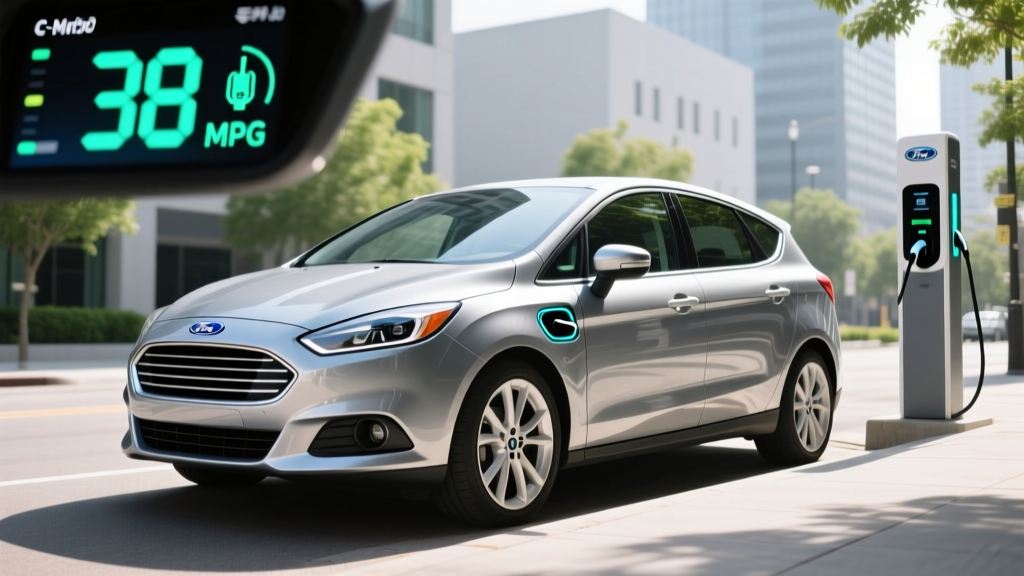
The 2014 Ford C-Max Hybrid FWD is a conventional hybrid electric vehicle (HEV) — not a plug-in — that Ford positioned as a fuel-efficient alternative to the Toyota Prius v. With an EPA rating of 42 MPG combined, a roomy hatchback body, and a starting MSRP that was around $25,995 when new, it carved out a niche among compact hybrid wagons. Now well into its second decade on the road, the 2014 C-Max Hybrid represents a budget-friendly entry into hybrid ownership, with used examples routinely selling between $6,000 and $11,000 depending on mileage and condition.
But buying a 12-year-old hybrid comes with specific concerns: battery health, real-world fuel economy versus the EPA sticker, and whether the savings over a gas car still pencil out. This guide breaks down every number you need.
HEV vs PHEV: What the 2014 C-Max Hybrid Actually Is
Before evaluating this vehicle, it is essential to distinguish the two C-Max variants Ford sold in 2014:
| Attribute | C-Max Hybrid (HEV) | C-Max Energi (PHEV) |
|---|---|---|
| Powertrain type | Conventional hybrid — no plug | Plug-in hybrid — requires charging for EV mode |
| Battery capacity | 1.4 kWh (usable ~1.0 kWh) | 7.6 kWh (usable ~5.5 kWh) |
| Electric-only driving | Brief low-speed EV assist only | ~19 miles EPA electric-only range |
| Plug-in charging | No — charges via regenerative braking and engine | Yes — Level 1 (120V) or Level 2 (240V) |
| EPA combined | 42 MPG | 38 MPG (gas) / 88 MPGe (electric + gas) |
| Federal tax credit (at launch) | None | Up to $3,750 (expired) |
This article focuses on the 2014 Ford C-Max Hybrid FWD — the conventional HEV. If you are researching the plug-in Energi variant, the battery size, charging requirements, and electric-only range are substantially different. The HEV never needs to be plugged in; it recovers energy through regenerative braking and the gasoline engine to keep its small traction battery charged.
Fuel Economy: EPA Ratings vs Real-World MPG
The EPA rates the 2014 Ford C-Max Hybrid FWD as follows, per fueleconomy.gov:
| Driving Cycle | EPA MPG |
|---|---|
| City | 42 MPG |
| Highway | 37 MPG |
| Combined | 40 MPG* |
*Note: Ford revised C-Max Hybrid window-sticker labels downward in 2013-2014 after customer complaints and an EPA review. Original stickers claimed 47 MPG combined; corrected labels read 42 city / 37 highway / 40 combined. Some 2014 models carry the updated label, while early-build units may still show the original higher number. Always verify the specific vehicle's EPA rating on fueleconomy.gov using its VIN or build date.
Real-World Fuel Economy Expectations
Hybrids typically outperform their EPA city ratings in stop-and-go traffic, where regenerative braking recovers the most energy. Based on owner-reported data from Fuelly and hybrid forums, real-world figures for the 2014 C-Max Hybrid cluster as follows:
- City / suburban driving: 39–44 MPG (many owners match or slightly exceed the EPA city number)
- Highway cruising (70+ mph): 33–37 MPG (aerodynamic drag and reduced regen benefit hurt efficiency)
- Cold weather (below 35°F): 32–38 MPG (engine runs more often for cabin heat; battery efficiency drops)
- Combined mixed driving: 37–42 MPG for most owners
If your commute is predominantly city and suburban at moderate speeds, the C-Max Hybrid will reward you near or above its EPA combined rating. Highway-heavy drivers should expect closer to 35 MPG.
Powertrain Specs: Engine, Motor, and Combined Output
| Specification | 2014 C-Max Hybrid FWD |
|---|---|
| Gasoline engine | 2.0L Atkinson-cycle 4-cylinder |
| Engine horsepower | 141 hp @ 6,000 rpm |
| Electric motor | Permanent-magnet AC synchronous |
| Motor output | 118 hp (88 kW) |
| Combined net system horsepower | 188 hp |
| Transmission | Electronic CVT (eCVT) — power-split device |
| Drivetrain | Front-wheel drive (FWD) |
| Traction battery | 1.4 kWh lithium-ion (air-cooled) |
| 0–60 mph | ~8.1 seconds (est.) |
| Curb weight | ~3,640 lbs |
| Cargo volume (behind rear seats) | 24.5 cu ft / 52.6 cu ft (seats folded) |
The 2.0L Atkinson-cycle engine is optimized for thermal efficiency rather than peak power, and the electric motor fills in torque at low RPMs. The eCVT is not a belt-and-cone CVT like those in some Nissan models — it is a planetary gearset (Toyota-style power-split device) that seamlessly blends engine and motor output. This design is proven durable, with no belts or friction surfaces to wear.
Battery Health, Warranty, and Replacement Cost
Original Hybrid Battery Warranty: 8 years / 100,000 miles (whichever comes first) in most states; 10 years / 150,000 miles in California Air Resources Board (CARB) states including CA, CT, ME, MA, NJ, NY, OR, RI, VT, and WA.
For a 2014 model in 2026: The original factory warranty has expired on all examples outside CARB states with low mileage. Budget for potential battery replacement as part of ownership.
How Long Does the C-Max Hybrid Battery Last?
The 1.4 kWh lithium-ion pack in the C-Max Hybrid is relatively small and operates within a conservative state-of-charge window (roughly 40–60% SoC), which reduces stress on the cells. Owner reports and hybrid technician data suggest:
- Typical lifespan: 12–16 years or 150,000–200,000 miles before significant capacity loss
- Degradation symptoms: Reduced EV-mode assist at low speeds, slightly lower MPG, battery warning light
- Failure mode: Individual cell imbalance rather than full-pack failure — repairable via cell or module replacement in many cases
Battery Replacement Cost
- New OEM battery (Ford dealer): $2,500–$3,800 installed
- Remanufactured/reconditioned pack: $1,200–$2,200 installed at independent hybrid shops
- Individual cell/module repair: $400–$900 if only specific modules have failed
Given the vehicle's current used value of $6,000–$11,000, a full OEM battery replacement represents a significant percentage of the car's worth. Many owners opt for remanufactured packs or cell-level repair, which restores function at a fraction of the cost.
Ownership Costs: Does the Hybrid Premium Pay Off?
At current used prices, the 2014 C-Max Hybrid costs roughly the same as a comparable gas-powered compact hatchback. The fuel savings are the primary economic advantage.
Annual Fuel Cost Comparison
Assuming 12,000 miles/year, $3.40/gallon regular unleaded, and EPA combined ratings:
| Vehicle | Combined MPG | Gallons/Year | Annual Fuel Cost |
|---|---|---|---|
| 2014 C-Max Hybrid FWD | 40 MPG | 300 | $1,020 |
| 2014 Ford Escape FWD (2.5L gas) | 26 MPG | 462 | $1,570 |
| 2014 Honda CR-V FWD (2.4L gas) | 26 MPG | 462 | $1,570 |
Annual savings vs a comparable gas crossover: ~$550/year. Over five years, that is roughly $2,750 in fuel savings — meaningful, but not transformative given the low purchase price.
Tax Credit Eligibility
The 2014 Ford C-Max Hybrid (HEV) does not qualify for the federal §30D new clean vehicle credit, which applies only to plug-in vehicles (PHEVs and BEVs). The C-Max Energi PHEV originally qualified for up to $3,750 when new, but that credit is no longer available on used purchases of this model year.
Under current IRS used-vehicle credit rules, the §25E credit of up to $4,000 (30% of sale price, capped at $4,000) applies only to qualified plug-in electric vehicles or fuel-cell vehicles sold through a dealer for $25,000 or less. A conventional HEV like the C-Max Hybrid does not meet the plug-in requirement. No federal tax credit is available for this vehicle. Always consult a tax professional and verify current IRS guidance before making purchase decisions based on incentive eligibility.
Reliability Record and Common Issues
The 2014 C-Max Hybrid's powertrain — particularly the eCVT and Atkinson-cycle engine — has proven durable. However, a decade-old vehicle carries age-related concerns beyond the hybrid battery:
- Hybrid battery cooling fan: Can accumulate dust and debris; cleaning or replacement ($150–$300) may be needed if the battery runs hot
- 12V auxiliary battery: Standard lead-acid; replacement every 3–5 years ($150–$250). A weak 12V battery can cause hybrid system error codes even when the traction battery is fine
- Brake actuator: Some Ford hybrids of this era have had brake booster recalls. Check NHTSA recall status at nhtsa.gov/recalls using the VIN
- Coolant system: The hybrid system has a separate coolant loop; ensure it has been serviced per the maintenance schedule
- Infotainment / SYNC: The 2014 MyFord Touch system is widely regarded as slow and buggy. Functional but not a highlight
Overall, the C-Max Hybrid's mechanical reliability is solid for its class. The main risk for a used buyer is hybrid battery condition, which should be evaluated via an OBD-II scan tool that reads battery state of health (SoH) before purchase.
Who Should Buy the 2014 C-Max Hybrid — and Who Shouldn't
Choose This Hybrid If:
- Your commute is mostly city/suburban at speeds under 55 mph
- You want a low-cost entry into hybrid ownership under $10,000
- You need hatchback cargo space (24.5 cu ft) without an SUV footprint
- You cannot install a home charger and need a vehicle that never requires plugging in
- You want proven hybrid reliability without the complexity of a plug-in system
Look Elsewhere If:
- Your driving is mostly highway at 70+ mph (MPG advantage shrinks to ~35)
- You want electric-only driving range — consider the C-Max Energi PHEV or a full BEV
- You need all-wheel drive (the C-Max is FWD only)
- You want modern driver-assistance features (no adaptive cruise, lane-keeping, or automatic emergency braking on the 2014 model)
- You prefer a warranty-backed purchase — all 2014 examples are sold as-is or with limited dealer warranties
Hybrid vs PHEV vs EV: Which Fits You?
- HEV (this C-Max Hybrid): Best for buyers who want better MPG with zero lifestyle change — no plugs, no charging apps, no range planning. Ideal if you lack home charging access.
- PHEV (e.g., C-Max Energi, Toyota RAV4 Prime): Best for buyers with home Level 2 charging who want 20–40 miles of electric-only commuting but gas flexibility for road trips.
- Full EV (BEV): Best for buyers with reliable home charging, predictable daily mileage under 250 miles, and access to DC fast charging for road trips. Lowest per-mile energy cost but highest upfront price.
Frequently Asked Questions
How many MPG does the 2014 Ford C-Max Hybrid get?
The corrected EPA rating is 42 city / 37 highway / 40 combined MPG. Real-world owners typically report 37–44 MPG depending on driving mix and climate. City-heavy commuters often match or slightly exceed the EPA city number thanks to regenerative braking.
Does the 2014 C-Max Hybrid need to be plugged in?
No. The C-Max Hybrid is a conventional HEV. It charges its 1.4 kWh traction battery entirely through regenerative braking and the gasoline engine. Only the C-Max Energi (PHEV) variant requires plug-in charging.
Is the hybrid battery expensive to replace?
A new OEM battery from a Ford dealer costs $2,500–$3,800 installed. Remanufactured packs run $1,200–$2,200, and individual cell repairs can be as low as $400–$900. Most C-Max Hybrid batteries last 150,000+ miles, but at 12 years old, budget for potential replacement during ownership.
Does the 2014 C-Max Hybrid qualify for any tax credit?
No. The federal §30D and §25E tax credits apply only to plug-in electric vehicles (PHEVs and BEVs). A conventional hybrid like the C-Max Hybrid does not qualify for any federal purchase incentive. Some states may offer registration or HOV-lane perks for hybrids, but these vary by jurisdiction — check your state's DMV or energy office.
How does the C-Max Hybrid compare to the Toyota Prius v?
The 2014 Prius v offers slightly higher EPA ratings (44 city / 40 highway / 42 combined) and a stronger long-term reliability reputation, but typically costs $1,000–$3,000 more on the used market. The C-Max Hybrid offers more horsepower (188 hp combined vs 134 hp for the Prius v) and a more engaging driving feel. If maximum MPG and resale value matter most, the Prius v edges ahead. If driving dynamics and a lower purchase price are priorities, the C-Max Hybrid is compelling.
What should I check before buying a used 2014 C-Max Hybrid?
Prior to purchase, request an OBD-II hybrid battery health report showing individual cell voltages and state of health (SoH). Verify all NHTSA recalls have been performed. Check maintenance records for coolant system service and 12V battery age. A pre-purchase inspection at a hybrid-experienced shop ($100–$200) is strongly recommended.