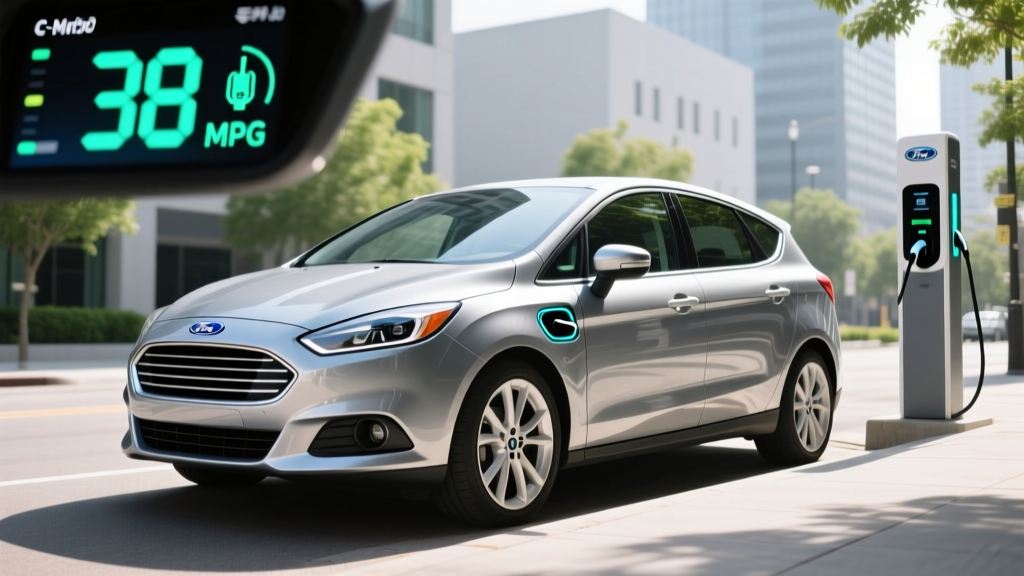
The Ford C-Max hybrid carved out a unique niche in the compact hybrid segment as a tall-hatchback alternative to the Toyota Prius, offering practical cargo space and surprisingly engaging driving dynamics. Although Ford discontinued the C-Max Hybrid (HEV) after the 2018 model year and the C-Max Energi plug-in hybrid (PHEV) after 2017, thousands remain on the road and on the used market. For buyers considering a pre-owned C-Max hybrid in 2026, understanding the real-world fuel economy, battery longevity, and how it compares to current hybrids and EVs is essential before signing any paperwork.
HEV vs PHEV: Which C-Max Is Which?
The C-Max came in two distinct electrified flavors, and confusing them is the single most common mistake buyers make when shopping used.
| Feature | C-Max Hybrid (HEV) | C-Max Energi (PHEV) |
|---|---|---|
| Plug-in required? | No — self-charging via regenerative braking and engine | Yes — plugs into Level 1 (120V) or Level 2 (240V) |
| Battery capacity | 1.4 kWh (lithium-ion) | 7.6 kWh usable (lithium-ion) |
| Electric-only range | N/A (electric assist only at low speeds) | ~19–21 miles EPA |
| Total range | ~550+ miles | ~550+ miles (electric + gas combined) |
| DC fast charging | No | No (Level 2 max, ~2.5 hours for full charge) |
| Combined horsepower | 188 hp (net system) | 188 hp (net system) |
| EPA combined MPG / MPGe | 42 MPG combined | 95 MPGe (electric) / 38 MPG (gas-only) |
| Production years | 2013–2018 | 2013–2017 |
The conventional C-Max Hybrid never needs to be plugged in. Its small 1.4 kWh battery charges through regenerative braking and the gasoline engine, exactly like a Toyota Prius. The C-Max Energi, by contrast, has a larger 7.6 kWh battery that you can plug in to get roughly 20 miles of electric-only driving before the 2.0L Atkinson-cycle engine kicks in as a series-parallel hybrid.
Fuel Economy: EPA Numbers vs Real-World MPG
Ford's C-Max hybrid drew attention — and controversy — for its fuel economy ratings. After a 2013 EPA label adjustment, the official figures settled at:
| Model | City MPG | Highway MPG | Combined MPG |
|---|---|---|---|
| C-Max Hybrid (2014–2018) | 42 | 38 | 40 |
| C-Max Energi (gas mode) | 40 | 36 | 38 |
| C-Max Energi (electric mode) | 95 MPGe combined | ||
Real-World MPG: What Owners Actually See
Hybrids typically outperform their EPA city ratings in stop-and-go traffic because regenerative braking recaptures energy that a gas car wastes as heat. C-Max Hybrid owners on fueleconomy.gov's My MPG tracker report averages between 38 and 44 MPG combined, with city-heavy drivers often exceeding the EPA estimate and highway-heavy drivers seeing numbers closer to 35–38 MPG.
For the Energi PHEV, real-world electric-only range depends heavily on climate. Expect 17–21 miles in mild weather, dropping to 12–15 miles in freezing temperatures due to battery chemistry limitations and cabin heating demand. Once the battery depletes, the Energi operates as a conventional hybrid at roughly 36–40 MPG.
Powertrain and Performance Specs
| Specification | C-Max Hybrid / Energi |
|---|---|
| Engine | 2.0L Atkinson-cycle 4-cylinder (141 hp, 129 lb-ft) |
| Electric motor | Permanent-magnet synchronous (integrated in transmission) |
| Combined system output | 188 hp (net) |
| Transmission | Electronic CVT (eCVT, planetary gearset) |
| 0–60 mph | ~8.1 seconds |
| Drivetrain | Front-wheel drive |
| Curb weight | ~3,600 lbs (Hybrid) / ~3,850 lbs (Energi) |
| Cargo volume | 24.5 cu ft (rear seats up) / 52.6 cu ft (folded) |
The C-Max's 188 net horsepower gave it a notable edge over the contemporary Prius (134 hp) and made it genuinely quick for a hybrid hatchback. The eCVT — Ford's version of the planetary-gear power-split device also used by Toyota — is smooth and reliable, with none of the rubber-band feeling of belt-driven CVTs.
Battery Warranty, Reliability, and Replacement Cost
Hybrid Battery Degradation and Lifespan
The C-Max Hybrid's 1.4 kWh battery is small and operates within a narrow state-of-charge window (roughly 40–60%), which is ideal for longevity. Ford's hybrid battery management system avoids deep cycling, meaning degradation is minimal. Owners commonly report 150,000+ miles with negligible capacity loss. The Energi's 7.6 kWh pack sees wider swings and may lose 15–20% capacity over 100,000 miles, reducing electric-only range from ~20 miles to ~16–17 miles.
Battery Replacement Cost
If a hybrid battery does fail out of warranty, replacement costs break down as follows:
- OEM new battery (Ford dealer): $3,000–$4,500 including labor
- Refurbished/remanufactured battery: $1,500–$2,500 including labor
- Individual cell/module replacement: $500–$1,200 at a hybrid specialist shop
The C-Max shares its hybrid powertrain architecture with the Ford Fusion Hybrid, so parts availability remains solid through 2026. Independent hybrid repair shops are increasingly common in major metro areas and offer significant savings over dealer pricing.
Overall Reliability
The C-Max hybrid powertrain — the 2.0L Atkinson engine, eCVT, and battery system — has proven durable. Common non-powertrain complaints include the MyFord Touch infotainment system (laggy, upgraded to SYNC 3 in 2016 models), occasional 12V auxiliary battery issues, and interior rattles. The eCVT has no belts, clutches, or friction materials to wear, making it one of the most reliable transmissions in any vehicle, hybrid or otherwise.
Tax Credits and Used Hybrid Economics in 2026
When new, the C-Max Energi PHEV qualified for a $4,007 federal tax credit under the previous IRS §30D rules. The C-Max Hybrid (HEV) never qualified for a federal purchase credit — conventional hybrids do not meet the plug-in requirement.
Under current 2026 IRS §30D rules, only new clean vehicles meeting battery sourcing, MSRP caps, and buyer income limits qualify. Since the C-Max is discontinued, no federal tax credit applies to any purchase today.
However, the Used Clean Vehicle Credit (§25E) may apply if you buy a qualifying pre-owned C-Max Energi from a dealer:
- Credit amount: 30% of sale price, up to $4,000 maximum
- Vehicle sale price must be $25,000 or less (easily met — used C-Max Energi prices run $10,000–$16,000)
- Buyer income caps: $75,000 single / $112,500 head of household / $150,000 joint
- Vehicle must be at least 2 model years old (all C-Max models qualify)
- Must purchase from a licensed dealer (private-party sales excluded)
- Credit is non-refundable but can be transferred to the dealer as a point-of-sale discount
The conventional C-Max Hybrid does not qualify for §25E because it is not a plug-in vehicle. Always verify eligibility with a tax professional and the IRS guidelines before relying on any credit.
Used Pricing in 2026
Based on current market data, pre-owned C-Max pricing falls in these ranges:
- 2013–2015 C-Max Hybrid: $7,000–$11,000 (80,000–130,000 miles typical)
- 2016–2018 C-Max Hybrid (SEL, SYNC 3): $11,000–$16,000 (50,000–90,000 miles)
- 2013–2017 C-Max Energi: $10,000–$16,000 (60,000–110,000 miles)
The Energi commands a modest premium for its plug-in capability, but buyers should verify the high-voltage battery's state of health (SoH) before purchase. Ask the seller for a battery capacity test or check the electric-only range on a full charge — if it's below 14 miles, the pack has significant degradation.
C-Max Hybrid vs Current Alternatives
C-Max Hybrid Pros
- Strong 188 hp for a hybrid — confident highway merging
- Tall hatchback cargo space (52.6 cu ft) beats most compact SUVs
- 40+ MPG real-world city economy at a low purchase price
- Proven, reliable eCVT powertrain shared with Fusion Hybrid
- No plug-in needed — works with any lifestyle
C-Max Hybrid Cons
- Discontinued — no new models, limited dealer support long-term
- Dated infotainment (pre-2016 MyFord Touch is frustrating)
- Higher highway fuel consumption vs Prius (38 vs 50+ MPG)
- No advanced ADAS (no adaptive cruise, lane-keeping on early models)
- Energi PHEV electric range (19–21 mi) trails modern PHEVs (30–45 mi)
How It Compares to What You Can Buy New
A used C-Max Hybrid at $12,000 delivers similar city MPG to a 2026 Toyota Prius ($28,000+) or Hyundai Elantra Hybrid ($27,000+), but those new models offer 50+ MPG combined, modern safety tech (automatic emergency braking, lane-keeping), and full warranties. The C-Max makes financial sense for budget-conscious buyers who need cargo versatility and want hybrid efficiency without a $30,000 outlay.
Who Should Choose the C-Max Hybrid, a PHEV, or a Full EV?
Choose the C-Max Hybrid (HEV) if: You want 40+ MPG without changing your fueling habits, need a versatile hatchback for cargo, have a tight budget ($10,000–$15,000), and lack reliable access to a charging outlet at home or work.
Choose the C-Max Energi (PHEV) if: Your daily commute is under 20 miles round-trip, you can charge at home (even a standard 120V outlet works overnight), and you want electric driving for errands with gas-engine backup for road trips. The §25E used credit can knock up to $4,000 off the price.
Choose a modern full EV (BEV) instead if: You have home Level 2 charging, drive 250+ miles per week (maximizing fuel savings), want minimal maintenance (no oil changes, no engine), and have a budget above $25,000 to access current models with 250+ mile range and modern safety features.
Frequently Asked Questions
How many MPG does the Ford C-Max hybrid get?
The EPA rates the C-Max Hybrid (2014–2018) at 42 city / 38 highway / 40 combined MPG. In real-world driving, city-dominant commuters often achieve 41–44 MPG combined, while highway-heavy drivers see 35–38 MPG. Cold weather reduces these figures by approximately 8–12%.
How far can the C-Max Energi go on electric only?
The C-Max Energi delivers approximately 19–21 miles of EPA-rated electric-only range in mild weather. In real-world conditions with moderate temperatures, expect 17–20 miles. In freezing weather, range drops to 12–15 miles due to battery chemistry limitations and resistive cabin heating. After the battery depletes, it operates as a standard hybrid at 36–40 MPG.
Is the C-Max hybrid reliable and what does battery replacement cost?
Yes, the C-Max hybrid powertrain is reliable. The 2.0L Atkinson-cycle engine and eCVT transmission have few failure points. Hybrid battery failures are rare before 150,000 miles. If replacement is needed, expect $3,000–$4,500 for a new OEM battery at a dealer or $1,500–$2,500 for a refurbished unit at an independent hybrid shop.
Does the C-Max hybrid qualify for any tax credit in 2026?
The C-Max Hybrid (HEV) does not qualify for any federal tax credit — conventional hybrids are ineligible. The C-Max Energi (PHEV) may qualify for the Used Clean Vehicle Credit (§25E) of up to $4,000 when purchased from a dealer, subject to buyer income caps ($75K single / $150K joint) and the $25,000 maximum sale price requirement. Consult a tax professional and review IRS §25E guidelines before purchasing.
Can I charge the C-Max Hybrid at home?
The conventional C-Max Hybrid (HEV) cannot be plugged in — it charges its small battery through regenerative braking and the gasoline engine. The C-Max Energi (PHEV) can charge at home using a standard 120V outlet (Level 1, ~7 hours for a full charge) or a 240V Level 2 charger (~2.5 hours). Neither model supports DC fast charging.
How does the C-Max hybrid compare to the Toyota Prius?
The C-Max Hybrid offers more horsepower (188 hp vs 121–196 hp depending on Prius trim), significantly more cargo space (52.6 vs ~50 cu ft), and a more engaging drive. The Prius wins on highway fuel economy (50+ MPG vs 38 MPG highway) and long-term parts availability since it's still in production. For budget buyers prioritizing cargo space and city MPG, the used C-Max is a strong value; for maximum efficiency and modern tech, a new Prius is the better choice.