Quick Verdict: A Proven Hybrid Workhorse at a Used-Car Price
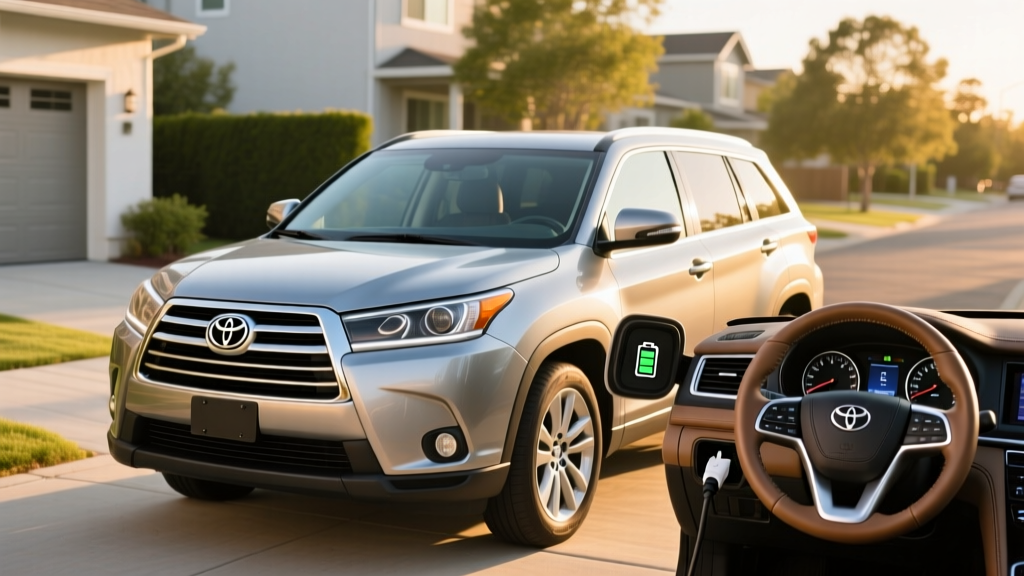
The 2013 Toyota Highlander Hybrid V6 pairs a 3.5-liter V6 with Toyota's Synergy Drive hybrid system to deliver 28 MPG combined in a three-row SUV that seats seven. More than a decade after it left the showroom floor, this generation remains one of the most reliable used hybrid SUVs available, with many examples surpassing 200,000 miles on the original hybrid battery. At current used-market prices between $10,000 and $16,000, it represents a low-risk entry into hybrid ownership — but buyers need to understand exactly what they're getting, what to inspect, and where the costs hide.
This is a conventional hybrid (HEV), not a plug-in. You never plug it in. It recovers energy through regenerative braking and engine optimization, storing it in a nickel-metal hydride (NiMH) battery pack. If you're looking for electric-only driving, this isn't the vehicle — but if you want a family SUV that sips fuel without changing any habits, it's a strong candidate.
HEV vs PHEV: What the 2013 Highlander Hybrid Actually Is
Conventional Hybrid (HEV) — This Vehicle: The 2013 Highlander Hybrid is a self-charging hybrid. It uses a small battery (approximately 1.9 kWh total capacity) charged entirely by the gasoline engine and regenerative braking. There is no plug, no electric-only range to speak of (it can creep at very low speeds on electric power for fractions of a mile), and no dependency on charging infrastructure. You drive it exactly like a gas car, but it uses roughly 30% less fuel.
Plug-In Hybrid (PHEV): A PHEV like the current Toyota RAV4 Prime has a larger battery (18.1 kWh) that you plug in to charge, delivering 42 miles of electric-only range before the gas engine kicks in. The 2013 Highlander Hybrid is not a PHEV and Toyota never offered a plug-in version of this generation.
Full EV (BEV): A battery-electric vehicle has no gasoline engine at all. If you're considering trading up from this Highlander to a modern EV like the Kia EV9 or Toyota bZ4X, you'll gain zero tailpipe emissions and lower per-mile fuel costs, but you'll need home charging access and a significantly larger budget.
Fuel Economy: EPA Ratings vs Real-World MPG
The EPA rates the 2013 Toyota Highlander Hybrid V6 AWD-i at 28 MPG combined, breaking down as follows:
| Driving Condition | EPA Rating | Real-World Expectation |
|---|---|---|
| City | 28 MPG | 26–30 MPG (hybrids excel in stop-and-go) |
| Highway | 28 MPG | 25–27 MPG (less regen benefit at steady speed) |
| Combined | 28 MPG | 25–29 MPG depending on driving mix |
According to fueleconomy.gov, the 2013 Highlander Hybrid achieves identical city and highway ratings — a hallmark of Toyota's hybrid system, which leverages regenerative braking heavily in city driving to offset the highway disadvantage that most gas-only vehicles face.
Real-World MPG Note: Owner-reported data on Fuelly and similar platforms shows a median of approximately 25–26 MPG for mixed driving. Cold weather (below 40°F), heavy cargo loads, and frequent short trips can push this to 22–23 MPG. Conversely, gentle suburban driving in mild temperatures can yield 29–30 MPG. The hybrid system's city advantage is real — expect your best numbers in stop-and-go traffic, not on the interstate.
Compared to the non-hybrid 2013 Highlander V6 AWD (rated at 18 MPG combined), the hybrid saves roughly 200 gallons of fuel per year at 15,000 miles driven — approximately $600–$750 annually at 2026 fuel prices.
Powertrain and Performance Specifications
| Specification | 2013 Highlander Hybrid V6 |
|---|---|
| Engine | 3.5L V6 Atkinson-cycle |
| Engine Power | 230 hp @ 5,600 rpm |
| Electric Motor | Front + rear permanent-magnet AC motors |
| Net Combined System Power | 280 hp |
| Transmission | eCVT (electronically controlled continuously variable) |
| Drivetrain | AWD-i (electronic on-demand AWD via rear motor) |
| 0–60 mph | ~7.8 seconds |
| Towing Capacity | 3,500 lbs |
| Seating | 7 passengers (3 rows) |
| Cargo Volume (behind 3rd row) | 10.3 cu ft |
| Cargo Volume (behind 2nd row) | 42.3 cu ft |
| Hybrid Battery Type | Nickel-Metal Hydride (NiMH) |
| Hybrid Battery Capacity | ~1.9 kWh (total) |
| Fuel Tank | 17.2 gallons |
| Total Range (est.) | ~480 miles |
The AWD-i system is worth understanding: unlike mechanical AWD with a driveshaft, the Highlander Hybrid uses the rear electric motor to power the rear wheels only when slip is detected or during hard acceleration. This means zero parasitic drivetrain loss during normal cruising — a key efficiency advantage over conventional AWD systems.
Hybrid Battery: Lifespan, Warranty, and Replacement Cost
Original Battery Warranty: Toyota's hybrid battery warranty for the 2013 model year was 8 years / 100,000 miles (10 years / 150,000 miles in California and states adopting CARB emissions standards). As of 2026, all original warranty coverage has expired for every 2013 Highlander Hybrid on the road.
This is the single biggest concern for used hybrid buyers, and it deserves a thorough answer.
How Long Does the Hybrid Battery Actually Last?
Toyota's NiMH hybrid batteries in this generation have proven remarkably durable. Data from owner communities, taxi fleets, and repair shops indicates:
- Typical lifespan: 150,000–200,000+ miles before significant degradation
- Failure mode: Individual cells degrade unevenly rather than full-pack failure
- Warning signs: Reduced MPG (2–4 MPG drop), "Check Hybrid System" dashboard warning, battery fan running constantly
- Age factor: At 13 years old, even low-mileage examples may show age-related cell degradation
Battery Replacement Costs
If the hybrid battery fails, you have three options:
- New OEM Toyota battery: $3,000–$4,000 installed at a dealership
- Refurbished/reconditioned battery: $1,500–$2,500 from specialty hybrid shops (e.g., Green Bean Battery, which offers a lifetime warranty on reconditioned packs)
- Individual cell replacement: $500–$1,000 if only a few cells are bad — requires a skilled hybrid technician
At a used purchase price of $10,000–$16,000, a $2,000 reconditioned battery replacement is a meaningful but manageable expense. Budget for it if the vehicle is over 120,000 miles and the battery hasn't been replaced.
Pre-Purchase Battery Health Check
Before buying any 2013 Highlander Hybrid, have a technician perform a hybrid battery health test using Toyota's Techstream diagnostic software or an equivalent OBD-II scanner that reads individual cell voltages. A healthy pack shows cell voltages within 0.2V of each other. A pack with cells varying by 0.3V or more is a candidate for reconditioning or replacement within 1–2 years.
Pricing, Tax Credits, and Total Cost of Ownership
Used Market Pricing (2026)
The 2013 Toyota Highlander Hybrid commands a premium over its gas-only sibling on the used market, reflecting strong demand for reliable hybrid SUVs:
- High mileage (150,000+ mi): $8,000–$11,000
- Average mileage (100,000–140,000 mi): $11,000–$14,000
- Low mileage (under 90,000 mi): $14,000–$17,000
Trim levels include the base Hybrid and the Hybrid Limited, which adds leather, navigation, and a premium JBL audio system. The Limited typically commands $1,500–$2,500 more than the base trim at equivalent mileage.
Tax Credit Eligibility
The 2013 Highlander Hybrid does not qualify for the federal §30D new clean vehicle tax credit (up to $7,500) — that credit applies only to new vehicle purchases and has specific battery sourcing, MSRP cap, and buyer income requirements per current IRS guidelines.
It also does not qualify for the federal used clean vehicle credit (up to $4,000 under §25E), because that credit applies only to used BEVs and PHEVs with a minimum 7 kWh battery capacity. The Highlander Hybrid's ~1.9 kWh NiMH pack falls well below this threshold, and conventional HEVs are excluded from both credits.
Some state and local incentives may apply to hybrid ownership (HOV lane access in certain states, for example), but these vary by jurisdiction. Check your state's DMV or energy office for specifics.
5-Year Ownership Cost Estimate
| Cost Category | Estimated 5-Year Cost |
|---|---|
| Purchase price (avg. mileage example) | $12,500 |
| Fuel (15,000 mi/yr @ 26 MPG avg, $3.40/gal) | $9,800 |
| Insurance (national avg. for used SUV) | $7,500 |
| Maintenance & repairs (hybrid-specific + standard) | $3,500 |
| Potential hybrid battery replacement | $0–$2,500 |
| Total estimated 5-year cost | $33,300–$35,800 |
Reliability: What Owners and Data Show
The 2013 Highlander Hybrid benefits from Toyota's reputation for hybrid powertrain durability, and this specific generation has strong reliability indicators:
- Powertrain: The 2GR-FXE V6 and eCVT combination is one of Toyota's most proven setups, shared with the Camry Hybrid, Sienna, and Lexus RX 450h of the same era. The eCVT has no traditional gears, bands, or clutch packs to wear — it uses planetary gearsets that are extraordinarily durable.
- Common non-hybrid issues: Water pump failures (around 100,000–130,000 miles, $400–$600 repair), power steering hose leaks, and brake actuator assembly wear (a known issue in Toyota hybrids of this era, with repair costs of $1,200–$1,800).
- Brake life: Regenerative braking significantly extends pad and rotor life. Many owners report original brake pads lasting 80,000–100,000+ miles.
- NHTSA safety ratings: The 2013 Highlander earned 4 out of 5 stars overall in NHTSA crash testing, with 5 stars in side-impact protection.
Who Should Buy This Hybrid — and Who Shouldn't
Choose the 2013 Highlander Hybrid if:
- You need a 7-seat SUV on a budget under $16,000
- You drive a mix of city and highway miles and want 28 MPG without changing habits
- You don't have access to home or workplace charging (no plug needed)
- You want proven Toyota reliability with widely available parts and hybrid-savvy mechanics
- You tow light loads (up to 3,500 lbs — boats, small campers)
Look elsewhere if:
- You want electric-only driving — consider a used PHEV like the Chrysler Pacifica Hybrid or a newer Toyota RAV4 Prime
- You need modern ADAS features (lane-keeping, adaptive cruise) — this generation predates Toyota Safety Sense
- You want the latest infotainment (no Apple CarPlay, no Android Auto, small 6.1" screen)
- You drive primarily highway miles — the hybrid fuel economy advantage shrinks at steady speed, and a modern turbo-diesel or efficient gas SUV may match it
- You want federal tax credits — those require a new or qualifying used BEV/PHEV
Pros
- 28 MPG combined in a 7-seat AWD SUV
- Proven, durable hybrid powertrain with 200k+ mile potential
- No charging infrastructure needed
- Strong towing capacity (3,500 lbs)
- eCVT is nearly maintenance-free
- Regenerative braking extends brake life significantly
Cons
- Hybrid battery warranty expired; replacement is $1,500–$4,000
- No plug-in or electric-only capability
- Dated interior tech (no smartphone integration)
- No advanced driver-assistance systems
- Cargo space behind 3rd row is tight (10.3 cu ft)
- Brake actuator repair can exceed $1,500 if it fails
Frequently Asked Questions
How many MPG does the 2013 Toyota Highlander Hybrid V6 get?
The EPA rates it at 28 MPG city, 28 MPG highway, and 28 MPG combined. Real-world driving typically yields 25–29 MPG depending on conditions, with city driving often matching or slightly exceeding the EPA estimate thanks to regenerative braking.
Does the 2013 Highlander Hybrid need to be plugged in?
No. This is a conventional hybrid (HEV), not a plug-in hybrid (PHEV). The battery charges through regenerative braking and the gasoline engine. You fuel it like any other car — there is no charging port.
Is this hybrid reliable, and what does battery replacement cost?
The powertrain is among the most reliable Toyota has produced. The NiMH hybrid battery typically lasts 150,000–200,000 miles. If replacement is needed, a reconditioned pack costs $1,500–$2,500 installed, while a new OEM battery runs $3,000–$4,000. At 13 years old, budget for a potential battery service if the vehicle hasn't had one.
Does the 2013 Highlander Hybrid qualify for any tax credit?
No. It does not qualify for the federal §30D new vehicle credit (it's not new) or the §25E used clean vehicle credit (conventional hybrids with under 7 kWh battery capacity are excluded). Check your state for any local hybrid incentives or HOV lane access programs.
Hybrid vs PHEV vs EV — which should I choose?
If you lack home charging access and want maximum flexibility, a conventional hybrid like this Highlander is the right call. If you have home charging and a short commute, a PHEV gives you electric-only daily driving with gas-engine backup for road trips. If you have reliable charging and want the lowest per-mile cost and zero tailpipe emissions, a full EV is the future-proof choice — but at a significantly higher purchase price.
What should I check before buying a used 2013 Highlander Hybrid?
Prioritize a hybrid battery health scan (cell voltage balance via OBD-II), brake actuator test, water pump inspection, and a review of maintenance records. Verify the hybrid system warning light is not illuminated. A pre-purchase inspection at a Toyota dealership or hybrid-specialist shop is strongly recommended — budget $150–$250 for this service.
How does the AWD-i system work?
Toyota's AWD-i uses a separate rear electric motor to power the rear wheels only when needed — during acceleration, wheel slip, or low-traction conditions. There is no mechanical driveshaft connecting the front and rear axles. This eliminates parasitic drivetrain losses and contributes to the vehicle's strong fuel economy compared to mechanical AWD systems.