Quick Verdict: A Proven Midsize Hybrid Sedan at a Used-Car Bargain
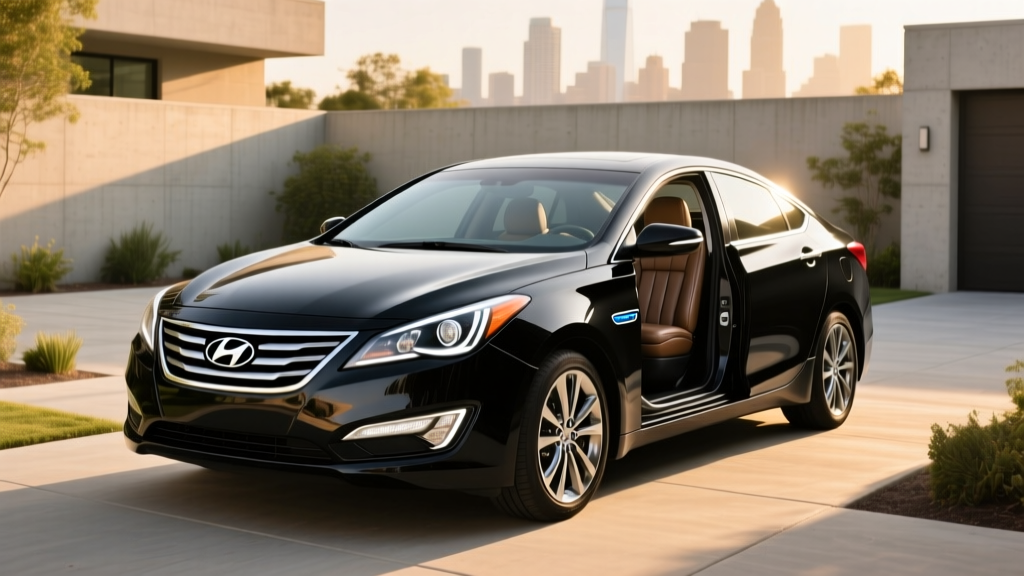
The 2013 Hyundai Sonata Hybrid Limited represents a specific moment in hybrid history: a conventional (non-plug-in) hybrid sedan that prioritized real-world fuel economy over performance theatrics. With an EPA-rated 36 MPG combined and a 2.4-liter four-cylinder paired with a 35 kW electric motor, it delivers the kind of straightforward efficiency that budget-conscious commuters still seek on the used market. In 2026, well-maintained examples trade between $6,000 and $10,000 depending on mileage and condition — a compelling entry point for drivers who want hybrid efficiency without EV charging logistics.
This guide covers the 2013 Sonata Hybrid Limited specifically — the top trim with leather, navigation, and premium audio — but most mechanical and efficiency data applies across all 2013 Sonata Hybrid trims. We'll break down real-world MPG expectations, battery longevity, replacement costs, and how this HEV stacks up against modern PHEVs and full EVs for today's buyers.
| Specification | 2013 Sonata Hybrid Limited |
|---|---|
| Powertrain Type | Conventional Hybrid (HEV) — no plug |
| Engine | 2.4L 4-cylinder Atkinson-cycle (159 hp) |
| Electric Motor | 35 kW (47 hp) |
| Combined System Output | 199 hp |
| Transmission | 6-speed automatic |
| Hybrid Battery | 1.4 kWh NiMH (nickel-metal hydride) |
| EPA MPG (City / Hwy / Combined) | 36 / 40 / 36 |
| Fuel Tank | 18.5 gallons |
| Total Range | ~666 miles |
| 0-60 mph | ~8.5 seconds |
| Drivetrain | Front-wheel drive |
| Original MSRP (Limited) | $31,850 |
| Current Used Price (2026 est.) | $6,000–$10,000 |
EPA Fuel Economy vs. Real-World MPG
The EPA rates the 2013 Sonata Hybrid at 36 MPG city, 40 MPG highway, and 36 MPG combined. Note that Hyundai revised the 2013 model's powertrain calibration compared to the 2011–2012 model years, swapping the previous 6-speed automatic for improved shift logic and tweaking the electric motor assist curve. The result was a meaningful bump from the earlier 33/37/35 ratings.
| Driving Scenario | Expected MPG | Notes |
|---|---|---|
| City (EPA) | 36 | Stop-and-go maximizes regen and electric assist |
| Highway (EPA) | 40 | Atkinson-cycle efficiency at steady cruise |
| Combined (EPA) | 36 | 55% city / 45% highway mix |
| Real-World City (owner-reported) | 34–38 | Hybrids often meet or beat EPA city in moderate climates |
| Real-World Highway (75+ mph) | 33–36 | Aero drag reduces hybrid advantage at high speed |
| Cold Weather (below 30°F) | 29–33 | Engine runs more for cabin heat; battery less efficient |
| Mountainous Terrain | 28–32 | Regen helps on descents but climbs consume fuel |
Real-world data from owner forums and FuelEconomy.gov user reports cluster around 33–37 MPG combined for mixed driving. The Sonata Hybrid's relatively small 1.4 kWh NiMH battery means it can't sustain electric-only driving for more than brief low-speed coasting — this is a mild hybrid system by modern standards, relying on the electric motor for assist rather than propulsion. Drivers who do mostly city driving at moderate speeds tend to see the best results, sometimes nudging past the 36 MPG combined sticker.
Cold-weather caveat: Expect a 10–15% MPG drop in sustained sub-freezing temperatures. The gasoline engine must run continuously to provide cabin heat (no electric heater in this generation), and the NiMH battery's charge-acceptance rate drops in cold conditions, reducing regenerative braking effectiveness.
Powertrain Deep Dive: How the 2013 System Works
The 2013 Sonata Hybrid uses Hyundai's parallel hybrid architecture — the gasoline engine and electric motor can both drive the front wheels, either independently or together. Here's the breakdown:
- 2.4L Theta II Atkinson-cycle engine: Produces 159 hp and 154 lb-ft of torque. The Atkinson cycle delays intake valve closing, sacrificing some low-end torque for greater thermal efficiency at cruise RPMs.
- 35 kW electric motor: Mounted between the engine and transmission, it adds up to 47 hp and 151 lb-ft of torque. It also serves as the generator during regenerative braking and engine-start duties.
- Combined output: 199 hp — but note that peak engine and motor outputs don't occur at the same RPM, so combined figures are system-limited rather than additive.
- 6-speed automatic: Unlike the Toyota Camry Hybrid's planetary eCVT, Hyundai used a conventional stepped automatic with a torque converter replaced by the electric motor and a clutch pack. This gives more natural shift feel but slightly less seamless electric-to-gas transitions.
The 1.4 kWh NiMH battery pack sits behind the rear seats, reducing trunk capacity from the gas Sonata's 16.4 cubic feet to 11.0 cubic feet. This is a meaningful trade-off for cargo-heavy buyers.
HEV vs. PHEV vs. EV: Which Powertrain Fits You?
The 2013 Sonata Hybrid is a conventional hybrid (HEV) — it generates all its electricity internally through regenerative braking and engine-driven generation. You never plug it in. This is fundamentally different from a plug-in hybrid (PHEV) or a battery-electric vehicle (BEV).
| Factor | HEV (this car) | PHEV (e.g., modern Sonata PHEV) | BEV (e.g., Ioniq 6) |
|---|---|---|---|
| Plug-in required? | No | Yes (for EV range) | Yes (always) |
| Electric-only range | ~0.5 mi at low speed | 25–40 mi typical | 250–360 mi typical |
| Fuel/energy cost per mile | ~$0.10 (gas) | ~$0.04 (electric) / $0.10 (gas) | ~$0.04 (electric) |
| Home charging needed? | No | Recommended | Essential |
| Maintenance complexity | Low (oil changes + standard) | Moderate (two systems) | Low (no engine) |
| Used price (2026) | $6K–$10K | $18K–$30K | $22K–$45K+ |
| Federal tax credit (new) | None | Up to $7,500 (§30D) | Up to $7,500 (§30D) |
Choose the 2013 Sonata Hybrid (HEV) if: You want better fuel economy without changing your habits. No charging access, no plug, no app management — just fill up less often. Ideal for apartment dwellers, street parkers, or anyone without reliable home/workplace charging.
Choose a PHEV if: You have home charging access and a commute under 30 miles round-trip. You'll drive mostly on electricity but retain gas-engine range for road trips. The current-generation Hyundai Tucson PHEV or Toyota RAV4 Prime exemplify this category.
Choose a BEV if: You have reliable Level 2 home charging, want the lowest per-mile energy cost, and your daily driving plus road-trip frequency aligns with DC fast-charging infrastructure in your region.
Battery Longevity, Warranty, and Replacement Cost
This is the top concern for any used-hybrid buyer, and it deserves detailed treatment.
Original Hybrid Battery Warranty
Hyundai warranted the 2013 Sonata Hybrid's NiMH battery pack for 8 years / 100,000 miles (10 years / 150,000 miles in CARB states including California, New York, Massachusetts, and others that adopted California emissions standards). This warranty covered capacity loss below a defined threshold and defects.
For a 2013 model, this factory warranty expired in 2021 at the earliest (or 2023 in CARB states by time). Any 2013 Sonata Hybrid on the road in 2026 is operating on battery life beyond its warranty period.
Real-world battery lifespan: NiMH packs in Hyundai's first-generation Sonata Hybrid have proven reasonably durable, with many owner reports of 130,000–180,000+ miles before significant degradation. However, NiMH chemistry is more susceptible to heat-related degradation than modern lithium-ion packs. Vehicles in hot climates (Arizona, Texas, Southern California) tend to see earlier battery issues.
Signs of hybrid battery degradation:
- Noticeable drop in fuel economy (5+ MPG below historical average)
- More frequent engine running at stops or low speeds
- Reduced regenerative braking feel
- Dashboard hybrid system warning light
- Rapid state-of-charge swings on the energy flow display
Battery replacement cost (2026 estimates):
| Option | Cost Range | Notes |
|---|---|---|
| New OEM battery (Hyundai dealer) | $2,800–$3,800 | Full pack replacement, includes labor |
| Refurbished/remanufactured pack | $1,500–$2,500 | Replaced weak cells, varying warranty (1–3 yr) |
| Used/salvage yard pack | $600–$1,200 | Unknown remaining life; gamble |
| Individual cell replacement (specialist shop) | $800–$1,600 | Only failed cells replaced; requires diagnostic expertise |
Given that a 2013 Sonata Hybrid Limited is worth $6,000–$10,000, a $3,000+ OEM battery replacement represents 30–50% of the vehicle's value. This is the critical economic calculation for used-hybrid buyers: factor in battery replacement risk when negotiating price. A pre-purchase hybrid battery health check (available at Hyundai dealers and independent hybrid specialists) is strongly recommended and typically costs $100–$200.
Limited Trim: What You Get at the Top of the Line
The Limited trim was the premium offering for the 2013 Sonata Hybrid, adding significant equipment over the base hybrid trim. Standard Limited features included:
- Leather seating surfaces with heated front and rear seats
- 8-inch touchscreen navigation with rearview camera
- Infinity premium audio system (400W, 10 speakers + subwoofer)
- Hyundai Blue Link telematics (telematics hardware is now largely obsolete in 2026 — don't count on connected features)
- Panoramic sunroof
- LED daytime running lights and HID headlamps
- 17-inch alloy wheels with low-rolling-resistance tires
- Dual-zone automatic climate control
From a 2026 perspective, the infotainment system is dated: no Apple CarPlay or Android Auto (those arrived in later Hyundai models), and the Blue Link backend services have been sunsetted for this generation. Budget $200–$400 for an aftermarket CarPlay-capable head unit if smartphone integration matters to you.
Pros
- Strong real-world MPG in city driving (34–38 achievable)
- No plug-in charging required — zero lifestyle change
- Limited trim well-equipped for the used price
- Conventional 6-speed auto avoids CVT drone
- Low annual fuel cost (~$1,100 at 12K mi/yr and $3.20/gal)
- Comfortable ride quality for a midsize sedan
Cons
- Trunk space reduced to 11.0 cu ft (battery intrusion)
- NiMH battery out of warranty; replacement cost is significant vs. car value
- Dated infotainment — no CarPlay/Android Auto
- Electric-only capability essentially zero (not a PHEV)
- Acceleration is adequate but not quick (8.5 sec 0–60)
- Highway MPG advantage over non-hybrid Sonata is modest
- Blue Link telematics services discontinued for this generation
Tax Credits and Incentives: The Used-Hybrid Reality
There is no federal tax credit available for the purchase of a used 2013 Sonata Hybrid in 2026. Here's why:
- The IRS §30D Clean Vehicle Credit applies only to new qualifying vehicles. The 2013 Sonata Hybrid was never eligible for the current credit structure, which requires battery capacity of at least 7 kWh (the Sonata Hybrid has 1.4 kWh).
- The Used Clean Vehicle Credit (§25E) provides up to $4,000 (30% of sale price, capped) for qualifying used EVs and PHEVs with at least 7 kWh of battery capacity. As a conventional HEV with a 1.4 kWh NiMH pack, the Sonata Hybrid does not qualify.
- No state-level incentives currently target used conventional hybrids. Some states offer registration fee reductions or HOV lane access for hybrids, but these programs have largely sunsetted for older models.
The economic case for this car rests entirely on fuel savings, not incentives. At 36 MPG combined versus a comparable gas-only midsize sedan at ~26 MPG combined, driving 12,000 miles annually at $3.20/gallon saves approximately $425 per year in fuel costs. Over five years, that's roughly $2,125 in savings — meaningful at this price point, but not transformative.
Reliability and Ownership Costs
The 2013 Sonata Hybrid's reliability record is mixed, reflecting both Hyundai's improving quality in this era and the complexity of first-generation hybrid systems:
- Engine: The 2.4L Theta II engine in this generation was subject to a major Hyundai recall and extended warranty program for connecting rod bearing failures. Verify that any used example has had the recall service completed — check the VIN on NHTSA's recall lookup. Hyundai extended coverage on affected engines to 15 years / 150,000 miles in some cases.
- Hybrid system: Generally reliable but with isolated reports of inverter coolant pump failures and hybrid control module issues. The NiMH battery is the primary longevity concern as noted above.
- Transmission: The 6-speed automatic has been largely trouble-free in hybrid applications, with fewer reported issues than the conventional Sonata's transmission.
- Brakes: Regenerative braking reduces wear on the friction brakes — expect pad life of 60,000–90,000 miles in normal driving.
Estimated annual ownership costs (2026):
| Category | Annual Cost |
|---|---|
| Fuel (12K mi/yr, $3.20/gal, 36 MPG) | $1,067 |
| Insurance (national avg. for 13-yr-old sedan) | $900–$1,200 |
| Maintenance (oil, filters, tires, brakes) | $500–$800 |
| Expected repairs (amortized) | $400–$700 |
| Total annual operating cost | $2,867–$3,767 |
Pre-Purchase Checklist for Used 2013 Sonata Hybrid Buyers
Before committing to a 2013 Sonata Hybrid Limited, run through this checklist:
- VIN recall check: Confirm the Theta II engine recall was performed via NHTSA.gov.
- Hybrid battery health scan: Have a dealer or hybrid specialist read the battery's state-of-health data — specifically cell voltage variance (cells should be within 0.2V of each other) and internal resistance.
- Service records: Verify regular oil changes (critical for the Atkinson-cycle engine's longevity) and inverter coolant service.
- Test drive observations: Note transitions between electric and gas power — they should be smooth. Jerky engagement or frequent engine cycling at low speeds may indicate hybrid system issues.
- Trunk inspection: Check the battery compartment area (behind rear seats, accessible from trunk) for corrosion or moisture intrusion.
- Tire condition: The low-rolling-resistance tires affect MPG — confirm they haven't been swapped for standard all-seasons, which can reduce fuel economy by 1–2 MPG.
Frequently Asked Questions
How many MPG does the 2013 Sonata Hybrid actually get?
The EPA rates it at 36 city / 40 highway / 36 combined. Real-world owners typically report 33–37 MPG combined in mixed driving. City-heavy routes tend to yield the best results thanks to regenerative braking and frequent electric motor assist. Cold weather and sustained highway speeds above 75 mph reduce efficiency to 29–33 MPG.
Does the 2013 Sonata Hybrid need to be plugged in?
No. This is a conventional hybrid (HEV), not a plug-in hybrid. The battery charges through regenerative braking and the gasoline engine. You never plug it in — you just fuel it like any regular car at a gas station.
How long does the hybrid battery last, and what does replacement cost?
NiMH batteries in this generation typically last 130,000–180,000 miles before significant degradation. The original 8-year/100,000-mile warranty has expired on all 2013 models. Replacement costs range from $600 (used/salvage pack) to $3,800 (new OEM from dealer), with refurbished options in the $1,500–$2,500 range. A pre-purchase battery health check is essential.
Is the 2013 Sonata Hybrid reliable?
Moderately reliable, with one major caveat: the 2.4L Theta II engine was subject to a significant recall for bearing failure. Verify recall completion before purchasing. The hybrid system itself has been generally dependable, but the NiMH battery is a wear item that may need replacement at higher mileage. Overall, it's less bulletproof than a contemporary Toyota Camry Hybrid but more affordable on the used market.
Does the 2013 Sonata Hybrid qualify for any tax credit?
No. As a conventional hybrid with a 1.4 kWh battery, it does not qualify for the federal §30D new-vehicle credit, the §25E used-vehicle credit (requires 7+ kWh), or any current state EV incentives. Its economic value comes purely from fuel savings.
How does it compare to a modern hybrid like the 2026 Toyota Camry Hybrid?
The current Camry Hybrid achieves 52 MPG combined (LE trim) with a more advanced lithium-ion battery, standard CarPlay/Android Auto, modern ADAS (Toyota Safety Sense 3.0), and a full factory warranty — but starts at ~$30,000. The 2013 Sonata Hybrid at $6K–$10K offers roughly 70% of the fuel efficiency at 20–30% of the price, making it a strong value play for budget buyers who accept the battery risk and dated technology.
Should I buy this instead of a used EV?
It depends on your charging situation. If you lack reliable home or workplace Level 2 charging, the Sonata Hybrid eliminates that barrier entirely while still cutting fuel costs. If you do have charging access, a used EV like a 2018–2020 Chevy Bolt (often $10K–$14K in 2026) offers dramatically lower per-mile energy costs (~$0.04/mi vs. ~$0.10/mi) and zero tailpipe emissions, but requires charging infrastructure commitment.