Quick Verdict: A Pioneer PHEV That Still Has Niche Appeal
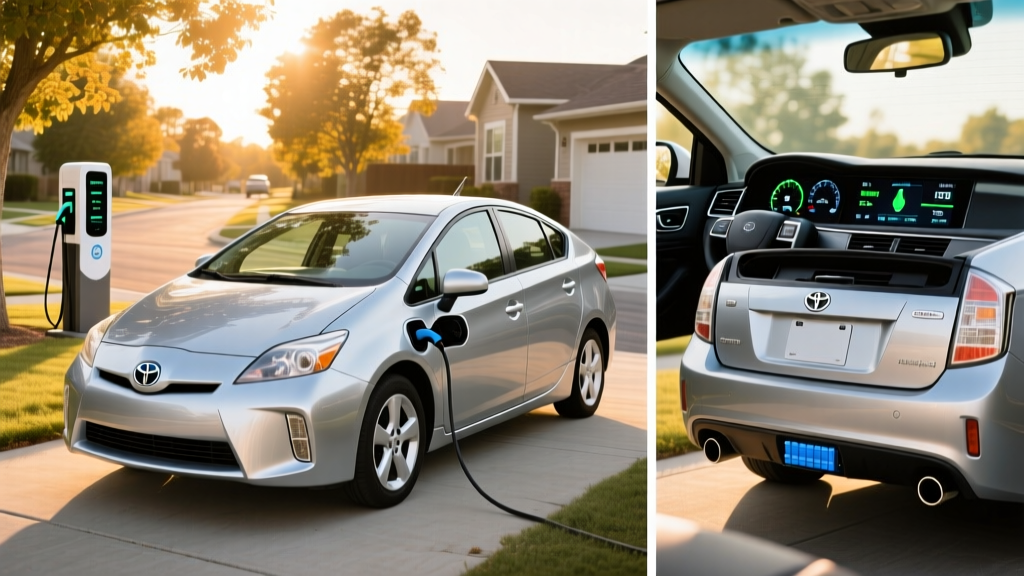
The 2013 Toyota Prius Plug-In Hybrid was one of the first mass-market plug-in hybrids sold in the United States, bridging the gap between Toyota's legendary conventional Prius hybrid and the all-electric future. More than a decade later, it remains a viable used-car option for budget-conscious commuters who need electric-only driving for short trips but can't commit to a full battery-electric vehicle (BEV). With an EPA-rated 11 miles of electric-only range and 50 MPG combined once the battery depletes, it still outperforms most gasoline-only compacts — but buyers in 2026 must weigh its aging 4.4 kWh battery against newer PHEVs offering 30-40 miles of EV range.
This guide covers everything a used buyer needs to know: real-world fuel economy, battery health expectations, replacement costs, and how this first-generation Prius Plug-In stacks up against modern alternatives.
HEV vs PHEV: What the 2013 Prius Plug-In Actually Is
Before evaluating this specific model, it's essential to understand the distinction between a conventional hybrid and a plug-in hybrid — because the 2013 Prius lineup sold both.
Conventional Hybrid (HEV) — 2013 Prius (Standard)
- Battery: 1.3 kWh nickel-metal hydride (NiMH)
- Plug-in charging: No — charges only via regenerative braking and the gasoline engine
- Electric-only driving: Less than 1 mile at very low speeds
- EPA combined MPG: 50 MPG
Plug-In Hybrid (PHEV) — 2013 Prius Plug-In
- Battery: 4.4 kWh lithium-ion (Li-ion)
- Plug-in charging: Yes — Level 1 (120V) or Level 2 (240V) via J1772 connector
- Electric-only driving: EPA-rated 11 miles (up to ~62 mph in EV mode)
- EPA combined MPG (charge-depleted, hybrid mode): 50 MPG
- EPA MPGe (charge-sustaining + electric): 95 MPGe
The critical difference: the standard Prius HEV never plugs in and has virtually no electric-only range. The Prius Plug-In adds a larger lithium-ion battery and a charge port, enabling short all-electric commutes before seamlessly switching to hybrid operation. If you see a 2013 Prius listed as a "Plug-In" or "PHV," it's the PHEV variant. The badging on the rear hatch reads "PLUG-IN HYBRID."
Fuel Economy and Electric Range: EPA Numbers vs Real World
| Metric | EPA Rating | Real-World Expectation |
|---|---|---|
| Combined MPGe (EV + hybrid) | 95 MPGe | 85–100 MPGe (depends on plug-in frequency) |
| EV-only range | 11 miles | 8–12 miles (7–9 in cold weather) |
| Combined MPG (hybrid mode, battery depleted) | 50 MPG | 46–52 MPG (city-biased driving favors higher numbers) |
| City MPG (hybrid mode) | 51 MPG | 48–55 MPG (hybrids often exceed EPA in stop-and-go) |
| Highway MPG (hybrid mode) | 49 MPG | 44–48 MPG (aerodynamic drag reduces efficiency at 70+ mph) |
| Total combined range (EV + gas) | ~540 miles | ~480–560 miles depending on conditions |
The 11-mile EV range was modest even in 2013 and feels limited by 2026 standards, where the Toyota RAV4 Prime delivers 42 miles of electric range. However, for a commuter with a round trip under 10 miles and access to a standard 120V outlet at home or work, the Prius Plug-In can cover most daily driving on electricity alone — using roughly 3–4 kWh per charge, which costs about $0.45–$0.65 at the national average residential rate of ~$0.16/kWh.
Real-world MPG note: Toyota's hybrid system excels in city driving, where regenerative braking recaptures energy and the engine shuts off frequently. Owners who drive primarily in urban conditions commonly report 50–55 MPG in hybrid mode. Highway-heavy commuters at 75+ mph should expect numbers in the mid-40s. Cold weather (below 35°F) reduces both EV range (by roughly 20–30%) and hybrid fuel economy (by 5–10%) due to cabin heating demands and reduced battery efficiency.
Powertrain and Battery Specifications
| Gasoline Engine | 1.8L 4-cylinder Atkinson cycle, 98 hp |
|---|---|
| Electric Motor | 60 kW (80 hp) AC synchronous |
| Combined Net Horsepower | 134 hp |
| Transmission | Planetary eCVT (electronically controlled) |
| Traction Battery | 4.4 kWh lithium-ion (usable capacity ~3.5 kWh) |
| Battery Chemistry | Lithium-ion (NMC-type) |
| Charge Port | J1772 (Level 1 and Level 2 AC only) |
| DC Fast Charging | Not supported |
| Level 1 Charge Time (120V, 12A) | ~2.5–3 hours (0–100%) |
| Level 2 Charge Time (240V, 15A) | ~1.5 hours (0–100%) |
| 0–60 mph | ~9.8 seconds |
| Curb Weight | ~3,165 lbs |
| Cargo Volume (rear seats up) | 21.6 cu ft |
The powertrain is Toyota's third-generation Hybrid Synergy Drive, shared with the standard 2013 Prius but paired with the larger lithium-ion pack instead of the NiMH unit. The 4.4 kWh battery is air-cooled and mounted under the rear cargo floor, which slightly reduces cargo space compared to the standard Prius (21.6 cu ft vs 21.6 cu ft — the difference is minimal, but the spare tire is replaced by a tire repair kit).
Charging reality: There is no DC fast charging on this vehicle. The maximum AC charge rate is approximately 3.3 kW on Level 2. That means even with a 240V home charger, a full charge takes about 90 minutes. For a vehicle with only 11 miles of range, this is acceptable — most owners plug in overnight on a standard 120V outlet and wake up fully charged. But it also means opportunistic top-ups during the day are less practical than on modern PHEVs with larger batteries and faster charge rates.
Battery Health, Degradation, and Replacement Cost
Original Battery Warranty
Toyota warranted the 2013 Prius Plug-In's lithium-ion hybrid battery for 8 years / 100,000 miles (extended to 10 years / 150,000 miles in California and other CARB-adopting states: CT, ME, MA, NJ, NY, OR, RI, VT, WA). The warranty covers capacity loss below approximately 60% of original capacity, as well as defects.
As of 2026, all original warranties have expired — even in CARB states, a 2013 model year vehicle's 10-year coverage ended December 31, 2023. Any battery replacement is now an out-of-pocket expense.
Expected degradation: Toyota's lithium-ion packs in the Prius Plug-In have proven relatively durable, but 13-year-old cells will show measurable capacity loss. Based on owner reports and industry data from sources like fueleconomy.gov's EV technology resources, expect a well-maintained 2013 Prius Plug-In battery to retain roughly 70–85% of its original capacity. That translates to 7–9 miles of real-world EV range instead of the original 11. Degradation accelerates if the vehicle was routinely charged to 100% and left sitting in hot climates (Arizona, Texas, Southern California).
Battery replacement cost (2026 estimates):
- New OEM Toyota battery: $2,800–$3,600 (parts) + $500–$900 (labor) = $3,300–$4,500 total
- Refurbished/remanufactured battery: $1,500–$2,500 installed
- Individual module replacement: Some independent hybrid specialists can replace degraded modules within the pack for $800–$1,500, though this requires specialized diagnostic equipment
Pre-purchase tip: Before buying a used 2013 Prius Plug-In, request a hybrid battery health check from a Toyota dealer or qualified hybrid specialist. A tool like Toyota's Techstream or an aftermarket OBD-II reader (e.g., ScanGauge, Dr. Prius app) can read the battery's State of Health (SoH) and individual cell voltages. Avoid vehicles where cell voltage variance exceeds 0.3V, as this indicates imbalanced or failing modules.
Used Pricing and Tax Credit Eligibility
The 2013 Prius Plug-In originally started at an MSRP of approximately $32,000 (before a $7,500 federal tax credit that was available at launch). In the 2026 used market, expect to pay:
- 80,000–120,000 miles: $7,500–$10,500
- 50,000–80,000 miles: $10,000–$13,500
- Under 50,000 miles (rare): $13,000–$16,000
Prices vary significantly based on battery health, service history, and regional demand. California and Pacific Northwest listings tend to command a premium due to HOV lane access (now expired for this model year in most jurisdictions) and stronger PHEV demand.
Does It Qualify for Any Tax Credit in 2026?
Federal used-EV credit (§25E): Under current IRS rules for the Used Clean Vehicle Credit, qualifying used PHEVs can receive up to $4,000 or 30% of the sale price (whichever is lower). To qualify:
- Sale price must be $25,000 or less (most 2013 Prius Plug-In listings qualify)
- Buyer's adjusted gross income must not exceed $75,000 (single), $112,500 (head of household), or $150,000 (joint)
- Vehicle must be at least 2 model years old (a 2013 model qualifies)
- Vehicle must have a battery capacity of at least 7 kWh — the 2013 Prius Plug-In's 4.4 kWh battery does NOT meet this threshold
- Must be purchased from a licensed dealer (private-party sales do not qualify)
Bottom line: The 2013 Prius Plug-In's 4.4 kWh battery is too small to qualify for the federal used-EV tax credit. Buyers should not factor any federal incentive into their purchase budget. Some state and local incentives may apply for used PHEVs — check your state's energy office or the Alternative Fuels Data Center for current programs.
Reliability and Ownership Costs
Toyota's third-generation Prius platform (2010–2015) has an outstanding long-term reliability record. The 1.8L 2ZR-FXE Atkinson-cycle engine is under-stressed and routinely reaches 200,000+ miles with basic maintenance. The eCVT transmission has no traditional clutch packs or bands to wear — it's a planetary gearset that is essentially bulletproof.
Common issues specific to the 2013 Prius Plug-In:
- Hybrid battery degradation: As discussed above, the primary expense risk. Budget $1,500–$4,500 for eventual replacement.
- 12V auxiliary battery: The small 12V lead-acid battery (located in the rear cargo area) typically lasts 4–6 years and costs $180–$280 to replace. If the car won't start or shows dash warnings, check this first — it's far more common than traction battery failure.
- Brake actuator recall: Some 2010–2015 Prius models were subject to recalls for the brake booster assembly. Verify all recalls have been performed via NHTSA's recall lookup.
- Oil consumption: A small percentage of 1.8L engines from this era consume oil between changes. Check the dipstick regularly and use 0W-20 synthetic.
- EGR valve and intake carbon buildup: At higher mileage (120,000+), the exhaust gas recirculation system can clog. An EGR cleaning (~$200–$400 at an independent shop) can prevent rough idle and head gasket stress.
Estimated annual maintenance: $400–$700 per year for a Prius Plug-In at this age, covering oil changes, cabin/engine air filters, brake fluid, coolant checks, and tire rotation. Brake pads last exceptionally long (80,000–120,000 miles) thanks to regenerative braking handling most deceleration.
2013 Prius Plug-In: Pros and Cons in 2026
Pros
- 50 MPG combined in hybrid mode remains excellent in 2026
- Low purchase price on the used market ($7,500–$14,000)
- Toyota reliability and massive parts/service network
- Charges on any standard 120V outlet — no Level 2 installation required
- Low annual maintenance costs compared to aging gas vehicles
- Practical hatchback cargo space for its footprint
Cons
- 11-mile EV range is severely limited by 2026 PHEV standards
- No DC fast charging; Level 2 charge takes 90 minutes for a tiny battery
- Original battery warranty expired; replacement costs $1,500–$4,500
- Does not qualify for federal used-EV tax credit (battery under 7 kWh)
- Outdated infotainment — no Apple CarPlay, Android Auto, or modern safety tech
- Modest 134 hp and 9.8-second 0–60 time feel slow in modern traffic
- Aging interior materials and noticeable road noise at highway speed
Who Should Buy This vs a Modern PHEV or Full EV?
Choose the Used 2013 Prius Plug-In If:
- Your budget is under $12,000 and you want maximum fuel economy per dollar
- Your daily commute is under 15 miles round-trip and you can plug in at home (even a 120V outlet works)
- You want Toyota reliability with minimal learning curve — it drives like a normal car
- You live in an area with limited public charging infrastructure and need the gas-engine safety net
- You view the PHEV system as a bonus on top of an already-efficient 50-MPG hybrid
Choose a Modern PHEV Instead (e.g., 2024–2026 RAV4 Prime, Prius Prime) If:
- You need 25–42 miles of electric range to actually cover your commute without gasoline
- You want current safety technology (automatic emergency braking, lane-keeping, blind-spot monitoring)
- You want Apple CarPlay/Android Auto and modern infotainment
- You want to qualify for federal or state PHEV tax credits on a new purchase
- You plan to keep the vehicle 8+ years and want a fresh battery under warranty
Choose a Full EV (BEV) Instead If:
- You have reliable home Level 2 charging and your daily driving is under 200 miles
- You want to eliminate oil changes, spark plugs, and exhaust system maintenance entirely
- You want a smoother, quieter driving experience with instant torque
- You want to qualify for the up-to-$7,500 federal new-EV tax credit (§30D) or the up-to-$4,000 used-EV credit
Frequently Asked Questions
How many MPG does the 2013 Prius Plug-In get?
The EPA rates it at 50 MPG combined (51 city / 49 highway) in hybrid mode after the battery is depleted. In real-world driving, city-heavy commuters often see 50–55 MPG, while highway driving at 75+ mph typically yields 44–48 MPG. When factoring in electric-only miles, overall efficiency depends heavily on how often you plug in — frequent plugging can push effective economy well above 50 MPG equivalent.
How far can the 2013 Prius Plug-In go on electric only?
The EPA rates it at 11 miles of all-electric range. In real-world conditions, expect 8–12 miles depending on temperature, speed, and terrain. Highway driving at 65+ mph and cold weather (below 35°F) reduce this to roughly 7–9 miles. The EV mode works at speeds up to about 62 mph, making it viable for suburban commuting, not just parking-lot crawling.
Is the 2013 Prius Plug-In reliable?
Yes, with one caveat. The powertrain (engine, eCVT, motor) is among the most reliable Toyota has ever built, routinely reaching 200,000+ miles. The main risk is the lithium-ion traction battery, which is now 13 years old and out of warranty. Budget for a potential $1,500–$4,500 battery replacement during ownership. With that addressed, the vehicle is exceptionally dependable and cheap to maintain.
What does it cost to replace the hybrid battery?
A new OEM Toyota battery costs approximately $3,300–$4,500 installed at a dealer. Refurbished batteries from third-party suppliers run $1,500–$2,500 installed. Individual module replacement by a hybrid specialist can cost as little as $800–$1,500 if only a few cells have degraded. Always get a battery health report before purchasing.
Does the 2013 Prius Plug-In qualify for any tax credits in 2026?
No federal tax credit is available. The used-EV credit (§25E) requires a minimum battery capacity of 7 kWh, and the Prius Plug-In's 4.4 kWh pack falls short. The original $7,500 federal credit that applied at new-vehicle purchase expired for this model years ago. Check your state's incentive database for any local programs that may apply to used PHEV purchases.
Can I charge it on a regular household outlet?
Yes. The 2013 Prius Plug-In charges fully in about 2.5–3 hours on a standard 120V (Level 1) outlet using the included charging cable. A 240V Level 2 station reduces this to approximately 1.5 hours. Given the small 4.4 kWh battery, most owners find Level 1 charging perfectly adequate — there's no need to invest in a Level 2 home installation for this vehicle.
How does it compare to the standard 2013 Prius (non-plug-in)?
The standard Prius HEV gets the same 50 MPG combined but has no plug, no electric-only range, and uses a smaller 1.3 kWh NiMH battery. The Plug-In costs more on the used market but adds the ability to drive 8–11 miles on electricity. If you can't plug in regularly, the standard Prius is simpler and cheaper — the Plug-In's advantage only materializes with consistent charging access.