The 2013 Prius Hybrid: A Used-Car Benchmark Revisited
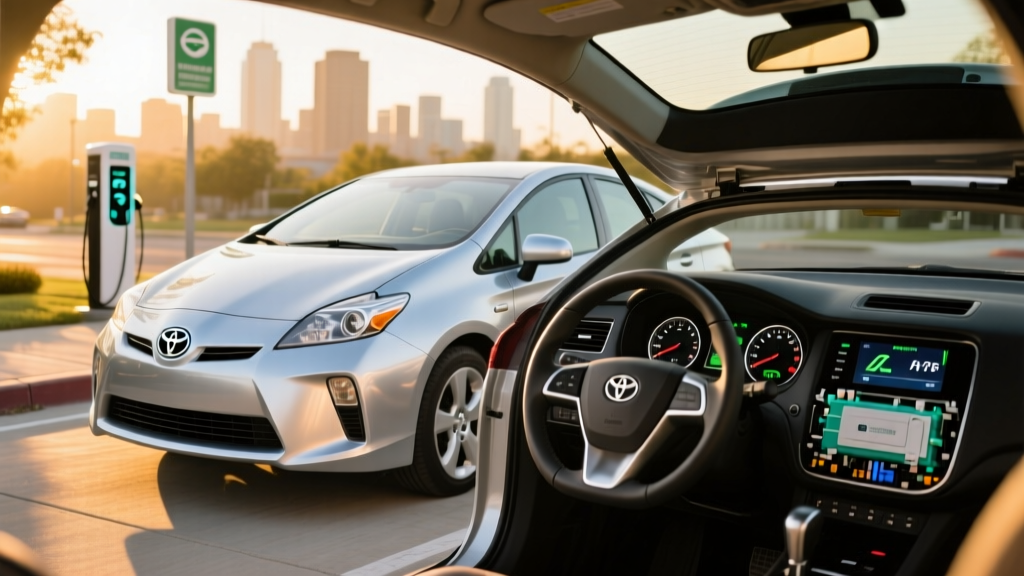
The third-generation Toyota Prius (model years 2010–2015) remains one of the most recognizable hybrid vehicles on American roads, and the 2013 Prius hybrid sits at a sweet spot in that lineup. Toyota introduced a refreshed infotainment system, revised front styling, and new Entune audio options for the 2013 model year while retaining the proven 1.8-liter hybrid powertrain that made the Prius synonymous with fuel efficiency. As a conventional hybrid electric vehicle (HEV), the 2013 Prius never needs to be plugged in — it generates all its electricity through regenerative braking and its gasoline engine.
In 2026, this car is 13 years old, and most examples on the used market carry between 100,000 and 180,000 miles. The critical question for buyers is whether the hybrid battery, powertrain, and overall reliability still hold up — and whether the 50 MPG combined rating translates to real-world savings versus a modern EV or newer hybrid. This guide breaks down every spec that matters.
HEV vs. PHEV: Understanding What the 2013 Prius Is (and Isn't)
Before diving into specs, it's essential to distinguish between the two hybrid architectures Toyota offered around this era, because confusion here leads to bad purchase decisions.
| Feature | 2013 Prius (HEV) | 2013 Prius Plug-In (PHEV) |
|---|---|---|
| Powertrain Type | Conventional Hybrid (HEV) | Plug-In Hybrid (PHEV) |
| Plug-In Charging | No — self-charging only | Yes — Level 1 (120V) / Level 2 (240V) |
| Electric-Only Range | ~1 mile at low speed (EV mode) | 11 miles EPA (EV mode) |
| Battery Capacity | 1.3 kWh (NiMH) | 4.4 kWh (Lithium-Ion) |
| DC Fast Charging | Not available | Not available |
| EPA Combined MPG | 50 MPG (gasoline) | 95 MPGe (EV) / 50 MPG (gasoline) |
| MSRP When New | $24,200–$30,005 | $32,000–$39,525 |
The standard 2013 Prius is an HEV. Its small 1.3 kWh nickel-metal hydride (NiMH) battery assists the gasoline engine during acceleration and captures energy during braking, but it cannot sustain meaningful electric-only driving. The Prius Plug-In Hybrid (sold alongside it and later renamed the Prius Prime) added a larger 4.4 kWh lithium-ion pack and a charge port, enabling 11 miles of electric-only range before the gasoline engine engaged.
If you're looking at a used 2013 Prius, confirm which variant you're evaluating — the exterior badges differ ("Plug-In Hybrid" on the rear for the PHEV), and the purchase economics are very different.
Fuel Economy: EPA Ratings and Real-World MPG
Fuel efficiency is the entire reason the Prius exists, and the 2013 model delivers numbers that still compete with modern hybrids.
| Metric | EPA Rating | Real-World Expectation |
|---|---|---|
| City MPG | 51 MPG | 48–55 MPG (hybrids excel in stop-and-go) |
| Highway MPG | 48 MPG | 42–47 MPG (aerodynamic drag hurts at 70+ mph) |
| Combined MPG | 50 MPG | 45–52 MPG (depends on driving mix) |
| Fuel Tank Capacity | 11.9 gallons | — |
| Total Driving Range | ~595 miles | ~500–600 miles |
According to fueleconomy.gov, the 2013 Prius earns 51 city / 48 highway / 50 combined MPG. These figures are remarkably honest: unlike many vehicles where real-world results fall short, the Prius HEV often exceeds its EPA city rating in genuine urban driving because regenerative braking recaptures more energy at low speeds. Highway driving is where it underperforms slightly, especially above 70 mph or in headwinds.
Owner-reported data on Fuelly and similar platforms clusters around 46–48 MPG combined for mixed driving, with some hypermilers consistently achieving 52–55 MPG. Cold weather, short trips (before the engine reaches optimal operating temperature), and aggressive acceleration will push figures toward the low 40s.
Powertrain Specs: Engine, Motor, and Combined Output
| Specification | Detail |
|---|---|
| Engine | 1.8L inline-4 Atkinson cycle (2ZR-FXE) |
| Engine Power | 98 hp @ 5,200 rpm |
| Engine Torque | 105 lb-ft @ 4,000 rpm |
| Electric Motor Power | 80 hp (60 kW) |
| Combined Net Output | 134 hp |
| Transmission | Planetary eCVT (no traditional gears) |
| 0–60 mph | ~9.8 seconds |
| Drivetrain | Front-wheel drive |
| Hybrid Battery | 1.3 kWh NiMH (201.6V nominal) |
| Curb Weight | ~3,042 lbs |
The third-generation Prius uses Toyota's Hybrid Synergy Drive, which blends the 1.8-liter Atkinson-cycle four-cylinder with an 80-hp permanent-magnet electric motor through a planetary gearset. This eCVT design has no belts, clutches, or traditional gear shifts — it's one of the most mechanically simple and durable transmissions in any vehicle, which is a significant factor in the Prius's long-term reliability reputation.
Combined net output of 134 hp is modest by modern standards. The 0–60 mph time of approximately 9.8 seconds is adequate for merging and passing but won't feel quick. This car prioritizes efficiency over acceleration, and that trade-off is deliberate.
Battery Longevity, Warranty, and Replacement Costs
For any used hybrid — especially one that's now over a decade old — the traction battery is the single largest financial risk. Here's what you need to know.
Original Battery Warranty (When New)
Toyota warranted the 2013 Prius hybrid battery for 8 years / 100,000 miles in most states and 10 years / 150,000 miles in California Air Resources Board (CARB) states (CA, CT, ME, MA, NJ, NY, OR, RI, VT, WA). By 2026, virtually every 2013 Prius has exceeded both thresholds, meaning the original warranty no longer applies unless an extended warranty was purchased and remains active.
How Long Do Prius Hybrid Batteries Actually Last?
NiMH batteries in the third-generation Prius have demonstrated excellent longevity in fleet and owner data. Many examples reach 150,000–200,000 miles before showing meaningful degradation. Unlike full EVs with large lithium-ion packs where a 10–20% capacity loss is noticeable in range, a hybrid's small battery degrades more subtly: you may see a 1–3 MPG drop as the battery ages, and the gasoline engine engages slightly more often.
The primary failure mode for a 13-year-old NiMH pack is cell imbalance rather than total capacity loss. One or two weak cells in the 28-module pack can trigger a hybrid system warning light and reduced efficiency.
Battery Replacement Cost (2026 Pricing)
| Option | Cost Range | Notes |
|---|---|---|
| New OEM Toyota Battery | $2,500–$3,200 (installed) | Full 28-module pack; available through dealerships |
| Remanufactured Battery | $1,200–$1,800 (installed) | Rebalanced used modules; 1–3 year warranty typical |
| Individual Module Replacement | $300–$600 (installed) | Replace only failed cells; requires diagnostic scan; short-term fix |
| Aftermarket Lithium-Ion Upgrade | $2,000–$2,800 | Companies like Project u2b offer lighter Li-ion replacements; limited availability |
The most cost-effective approach for a 2013 Prius in 2026 is typically a remanufactured battery or targeted module replacement, especially given the vehicle's residual value of roughly $5,000–$9,000 depending on mileage and condition. Spending $3,000+ on a new OEM battery rarely makes financial sense unless you plan to drive the car for another 5+ years.
Who Should Buy the 2013 Prius Hybrid in 2026?
The 2013 Prius occupies a specific niche in today's market. It's not the right choice for everyone, but for the right buyer, it remains compelling.
Pros
- 50 MPG combined still rivals any new hybrid on sale
- Extremely low cost of ownership: cheap insurance, inexpensive tires, simple maintenance
- Proven powertrain with massive aftermarket and DIY support
- No charging infrastructure needed — works anywhere with a gas station
- Strong cargo versatility (hatchback with ~21.6 cu ft behind rear seats)
- eCVT transmission virtually eliminates transmission-failure risk
Cons
- 13-year-old vehicle: expect wear items (suspension, brakes, A/C) to need attention
- Hybrid battery replacement likely within ownership period ($1,200–$3,200)
- No DC fast charging, no plug-in capability, no electric-only highway driving
- Modest 134 hp — underpowered for mountain passes or aggressive merging
- Dated infotainment (no Apple CarPlay / Android Auto without aftermarket head unit)
- Safety tech limited: no automatic emergency braking, no lane-keeping assist
Choose the 2013 Prius HEV If:
You need a low-cost, ultra-efficient commuter for city and suburban driving, you have no access to home or workplace EV charging, and you're comfortable budgeting $1,500–$2,500 for a potential battery replacement within the next few years. It's ideal as a second car, a budget commuter, or a high-mileage Uber/Lyft vehicle where fuel savings directly translate to income.
Choose a Modern PHEV or Full EV Instead If:
You want electric-only daily commuting (a 2026 Toyota Prius Prime offers 44 miles of EV range), you need current safety technology (automatic emergency braking, blind-spot monitoring), or you want to eliminate gasoline entirely. A used Chevrolet Bolt EV or Nissan LEAF can often be found in the same $8,000–$12,000 price range with lower mileage and zero fuel cost for local driving — provided you can charge at home.
Tax Credits and Incentives: What Applies to a Used 2013 Prius?
The federal EV tax credit landscape under IRS §30D applies exclusively to new plug-in electric vehicles (BEVs and PHEVs). The 2013 Prius HEV does not qualify for any federal tax credit because it is a conventional hybrid with no plug-in capability.
The Used Clean Vehicle Credit (up to $4,000 or 30% of sale price, whichever is lower) applies only to used BEVs and PHEVs with a battery capacity of at least 7 kWh. The standard 2013 Prius HEV's 1.3 kWh NiMH battery does not meet this threshold. The 2013 Prius Plug-In Hybrid's 4.4 kWh battery also falls below the 7 kWh minimum, so neither variant qualifies for the used EV credit.
Some states offer their own hybrid or efficiency incentives, but these are typically structured as rebates on new vehicle purchases. Check your state's energy or environmental agency for any current programs, but do not expect meaningful incentives on a 2013 used hybrid purchase.
Real-World Ownership Economics in 2026
Let's put actual numbers around what owning a 2013 Prius hybrid costs today versus alternatives.
| Annual Cost Factor | 2013 Prius HEV | 2024 Toyota Corolla (Gas) | 2024 Chevrolet Bolt EV (Used) |
|---|---|---|---|
| Purchase Price (approx.) | $6,500–$9,000 | $22,000 (new) | $12,000–$15,000 |
| Annual Fuel / Energy (12,000 mi) | ~$840 (at $3.50/gal, 50 MPG) | ~$1,290 (at $3.50/gal, 33 MPG) | ~$480 (at $0.14/kWh, 3.5 mi/kWh) |
| Annual Insurance | ~$900–$1,100 | ~$1,200–$1,500 | ~$1,100–$1,400 |
| Maintenance (annual avg.) | ~$400–$600 | ~$500–$700 | ~$200–$350 |
| 5-Year Fuel Total | ~$4,200 | ~$6,450 | ~$2,400 |
The 2013 Prius still saves roughly $2,250 in fuel over five years compared to a comparable gas-only compact car. However, a used EV like the Bolt saves even more — approximately $1,800 more than the Prius over the same period — if you have home charging access. The Prius advantage is zero upfront infrastructure cost and no range limitation on road trips.
Frequently Asked Questions
How many MPG does the 2013 Prius hybrid get?
The EPA rates the 2013 Toyota Prius at 51 city / 48 highway / 50 combined MPG. Real-world driving typically yields 45–52 MPG combined, with city-heavy driving often exceeding the EPA city figure thanks to regenerative braking.
Does the 2013 Prius need to be plugged in?
No. The standard 2013 Prius is a conventional hybrid (HEV) that charges its battery entirely through regenerative braking and the gasoline engine. It has no charge port. Only the separate 2013 Prius Plug-In Hybrid variant has a charge port and can be plugged in.
How far can the 2013 Prius go on electric only?
The standard 2013 Prius HEV can travel roughly 1 mile at very low speeds (under 25 mph) in EV mode before the gasoline engine starts. This is not practical electric-only driving — it's designed for creeping through parking lots. The Prius Plug-In Hybrid variant offers 11 miles of EPA-rated electric-only range.
Is the 2013 Prius hybrid reliable?
Yes. The third-generation Prius powertrain is among the most reliable in the automotive industry. The eCVT transmission has no wear components (no clutch packs, bands, or torque converters), and the 1.8L Atkinson-cycle engine runs under low stress. The primary reliability concern at this age is the hybrid battery, which may require module replacement or a full pack swap at $1,200–$3,200 depending on the approach.
What is the hybrid battery replacement cost for a 2013 Prius?
In 2026, expect to pay $2,500–$3,200 for a new OEM Toyota battery installed at a dealer, $1,200–$1,800 for a remanufactured battery from a hybrid specialist, or $300–$600 to replace individual failed modules. Most owners of 13-year-old Priuses opt for remanufactured packs or module-level repairs given the vehicle's residual value.
Does the 2013 Prius qualify for any tax credit?
No. The standard 2013 Prius HEV does not qualify for the federal §30D new clean vehicle credit or the used clean vehicle credit. The used EV credit requires a minimum 7 kWh battery; the Prius HEV's 1.3 kWh pack does not meet this threshold. The 2013 Prius Plug-In (4.4 kWh) also falls short of the 7 kWh requirement.
Is a 2013 Prius better than buying a modern EV?
It depends on your situation. The 2013 Prius is better if you have no home charging access, regularly drive more than 200 miles between stops, or need the lowest possible purchase price. A modern used EV (Bolt, LEAF, Model 3) is better if you can charge at home, want lower per-mile energy costs, and value modern safety features. Both can be excellent budget choices in 2026 — they solve different problems.
Sources: EPA Fuel Economy — 2013 Toyota Prius, IRS Clean Vehicle Credits, Toyota Motor Corporation specification archives.