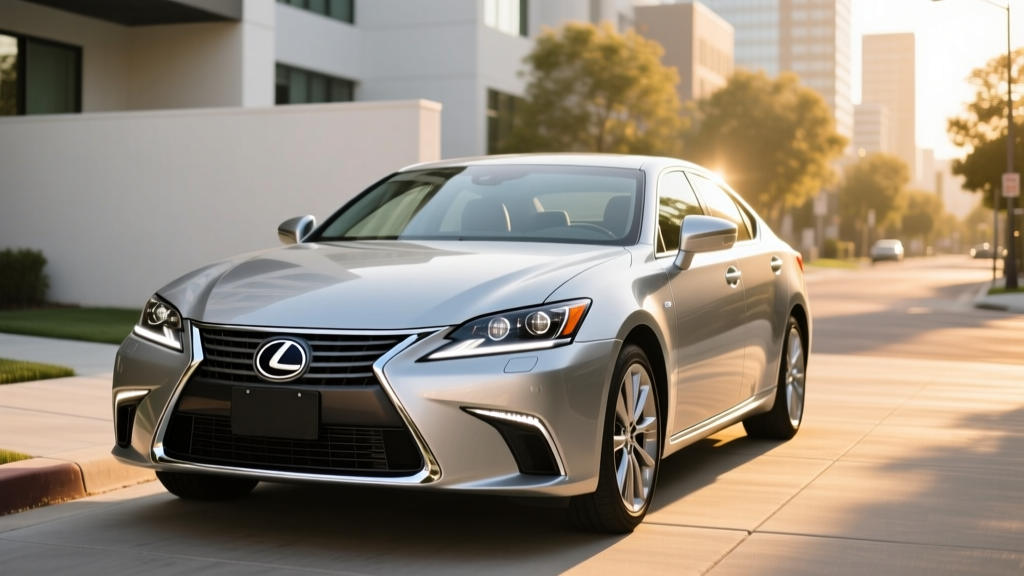
Quick Verdict: The 2013 Lexus ES 300h at a Glance
The 2013 Lexus ES 300h was the first hybrid variant of Lexus's midsize luxury sedan, pairing a 2.5-liter four-cylinder engine with an electric motor for a combined 200 horsepower and an EPA-estimated 40 MPG combined. Over a decade later, it remains one of the most fuel-efficient used luxury sedans available, with a proven Toyota Hybrid Synergy Drive powertrain that has demonstrated exceptional longevity. For buyers in 2026 shopping the used market, the ES 300h offers a compelling blend of low running costs, Lexus reliability, and a comfortable ride — but it comes with caveats around aging hybrid batteries, outdated infotainment, and the realities of buying a 13-year-old electrified vehicle.
2013 Lexus ES 300h: Full Powertrain & Efficiency Specs
| Specification | 2013 Lexus ES 300h |
|---|---|
| Powertrain Type | Conventional Hybrid (HEV) — not plug-in |
| Engine | 2.5L Atkinson-cycle 4-cylinder (156 hp, 156 lb-ft) |
| Electric Motor | Permanent-magnet synchronous (105 kW / 141 hp) |
| Combined Net Horsepower | 200 hp |
| Transmission | eCVT (electronically controlled CVT) |
| Drivetrain | Front-wheel drive (FWD) |
| Hybrid Battery | Nickel-Metal Hydride (NiMH), ~1.6 kWh |
| EPA MPG (City / Highway / Combined) | 40 / 39 / 40 MPG |
| Fuel Tank Capacity | 17.2 gallons |
| Total Range (est.) | ~688 miles |
| 0-60 mph | 8.1 seconds |
| Cargo Volume | 12.1 cu ft (battery reduces trunk space) |
| Original MSRP (base) | $38,850 |
| Used Price Range (2026) | $9,000–$15,500 depending on mileage & condition |
How Many MPG Does the 2013 ES 300h Actually Get?
The EPA rates the 2013 Lexus ES 300h at 40 MPG city, 39 MPG highway, and 40 MPG combined, according to fueleconomy.gov. These numbers were class-leading for a midsize luxury sedan in 2013 and remain impressive today — for context, the 2026 Toyota Camry Hybrid achieves a similar 44–52 MPG combined depending on trim, showing how far mainstream hybrids have come.
| Driving Scenario | EPA Rating | Real-World Expectation |
|---|---|---|
| City | 40 MPG | 41–44 MPG |
| Highway (65 mph) | 39 MPG | 36–39 MPG |
| Highway (75+ mph) | — | 35–38 MPG |
| Combined | 40 MPG | 38–42 MPG |
| Cold Weather (combined) | — | 36–40 MPG |
Hybrid Battery Longevity, Warranty & Replacement Cost
The 2013 ES 300h uses a nickel-metal hydride (NiMH) hybrid battery pack located behind the rear seats, which is why trunk space is reduced to 12.1 cubic feet compared to the gas-only ES 350's 16.7 cu ft. This NiMH pack is small — approximately 1.6 kWh — because it only needs to buffer energy for short electric-assist bursts, not sustain electric-only driving.
Real-world battery lifespan: Toyota/Lexus NiMH hybrid batteries have proven remarkably durable. Data from owner communities and repair shops indicates most ES 300h batteries last 150,000–200,000 miles before showing meaningful degradation, and many exceed 200,000 miles with gradual capacity loss rather than sudden failure. The NiMH chemistry degrades more gracefully than early lithium-ion packs — you'll notice reduced fuel economy and more frequent engine engagement before the battery fails outright.
Replacement cost in 2026:
- New OEM battery (Lexus dealer): $3,000–$4,200 including labor
- Refurbished/remanufactured battery: $1,500–$2,500 installed
- Individual cell/module replacement: $500–$1,200 if only specific modules have failed (a viable option diagnosed by a hybrid specialist)
Before purchasing a used 2013 ES 300h, request a hybrid battery health check from a Lexus dealer or qualified hybrid shop. The diagnostic tool reads individual module voltages — a healthy pack shows modules within 0.2V of each other. Wider variance signals impending failure. Also check whether the battery has already been replaced; a receipt for a newer OEM or refurbished unit is a strong positive.
Driving Experience & What It's Like to Own
The ES 300h prioritizes comfort over sportiness — a hallmark of the ES line. The eCVT delivers seamless, shift-free acceleration, though it lacks the directness of a conventional automatic. At 200 combined horsepower, the 0-60 mph time of 8.1 seconds is adequate for merging and passing but not quick by modern standards. The hybrid system operates silently at low speeds, with the gasoline engine engaging smoothly when more power is needed or when the battery state of charge drops.
The cabin is well-insulated from road and wind noise, and the seats are plush for long drives. However, the 2013 model year means you're working with Lexus's older Remote Touch infotainment interface — a mouse-like controller that many drivers find frustrating compared to modern touchscreens. Apple CarPlay and Android Auto are not available; Bluetooth audio streaming and a USB port are your connectivity options. If modern infotainment is a priority, this will be a pain point.
Safety-wise, the 2013 ES earned a Top Safety Pick rating from the IIHS, with Good ratings in moderate overlap front, side, roof strength, and rear crash protection. Standard features include 10 airbags, stability control, and a backup camera.
Does the 2013 ES 300h Qualify for Any Tax Credits?
No. The 2013 Lexus ES 300h is a conventional hybrid (HEV), not a plug-in vehicle. The federal IRS §30D Clean Vehicle Credit — which offers up to $7,500 — applies exclusively to battery electric vehicles (BEVs) and plug-in hybrids (PHEVs) with a minimum battery capacity of 7 kWh. The ES 300h's ~1.6 kWh NiMH pack doesn't qualify, and the credit has never applied to conventional hybrids.
There is also no federal used-EV credit (§25E) available for this vehicle, as that credit similarly requires plug-in capability. Some states historically offered hybrid purchase incentives, but most expired years ago or were converted to plug-in-only programs. Check your state's current energy office website for any remaining local incentives, but don't expect any for a 2013 conventional hybrid purchase in 2026.
HEV vs. PHEV vs. EV: Which Should You Choose?
If you're cross-shopping the used 2013 ES 300h, you're likely weighing it against other electrified options. Here's a practical decision framework:
Choose the ES 300h (HEV) if:
- You want maximum simplicity — no plugs, no charging, just gas it up
- You lack access to home or workplace charging
- Your budget is $10,000–$15,000 for a used luxury sedan
- You drive 12,000–18,000 miles/year and want 40 MPG without behavioral changes
- You value proven reliability with minimal new-technology risk
Consider a PHEV instead if:
- You can charge at home (Level 1 or Level 2) and want 20–40 miles of electric-only commuting
- Your daily commute is under 30 miles round-trip (you'd rarely use gas)
- You want to reduce fuel use dramatically while keeping gas for road trips
- You're willing to spend $18,000–$30,000+ on a newer used PHEV (e.g., Toyota RAV4 Prime, Chrysler Pacifica Hybrid)
Consider a full EV (BEV) instead if:
- You have reliable home Level 2 charging
- You want zero tailpipe emissions and minimal maintenance
- Your budget allows $15,000+ for a used EV (Chevy Bolt, Nissan Leaf, older Model 3)
- You want to qualify for the up-to-$4,000 used clean vehicle tax credit (§25E)
- You rarely take trips exceeding 200+ miles or are comfortable planning DC fast charging stops
Pros & Cons of the 2013 Lexus ES 300h Today
✓ Pros
- 40 MPG combined — outstanding for a luxury sedan, real-world often higher in city
- Proven Toyota hybrid powertrain — among the most reliable electrified systems ever built
- Low maintenance costs — no timing belt, regenerative braking extends pad life, no plug-in complexity
- Comfortable ride quality — true luxury sedan isolation and seat comfort
- 688-mile total range — fewer fuel stops on road trips
- Strong used value — holds value well relative to non-hybrid luxury competitors
✗ Cons
- Aging hybrid battery — factory warranty expired; replacement costs $1,500–$4,200
- Dated infotainment — Remote Touch controller, no CarPlay/Android Auto, small screen
- Reduced trunk space — 12.1 cu ft vs. 16.7 in gas ES 350 due to battery placement
- Modest acceleration — 8.1 seconds 0-60 is adequate but not quick
- No tax credit eligibility — conventional hybrids get no federal purchase incentives
- FWD only — no all-wheel-drive option for snow-belt buyers
- Premium fuel recommended — Lexus recommends 91 octane, adding to fuel cost
Frequently Asked Questions
How many MPG does the 2013 Lexus ES 300h hybrid get?
The EPA rates it at 40 MPG city, 39 MPG highway, and 40 MPG combined. In real-world driving, many owners report 41–44 MPG in city and suburban conditions. Highway driving at higher speeds (75+ mph) typically yields 35–38 MPG. Cold weather can reduce combined efficiency by 5–10%.
Is the 2013 ES 300h a plug-in hybrid?
No. The 2013 Lexus ES 300h is a conventional hybrid (HEV). You never plug it in. The battery recharges through regenerative braking and the gasoline engine. It has no electric-only driving range. If you want plug-in capability, look at vehicles like the Toyota Prius Prime, Ford Escape PHEV, or Lexus's own newer NX 450h+.
Is the 2013 ES 300h hybrid reliable?
Yes. The ES 300h uses Toyota's Hybrid Synergy Drive, which has an exceptional reliability track record spanning millions of vehicles (Prius, Camry Hybrid, Highlander Hybrid). The eCVT has no traditional gears or belts to fail. The main reliability concern for a 2013 model in 2026 is hybrid battery age — at 13 years old, original batteries may be approaching end-of-life if they haven't already been replaced.
What does it cost to replace the hybrid battery?
A new OEM Lexus hybrid battery costs $3,000–$4,200 installed at a dealer. Refurbished or remanufactured batteries run $1,500–$2,500 installed at independent hybrid specialists. In some cases, only individual battery modules need replacement, which can cost $500–$1,200. Get a battery health diagnostic before purchasing.
Does the 2013 ES 300h qualify for any tax credits?
No. Federal tax credits under IRS §30D (new clean vehicles) and §25E (used clean vehicles) apply only to plug-in vehicles — BEVs and PHEVs with a minimum battery capacity. The ES 300h is a conventional hybrid and has never qualified for federal purchase incentives. Check your state's energy office for any local programs, though most hybrid-specific incentives have expired.
Should I buy the ES 300h or the gas-only ES 350?
If fuel economy matters to you and you drive more than 12,000 miles per year, the ES 300h's 40 MPG combined versus the ES 350's 24 MPG combined saves roughly $700–$1,000 per year in fuel (based on 15,000 miles/year and $3.50/gallon premium). Over 5 years, that's $3,500–$5,000 in fuel savings, which typically offsets the ES 300h's slightly higher used purchase price and any battery replacement cost. The ES 350 offers more trunk space (16.7 cu ft) and stronger acceleration (268 hp, 6.8 sec 0-60), so it comes down to priorities.
What should I check before buying a used 2013 ES 300h?
Prioritize these inspections: (1) Hybrid battery health diagnostic with individual module voltage readings; (2) Full service history, especially whether the battery has been replaced; (3) Brake condition — regenerative braking extends pad life, but at 13 years old, inspect rotors and fluid; (4) Coolant system — the hybrid system has a separate inverter coolant loop that should be flushed per the maintenance schedule; (5) Standard pre-purchase inspection for suspension, tires, and body condition.