Quick Verdict: A Proven, Frugal Entry Into Hybrid Ownership
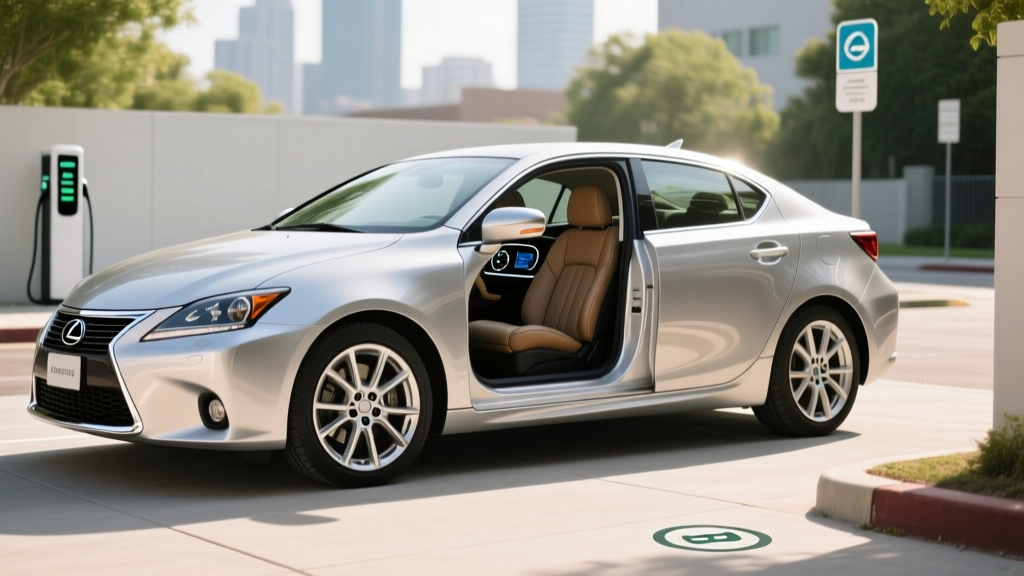
The 2013 Lexus CT 200h hybrid remains one of the most accessible used luxury hybrids on the market. Built on Toyota's third-generation Prius powertrain, this conventional hybrid (HEV) delivers an EPA-estimated 43 MPG combined without ever needing to be plugged in. For buyers considering a used electrified vehicle but unwilling to deal with charging infrastructure, the CT 200h offers a low-risk, high-reliability gateway — provided you understand what a decade-old hybrid battery entails.
Let's be clear up front: this is not a plug-in hybrid (PHEV) and not an electric vehicle (BEV). The CT 200h has no electric-only range, no charging port, and no EV mode beyond low-speed parking-lot maneuvers. It is a self-charging hybrid that recovers energy through regenerative braking and engine operation. If you're searching for the 2013 Lexus 300h hybrid, you're likely encountering the CT 200h (Lexus's compact hybrid hatchback from this era) — the "300h" badge appeared on the ES and RX sedans/SUVs, which share similar hybrid architecture. We'll cover the CT 200h in depth here, with notes applicable to all Lexus hybrids of this generation.
HEV vs. PHEV: What's the Difference?
Conventional Hybrid (HEV) — like the 2013 CT 200h — uses a small battery (typically 1.0–1.8 kWh) charged only by the engine and regenerative braking. No plug. Electric assist is brief and supplemental. Think of it as a gas car that's 30–50% more efficient.
Plug-in Hybrid (PHEV) — like the current Toyota RAV4 Prime or Lexus NX 450h+ — has a larger battery (14–22 kWh) that you plug in to charge. It offers 20–45 miles of electric-only driving before the gas engine kicks in. PHEVs qualify for federal tax credits; HEVs generally do not.
BEV (Battery Electric) — no gas engine at all. 200–400+ miles of range, requires charging access.
Fuel Economy: EPA Ratings vs. Real-World MPG
The 2013 Lexus CT 200h carries EPA ratings that have held up remarkably well in real-world use — and in some conditions, owners report exceeding them.
| Metric | EPA Estimate | Real-World Expectation |
|---|---|---|
| City MPG | 43 MPG | 42–48 MPG (hybrids excel in stop-and-go) |
| Highway MPG | 40 MPG | 36–40 MPG (less regen benefit at speed) |
| Combined MPG | 43 MPG | 38–45 MPG depending on driving mix |
| Fuel Tank Capacity | 10.6 gallons | ~380–450 miles per tank |
Source: fueleconomy.gov — 2013 Lexus CT 200h
The key insight with Toyota/Lexus hybrids of this era: city MPG often exceeds highway MPG. Regenerative braking recovers energy at every stop light, and the engine shuts off frequently in traffic. Highway driving at 70+ MPH reduces the hybrid system's advantage because the gasoline engine runs continuously and aerodynamic drag dominates. If your commute is 80% city, expect to see 44–48 MPG regularly. If it's 90% highway at 75 MPH, plan on 36–39 MPG.
Cold-weather impact: Hybrid fuel economy drops 10–15% in freezing temperatures. The engine runs more often to provide cabin heat (no electric heater in this generation), and the battery's charge/discharge efficiency decreases. Expect 36–38 MPG combined in sustained sub-30°F conditions.
Powertrain: Engine, Motor, and Combined Output
| Specification | 2013 Lexus CT 200h |
|---|---|
| Gasoline Engine | 1.8L 4-cylinder Atkinson cycle (98 hp) |
| Electric Motor | 60 kW AC synchronous (80 hp) |
| Combined Net Horsepower | 134 hp |
| Transmission | eCVT (planetary gearset, no belts) |
| 0–60 MPH | 9.8 seconds |
| Drivetrain | Front-wheel drive |
| Hybrid Battery | 1.3 kWh Nickel-Metal Hydride (NiMH) |
| Curb Weight | 3,130 lbs |
The CT 200h uses Toyota's Hybrid Synergy Drive — the same system found in the third-generation Prius (2010–2015). The Atkinson-cycle 1.8L engine sacrifices peak power for thermal efficiency, while the electric motor fills in torque gaps at low RPM. The eCVT is not a traditional belt-driven CVT; it's a planetary gearset with no wearable friction components, which is a major reliability advantage.
Performance is the CT 200h's most common criticism. At 134 combined horsepower and a 9.8-second 0–60 time, this is not a quick car. Highway merging requires planning, and steep grades will have the engine audibly straining. Drive modes (Eco, Normal, Sport) adjust throttle mapping and steering weight but cannot overcome the fundamental power deficit. If performance is a priority, the Lexus ES 300h (200 hp, 2.5L) or RX 450h (295 hp, 3.5L V6) from the same era offer substantially more power with only a modest MPG penalty.
Hybrid Battery: Lifespan, Warranty, and Replacement Cost
This is the single most important factor when buying a 2013 hybrid in 2026. The CT 200h's NiMH battery pack is now 13 years old. Here's what you need to know.
Battery Warranty & Expected Lifespan
Original warranty: 8 years / 100,000 miles (10 years / 150,000 miles in California and states adopting CARB emissions standards).
Expected battery lifespan: Toyota/Lexus NiMH hybrid batteries typically last 150,000–200,000 miles or 12–18 years before significant degradation. Many first-generation Prius batteries exceeded 200,000 miles.
Replacement cost (2026):
- Dealer new OEM battery: $3,000–$4,500 installed
- Refurbished/reconditioned battery: $1,500–$2,500 installed
- Individual module replacement (if only 1–2 cells fail): $300–$800 at a hybrid specialist
Key point: NiMH batteries degrade gradually — you'll notice declining MPG and more frequent engine cycling before total failure. The car remains drivable even with a degraded battery, just less efficient.
When evaluating a used 2013 CT 200h, request a hybrid battery health check. Many Toyota/Lexus dealerships can pull the battery's State of Health (SoH) via Techstream diagnostics. Independent hybrid specialists (increasingly common in major metros) offer this service for $50–$100. Look for a battery with less than 20% internal resistance deviation between modules — this is the primary predictor of remaining life.
If the battery has already been replaced, ask for documentation. An OEM dealer replacement with a receipt is the gold standard. A third-party refurb is acceptable but should come with its own warranty (typically 1–3 years).
Reliability and Ownership Costs
The 2013 CT 200h inherits the Prius's extraordinary reliability record. The powertrain has no timing belt (chain-driven), no traditional transmission to fail, and the regenerative braking system dramatically extends brake pad life — 80,000–120,000 miles on original pads is common.
Common issues to watch for at this age:
- 12V auxiliary battery: Located in the rear cargo area, this small lead-accent battery powers electronics and must be functional to boot the hybrid system. Replace every 4–5 years; cost ~$200.
- Inverter coolant pump: Known failure point on 2010–2015 Toyota/Lexus hybrids. Check for inverter coolant turbulence in the reservoir when the car is in READY mode. Replacement: $400–$700.
- EGR valve/circuit: Can clog with carbon buildup around 100,000+ miles, causing rough idle or check-engine lights. Cleaning or replacement: $200–$500.
- Brake actuator: The electro-hydraulic brake booster is expensive ($1,200–$2,000) but rarely fails before 150,000 miles.
Insurance costs are typically low for the CT 200h — it's a low-power compact with excellent crash-test scores (IIHS Top Safety Pick). Expect $80–$130/month depending on your profile and state.
Pricing and Tax Credit Eligibility
As a used vehicle, the 2013 CT 200h is no longer eligible for the federal §30D new clean vehicle credit. However, there is a relevant incentive for used hybrid buyers:
Used Clean Vehicle Credit (§25E): Up to $4,000 (30% of sale price, capped at $4,000) for qualified used vehicles purchased from a dealer. However, this credit applies only to vehicles with a sale price of $25,000 or less AND model years at least two years prior to the purchase year. For 2026, the vehicle must be a 2024 model year or older — so the 2013 CT 200h qualifies by model year. The credit is limited by buyer income (AGI ≤ $75,000 single / $150,000 joint) and must be purchased from a licensed dealer, not a private party.
In practice, because a 2013 CT 200h typically sells for $9,000–$15,000, the 30% calculation means the actual credit would be $2,700–$4,000. Verify current eligibility at IRS.gov — Used Clean Vehicle Credit, as rules and qualified model lists update periodically.
| 2026 Used Market Pricing | Estimated Range |
|---|---|
| 80,000–100,000 miles, good condition | $12,000–$15,000 |
| 100,000–140,000 miles, good condition | $9,500–$12,000 |
| 140,000+ miles or battery needs replacement | $6,500–$9,500 |
Who Should Buy the 2013 CT 200h — And Who Shouldn't
Pros
- 43 MPG combined with no plug-in required
- Prius-derived reliability with massive parts availability
- Low insurance and maintenance costs
- Lexus build quality, quiet cabin, premium materials
- Strong cargo versatility (hatchback, 14.3 cu ft rear seats up)
- Excellent IIHS safety scores
- Potential §25E used-EV credit up to $4,000
Cons
- Slow acceleration (9.8 sec 0–60) — merging requires patience
- Firm ride quality, especially with 17-inch F-Sport wheels
- Dated infotainment with no Apple CarPlay/Android Auto
- Rear visibility is poor (small window, thick C-pillars)
- Hybrid battery is 13 years old — budget for eventual replacement
- Small fuel tank (10.6 gal) limits highway range to ~380 miles
- No AWD option
Decision Framework: Is This the Right Electrified Vehicle for You?
Choose the 2013 CT 200h (HEV) if: You want maximum fuel efficiency without changing your habits — no plugs, no range planning, no charging apps. Your budget is under $15,000. You drive primarily in city/suburban conditions. You want a low-risk entry into hybrid ownership with Toyota-proven reliability.
Choose a newer PHEV (e.g., Toyota Prius Prime, RAV4 Prime) if: You have home charging access and want 25–45 miles of electric-only commuting with a gas backup for road trips. You qualify for the §30D new-vehicle credit (up to $7,500) or the §25E used credit. You want more modern tech and safety features.
Choose a BEV (e.g., Tesla Model 3, Hyundai Ioniq 5) if: You have reliable home Level 2 charging, your daily driving is under 200 miles, and you want to eliminate gasoline entirely. You're ready for the charging-infrastructure learning curve and want the lowest per-mile energy cost.
Stick with a conventional gas car if: You drive very few miles per year (under 8,000), making the hybrid premium hard to recoup, or you regularly tow or haul heavy loads.
Real-World Ownership: What It's Actually Like in 2026
At roughly $10,000–$15,000 on the used market, the 2013 CT 200h occupies an interesting niche: it's one of the cheapest ways to access Lexus reliability and 40+ MPG simultaneously. The total cost of ownership is remarkably low.
Annual fuel cost: At 12,000 miles/year and $3.50/gallon regular unleaded (the CT 200h does not require premium), you'll burn approximately 279 gallons per year — about $977 annually. Compare that to a comparable 25-MPG compact at $1,680/year. The hybrid saves roughly $700/year in fuel.
Maintenance: Oil changes every 10,000 miles (~$50–$70 with synthetic 0W-20). No transmission fluid service required under normal conditions. Brake pads often last 80,000+ miles thanks to regenerative braking. Total annual maintenance averages $300–$500 for a well-maintained example.
The battery question, in perspective: If you buy a CT 200h for $11,000 and spend $2,500 on a refurbished battery at 160,000 miles, your total vehicle cost is $13,500. Spread over 5 years of ownership and 60,000 miles of driving, that's $0.225/mile in vehicle cost alone — before fuel savings offset the equation further. Even with a battery replacement, the math works.
Frequently Asked Questions
How many MPG does the 2013 Lexus CT 200h hybrid get?
The EPA rates the 2013 CT 200h at 43 MPG city, 40 MPG highway, and 43 MPG combined. In real-world driving, most owners report 38–48 MPG depending on their city/highway mix. City-heavy commutes frequently return 44–48 MPG because regenerative braking recovers energy at every stop. Sustained highway driving at 75 MPH typically yields 36–40 MPG. Cold weather (below 30°F) reduces economy by 10–15%.
Does the 2013 Lexus CT 200h need to be plugged in?
No. The CT 200h is a conventional hybrid (HEV), not a plug-in hybrid (PHEV). It has no charging port and no electric-only driving range beyond brief low-speed maneuvers. The 1.3 kWh NiMH battery is charged entirely by the gasoline engine and regenerative braking. You fuel it like any other car — just less often.
How far can it go on electric only?
Effectively zero miles in practical terms. Under very specific conditions (fully charged battery, flat ground, under 25 MPH, light throttle), the CT 200h can travel roughly 0.5–1 mile on electric power alone before the engine engages. This is not a usable electric range — it's a function of the hybrid system's low-speed assist. If you need meaningful electric-only driving (20–45 miles), you need a PHEV like the Toyota Prius Prime or a BEV.
Is the 2013 Lexus CT 200h reliable? What does a battery replacement cost?
Yes — the CT 200h shares its powertrain with the third-generation Toyota Prius, one of the most reliable vehicles ever produced. The eCVT has no belts or clutches to wear out, and the brake system lasts far longer than conventional cars. The primary long-term cost is the hybrid battery: expect $3,000–$4,500 for a new OEM replacement at a dealer, or $1,500–$2,500 for a quality refurbished unit. Many original batteries last 150,000–200,000 miles. Other common maintenance items (inverter coolant pump, EGR valve) are well-documented and affordable to address.
Does the 2013 CT 200h qualify for any tax credit?
It does not qualify for the §30D new clean vehicle credit (that applies only to new purchases). However, under the §25E Used Clean Vehicle Credit, you may be eligible for up to $4,000 (30% of the sale price) if you purchase from a licensed dealer, your AGI is within limits ($75,000 single / $150,000 joint), and the sale price is $25,000 or less. Since a 2013 CT 200h typically sells for $9,000–$15,000, the credit would be approximately $2,700–$4,000. Confirm eligibility at IRS.gov before purchasing, as qualified vehicle lists and rules update periodically. State incentives vary — check your state's energy office for additional rebates.
Hybrid vs. PHEV vs. EV — which should I choose?
It depends on your charging access and driving patterns. A conventional hybrid (HEV) like the CT 200h is best if you lack home charging and want zero lifestyle change — just better MPG. A PHEV is ideal if you can charge at home, have a short commute (under 40 miles), and want electric daily driving with gas flexibility for road trips. A BEV makes sense if you have reliable Level 2 home charging, drive under 250 miles daily, and want the lowest operating cost and zero tailpipe emissions. For a used buyer on a tight budget, the HEV remains the lowest-risk, lowest-complexity electrified option.
What should I check before buying a used 2013 CT 200h?
Prioritize these items during a pre-purchase inspection: (1) Hybrid battery State of Health via Techstream or a hybrid specialist — this is the most expensive single component. (2) Inverter coolant pump operation — check for fluid turbulence in the inverter reservoir with the car in READY mode. (3) Brake actuator function — the brake pedal should feel firm and consistent, not spongy or erratic. (4) Service records — evidence of regular oil changes and inverter coolant service. (5) 12V battery age — if it's over 4 years old, budget for replacement. A pre-purchase inspection at a Toyota/Lexus dealer or hybrid specialist ($150–$250) is strongly recommended.