Quick Verdict: Is the 2013 Fusion Hybrid Titanium Still Worth Buying?
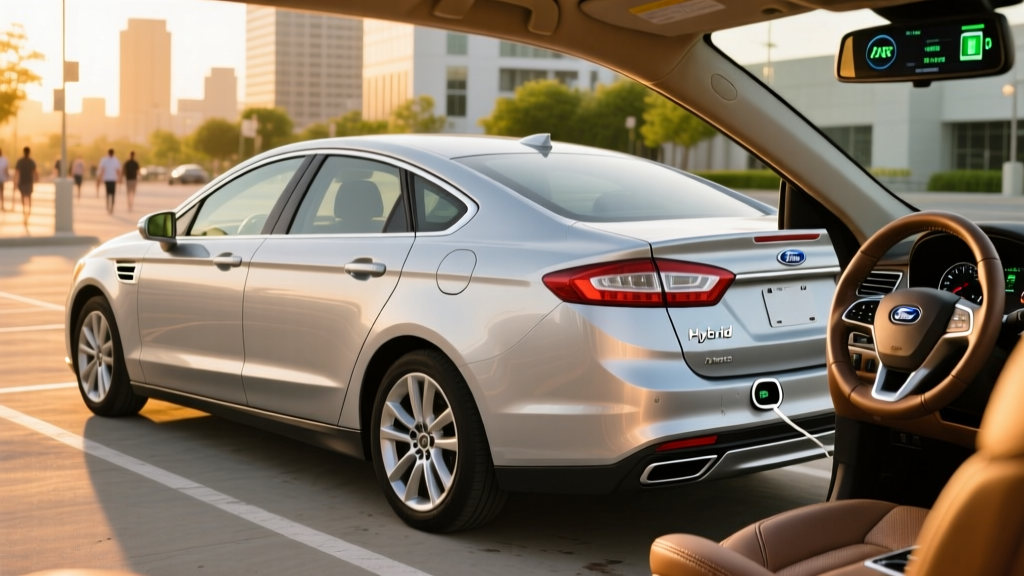
The 2013 Ford Fusion Hybrid Titanium was a benchmark midsize sedan when it launched, pairing a 2.0-liter Atkinson-cycle four-cylinder with an electric motor for a combined 188 horsepower and an EPA-rated 47 MPG. More than a decade later, it remains one of the most fuel-efficient used sedans on the market — and one of the most affordable entry points into hybrid ownership. If you're shopping the used market in 2026, a well-maintained Titanium trim typically trades between $7,000 and $11,000 depending on mileage and condition.
But age introduces real questions: How has the 1.4 kWh lithium-ion traction battery held up? What does a replacement cost? And does a decade-old hybrid still make financial sense versus a modern PHEV or a new full EV? This guide answers those questions with hard data.
| Spec | Value |
|---|---|
| Powertrain | 2.0L Atkinson I-4 + AC electric motor |
| Combined Horsepower | 188 hp (141 hp engine + 118 hp motor, net system output) |
| Transmission | eCVT (planetary gearset, no traditional belts) |
| Traction Battery | 1.4 kWh lithium-ion (air-cooled) |
| EPA MPG (City / Hwy / Combined) | 47 / 47 / 47 |
| Fuel Tank | 13.5 gallons |
| Total Range | ~634 miles (EPA) |
| 0-60 mph | ~7.6 seconds (Car and Driver tested) |
| Drivetrain | Front-wheel drive |
| Cargo Volume | 12.0 cu ft (trunk reduced by battery) |
| Original MSRP (Titanium) | ~$32,600 (2013) |
| Typical Used Price (2026) | $7,000 – $11,000 |
HEV vs. PHEV: Where the Fusion Hybrid Fits
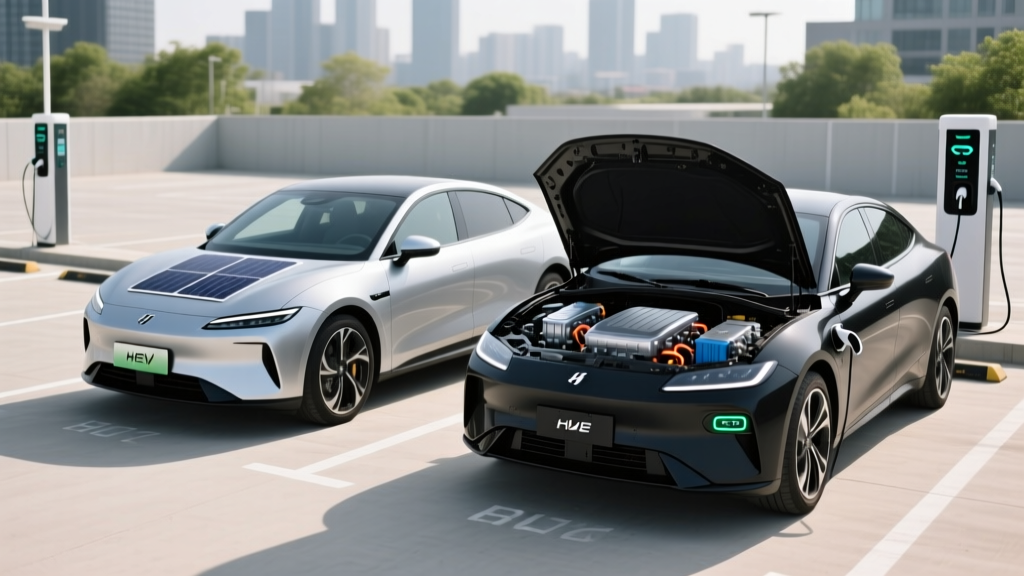
Before diving deeper, it's critical to understand what this car is — and what it isn't. The 2013 Ford Fusion Hybrid is a conventional hybrid electric vehicle (HEV). It does not plug in. It cannot drive on electric power alone for meaningful distances. The small 1.4 kWh battery recharges exclusively through regenerative braking and the gasoline engine.
Ford also sold a Fusion Energi for the 2013 model year — that's the plug-in hybrid (PHEV) variant with a larger 7.6 kWh battery and roughly 21 miles of electric-only range. The Energi is a fundamentally different vehicle. If you see "Fusion Hybrid" on a listing, it's the HEV. If you see "Fusion Energi," it's the PHEV.
| Attribute | Fusion Hybrid (HEV) | Fusion Energi (PHEV) |
|---|---|---|
| Plug-in Charging | No — self-charging only | Yes — Level 1 (120V) or Level 2 (240V) |
| Battery Capacity | 1.4 kWh | 7.6 kWh |
| Electric-Only Range | ~1 mile at low speed | ~21 miles (EPA) |
| EPA Combined MPG / MPGe | 47 MPG | 43 MPG (gas) / 100 MPGe (with charge) |
| Trunk Space | 12.0 cu ft | 8.2 cu ft (larger battery) |
| Original Federal Tax Credit | None | Up to $3,750 (expired) |
Fuel Economy: EPA Ratings vs. Real-World MPG
The 2013 Fusion Hybrid's EPA rating of 47 MPG city / 47 highway / 47 combined was class-leading at launch, beating the Toyota Camry Hybrid (40 combined) and the Hyundai Sonata Hybrid (37 combined). According to fueleconomy.gov, this rating remains competitive even against 2026 midsize hybrids.
| Vehicle | City MPG | Highway MPG | Combined MPG |
|---|---|---|---|
| 2013 Ford Fusion Hybrid | 47 | 47 | 47 |
| 2013 Toyota Camry Hybrid LE | 40 | 38 | 40 |
| 2013 Hyundai Sonata Hybrid | 35 | 40 | 37 |
| 2026 Toyota Camry Hybrid LE | 53 | 50 | 52 |
Real-World MPG: What Owners Actually Report
Hybrids tend to exceed their EPA ratings in stop-and-go city driving, where regenerative braking recaptures energy most effectively. The Fusion Hybrid is no exception. Owner-reported data on Fuelly and hybrid forums shows real-world averages clustering between 42 and 48 MPG combined, with city-heavy commuters sometimes hitting 50+ MPG in warm weather. Highway-dominant driving at 75+ mph tends to pull the average down to 40-43 MPG, as the electric motor assists less at sustained high speeds.
Cold weather reduces efficiency by roughly 5-10% due to increased engine idling for cabin heat and reduced battery efficiency. Expect 40-44 MPG in winter if you live in a cold climate. This is a smaller penalty than full EVs experience (which can lose 20-30% of range in freezing temps), because the hybrid's engine waste heat warms the cabin without additional energy draw.
Powertrain Deep Dive: How the Hybrid System Works
The 2013 Fusion Hybrid uses Ford's second-generation hybrid system, which is mechanically similar to the Toyota Hybrid Synergy Drive. A 2.0-liter Atkinson-cycle inline-four (141 hp, 129 lb-ft) is paired with a 118-hp AC synchronous electric motor through an eCVT — a planetary gearset that seamlessly blends power from both sources. There are no traditional gears, belts, or clutches to wear out, which is a reliability advantage.
The system prioritizes electric-only propulsion at low speeds (under ~25 mph on flat ground with gentle throttle), seamlessly starting the gas engine when more power is needed or when the small battery depletes. The 1.4 kWh lithium-ion pack is air-cooled and mounted behind the rear seats, which reduces trunk volume to 12.0 cu ft from the gas Fusion's 16.0 cu ft.
Total system output is rated at 188 horsepower, which is adequate for merging and passing but not sporty. The 0-60 mph time of approximately 7.6 seconds puts it mid-pack in the midsize sedan segment. The eCVT delivers smooth, linear acceleration without the shift shock of a conventional automatic, though some drivers find the engine drone under hard acceleration intrusive.
Battery Health, Warranty, and Replacement Cost
The traction battery is the single biggest concern for any used hybrid buyer. The 2013 Fusion Hybrid's 1.4 kWh lithium-ion pack was designed for longevity rather than capacity — it's a small buffer that cycles shallowly, which is easier on cell chemistry than the deep cycles in a full EV.
Original Battery Warranty
Ford warranted the hybrid battery for 8 years / 100,000 miles (extended to 10 years / 150,000 miles in California and states that adopted CARB emissions standards: CT, MA, ME, NJ, NY, OR, RI, VT, WA). By 2026, all 2013 models have aged out of the standard 8-year warranty. If you're in a CARB state and the vehicle has under 150,000 miles, verify warranty status with a Ford dealer — though the 10-year mark passed in 2023, so even CARB-state coverage has expired.
Real-World Battery Degradation
Owner reports and mechanic surveys indicate the Fusion Hybrid's battery holds up well. Most 10+ year-old examples show minimal capacity loss — the battery management system keeps cells in a narrow state-of-charge window (roughly 40-60% SoC) to minimize degradation. Complete battery failure before 150,000 miles is uncommon, though individual cell module failures do occur.
Battery replacement cost: A new OEM replacement battery from Ford runs approximately $2,500 to $4,000 including labor at a dealership. Independent hybrid specialists often offer refurbished or reconditioned battery packs for $1,500 to $2,500 installed. Some shops can replace individual failed cell modules for $300-$600, which resolves most battery-related check-engine codes without a full pack swap.
Before buying, request a hybrid battery health report from a Ford dealer or a qualified independent shop. The OBD-II port can read individual cell voltages and internal resistance — a wide variance between cells signals impending failure. A healthy pack will show cell voltages within 0.1-0.2V of each other.
Titanium Trim: What You Get for the Money
The Titanium was the top-tier trim for the 2013 Fusion Hybrid, and it came well-equipped by 2013 standards. Standard features included leather-trimmed heated front seats, a 12-speaker Sony audio system, SYNC with MyFord Touch (Ford's touchscreen infotainment), dual-zone automatic climate control, a rear-view camera, push-button start, and 18-inch alloy wheels. Available options included adaptive cruise control, lane-keeping assist, blind-spot monitoring (BLIS), a moonroof, and a navigation system.
From a 2026 perspective, the MyFord Touch interface is the weakest link — it's slow, occasionally unresponsive, and lacks Apple CarPlay or Android Auto. Many owners have upgraded to an aftermarket head unit (typically $400-$700 installed) to gain modern smartphone integration. This is a worthwhile investment for daily usability.
Safety ratings were strong: the 2013 Fusion earned a 5-star overall rating from NHTSA and a Top Safety Pick+ from IIHS, which matters if you're putting family members in this car. Per NHTSA records, it scored 5 stars in frontal and side crash tests and 4 stars in rollover.
Tax Credits and Incentives: What Applies in 2026
The 2013 Ford Fusion Hybrid does not qualify for the federal §30D new clean vehicle tax credit — that credit applies only to new vehicle purchases and has specific MSRP caps, buyer income limits, and battery-sourcing requirements detailed on IRS.gov. Conventional hybrids (HEVs) have never qualified for the §30D credit, which requires a minimum battery capacity and plug-in capability.
However, there is one potential incentive: the Used Clean Vehicle Credit (§25E), which offers up to $4,000 or 30% of the sale price (whichever is lower) for qualifying used EVs and PHEVs purchased from a dealer for $25,000 or less. Unfortunately, conventional hybrids like the Fusion Hybrid do not qualify — only used BEVs and PHEVs are eligible. The Fusion Energi (PHEV variant) may qualify if it meets the $25,000 price cap and the buyer's income is under $75,000 (single) or $150,000 (joint).
Some states offer their own used-hybrid incentives or HOV lane access, but these vary widely and change frequently. Check your state's DMV and energy office for current programs.
Who Should Buy This Car — And Who Shouldn't
Pros
- 47 MPG EPA with real-world consistency — saves ~$1,000-$1,400/year in fuel vs. a 25 MPG gas sedan at 12,000 miles/year and $3.20/gal
- Low used entry price ($7K-$11K) with strong feature content in Titanium trim
- No plug-in requirement — works for apartment dwellers and street parkers
- Proven, simple hybrid system with no belts or traditional transmission to fail
- Strong NHTSA 5-star and IIHS Top Safety Pick+ ratings
- Battery replacement cost is manageable ($1,500-$4,000) and failures are infrequent
Cons
- Trunk is small (12.0 cu ft) due to battery placement
- MyFord Touch infotainment is outdated — no CarPlay/Android Auto without aftermarket swap
- Original battery warranty has expired on all 2013 models
- Highway passing power is adequate but not confident at 188 hp
- No federal tax credit eligibility as a used conventional hybrid
- 13+ year-old vehicle means typical wear items (suspension, brakes, A/C) may need attention
Decision Framework
Choose the 2013 Fusion Hybrid Titanium if: You want maximum fuel savings on a tight budget, you can't charge at home, and your commute involves significant city or suburban driving where the hybrid system shines.
Choose a used PHEV (like a 2017+ Fusion Energi or Prius Prime) if: You have home charging access, your daily commute is under 25 miles, and you want to drive mostly on electricity while keeping a gas backup for road trips.
Choose a full EV (like a used Chevy Bolt or Tesla Model 3) if: You have reliable home Level 2 charging, your daily driving is under 200 miles, and you want to eliminate gasoline entirely while benefiting from lower per-mile energy costs and reduced maintenance.
Choose a newer gas sedan if: You drive mostly highway miles (where hybrid advantages shrink), you need maximum trunk space, or you prefer a modern infotainment system and current safety tech without the used-hybrid battery risk.
Frequently Asked Questions
How many MPG does the 2013 Ford Fusion Hybrid actually get?
The EPA rates it at 47 MPG city, 47 highway, and 47 combined. Real-world owners report 42-48 MPG combined on average, with city-heavy driving sometimes exceeding 50 MPG in warm weather. Highway-dominant driving at high speeds drops to roughly 40-43 MPG. Cold weather reduces efficiency by about 5-10%.
Does the Fusion Hybrid need to be plugged in?
No. The 2013 Fusion Hybrid is a conventional hybrid (HEV) that charges its 1.4 kWh battery entirely through regenerative braking and the gasoline engine. There is no plug and no electric-only driving range beyond about 1 mile at very low speeds. If you want plug-in capability, look for the Fusion Energi (PHEV) variant instead.
Is the 2013 Fusion Hybrid reliable, and what does a battery replacement cost?
The hybrid powertrain is generally reliable — the eCVT has no belts or traditional clutch components to fail, and the battery management system is conservative to protect cell health. The main risk is the traction battery, which has outlived its factory warranty on all 2013 examples. A full OEM replacement costs $2,500-$4,000 at a dealer, while refurbished packs run $1,500-$2,500 at independent hybrid specialists. Individual cell module repairs can cost as little as $300-$600. Get a pre-purchase hybrid battery health scan before buying.
Does the 2013 Fusion Hybrid qualify for any tax credit?
No. Conventional hybrids (HEVs) do not qualify for the federal §30D new vehicle credit or the §25E used clean vehicle credit. Those credits require plug-in capability and minimum battery capacity thresholds. The Fusion Energi (PHEV) may qualify for the used credit if purchased under $25,000 from a dealer and the buyer meets income caps. Some states offer separate incentives — check your local programs.
Hybrid vs. PHEV vs. EV — which should I buy?
A conventional hybrid (HEV) like the Fusion Hybrid is best if you lack home charging and want fuel savings with zero lifestyle change. A plug-in hybrid (PHEV) suits drivers with home charging and short commutes who want electric-only daily driving plus gas flexibility for road trips. A full EV is ideal if you have Level 2 home charging, drive under 200 miles daily, and want the lowest per-mile cost and minimal maintenance. The right answer depends entirely on your charging access and driving patterns.
How does the Fusion Hybrid compare to a 2026 hybrid?
Modern hybrids like the 2026 Toyota Camry Hybrid LE achieve 52 MPG combined — about 5 MPG better — and come with current infotainment (wireless CarPlay/Android Auto), modern ADAS (automatic emergency braking, lane centering), and a full factory warranty. However, a new Camry Hybrid starts around $30,000, while the used 2013 Fusion Hybrid Titanium costs $7,000-$11,000. If budget is the priority, the Fusion Hybrid delivers 80-90% of the fuel savings at a fraction of the price.