Quick Verdict: A Proven Hybrid That Still Delivers
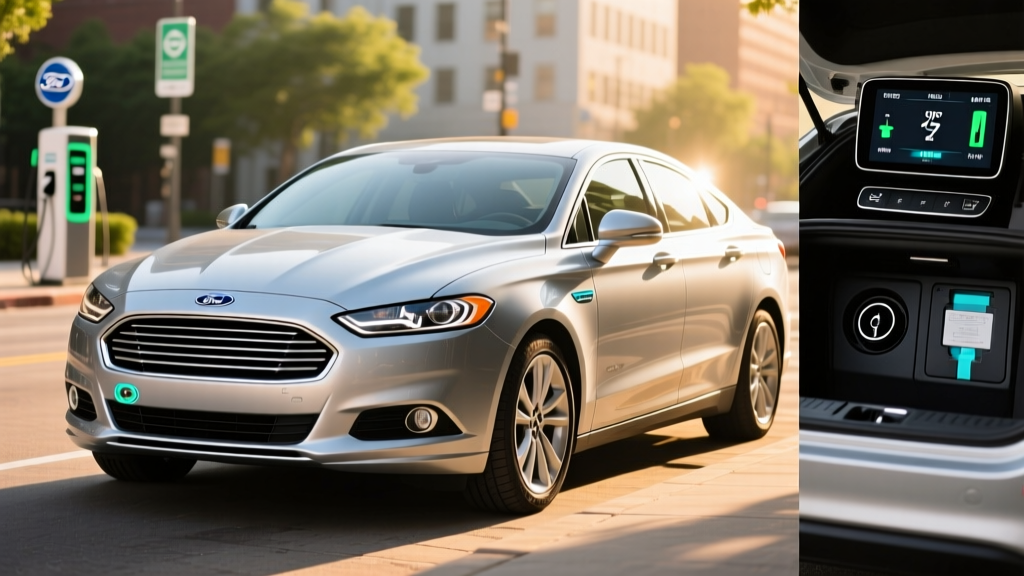
The 2013 Ford Fusion Hybrid remains one of the most efficient midsize sedans ever sold, with an EPA-rated 47 MPG combined that still holds up against 2026 hybrid competition. As a conventional hybrid (HEV) — not a plug-in — it requires zero charging infrastructure and rewards city-heavy drivers with real-world fuel economy that frequently exceeds its sticker numbers. For used-car buyers seeking low running costs without the complexity of plug-in ownership, the 2013 Fusion Hybrid is a data-backed bargain, provided the hybrid battery checks out.
EPA Fuel Economy vs. Real-World MPG
The 2013 Fusion Hybrid's powertrain pairs a 2.0-liter Atkinson-cycle four-cylinder engine with an electric motor and a 1.4 kWh lithium-ion battery pack. The result is seamless electric assist at low speeds and regenerative braking that recaptures energy in stop-and-go traffic.
| Metric | EPA Rating | Real-World Expectation |
|---|---|---|
| City MPG | 47 MPG | 45–52 MPG (hybrids often exceed EPA in city) |
| Highway MPG | 47 MPG | 40–44 MPG (less regen benefit at steady speed) |
| Combined MPG | 47 MPG | 43–48 MPG (varies with driving mix) |
| Fuel Tank | 13.5 gallons | ~580–630 miles per tank |
Hybrids like the Fusion are uniquely efficient in urban driving. The electric motor handles launches and low-speed cruising, while the engine shuts off at stops. In real-world city loops, owners regularly report 48–52 MPG. Highway driving reduces the advantage — at 70+ MPH, the gasoline engine does most of the work, and aerodynamic drag limits efficiency gains. Expect 40–44 MPG on long interstate trips.
For comparison, the 2026 Toyota Camry Hybrid LE rates at 52 MPG combined (fueleconomy.gov), but a well-maintained 2013 Fusion Hybrid at a fraction of the purchase price closes the gap significantly on a cost-per-mile basis.
HEV vs. PHEV: Understanding What the 2013 Fusion Hybrid Is
The 2013 Fusion was sold in two electrified variants: the Fusion Hybrid (HEV) and the Fusion Energi (PHEV). These are fundamentally different vehicles, and confusing them is the most common mistake used-car shoppers make.
| Attribute | Fusion Hybrid (HEV) | Fusion Energi (PHEV) |
|---|---|---|
| Plug-in Required? | No — self-charging via regen & engine | Yes — plug in for EV range |
| Electric-Only Range | ~1 mile at low speed | 21 miles EPA (EV mode) |
| Battery Capacity | 1.4 kWh (Li-ion) | 7.6 kWh (Li-ion) |
| Total Range | ~600+ miles (gas tank) | ~620 miles (EV + gas combined) |
| Combined MPG/MPGe | 47 MPG | 100 MPGe (EV) / 43 MPG (gas) |
| Trunk Space | 12.0 cu ft | 8.2 cu ft (battery intrudes) |
| DC Fast Charge? | No | No — Level 1/2 only |
If you're looking at a listing for a "2013 Ford Fusion Hybrid," verify whether it's the HEV or the Energi PHEV. The Energi has a charge port on the front fender and a smaller trunk. The HEV has no charge port and a full-size trunk.
Powertrain Specs and Performance
| Engine | 2.0L Atkinson-cycle I4 |
| Engine Power | 141 HP @ 6,000 RPM |
| Electric Motor | 88 kW (118 HP) AC synchronous |
| Combined System Output | 188 HP |
| Transmission | eCVT (planetary gearset, no belts) |
| 0–60 MPH | ~8.4 seconds |
| Drivetrain | Front-wheel drive |
| Curb Weight | ~3,615 lbs |
| Battery Type | 1.4 kWh Lithium-Ion (located behind rear seat) |
| EPA Combined MPG | 47 MPG |
The eCVT in the Fusion Hybrid is not a belt-driven CVT like those in some competitors. It uses a planetary gearset to blend engine and motor power — a design shared with Toyota's Hybrid Synergy Drive. This means no belt wear, no shudder, and minimal maintenance. Acceleration is adequate for merging and passing, though 188 HP won't make it feel sporty. The steering is well-weighted, and the ride quality is compliant, making it a comfortable commuter.
Hybrid Battery Lifespan, Warranty, and Replacement Cost
Hybrid Battery Warranty (Original)
Ford covered the 2013 Fusion Hybrid's lithium-ion battery for 8 years / 100,000 miles (10 years / 150,000 miles in CARB states including California, New York, Massachusetts, and others). By 2026, the original federal warranty has expired for all 2013 models. CARB-state warranties expire in 2023 by time, though some may still have mileage headroom.
The 1.4 kWh battery in the HEV variant is small and lightly stressed compared to a full EV pack. It never depletes fully — the system maintains a state-of-charge buffer between roughly 40% and 80%, which dramatically slows degradation. Real-world data from fleet operators and owner forums shows most 2013 Fusion Hybrid batteries retain 85–95% of original capacity at 150,000+ miles when properly maintained.
Replacement cost in 2026:
- Remanufactured battery: $1,800–$2,800 (installed at an independent hybrid specialist)
- New OEM battery (Ford dealer): $3,500–$5,000 (installed)
- Used/salvage battery: $800–$1,500 (risky — unknown remaining life)
The eCVT transmission is essentially bulletproof — there are no clutch packs or belts to wear. Many units surpass 200,000 miles with only fluid changes. The 12-volt auxiliary battery (a standard AGM unit) will need replacement every 4–6 years at ~$180–$250.
Pricing and Tax Credit Eligibility in 2026
The 2013 Fusion Hybrid originally started at approximately $27,200 MSRP. In the 2026 used market, pricing reflects the vehicle's age, mileage, and hybrid-battery condition:
- 100,000–130,000 miles: $5,500–$8,000
- 130,000–170,000 miles: $4,000–$6,500
- 170,000+ miles: $3,000–$5,000
Federal tax credits: The Fusion Hybrid (HEV) never qualified for the §30D federal EV tax credit, as it is a conventional hybrid without plug-in capability. The Fusion Energi (PHEV) originally qualified for up to $3,750 in federal credits when new, but that credit expired for Ford PHEVs years ago due to the manufacturer cap (which has since been restructured under the Inflation Reduction Act). Under current IRS §30D rules, the §30D credit applies only to new qualifying clean vehicles — it does not apply to used HEVs. The used clean vehicle credit (§25E) offers up to $4,000 for qualifying used PHEVs and EVs priced under $25,000, but the 2013 Fusion Energi's 21-mile EV range falls below the current 30-mile minimum threshold for new PHEV qualification, and its eligibility under §25E depends on specific model-year battery criteria — consult a tax professional before claiming.
Some states offer rebates for used hybrid purchases. Check your state energy office or AFDC state incentive database for current programs.
Who Should Buy the 2013 Fusion Hybrid vs. a Full EV or Gas Car
Choose the 2013 Fusion Hybrid If:
- You drive primarily in city or suburban stop-and-go traffic (where hybrids shine)
- You lack access to home or workplace charging (no plug needed)
- Your budget is under $8,000 and you want low cost-per-mile
- You want a midsize sedan with comfortable ride quality and solid trunk space
- You plan to keep the car 3–5 years and want predictable maintenance costs
Choose a Plug-In Hybrid (PHEV) Instead If:
- You have home Level 2 charging and a commute under 30 miles
- You want electric-only daily driving with gas-engine range for road trips
- You're buying new or nearly new and want to capture tax credits
Choose a Full EV (BEV) Instead If:
- You have reliable home charging and drive under 250 miles daily
- You want zero tailpipe emissions and minimal drivetrain maintenance
- You're eligible for the full $7,500 §30D credit on a new EV, making the purchase price competitive
Stick With a Gas Car If:
- Your budget is under $3,000 (hybrid repair risk isn't worth it at that price)
- You drive almost exclusively highway miles (the hybrid MPG advantage narrows)
Pros and Cons at a Glance
Pros
- 47 MPG EPA combined — excellent even by 2026 standards
- No plug-in charging required; works like any gas car at the pump
- eCVT planetary gearset is extremely durable (no belt wear)
- Comfortable ride, quiet cabin, composed handling for the class
- Low used-car entry price ($4,000–$8,000 in 2026)
- Strong real-world city MPG (often exceeds 47 in stop-and-go)
Cons
- Original battery warranty has expired — replacement is an out-of-pocket risk
- No federal tax credit available for used HEV purchase
- Highway MPG drops to low 40s (less advantage on long road trips)
- Infotainment (SYNC) feels dated compared to 2026 systems
- Rear-seat headroom is tight for taller passengers
- 0–60 in 8.4 seconds — adequate but not quick
Frequently Asked Questions
How many MPG does the 2013 Ford Fusion Hybrid get?
The EPA rates the 2013 Fusion Hybrid at 47 MPG city, 47 MPG highway, and 47 MPG combined. In real-world city driving, many owners achieve 48–52 MPG thanks to frequent regenerative braking. Highway fuel economy typically drops to 40–44 MPG at sustained speeds above 65 MPH.
Does the 2013 Fusion Hybrid need to be plugged in?
No. The 2013 Fusion Hybrid is a conventional hybrid (HEV). Its 1.4 kWh battery charges through regenerative braking and the gasoline engine. You never plug it in. The Fusion Energi (PHEV) variant does require plug-in charging for its 21-mile electric-only range, but that is a different model.
Is the 2013 Fusion Hybrid reliable, and what does a battery replacement cost?
The 2013 Fusion Hybrid has above-average reliability for its class. The eCVT transmission is exceptionally durable, and the hybrid battery is lightly stressed thanks to charge buffering. If the battery does fail, a remanufactured replacement costs $1,800–$2,800 installed at a hybrid specialist, or $3,500–$5,000 at a Ford dealer. Many batteries last well past 150,000 miles.
Does the 2013 Ford Fusion Hybrid qualify for any tax credit?
No federal tax credit is available for purchasing a used 2013 Fusion Hybrid (HEV). The §30D new clean vehicle credit does not apply to conventional hybrids, and the §25E used clean vehicle credit is limited to qualifying used EVs and PHEVs meeting specific battery-capacity thresholds. Always consult a tax professional and review current IRS guidance before claiming any credit.
How does the 2013 Fusion Hybrid compare to a 2026 hybrid?
Newer hybrids like the 2026 Toyota Camry Hybrid (52 MPG combined) and 2026 Honda Accord Hybrid (48 MPG combined) offer modestly better efficiency and modern infotainment. However, at $5,000–$8,000 used versus $30,000+ new, the 2013 Fusion Hybrid delivers dramatically lower cost-per-mile when accounting for purchase price depreciation. The efficiency gap is only 3–5 MPG — roughly $100–$150 per year in fuel at 12,000 miles driven.
What should I check before buying a used 2013 Fusion Hybrid?
Prioritize three items: (1) Have a hybrid-qualified mechanic test the high-voltage battery's state of health (SoH) — many scan tools can read this via OBD-II. (2) Check for any outstanding recalls via the NHTSA recall lookup. (3) Verify the maintenance history, particularly coolant flushes for the hybrid battery thermal management system. Also inspect the 12V battery age, brake pad wear (regen extends pad life, so worn pads may indicate high mileage or aggressive driving), and SYNC module functionality.