The 2013 Ford C-Max Hybrid hatchback arrived with an EPA-rated 47 MPG combined — a number that turned heads and sparked one of the most notable fuel-economy controversies in modern automotive history. More than a decade later, this compact hybrid still circulates the used-car market as a practical, fuel-efficient family hauler. But with battery age now a real factor, prospective buyers need clear data on what this vehicle actually delivers today.
This guide covers the 2013 C-Max Hybrid's real-world fuel economy, powertrain specs, battery longevity, ownership costs, and how it stacks up against modern hybrids, plug-in hybrids, and full EVs available in 2026.
2013 Ford C-Max Hybrid: Quick Specs at a Glance
| Specification | 2013 Ford C-Max Hybrid |
|---|---|
| Powertrain Type | Conventional Hybrid (HEV) — no plug |
| Engine | 2.0L Atkinson-cycle 4-cylinder |
| Electric Motor | Permanent-magnet synchronous AC motor |
| Combined Horsepower | 188 hp (net system) |
| Transmission | eCVT (electronically controlled CVT) |
| EPA MPG (City / Hwy / Combined) | 47 / 47 / 47 |
| Hybrid Battery | 1.4 kWh lithium-ion (air-cooled) |
| Fuel Tank Capacity | 13.5 gallons |
| EPA Estimated Range | ~635 miles |
| 0–60 mph | ~8.1 seconds (est.) |
| Cargo Volume (rear seats up / down) | 24.5 / 52.6 cu ft |
| Drivetrain | Front-wheel drive |
| Original MSRP (base S trim) | $25,995 |
| Typical 2026 Used Price | $5,500–$9,500 |
How Many MPG Does the 2013 C-Max Hybrid Actually Get?
The 2013 C-Max Hybrid's original EPA rating of 47 MPG city, 47 highway, and 47 combined was the centerpiece of Ford's marketing — and the centerpiece of a class-action lawsuit. Owners reported real-world fuel economy significantly below the sticker, prompting Ford to issue voluntary reimbursement checks and eventually revise the EPA label for the 2014 model year downward to 43 MPG combined (44 city / 41 highway).
For the 2013 model year specifically, the EPA window sticker still reads 47/47/47, but owners should calibrate expectations accordingly. According to aggregated owner data on fueleconomy.gov, real-world submissions for the 2013 C-Max Hybrid cluster around 39–44 MPG combined, with considerable variance based on driving style and climate.
| Driving Scenario | EPA Sticker (2013) | Revised EPA (2014+) | Real-World Expectation |
|---|---|---|---|
| City (stop-and-go) | 47 MPG | 44 MPG | 42–46 MPG |
| Highway (70+ mph) | 47 MPG | 41 MPG | 36–40 MPG |
| Combined | 47 MPG | 43 MPG | 39–44 MPG |
| Cold Weather (below 35°F) | — | — | 34–38 MPG |
Hybrids like the C-Max typically exceed their EPA city rating in warm, low-speed urban driving thanks to regenerative braking and electric-motor assist. Highway efficiency drops because the gasoline engine bears more load at sustained speeds — the opposite of a conventional car's city/highway split. Cold weather further reduces MPG as the engine runs more frequently to maintain cabin heat and battery temperature.
Hybrid (HEV) vs. Plug-In Hybrid (PHEV): What the C-Max Lineup Offered
Ford sold the C-Max in two electrified variants for 2013, and confusing them is a common mistake among used-car shoppers:
C-Max Hybrid (HEV)
- Type: Conventional hybrid — never plugs in
- Battery: 1.4 kWh lithium-ion
- Electric-only driving: Brief low-speed assist only (~0.5 miles at very low speed)
- Refueling: Gas station only; regenerative braking recharges battery
- EPA MPG: 47 combined (sticker); ~43 real-world
- Federal tax credit: None (HEVs do not qualify for §30D credit)
C-Max Energi (PHEV)
- Type: Plug-in hybrid — charges from a wall outlet or public charger
- Battery: 7.6 kWh lithium-ion (usable ~5.5 kWh)
- Electric-only range: 21 miles (EPA)
- Total range: ~620 miles (EV + gas)
- EPA MPGe: 100 MPGe (EV mode); 43 MPG (hybrid mode)
- Federal tax credit (original): Qualified for ~$3,750 when new; no longer eligible as a used purchase under current §30D rules (MSRP cap and model-year restrictions apply)
- Charging: Level 1 (120V) ~7 hours; Level 2 (240V) ~2.5 hours; no DC fast charging
This article focuses on the C-Max Hybrid (HEV), but the Energi PHEV variant is worth considering if your daily commute is under 20 miles and you have access to home charging. The Energi's larger battery gives meaningful electric-only driving, but it also sacrificed cargo space (19.2 cu ft vs. 24.5) due to the battery pack occupying part of the load floor.
Powertrain and Driving Impressions
The C-Max Hybrid pairs a 2.0-liter Atkinson-cycle four-cylinder engine (141 hp on its own) with a 118-hp electric motor integrated into Ford's eCVT transaxle. The combined system output of 188 hp was competitive for the segment in 2013, giving the C-Max stronger acceleration than the Toyota Prius of the same era (134 hp combined).
The eCVT is not a belt-driven CVT like those in some conventional cars — it's a planetary gearset that blends engine and motor power seamlessly. There's no rubber-band effect, but there is the characteristic hybrid drone under hard acceleration as the engine holds at an optimal RPM.
Driving dynamics are competent rather than engaging. The C-Max rides on the same global C-platform as the Focus, so handling is reasonable for a tall hatchback, but the extra hybrid-system weight (~3,600 lbs curb weight) is noticeable in corners. Steering is light and numb — typical of the era's efficiency-focused tuning.
Regenerative braking is moderate. The C-Max Hybrid does not offer true one-pedal driving; you'll still use the friction brakes for complete stops. The brake pedal feel is a common complaint — the transition between regenerative and friction braking can be grabby, especially at low speeds.
Battery Lifespan, Warranty, and Replacement Cost
Original Hybrid Battery Warranty: 8 years / 100,000 miles (10 years / 150,000 miles in California and states adopting CARB emissions standards). This warranty has expired for virtually all 2013 C-Max Hybrids as of 2021–2023.
The 2013 C-Max Hybrid's 1.4 kWh lithium-ion battery pack is small by modern standards, and its modest capacity means it undergoes frequent shallow charge-discharge cycles rather than deep ones. This is generally favorable for longevity. Most hybrid batteries from this era — Toyota, Ford, and Hyundai — tend to last 150,000–200,000 miles before significant degradation, though individual results vary with climate and usage patterns.
Signs of hybrid battery degradation in a used C-Max include:
- Noticeably reduced fuel economy (5+ MPG below expected)
- The gasoline engine running more frequently, even at low speeds
- Reduced regenerative braking strength
- Dashboard warning lights (wrench icon or "Check Hybrid System" message)
Battery replacement cost in 2026: A remanufactured hybrid battery pack for the 2013 C-Max Hybrid typically runs $2,000–$3,500 installed at an independent hybrid specialist. A new OEM battery from a Ford dealer can exceed $4,000–$5,500 including labor. Third-party reconditioning services that replace individual failed cells within the pack are available for $800–$1,500, though results are less predictable.
Before purchasing a used 2013 C-Max Hybrid, request a hybrid battery health report. Many OBD-II scan tools and apps (such as Torque Pro with a compatible adapter) can read the battery's state of health percentage. A reading below 70% suggests replacement is approaching within 1–2 years.
Reliability, Safety, and Known Issues
The 2013 C-Max Hybrid sits in the middle of the pack for reliability. According to NHTSA records, the model accumulated a modest number of complaints relative to its sales volume. The most frequently reported issues include:
- Transmission shudder: Some owners report a vibration or shudder during low-speed acceleration, often traced to the eCVT's clutch engagement. Software updates from Ford addressed many cases.
- 12V battery drain: Like many hybrids, the C-Max can drain its conventional 12-volt accessory battery if left unused for extended periods. A dead 12V battery prevents the hybrid system from starting, even if the high-voltage pack is fully charged.
- Door latch recalls: Ford issued recalls for faulty door latches that could prevent doors from fully closing. Verify recall completion on any used example via the NHTSA VIN lookup tool.
- Climate control issues: Some reports of weak A/C performance, potentially related to the electric compressor or refrigerant leaks.
On safety, the 2013 C-Max earned a Top Safety Pick designation from the IIHS, with Good ratings in the moderate overlap front, side, roof strength, and head restraint tests. It received a Marginal rating in the small overlap front test (introduced mid-cycle). Standard safety equipment includes six airbags, stability control, and anti-lock brakes. No advanced driver-assistance features (lane-keeping, adaptive cruise, automatic emergency braking) were available — this is a pre-ADAS era vehicle.
Pricing, Tax Credits, and Total Cost of Ownership
The 2013 C-Max Hybrid originally started at $25,995 (S trim) and reached approximately $30,000–$32,000 in fully loaded SEL trim with options. In the 2026 used-car market, expect to pay:
- $5,500–$7,000: High-mileage examples (130,000+ miles), potential battery concerns
- $7,000–$9,500: Average-mileage examples (80,000–130,000 miles) in good condition
- $9,500–$12,000: Low-mileage, well-maintained examples (under 80,000 miles)
Federal tax credit eligibility: The 2013 C-Max Hybrid does not qualify for any current federal tax credit. Conventional hybrids (HEVs) have never been eligible for the §30D New Clean Vehicle Credit, and the IRS used-EV credit (§25E, up to $4,000) applies only to battery-electric vehicles and plug-in hybrids with at least 4 kWh of battery capacity purchased through a dealer — the C-Max Hybrid's 1.4 kWh pack falls below the threshold. Even the C-Max Energi PHEV variant would struggle to qualify under §25E due to the model's age and MSRP caps.
| Cost Factor (5-Year Estimate) | 2013 C-Max Hybrid (~42 MPG avg) | Comparable Gas Hatchback (~30 MPG avg) |
|---|---|---|
| Purchase Price (avg used) | $8,000 | $7,500 |
| Fuel (15,000 mi/yr @ $3.40/gal) | $6,071 | $8,500 |
| Insurance (avg) | $5,500 | $5,200 |
| Maintenance (5 years) | $2,800 | $3,200 |
| Potential Battery Replacement | $2,500 (risk factor) | $0 |
| Estimated 5-Year Total | $24,871 | $24,400 |
The fuel savings are real — roughly $485/year over a 30 MPG gas car at current fuel prices — but they're partially offset by the risk of an out-of-warranty hybrid battery replacement. If the battery holds up, the C-Max Hybrid delivers genuine cost savings. If it doesn't, one replacement wipes out 5–6 years of fuel savings.
Who Should Buy the 2013 C-Max Hybrid — and Who Shouldn't?
Choose the 2013 C-Max Hybrid if:
- Your budget is under $10,000 and you want maximum MPG without plugging in
- You drive primarily in city/suburban conditions where hybrid efficiency shines (40+ MPG realistic)
- You need a practical hatchback with generous cargo space (24.5 cu ft) for a small family
- You lack access to home or workplace charging (making a PHEV or EV impractical)
- You want a proven hybrid system with widely available aftermarket battery replacement options
Look elsewhere if:
- You drive mostly highway miles — the fuel-economy advantage over a modern turbo-4 gas car shrinks significantly
- You want modern safety tech (AEB, blind-spot monitoring, lane-keeping) — the 2013 C-Max has none of it
- You have home charging access — a modern PHEV like the Toyota Prius Prime (44 miles EV range) or a used BEV may deliver better economics and a smoother driving experience
- Reliability peace of mind is paramount — a similarly priced Toyota Prius (third-gen, 2010–2015) has a stronger long-term reliability track record
Pros
- Strong real-world city MPG (42–46 in warm conditions)
- 188 hp provides confident merging and passing power
- Spacious hatchback cargo area beats most compact sedans
- No plug-in charging required — fill up at any gas station
- Low used-car entry price with good parts availability
Cons
- Original 47 MPG EPA sticker was misleading; expect ~39–44 real-world
- No advanced driver-assistance or modern infotainment
- Hybrid battery warranty has expired — replacement risk is on you
- Grabby brake pedal feel (regen-to-friction transition)
- Highway MPG drops significantly at 75+ mph
Hybrid vs. PHEV vs. Full EV: Which Fits Your Situation in 2026?
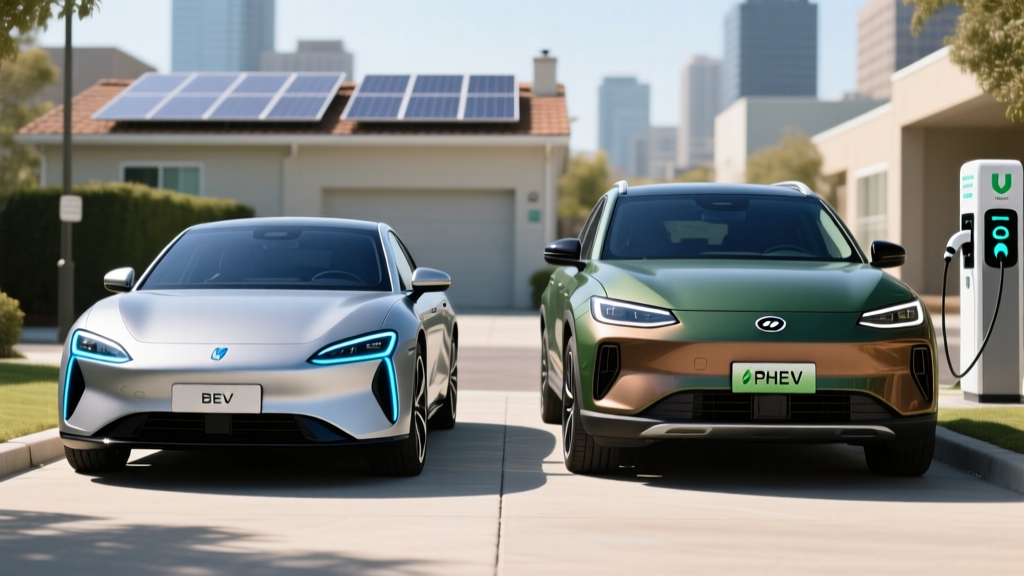
The 2013 C-Max Hybrid occupies a specific niche. Here's how it compares to the alternatives a budget-conscious buyer might consider:
| Factor | 2013 C-Max Hybrid (HEV) | Used PHEV (e.g., 2017 Prius Prime) | Used BEV (e.g., 2018 Bolt EV) |
|---|---|---|---|
| Typical Used Price | $6K–$10K | $12K–$17K | $10K–$15K |
| Electric-Only Range | None (motor assist only) | 25 miles | 238 miles |
| Needs Home Charging? | No | Recommended (for EV mode benefit) | Essential |
| Fuel Cost per Mile | ~$0.08 (gas) | ~$0.04 (EV mode) / $0.08 (gas) | ~$0.04 (electricity) |
| Maintenance Complexity | Engine + hybrid system | Engine + hybrid + charging | Minimal (no engine) |
| Federal Tax Credit (Used §25E) | Not eligible | Possibly eligible ($4,000 max) | Possibly eligible ($4,000 max) |
| Best For | No-charging-access buyers, city drivers | Short-commute + home-charging buyers | Home-charging buyers wanting zero gas |
If you can charge at home and your budget stretches to $12,000–$15,000, a used BEV like the Chevrolet Bolt EV or a used PHEV like the Prius Prime will likely deliver lower per-mile operating costs and a more modern driving experience. But for buyers who need a no-plug-required, fuel-efficient hatchback under $10,000, the C-Max Hybrid remains a viable option — provided you budget for potential battery service.
Frequently Asked Questions
How many MPG does the 2013 Ford C-Max Hybrid get?
The EPA sticker says 47 MPG city, highway, and combined. Real-world results are typically 39–44 MPG combined, with city driving often reaching 42–46 MPG in warm weather and highway driving dropping to 36–40 MPG at speeds above 70 mph. Cold weather can push combined figures into the 34–38 MPG range.
Does the 2013 C-Max Hybrid need to be plugged in?
No. The C-Max Hybrid is a conventional hybrid (HEV). Its small 1.4 kWh battery recharges through regenerative braking and the gasoline engine. You never plug it in. The separate C-Max Energi variant is a plug-in hybrid (PHEV) that does require charging to access its 21-mile electric-only range.
How long does the 2013 C-Max Hybrid battery last?
Ford's lithium-ion hybrid battery packs from this era typically last 150,000–200,000 miles before significant capacity loss. However, age is also a factor — a 13-year-old battery with only 80,000 miles may still show degradation due to calendar aging. The original 8-year/100,000-mile warranty has expired for all 2013 examples.
What does it cost to replace the hybrid battery?
A remanufactured replacement battery installed at an independent shop typically costs $2,000–$3,500. An OEM dealer replacement can exceed $4,000–$5,500. Individual cell reconditioning services offer a lower-cost option at $800–$1,500 but with less predictable long-term results.
Does the 2013 C-Max Hybrid qualify for any tax credit?
No. Conventional hybrids (HEVs) do not qualify for the federal §30D New Clean Vehicle Credit or the §25E Used Clean Vehicle Credit. The C-Max Hybrid's 1.4 kWh battery is below the 4 kWh minimum threshold for any federal electrification incentive. Some states previously offered hybrid rebates, but most have expired or shifted focus to PHEVs and BEVs.
Is the 2013 C-Max Hybrid better than a Prius of the same year?
The C-Max offers more horsepower (188 vs. 134), more cargo space, and a more car-like driving experience. The contemporaneous Toyota Prius (third-gen) generally delivers slightly better real-world fuel economy, has a stronger long-term reliability reputation, and benefits from broader hybrid-battery aftermarket support. If maximum MPG and bulletproof reliability are your priorities, the Prius edges ahead. If you value power and cargo versatility, the C-Max is the better pick.
Can I still get parts and service for a 2013 C-Max Hybrid?
Yes. Ford sold roughly 200,000 C-Max Hybrids and Energis between 2013 and 2018, and many mechanical components (brakes, suspension, engine parts) are shared with the Ford Focus and Escape of the same era. Hybrid-specific components like the battery pack, inverter, and eCVT are available through Ford dealers, independent hybrid specialists, and the aftermarket. Any competent mechanic can handle routine maintenance; hybrid system diagnostics require a scan tool capable of reading Ford's hybrid-specific data.