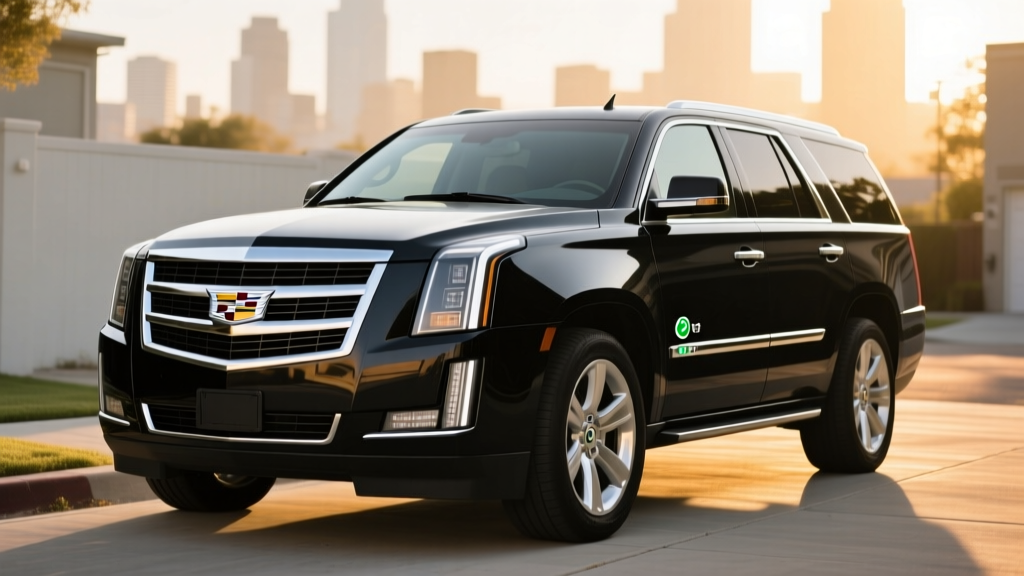
If you are shopping for a full-size luxury SUV with some electrified efficiency, the 2013 Cadillac Escalade Hybrid may cross your path on the used market. It was one of the earliest attempts at hybridizing a body-on-frame American luxury hauler, pairing GM's two-mode hybrid system with a 6.0-liter V8. But more than a decade after its final model year, what does ownership actually look like in 2026? This guide covers the real fuel economy, hybrid battery health expectations, replacement costs, and whether this HEV still makes sense compared to modern hybrids, PHEVs, and full EVs.
2013 Cadillac Escalade Hybrid: Quick Spec Overview
| Spec | Value |
|---|---|
| Powertrain | 6.0L V8 + 2 electric motors (GM Two-Mode Hybrid) |
| Combined Horsepower | 379 hp (332 hp gas engine + electric assist) |
| Transmission | Electrically Variable Transmission (EVT) |
| Drivetrain | RWD or AWD |
| Hybrid Type | Conventional Hybrid (HEV) — no plug-in |
| Hybrid Battery | ~1.8 kWh Nickel-Metal Hydride (NiMH) |
| EPA MPG (City / Hwy / Combined) | 20 / 23 / 21 MPG |
| 0-60 mph | ~8.0 seconds |
| Towing Capacity | 5,600 lbs (reduced from non-hybrid) |
| Original MSRP (2013) | ~$74,575 (base) |
| Typical Used Price (2026) | $12,000 – $22,000 depending on mileage/condition |
| Battery Warranty (Original) | 8 years / 100,000 miles |
EPA Fuel Economy and Real-World MPG
The EPA rated the 2013 Escalade Hybrid at 20 city / 23 highway / 21 combined MPG. That was a meaningful improvement over the standard 6.2L V8 Escalade, which returned roughly 14 city / 18 highway / 15 combined MPG — a roughly 40% city efficiency gain thanks to the hybrid system's regenerative braking and electric-only low-speed operation.
Real-World MPG: What Owners Actually See
Like most conventional hybrids, the Escalade Hybrid's two-mode system shines in stop-and-go driving where regenerative braking recovers energy and the electric motors handle low-speed propulsion. Real-world owner reports on forums and fuel-tracking sites generally cluster around 18–21 MPG combined, with city driving sometimes pushing toward 22 MPG and highway cruising settling at 20–21 MPG.
The heavy 5,800+ lb curb weight works against highway efficiency. Unlike lighter hybrid sedans, the Escalade Hybrid's aerodynamic profile and mass mean highway MPG gains over the gas model are modest — the hybrid system's biggest advantage is in urban driving.
How the GM Two-Mode Hybrid System Works
The 2013 Escalade Hybrid uses GM's Two-Mode Hybrid system — a full hybrid (not a mild hybrid) that can propel the vehicle on electric power alone at low speeds (typically under 30 mph for short distances). The system pairs the 6.0-liter V8 (running on the Atkinson cycle for efficiency) with two electric motors integrated into the EVT transmission.
Key operational characteristics:
- EV mode at low speed: The gas engine shuts off, and the electric motors drive the wheels using energy from the NiMH battery — typically for 1–2 miles at parking-lot speeds.
- Regenerative braking: Kinetic energy is captured during deceleration and stored in the hybrid battery.
- Engine stop-start: The V8 shuts down at stops and restarts seamlessly when acceleration is needed.
- Combined output: 332 hp from the V8 plus electric motor assist yields a system total of 379 hp.
This is a self-charging conventional hybrid (HEV). There is no plug, no charging port, and no external charging capability. The battery is replenished entirely through regenerative braking and engine-driven generation.
HEV vs PHEV vs EV: Where Does This Escalade Fit?
Understanding the distinction between hybrid types is critical when comparing the 2013 Escalade Hybrid to modern alternatives.
| Feature | HEV (This Escalade) | PHEV (e.g., Jeep Wrangler 4xe) | BEV (e.g., Rivian R1S) |
|---|---|---|---|
| Plug-in Charging | No — self-charging | Yes — Level 1/2 AC | Yes — Level 1/2/DC |
| Electric-Only Range | ~1 mile at low speed | 20–40 miles typical | 250–400+ miles |
| Battery Size | ~1.8 kWh (NiMH) | 15–25 kWh (NMC/LFP) | 75–150 kWh (NMC/LFP) |
| Gas Engine | Primary power source | Backup + highway | None |
| Fuel Cost per Mile | ~$0.15–$0.20 | ~$0.05–$0.15 (varies) | ~$0.03–$0.06 |
| Tax Credit Eligibility | None | Up to $7,500 (new, §30D) | Up to $7,500 (new, §30D) |
The 2013 Escalade Hybrid is firmly an HEV. It cannot be plugged in, has essentially no meaningful electric-only range, and burns gasoline for all real driving. Its hybrid system improves efficiency versus the gas-only Escalade but does not offer the electric-commute capability of a modern PHEV or the zero-tailpipe-emission operation of a BEV.
Hybrid Battery Lifespan, Warranty, and Replacement Cost
This is the single most important ownership question for any used hybrid buyer. The 2013 Escalade Hybrid's ~1.8 kWh Nickel-Metal Hydride (NiMH) battery pack was covered by GM's original hybrid battery warranty of 8 years or 100,000 miles, whichever came first. As of 2026, every original battery warranty on this model year has expired.
Expected Battery Lifespan
NiMH hybrid batteries in GM's two-mode system have generally proven durable. Many Toyota and GM hybrid owners report original batteries lasting 150,000–200,000+ miles before significant degradation. However, age is a factor independent of mileage — a 13-year-old NiMH pack may show reduced capacity even at moderate mileage.
Signs of hybrid battery degradation in the Escalade Hybrid include:
- Reduced EV-mode engagement at low speeds
- Lower observed MPG (dropping below 17–18 combined)
- Hybrid system warning light on the dash
- More frequent engine cycling on and off
Battery Replacement Cost
If the hybrid battery fails, replacement costs for the 2013 Escalade Hybrid typically fall in the range of $3,000–$5,500 including parts and labor, depending on whether you source a new OEM pack, a refurbished unit, or an aftermarket option. Independent hybrid specialists often offer refurbished NiMH packs for $2,500–$3,500 installed, while dealer-installed new OEM batteries can exceed $5,000.
Some owners opt for individual module replacement (replacing only the degraded cells within the pack) for $800–$1,500, though this is a temporary fix and requires a technician experienced with NiMH module balancing.
Does the 2013 Escalade Hybrid Qualify for Any Tax Credit?
No. The 2013 Cadillac Escalade Hybrid does not qualify for any federal tax credit in 2026. Here's why:
- Federal §30D Clean Vehicle Credit: This credit applies only to the purchase of new qualifying plug-in electric vehicles (BEVs and PHEVs) with specific MSRP, income, battery sourcing, and final assembly requirements. The Escalade Hybrid is a conventional HEV with no plug-in capability, so it was never eligible — even when new.
- Used EV Credit (§25E): This credit of up to $4,000 applies to qualifying used plug-in EVs and PHEVs purchased from a dealer for $25,000 or less. Because the Escalade Hybrid is an HEV (not a PHEV or BEV), it does not qualify under this provision either.
- State incentives: A handful of states historically offered rebates for conventional hybrids, but most have sunset or shifted exclusively to plug-in vehicles. Check your state's current energy or DMV website for any residual programs.
For current federal credit rules, always verify with the IRS Clean Vehicle Credit page.
Reliability and Common Issues
The 2013 Escalade Hybrid shares its platform with the Chevrolet Tahoe Hybrid and GMC Yukon Hybrid. Overall reliability is mixed — the hybrid powertrain itself is reasonably robust, but the vehicle inherits the typical issues of GM's GMT900 full-size SUV platform.
Hybrid System Reliability
The two-mode hybrid transmission and NiMH battery have not been major failure points relative to the vehicle's overall build. The EVT is a proven design shared across GM and Chrysler applications. Most hybrid-specific complaints center on battery degradation with age rather than catastrophic failure.
Platform and Non-Hybrid Issues
- Active Fuel Management (AFM) lifter failure: The 6.0L V8 uses cylinder deactivation, which has known issues with lifter collapse at higher mileage.
- Power steering pump failures: Common on GMT900-platform SUVs.
- Air suspension compressor: The rear auto-leveling air suspension compressor is a wear item and costly to replace.
- Interior build quality: 2013-era GM interiors are known for dash cracking, peeling soft-touch surfaces, and infotainment glitches.
Who Should Buy This Hybrid — and Who Shouldn't
Choose This If...
- You want a full-size luxury SUV for $15K–$20K and want slightly better fuel economy than the gas Escalade
- Your driving is predominantly city/suburban where the hybrid system's regen and EV-mode deliver the most benefit
- You don't have access to home or workplace charging (no plug needed)
- You accept the risk of an aging hybrid battery with no warranty coverage
- You need 3-row seating and body-on-frame towing (though reduced to 5,600 lbs)
Look Elsewhere If...
- You want meaningful electric-only driving — this HEV offers none in practical terms
- You want a tax credit — no federal incentives apply to conventional hybrids
- You drive mostly highway — the hybrid advantage shrinks to just 2–3 MPG over gas
- You need maximum towing — the hybrid system reduces capacity to 5,600 lbs vs. 8,000+ for the gas model
- You want modern ADAS features — 2013 predates automatic emergency braking, lane keep, and adaptive cruise on this platform
Modern Alternatives to Consider
If you're drawn to the Escalade Hybrid's mission — a large, efficient luxury SUV — several modern options deliver far more electrified capability:
- 2024–2026 Cadillac Escalade IQ (BEV): GM's all-electric Escalade on the Ultium platform offers 450+ miles of range, 750+ hp, and DC fast charging. MSRP starts around $130,000 — a massive jump, but a generational technology leap.
- BMW X5 xDrive50e (PHEV): ~38 miles electric-only range, 483 hp combined, and qualifies for partial federal credits depending on sourcing. A far more modern plug-in experience.
- Toyota Grand Highlander Hybrid (HEV): 3-row, 36 MPG combined, no plug needed. Starts ~$45,000 new with full warranty. The efficiency leader in the segment.
- Used Tesla Model X: 2020+ examples have dropped into the $40K–$55K range, offering 300+ miles of range, Supercharger access, and modern driver-assist tech.
Frequently Asked Questions
How many MPG does the 2013 Cadillac Escalade Hybrid get?
The EPA rates it at 20 city / 23 highway / 21 combined MPG. Real-world driving typically yields 18–21 combined, with city-heavy routes sometimes reaching 22 MPG thanks to regenerative braking and electric-only low-speed operation.
Can I plug in the 2013 Escalade Hybrid to charge?
No. This is a conventional hybrid (HEV), not a plug-in hybrid (PHEV). The battery charges exclusively through regenerative braking and the gas engine. There is no charging port on the vehicle.
How far can it drive on electric power alone?
Only about 1 mile at very low speeds (under 30 mph). The electric-only capability is limited to parking lots and stop-and-go traffic — it is not designed for electric commuting.
Is the hybrid battery reliable, and what does replacement cost?
The NiMH battery pack is generally durable, often lasting 150,000–200,000 miles. However, at 13+ years old, age-related degradation is a real concern. Replacement costs $3,000–$5,500 out of pocket, as the original 8-year/100,000-mile warranty has expired on all examples.
Does the 2013 Escalade Hybrid qualify for any tax credit in 2026?
No. It is a conventional hybrid (HEV) with no plug-in capability, making it ineligible for both the federal §30D new vehicle credit and the §25E used EV credit. No federal tax incentives apply.
How does towing compare to the gas-only Escalade?
The hybrid's towing capacity is reduced to approximately 5,600 lbs, compared to 8,000+ lbs for the standard V8 Escalade. If you tow frequently, the gas model or a modern alternative may be more suitable.
Is the 2013 Escalade Hybrid a good used buy in 2026?
It can be, if priced right ($12K–$18K with a verified hybrid battery health check) and if your priorities align with its strengths: three-row luxury, modest city MPG gains, and no charging infrastructure requirement. Budget $3,000–$5,000 in reserve for a potential hybrid battery replacement, and understand that you're buying a 13-year-old luxury SUV with the maintenance costs that entails.