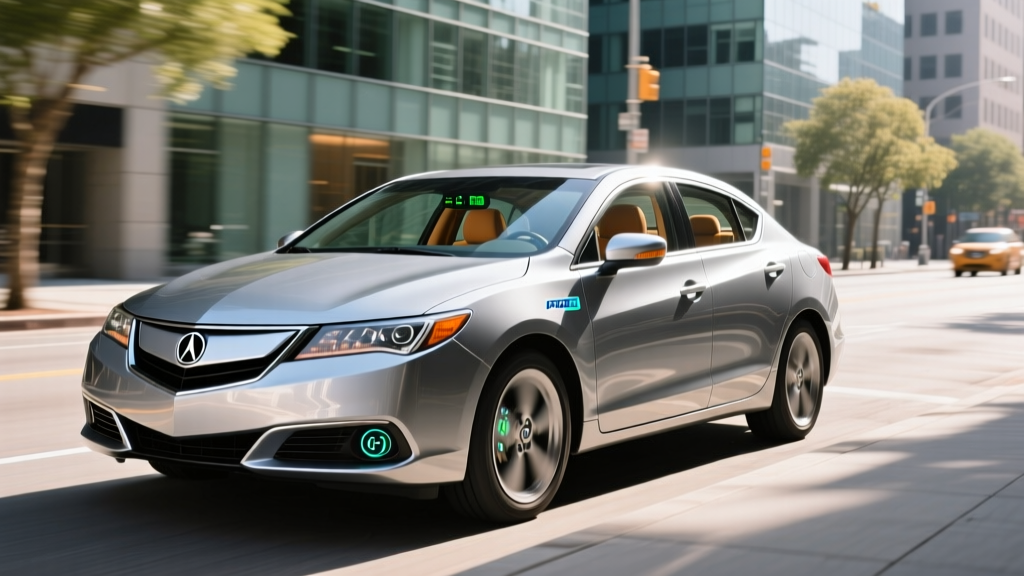
The 2013 Acura ILX Hybrid 1.5L occupies a curious space in the used luxury-hybrid market. Based on the Honda Civic Hybrid platform but dressed in Acura's more refined sheet metal, this compact sedan promised premium features with outstanding fuel economy. Now well into its second decade on the road, the ILX Hybrid is an affordable entry point for buyers wanting hybrid efficiency without a plug. But how does this aging mild-hybrid system hold up in 2026, and what should you expect from a 13-year-old hybrid battery? This guide breaks down every spec that matters.
2013 Acura ILX Hybrid 1.5L: Key Specifications
| Spec | Value |
|---|---|
| Powertrain | 1.5L i-VTEC 4-cyl + IMA electric motor |
| Combined Horsepower | 111 HP @ 6,000 RPM |
| Combined Torque | 125 lb-ft @ 1,000–3,500 RPM |
| Transmission | CVT (Continuously Variable) |
| Battery Type | Nickel-Metal Hydride (NiMH), ~0.5 kWh |
| EPA MPG (City / Hwy / Combined) | 39 / 38 / 39 |
| Fuel Tank | 13.2 gallons |
| Total Range | ~515 miles |
| 0–60 MPH | ~9.4 seconds |
| Drivetrain | Front-Wheel Drive |
| Original MSRP | $29,450 (base hybrid) |
| Typical Used Price (2026) | $6,500–$10,500 |
Understanding the IMA Hybrid System: HEV, Not PHEV
The 2013 Acura ILX Hybrid uses Honda's Integrated Motor Assist (IMA) system — a conventional hybrid electric vehicle (HEV) architecture. This is not a plug-in hybrid (PHEV). You never plug it in. The small nickel-metal hydride battery charges exclusively through regenerative braking and the gasoline engine.
HEV vs PHEV: Where the ILX Fits
| Feature | 2013 ILX Hybrid (HEV) | Modern PHEV (e.g., Toyota Prius Prime) |
|---|---|---|
| Plug-in Charging | No — self-charging only | Yes — plug in for electric miles |
| Electric-Only Range | None (motor assists engine) | 25–44 miles electric-only |
| Battery Size | ~0.5 kWh (NiMH) | 13–18 kWh (lithium-ion) |
| Federal Tax Credit (New) | Never qualified | Up to $7,500 (§30D, if eligible) |
| Best For | Drivers without home charging access | Drivers with short commutes + home charging |
The IMA system sandwiches a thin electric motor between the 1.5-liter engine and the CVT. That motor provides up to 20 HP of assist during acceleration and enables idle stop-start, but it cannot propel the car on electricity alone at any meaningful speed. Think of it as a torque-fill assistant rather than a true dual-mode hybrid like Toyota's Hybrid Synergy Drive.
Fuel Economy: EPA Numbers vs Real-World MPG
The EPA rates the 2013 Acura ILX Hybrid at 39 MPG city, 38 MPG highway, and 39 MPG combined. These were strong numbers for a luxury-branded compact in 2013, and they remain respectable today.
EPA Fuel Economy Breakdown
| Driving Condition | EPA Estimate | Real-World Expectation |
|---|---|---|
| City | 39 MPG | 38–42 MPG (hybrids excel in stop-and-go) |
| Highway | 38 MPG | 35–39 MPG (aero drag, less regen benefit) |
| Combined | 39 MPG | 36–40 MPG |
| Cold Weather (below 32°F) | Not rated | 32–35 MPG (engine runs more for heat) |
Honda's IMA system tends to deliver real-world city MPG that meets or slightly exceeds the EPA sticker, because frequent braking maximizes regenerative energy capture and the engine shuts off at stops. Highway driving is less advantageous — the small battery offers minimal assist at sustained speed, and the 1.5L engine works harder. Expect a combined real-world average around 37 MPG in mixed driving, dropping to the low 30s in harsh winter conditions where the engine must run continuously for cabin heat.
With the 13.2-gallon fuel tank, realistic total range sits between 475 and 515 miles per fill-up. That's competitive with modern hybrids and significantly better than the gasoline-only 2013 ILX 2.0L (rated at 24/35/28 MPG).
Battery Health, Warranty, and Replacement Cost
The ILX Hybrid's NiMH battery pack is small (~0.5 kWh) and operates in a narrow state-of-charge window, which historically helps longevity. However, this is a 13-year-old battery system in 2026, and age is the primary degradation factor for NiMH chemistry regardless of mileage.
Original Hybrid Battery Warranty
Original coverage: 8 years / 80,000 miles (10 years / 150,000 miles in CARB states including CA, CT, ME, MA, NJ, NY, OR, RI, VT, WA)
Status in 2026: All original factory hybrid battery warranties have expired, even in CARB states.
Common failure symptoms on high-mileage IMA batteries include:
- IMA warning light on the dashboard
- Reduced regenerative braking and assist power
- Noticeable fuel economy decline (dropping to 28–32 MPG)
- Recalibration cycles where the battery gauge drops and recharges repeatedly
- In severe cases, the car will still drive on the gas engine alone, but with degraded performance and efficiency
Replacement costs in 2026:
- OEM Acura/Honda battery pack: $2,000–$3,200 (parts + dealer labor)
- Aftermarket refurbished NiMH pack: $1,200–$1,800 (installed at an independent hybrid specialist)
- DIY reconditioning/grid charging: $50–$200 for a grid charger to attempt cell rebalancing — a temporary fix that some Civic/ILX Hybrid owners use to extend battery life by months or a few years
When shopping for a used 2013 ILX Hybrid, ask for documentation of any battery replacement. A car with a recently installed OEM or quality aftermarket pack is worth a meaningful premium over one still on the original 13-year-old battery. An NHTSA VIN lookup can also reveal any open recalls related to the IMA system.
Powertrain Deep Dive: The 1.5L i-VTEC + IMA Combo
The gasoline component is Honda's 1.5-liter i-VTEC inline-four, producing 90 HP and 96 lb-ft of torque on its own. The IMA electric motor adds up to 20 HP and 58 lb-ft of torque assist, bringing the combined system output to 111 HP and 125 lb-ft. Power routes through a continuously variable transmission (CVT) to the front wheels.
This is not a performance-oriented powertrain. The 0–60 MPH time of approximately 9.4 seconds feels leisurely by modern standards, and highway merging requires planning. The CVT drones under hard acceleration — a characteristic common to Honda's IMA-era hybrids. Where the system shines is in gentle city driving, where the electric assist smooths out takeoffs and the engine frequently shuts off at stops.
One technical note: the IMA motor is integrated directly into the crankshaft, meaning it cannot drive the wheels independently of the engine. This fundamentally differs from Toyota's planetary-gear hybrid system (used in the Prius), which can operate in electric-only mode at low speeds. The ILX Hybrid is better understood as a mild hybrid with strong assist rather than a full hybrid.
Is the 2013 ILX Hybrid Reliable?
Beyond the battery, the 2013 ILX Hybrid's mechanicals are largely shared with the ninth-generation Honda Civic Hybrid, which carries an above-average reliability record. The 1.5L engine is simple and proven, the CVT has held up reasonably well when maintained (fluid changes every 30,000–50,000 miles are critical), and the electronics are straightforward by modern standards.
Known issues to inspect:
- IMA battery degradation — the most common and costly concern, as detailed above
- CVT judder or shudder — often resolved with a fluid drain-and-fill using Honda HCF-2 fluid; if persistent, may indicate internal wear
- Motor mount wear — the engine and IMA motor generate vibration that accelerates mount deterioration; listen for clunks on startup or shifting
- 12V battery drain — if the IMA battery is weak, the 12V system compensates, leading to premature 12V battery failure
- Brake actuator — regenerative braking systems can develop issues with the brake actuator assembly; test for consistent pedal feel
With proper maintenance and a healthy IMA battery, these cars routinely reach 180,000–220,000 miles. The non-hybrid 2.0L ILX is arguably simpler and cheaper to maintain long-term, but sacrifices roughly 11 MPG combined.
Pricing, Value, and Tax Credit Eligibility
The 2013 Acura ILX Hybrid originally started at $29,450, with the Technology package pushing it above $32,000. In the 2026 used market, expect to pay:
- $6,500–$8,000 for examples with 120,000+ miles or unknown battery health
- $8,000–$10,500 for lower-mileage cars (under 90,000 miles) with documented battery replacement or strong IMA health
Tax credit status: The 2013 ILX Hybrid did not qualify for the federal hybrid tax credit when new (that credit applied only to qualifying early-generation hybrids and expired for Honda in 2008). It does not qualify for the current IRS §30D Clean Vehicle Credit, which applies exclusively to new plug-in electric vehicles and PHEVs meeting battery sourcing and MSRP requirements. The federal used-EV credit (up to $4,000) also does not apply, as the ILX Hybrid is a conventional HEV — not a plug-in vehicle.
Some states offer minor registration incentives or HOV lane access for hybrids, but most of these programs have expired or shifted to zero-emission vehicles. Check your state's current DMV or energy office website for any remaining benefits.
Pros
- 39 MPG combined is still competitive in 2026
- No plug-in charging required — ideal for apartment dwellers
- Acura-badged interior with available leather, navigation, and premium audio
- Low annual fuel cost (~$1,250/yr at 12,000 mi and $3.50/gal)
- Honda Civic parts availability keeps repair costs reasonable
Cons
- 111 HP is underwhelming for highway merging and hills
- 13-year-old NiMH battery is at or past its service life
- All original hybrid battery warranties have expired
- CVT drone under acceleration; not a refined driving experience
- No electric-only driving capability whatsoever
- No federal tax credit eligibility (new or used)
Who Should Buy the 2013 ILX Hybrid vs a Modern EV or PHEV?
Decision Framework
Choose the 2013 ILX Hybrid if:
- Your budget is under $10,000 and you want hybrid MPG without plug-in infrastructure
- You live in an apartment or lack access to home/workplace charging
- Your commute is city-heavy, where regenerative braking maximizes efficiency
- You want low running costs and can budget $1,500–$2,500 for a potential battery replacement
Choose a used PHEV (e.g., 2017+ Prius Prime, 2018+ Clarity PHEV) if:
- You have home charging and a short commute (under 25 miles) to run mostly on electricity
- You want electric-only driving for daily errands with gas backup for road trips
- You can spend $14,000–$20,000 on a newer plug-in hybrid
Choose a used full EV (e.g., 2019+ Chevy Bolt, 2020+ Nissan Leaf) if:
- You have reliable home Level 2 charging
- You want zero tailpipe emissions and minimal drivetrain maintenance
- Your daily driving stays within 150–200 miles and you can budget for a $15,000–$22,000 used EV
The ILX Hybrid makes the most sense as a budget-conscious commuter car where plug-in charging isn't available. It trades modern refinement and electric-only capability for rock-bottom acquisition cost and proven hybrid efficiency. Just go in with eyes open about the battery.
Frequently Asked Questions
How many MPG does the 2013 Acura ILX Hybrid get?
The EPA rates it at 39 MPG city, 38 MPG highway, and 39 MPG combined. Real-world city driving often matches or slightly exceeds 39 MPG, while highway and cold-weather driving may drop to 32–36 MPG.
Does the 2013 ILX Hybrid need to be plugged in?
No. It is a conventional hybrid (HEV), not a plug-in hybrid. The battery charges through regenerative braking and the gasoline engine. There is no charging port.
How far can it drive on electric power alone?
It cannot. The IMA system only assists the gasoline engine — it does not provide independent electric propulsion. The engine shuts off at stops and during coasting, but the wheels are always driven by the gas engine when moving under power.
Is the hybrid battery still covered under warranty?
No. The original 8-year/80,000-mile warranty (10 years/150,000 in CARB states) expired no later than 2023. Any battery replacement in 2026 will be an out-of-pocket expense.
What does a replacement hybrid battery cost?
Expect $2,000–$3,200 for an OEM battery at a dealer, or $1,200–$1,800 for an aftermarket refurbished pack at an independent hybrid shop. Grid-charger reconditioning may extend the current battery's life for $50–$200 but is a temporary measure.
Does the 2013 ILX Hybrid qualify for any tax credit?
No. It did not qualify for the federal hybrid credit when new, and it does not qualify for the current IRS §30D Clean Vehicle Credit or the used-EV credit, both of which require plug-in capability.
Is the 2013 ILX Hybrid reliable overall?
The Civic-based mechanicals are generally reliable with proper maintenance. The main risk is IMA battery failure, which is likely on any car still running its original 13-year-old NiMH pack. CVT fluid changes and motor mount inspections are also important.
How does the ILX Hybrid compare to a 2013 Toyota Prius?
The Prius offers more interior space, a more advanced full-hybrid system with electric-only low-speed capability, and slightly better real-world MPG (48–50 combined). The ILX Hybrid trades practicality for Acura's premium interior materials and quieter cabin, at the cost of 10+ MPG and less sophisticated hybrid technology.