Quick Verdict: Is the 2012 Camry Hybrid XLE Still Worth It in 2026?
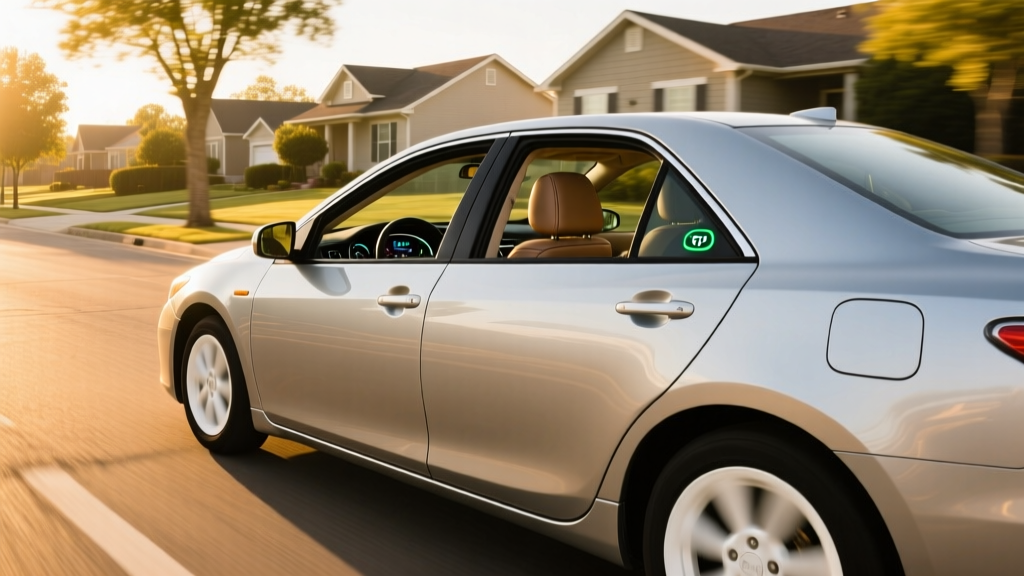
The 2012 Toyota Camry Hybrid XLE occupies a specific niche in today's used-car market: a mid-size sedan that delivers genuine 40+ MPG without requiring any lifestyle changes — no plugs, no range anxiety, no charging apps. As a conventional hybrid electric vehicle (HEV), it generates its own electricity through regenerative braking and its gasoline engine, meaning you fuel it exactly like any other car at any gas station.
For 2026 used-car shoppers, the XV50-generation Camry Hybrid XLE represents one of the most proven, data-backed hybrid powertrains Toyota has ever built. The 2.5-liter Atkinson-cycle four-cylinder paired with Toyota's Hybrid Synergy Drive has accumulated billions of real-world miles across the Toyota and Lexus lineup. But at 14 years old, battery health and replacement economics are the make-or-break factors. This guide covers every number you need.
HEV vs PHEV vs EV: Where the 2012 Camry Hybrid Fits
Conventional Hybrid (HEV) — This car: The 2012 Camry Hybrid uses a small 1.6 kWh nickel-metal hydride (NiMH) traction battery that charges itself through regenerative braking and the gasoline engine. You never plug it in. It can creep short distances (under 1 mile) on electric-only power at low speeds, but the electric motor primarily assists the gas engine for efficiency gains.
Plug-in Hybrid (PHEV): A PHEV like the current Toyota RAV4 Prime carries a much larger battery (18.1 kWh) that you plug in to charge, delivering 20-42 miles of pure electric driving before the gas engine engages. The 2012 Camry Hybrid is not a PHEV — Toyota never offered a plug-in Camry in the US market.
Battery Electric Vehicle (BEV): A full EV like the Tesla Model 3 or Hyundai Ioniq 6 has no gasoline engine at all, running entirely on a large battery (60-80+ kWh) charged from the grid. Zero tailpipe emissions, but requires home or public charging infrastructure.
The 2012 Camry Hybrid XLE is the right choice if you want hybrid fuel savings with zero change to your fueling routine. It's the wrong choice if you want electric-only commuting or access to HOV lane stickers (which most states reserve for PHEVs and BEVs).
EPA Fuel Economy and Real-World MPG
| Metric | EPA Estimate | Real-World Expectation |
|---|---|---|
| City MPG | 43 MPG | 40–45 MPG (hybrids often beat EPA in city) |
| Highway MPG | 39 MPG | 35–40 MPG (hybrid advantage shrinks at sustained speed) |
| Combined MPG | 40 MPG | 38–42 MPG depending on driving mix |
| Fuel Tank Capacity | 17.0 gallons | ~600–680 miles per tank |
Source: EPA Fuel Economy Guide — 2012 Toyota Camry Hybrid
Why real-world MPG often exceeds EPA in city driving: Conventional hybrids recapture kinetic energy during stop-and-go braking, feeding it back into the battery to power the electric motor. The more you brake, the more you recharge. City commuters frequently report 43–46 MPG on the XLE trim, while sustained 75+ MPH highway driving reduces the hybrid system's advantage, dropping to 35–38 MPG.
Cold-weather note: Expect a 5–10% MPG reduction in winter months. The gasoline engine runs more frequently to heat the cabin and maintain battery temperature, reducing electric-motor assist time.
Powertrain Specifications
| Specification | 2012 Camry Hybrid XLE |
|---|---|
| Engine | 2.5L Atkinson-cycle inline-4 (2AR-FXE) |
| Engine Power | 156 HP @ 5,700 RPM / 156 lb-ft torque |
| Electric Motor | Permanent-magnet synchronous (3JM), 105 kW / 141 HP |
| Net Combined System Power | 200 HP |
| Transmission | ECVT (electronically controlled continuously variable) |
| 0–60 MPH | ~7.6 seconds |
| Traction Battery | 1.6 kWh NiMH (244.8V nominal), 34 modules |
| Drivetrain | Front-wheel drive |
| Curb Weight | ~3,525 lbs |
The 200 HP combined output made the 2012 Camry Hybrid one of the quickest mid-size hybrid sedans of its era, outpacing the contemporary Honda Insight and Ford Fusion Hybrid. The eCVT is a power-split device, not a belt-driven CVT — it uses planetary gearsets to blend engine and motor power, which contributes to its long-term reliability.
Battery Health, Warranty, and Replacement Costs
Original Hybrid Battery Warranty: 8 years / 100,000 miles (10 years / 150,000 miles in California and CARB-adopting states). As of 2026, all 2012 Camry Hybrids have exceeded the standard federal warranty period. California-emissions vehicles may still have residual coverage if under 150,000 miles and in a CARB state.
Battery Chemistry: Nickel-Metal Hydride (NiMH) — not the lithium-ion chemistry used in modern EVs and PHEVs. NiMH is proven, tolerant of heat, and less prone to catastrophic failure, but carries lower energy density.
How Long Do Camry Hybrid Batteries Last?
Toyota's NiMH hybrid batteries have demonstrated remarkable longevity in fleet data. The typical lifespan ranges from 150,000 to 200,000+ miles, with many original batteries still functioning at 14+ years. However, capacity degradation is inevitable. A 2012 Camry Hybrid with 180,000 miles on the original battery may show 15–25% capacity loss, manifesting as slightly reduced electric-assist time and marginally lower MPG — but not a failure.
Signs of battery degradation to watch for:
- Noticeable drop in fuel economy (3–5+ MPG below historical average)
- The gasoline engine running more frequently at stops
- Reduced regenerative braking feel
- Dashboard warning: "Check Hybrid System" or battery-related DTC codes (P0A80, P0A7F)
Battery Replacement Cost Breakdown
| Option | Cost Range (2026) | Notes |
|---|---|---|
| New OEM Toyota battery | $2,500–$3,800 (parts + labor) | Dealership installed; best warranty (typically 3 yr/unlimited mi) |
| Refurbished/remanufactured battery | $1,200–$2,000 | Third-party suppliers like GreenBean or Dorman; 1–3 year warranty |
| Used battery from salvage yard | $500–$1,000 | Unknown health; short or no warranty — a gamble |
| Individual module replacement | $300–$800 | Requires a hybrid-savvy shop; replaces only failed cells |
Before purchasing any 2012 Camry Hybrid, request a hybrid battery health check from a Toyota dealer or hybrid specialist. They can read the battery's State of Health (SoH) via OBD-II, showing internal resistance and capacity data. A healthy battery will show balanced module voltages (within 0.2V of each other) and no history of hybrid-system DTCs.
XLE Trim Features and What You Get
The XLE was the top trim level for the 2012 Camry Hybrid, and it remains well-equipped by 2026 standards for a 14-year-old vehicle:
- Leather-trimmed heated front seats
- Dual-zone automatic climate control
- Smart Key with push-button start
- Backup camera (standard on Hybrid XLE)
- 6.1-inch touchscreen with Entune audio (Bluetooth, USB)
- 10-speaker JBL premium audio (optional package)
- 17-inch alloy wheels
- Blind Spot Monitor with Rear Cross-Traffic Alert (optional Safety Connect package)
What it lacks vs modern vehicles: No Apple CarPlay/Android Auto (the Entune system is dated), no adaptive cruise control, no lane-keeping assist, no automatic emergency braking. If advanced driver-assist features are a priority, you'll need to look at a 2018+ Camry Hybrid with Toyota Safety Sense-P.
Pricing and Tax Credit Eligibility
The 2012 Camry Hybrid XLE originally carried an MSRP of approximately $30,910 (including destination). In the 2026 used-car market, pricing varies significantly by mileage, condition, and battery health:
| Condition / Mileage | Typical 2026 Asking Price |
|---|---|
| Excellent, under 80,000 mi, healthy battery | $10,500–$13,000 |
| Good, 80,000–130,000 mi | $7,500–$10,500 |
| High mileage, 130,000–180,000 mi | $5,000–$7,500 |
| Needs battery replacement | $3,500–$5,500 (factor in $1,500–$3,000 repair) |
Does the 2012 Camry Hybrid Qualify for Any Tax Credit?
No federal tax credit applies to this vehicle. The IRS §30D Clean Vehicle Credit applies only to new qualifying plug-in electric vehicles and fuel cell vehicles. Conventional hybrids (HEVs) have not qualified for the federal purchase credit since the original Toyota Hybrid Synergy Drive credits expired for Toyota in 2007.
The Used Clean Vehicle Credit (up to $4,000 or 30% of sale price) requires the vehicle to be a qualified plug-in electric or fuel cell vehicle with a battery capacity of at least 7 kWh. The Camry Hybrid's 1.6 kWh NiMH battery does not meet this threshold, and it is not a plug-in vehicle.
State incentives: A handful of states offer minor registration-fee discounts or HOV access for hybrids, but most have shifted incentives exclusively to PHEVs and BEVs. Check your state's DMV or energy office for current programs.
Ownership Costs: 5-Year Projection
| Cost Category | 5-Year Estimate (10,000 mi/yr) | Notes |
|---|---|---|
| Purchase price (good condition, ~100k mi) | $9,000 | Private party, average market |
| Fuel (40 MPG avg, $3.40/gal) | $4,250 | ~50,000 mi ÷ 40 × $3.40 |
| Insurance | $4,500–$6,000 | $75–$100/mo; low for a 2012 sedan |
| Maintenance | $2,000–$3,000 | Oil, brakes (regen saves pads), tires, fluids |
| Potential battery replacement | $0–$2,500 | Budget reserve; many originals still alive at 150k |
| Total 5-Year Cost | $19,750–$24,750 | ~$0.40–$0.49/mile all-in |
Compare this to a 2012 Camry LE (non-hybrid, 28 MPG combined): fuel alone would cost ~$6,070 over 5 years — roughly $1,820 more than the hybrid. The hybrid premium pays for itself in fuel savings within 3–4 years at average driving distances, even on a used purchase.
Reliability and Known Issues
The 2012 Camry Hybrid XLE benefits from one of the strongest reliability records in Toyota's history. The 2AR-FXE engine and eCVT power-split device have no timing belt (chain-driven), no traditional starter motor, no alternator, and no conventional automatic transmission to fail. Fewer moving parts means fewer failure points.
Common issues reported by high-mileage owners:
- Hybrid battery degradation (age/mileage dependent, covered above)
- Brake actuator assembly — the electronically controlled brake system (ECB) can fail around 120,000–160,000 miles. Replacement: $1,200–$1,800 at a dealer. Symptoms include a firm pedal, ABS warning light, or DTC C1391.
- Water pump (electric) — the hybrid system uses an electric coolant pump that may fail around 100,000–140,000 miles. ~$400–$600 replacement.
- Inverter coolant pump — separate from the engine water pump; similar lifespan. Check for inverter coolant flow in the reservoir under the hood.
- 12V auxiliary battery — located in the trunk. Standard AGM replacement every 4–5 years (~$200).
For safety data, the 2012 Camry earned a 5-star overall rating from NHTSA and was an IIHS Top Safety Pick.
Who Should Buy This Hybrid — And Who Shouldn't
Choose the 2012 Camry Hybrid XLE if:
- You drive 10,000–15,000+ miles per year and want to minimize fuel costs without changing your fueling habits
- Your commute is city-heavy or mixed (where hybrid MPG shines)
- You want a proven, low-risk used vehicle with abundant parts availability and independent-shop serviceability
- You lack access to home or workplace EV charging
- Your budget is $6,000–$12,000 for a reliable daily driver
Look elsewhere if:
- You want electric-only driving or plug-in capability (consider a used Toyota Prius Prime, RAV4 Prime, or a PHEV from Hyundai/Kia)
- You want modern ADAS features like automatic emergency braking or lane-keeping (look at 2018+ Camry with TSS-P)
- You primarily drive sustained highway miles at 75+ MPH (the hybrid advantage narrows; a diesel or efficient gas car may match MPG)
- You want HOV lane access (most states require PHEV or BEV for clean-air stickers)
Pros
- 40 MPG combined real-world, often better in city
- 200 HP — adequate passing power, not sluggish
- eCVT is exceptionally reliable (no belt, no clutches)
- XLE trim well-equipped: leather, heated seats, backup camera
- Low insurance and maintenance costs
- 600+ mile range per tank eliminates fuel stops on road trips
- Strong resale demand keeps used values stable
Cons
- 14-year-old tech: no CarPlay, no modern ADAS
- Hybrid battery replacement is a $1,500–$3,500 risk
- Brake actuator failure is a known expensive repair
- No federal or state tax credits available
- NiMH battery less efficient than modern lithium-ion systems
- Trunk space reduced by battery pack (~14.1 cu ft vs 15.4 in gas model)
Frequently Asked Questions
How many MPG does the 2012 Toyota Camry Hybrid XLE get?
The EPA rates it at 43 city / 39 highway / 40 combined MPG. Real-world owners typically see 38–45 MPG depending on driving style and climate. City-heavy commutes often push above the EPA estimate thanks to regenerative braking.
Does the 2012 Camry Hybrid need to be plugged in?
No. This is a conventional hybrid (HEV), not a plug-in hybrid (PHEV). The 1.6 kWh NiMH battery charges itself through regenerative braking and the gasoline engine. You fuel it at any gas station, exactly like a conventional car.
How much does it cost to replace the hybrid battery?
A new OEM battery from Toyota costs $2,500–$3,800 installed. Refurbished units from reputable third-party suppliers run $1,200–$2,000 with a 1–3 year warranty. Many original batteries last 150,000–200,000+ miles, so replacement is not guaranteed to be necessary.
Is the 2012 Camry Hybrid reliable at high mileage?
Yes, with proper maintenance. The 2AR-FXE engine and eCVT are among Toyota's most durable powertrains. The main high-mileage risks are the hybrid battery, brake actuator assembly, and electric water pumps — all of which are well-documented and repairable. Pre-purchase inspection by a hybrid-qualified technician is strongly recommended.
How does the 2012 Camry Hybrid compare to a modern EV for commuting?
A modern EV like the Chevrolet Equus EV or Hyundai Ioniq 5 offers lower per-mile energy costs (~$0.04–$0.06/mile on home electricity vs ~$0.09/mile on gas at 40 MPG) and zero tailpipe emissions. However, EVs require home charging access, have higher purchase prices (even used), and may carry higher insurance costs. The 2012 Camry Hybrid wins on upfront cost, no charging infrastructure needed, and proven 14-year reliability data. For budget-conscious commuters without charging access, it remains a rational choice.
Does this car qualify for any federal tax credit?
No. The federal §30D Clean Vehicle Credit applies only to new plug-in electric and fuel cell vehicles. The Used Clean Vehicle Credit (up to $4,000) requires a plug-in vehicle with at least 7 kWh of battery capacity. The 2012 Camry Hybrid's 1.6 kWh NiMH battery and conventional HEV drivetrain make it ineligible for both credits. Consult a tax professional or IRS.gov for current incentive details.