What "Mercedes Mild Hybrid" Actually Means in 2026
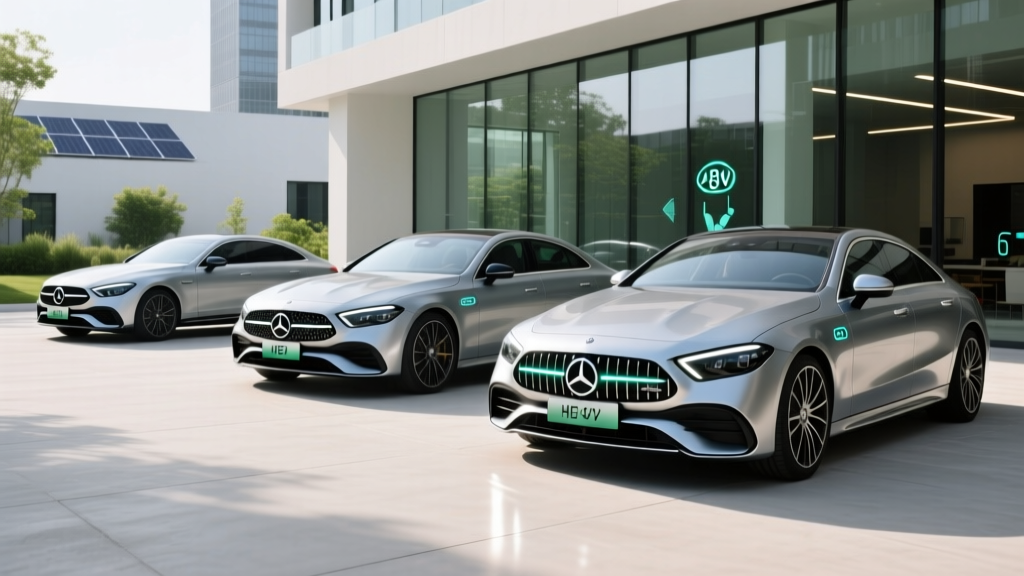
When shoppers search for a Mercedes mild hybrid, they are usually encountering the brand's 48-volt EQ Boost system — a small electric motor-generator integrated into the powertrain that assists the gasoline engine but cannot drive the wheels on electricity alone. This is fundamentally different from a conventional hybrid (HEV) like a Toyota Prius, and worlds apart from a plug-in hybrid (PHEV) such as the Mercedes-Benz S 580e. Understanding where Mercedes' mild-hybrid technology sits in the electrification spectrum is the key to deciding whether it saves you enough fuel — or whether you should look at a PHEV or full battery-electric vehicle (BEV) instead.
Mercedes-Benz has deployed its 48V mild-hybrid system across nearly the entire 2026 lineup, from the C-Class and E-Class to the GLC and GLE. The system pairs a belt-driven integrated starter-generator (ISG) with a small 48V lithium-ion battery (typically under 1 kWh of usable capacity). The result: smoother stop-start, brief torque-fill during acceleration, and modest coasting efficiency gains. But a mild hybrid is not a hybrid in the traditional sense — it cannot propel the car without the engine running, and it delivers only incremental fuel-economy improvements over a comparable non-hybrid turbocharged engine.
HEV vs PHEV vs Mild Hybrid — The Quick Distinction
| Type | Can Drive on Electric Only? | Needs Plug-In? | Typical Efficiency Gain |
|---|---|---|---|
| Mild Hybrid (48V) | No | No | 1–3 MPG combined |
| Full Hybrid (HEV) | Briefly, at low speed | No | 10–20 MPG combined vs gas-only |
| Plug-In Hybrid (PHEV) | Yes, 25–50+ mi | Yes (Level 2) | 50–80+ MPGe on short trips |
| Battery Electric (BEV) | Yes, 200–400+ mi | Yes (Level 2 / DC) | 100+ MPGe, zero tailpipe |
2026 Mercedes-Benz Mild-Hybrid Models: EPA MPG and Specs
Below are the key 2026 Mercedes models equipped with the 48V EQ Boost mild-hybrid system, along with their EPA fuel-economy estimates. Note that the mild-hybrid system is standard on most trims — you do not pay extra for it, and there is no separate "hybrid" badge on the trunk.
| Model | Engine | Combined HP | City MPG | Hwy MPG | Combined MPG |
|---|---|---|---|---|---|
| C 300 Sedan (RWD) | 2.0L Turbo I4 + 48V ISG | 255 hp | 26 | 36 | 30 |
| C 300 4MATIC | 2.0L Turbo I4 + 48V ISG | 255 hp | 24 | 33 | 28 |
| E 350 Sedan | 2.0L Turbo I4 + 48V ISG | 255 hp | 25 | 33 | 28 |
| GLC 300 (RWD) | 2.0L Turbo I4 + 48V ISG | 258 hp | 25 | 32 | 28 |
| GLC 300 4MATIC | 2.0L Turbo I4 + 48V ISG | 258 hp | 23 | 30 | 26 |
| GLE 350 4MATIC | 2.0L Turbo I4 + 48V ISG | 255 hp | 21 | 27 | 23 |
| S 500 4MATIC | 3.0L Turbo I6 + 48V ISG | 442 hp | 21 | 30 | 24 |
Source: fueleconomy.gov — EPA estimates for the most recent tested model year. Actual mileage varies with driving conditions.
How the 48V EQ Boost System Works (and What It Doesn't Do)
The 48V mild-hybrid system in Mercedes-Benz vehicles uses an integrated starter-generator (ISG) mounted between the engine and transmission. This compact unit replaces the traditional alternator and starter motor, delivering up to roughly 15 kW (about 20 hp) of brief electric assist. Here is what it does — and does not do:
- Torque fill: The ISG provides instant electric torque at low RPM while the turbocharger spools up, eliminating turbo lag. You feel this as smooth, responsive acceleration from a stop.
- Smooth stop-start: Engine restarts are nearly imperceptible compared to older 12V systems. The engine can also shut off while coasting at highway speeds ("sailing" mode) to save fuel.
- Energy recuperation: During deceleration and braking, the ISG recovers kinetic energy back into the small 48V battery — but this battery holds less than 1 kWh, so the recovered energy is used only for assist and auxiliary systems, not for electric-only driving.
- What it does NOT do: The car cannot move on electric power alone. There is no EV mode, no electric-only range, and no plug to connect. If you want any electric-only driving, you need a PHEV or BEV.
Mercedes PHEV Alternative: When You Need More Than Mild
If you are researching a Mercedes mild hybrid but actually want meaningful electric-only driving, the brand's plug-in hybrid lineup is where to look. The 2026 Mercedes-Benz PHEV models feature substantially larger batteries (18–28 kWh usable), dedicated electric motors, and Level 2 charging capability. Here is how the key PHEV models compare to their mild-hybrid siblings:
| Model | Battery (kWh usable) | EV Range (mi) | Combined HP | MPGe | MSRP (approx.) |
|---|---|---|---|---|---|
| S 580e Sedan | ~22 kWh | ~38 mi | 502 hp | 50 MPGe | $120,500 |
| GLE 350de 4MATIC | ~23 kWh | ~45 mi | 362 hp | 56 MPGe | $82,000 |
| C 300e Sedan | ~20 kWh | ~55 mi | 312 hp | 74 MPGe | $57,000 |
EPA estimates. EV range varies with temperature, speed, and climate-control use. Source: fueleconomy.gov and Mercedes-Benz USA.
Pricing, Tax Credits, and Total Cost of Ownership
One of the most common questions from hybrid shoppers is whether a Mercedes mild hybrid or PHEV qualifies for the federal §30D Clean Vehicle Credit. Here is the reality for 2026:
Federal Tax Credit Eligibility
- Mild hybrids (48V EQ Boost): Do NOT qualify for the §30D credit. The IRS requires a minimum battery capacity of 7 kWh and plug-in capability. The 48V system's sub-1 kWh battery does not meet this threshold.
- PHEVs (S 580e, GLE 350de, C 300e): May qualify for up to $7,500, but eligibility depends on battery component and critical-mineral sourcing requirements, buyer income caps ($150K single / $300K joint), and MSRP caps ($55K sedans / $80K SUVs/vans). The S 580e exceeds the sedan MSRP cap and is ineligible. The C 300e at ~$57,000 also exceeds the $55K sedan cap as of current rules. The GLE 350de may qualify for partial or full credit depending on the year's sourcing requirements — always verify on IRS.gov before purchasing.
- Point-of-sale transfer: If eligible, the credit can be transferred to the dealer at purchase, reducing your out-of-pocket cost immediately rather than waiting for tax filing.
2026 Mercedes Mild-Hybrid Pricing Snapshot
| Model | Base MSRP | Federal Tax Credit | Effective Starting Price |
|---|---|---|---|
| C 300 Sedan | $47,550 | $0 | $47,550 |
| E 350 Sedan | $59,900 | $0 | $59,900 |
| GLC 300 SUV | $49,250 | $0 | $49,250 |
| GLE 350 4MATIC | $64,350 | $0 | $64,350 |
| S 500 4MATIC | $118,900 | $0 | $118,900 |
MSRP figures from Mercedes-Benz USA. Destination charges additional. Tax credit rules subject to change — confirm at IRS.gov.
Battery Warranty and Long-Term Reliability
Hybrid battery longevity is a top concern for buyers spending $50K+ on a vehicle. Here is how Mercedes-Benz covers its hybrid systems:
Mercedes-Benz Hybrid Battery Warranty
| 48V Mild-Hybrid Battery | 4 years / 50,000 miles (standard new-vehicle warranty). Some states with California emissions rules extend hybrid-component coverage to 10 years / 150,000 miles. |
| PHEV High-Voltage Battery | 6 years / 62,000 miles (federal). In CARB states: 10 years / 150,000 miles. Covers capacity loss below 70% of original. |
| Estimated Replacement Cost | 48V battery: $800–$1,500. PHEV high-voltage pack: $8,000–$15,000 depending on model. |
The 48V mild-hybrid battery is small and relatively inexpensive to replace compared to a PHEV or BEV pack. It operates under less thermal and cycling stress because it never deep-discharges. In practice, most 48V batteries last the life of the vehicle. The larger concern with Mercedes mild hybrids is the complexity of the ISG unit and associated power electronics — these are covered under the standard powertrain warranty (4 years / 50,000 miles) but can be costly to repair out of warranty ($2,000–$4,000 for ISG replacement based on dealer estimates).
Real-World MPG: What Owners Actually Report
EPA estimates are a starting point, not a guarantee. Based on owner-reported data and independent testing, here is how Mercedes mild-hybrid models perform in real-world conditions:
- City driving: The 48V system shines here. Smooth stop-start and torque-fill at low speeds can yield 1–2 MPG above EPA city estimates in stop-and-go traffic. C 300 owners regularly report 27–28 MPG in urban commutes vs. the EPA's 26 MPG city rating.
- Highway driving: The mild-hybrid advantage diminishes at steady highway speeds. The engine does most of the work, and coasting/sailing mode engages only on gentle declines. Expect EPA highway numbers or slightly below at 75+ mph.
- Cold weather: Fuel economy drops 5–10% in freezing temperatures due to increased engine warm-up time, thicker fluids, and cabin heating demands. A C 300 rated at 30 MPG combined may average 26–27 MPG in January in Chicago.
- Compared to non-hybrid competitors: The BMW 330i (no mild hybrid) achieves 29 MPG combined; the Audi A4 45 TFSI gets 28 MPG combined. The Mercedes C 300's 30 MPG combined with 48V assist represents a genuine, if modest, 1–2 MPG advantage over its German rivals.
Mercedes Mild Hybrid vs PHEV vs Full EV: Which Should You Buy?
Decision Framework
Choose a Mercedes mild hybrid (C 300, E 350, GLC 300) if:
- You cannot charge at home or work (no garage, no outlet access)
- You want zero behavior change — no plugging in, no route planning
- Your priority is refinement (smoother stop-start, torque fill) over maximum fuel savings
- You drive 12,000–15,000 miles/year and the 1–2 MPG improvement saves you $100–$200 annually in fuel
Choose a Mercedes PHEV (GLE 350de, S 580e) if:
- You have Level 2 home charging and a commute under 40 miles round-trip
- You want to drive mostly on electricity during the week but need gas-engine range for road trips
- You are willing to pay a $5,000–$15,000 premium over the mild-hybrid equivalent
Choose a full EV (Mercedes EQE, EQS, or a competitor like the BMW i5) if:
- You have reliable home charging and want to eliminate gasoline entirely
- Your daily driving is under 250 miles and you can plan road-trip charging stops
- You want the lowest per-mile energy cost ($0.04–$0.06/mile on home electricity vs. $0.15–$0.20/mile on premium gasoline)
- You qualify for the full §30D tax credit on an eligible model
Mercedes Mild Hybrid — Pros
- No plug-in required; zero lifestyle change
- Smoother stop-start and low-speed acceleration
- No range anxiety whatsoever
- Standard across the lineup at no extra cost
- Lower repair cost than PHEV/BEV battery systems
Mercedes Mild Hybrid — Cons
- Only 1–3 MPG improvement over a non-hybrid turbo engine
- No electric-only driving capability
- No federal tax credit eligibility
- ISG/power electronics add complexity vs. a conventional alternator
- Fuel savings rarely justify the premium if comparing to a non-hybrid competitor
Frequently Asked Questions
How many MPG does a Mercedes mild hybrid get?
The 2026 Mercedes-Benz C 300 with 48V mild hybrid achieves an EPA-estimated 26 city / 36 highway / 30 combined MPG (RWD). The E 350 rates at 25/33/28 MPG, and the GLC 300 SUV at 25/32/28 MPG (RWD). Real-world city driving may slightly exceed EPA estimates thanks to the 48V system's regenerative braking and smooth stop-start.
Does a Mercedes mild hybrid need to be plugged in?
No. The 48V EQ Boost system charges itself through regenerative braking and the engine — exactly like a conventional alternator charges a 12V battery. There is no plug, no charging cable, and no electric-only range. You fuel it like any other gasoline car.
Does a Mercedes mild hybrid qualify for any tax credit?
No. The federal §30D Clean Vehicle Credit requires plug-in capability and a minimum battery capacity of 7 kWh. The Mercedes 48V mild-hybrid system uses a battery under 1 kWh and has no plug. No federal, and typically no state, tax credits apply to mild-hybrid vehicles.
Is the Mercedes 48V mild-hybrid system reliable?
The 48V system has proven generally reliable since its introduction, with the ISG and small battery operating under low stress. The primary risk is out-of-warranty ISG replacement ($2,000–$4,000). The 48V battery itself is inexpensive (~$800–$1,500) and typically lasts the vehicle's lifetime. Mercedes covers hybrid components for 4 years / 50,000 miles under the standard warranty, with extended coverage in CARB states.
Mercedes mild hybrid vs PHEV — which saves more money?
A PHEV saves dramatically more on fuel if you can charge at home and your commute fits within the electric range. For example, a GLE 350de driven 30 miles/day on electricity costs roughly $1.50/day in electricity vs. $6.50/day in premium gasoline for the GLE 350 mild hybrid. However, the PHEV carries a higher purchase price, and if you never plug it in, a PHEV's extra weight can make it less efficient than the mild hybrid. The mild hybrid wins only if you cannot or will not charge.
Should I wait for a full EV instead?
If you have home charging and your daily driving is predictable, a full EV like the Mercedes EQE (EPA ~300 miles range) or a competitor offers the lowest operating costs and strongest tax-credit eligibility. But if you regularly take 400+ mile road trips through areas with sparse charging infrastructure, or if you live in an apartment without charging access, the mild hybrid or PHEV remains a practical bridge technology. There is no universally correct answer — it depends on your charging access, driving patterns, and budget.