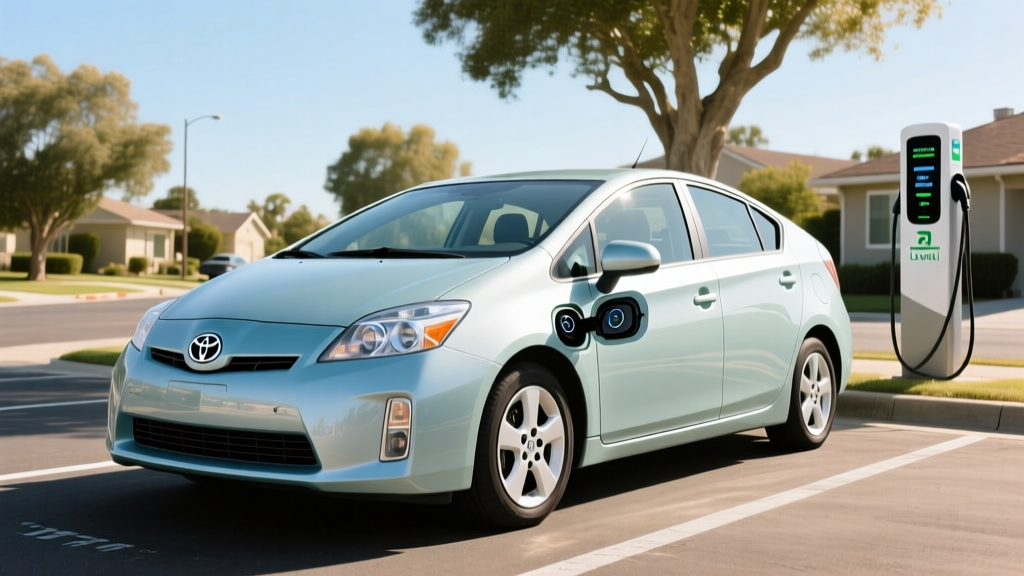
The third-generation Toyota Prius (model years 2010–2015) remains one of the most recognizable nameplates on the used market, and the 2012 Prius hybrid sits right in the sweet spot. With an EPA-rated 50 MPG combined, a proven 1.8-liter Hybrid Synergy Drive powertrain, and Toyota's reputation for longevity, it continues to attract cost-conscious commuters in 2026 who want maximum fuel efficiency without plugging in. But a 14-year-old hybrid raises specific questions — particularly around the high-voltage traction battery, real-world efficiency, and how it stacks up against modern hybrids, PHEVs, and full EVs.
This guide covers every number a used-car buyer needs: exact EPA fuel economy, powertrain output, battery chemistry and warranty history, replacement costs, and a clear framework for deciding whether a 2012 Prius hybrid still makes financial sense today.
2012 Prius Hybrid at a Glance: Core Specifications
| Specification | 2012 Toyota Prius (Liftback) |
|---|---|
| Powertrain Type | Conventional Hybrid (HEV) — no plug-in |
| Gas Engine | 1.8L 4-cylinder Atkinson-cycle, 98 hp |
| Electric Motor | Permanent-magnet AC synchronous, 80 hp (60 kW) |
| Net Combined Horsepower | 134 hp |
| Transmission | ECVT (planetary gearset, no fixed gears) |
| Traction Battery | Nickel-Metal Hydride (NiMH), ~1.3 kWh gross |
| EPA Fuel Economy (Combined) | 50 MPG |
| EPA City / Highway | 51 city / 48 highway |
| Fuel Tank Capacity | 11.9 gallons |
| Total Driving Range | ~595 miles (EPA estimate) |
| 0–60 mph | ~9.8 seconds |
| Curb Weight | ~3,042 lbs |
| Cargo Volume (rear seats up/down) | 21.6 / 39.6 cu ft |
| Original MSRP (Base) | $24,280 (2012) |
| Typical Used Price (2026) | $5,000 – $9,500 depending on mileage and condition |
Fuel Economy: EPA Ratings vs. Real-World MPG
The 2012 Prius carries EPA ratings of 51 MPG city, 48 MPG highway, and 50 MPG combined. These figures are sourced from fueleconomy.gov and apply to the standard Liftback model (not the larger Prius v or the smaller Prius c, which have different ratings).
| Driving Scenario | EPA Rating | Real-World Expectation |
|---|---|---|
| City (stop-and-go) | 51 MPG | 48–55 MPG (hybrids often exceed EPA in city) |
| Highway (65–75 mph) | 48 MPG | 42–47 MPG (aerodynamic drag hurts at speed) |
| Combined | 50 MPG | 44–52 MPG depending on driving mix |
| Cold weather (below 32°F) | N/A | 38–44 MPG (engine runs more for cabin heat) |
HEV vs. PHEV vs. EV: Where Does the 2012 Prius Fit?
The 2012 Prius Liftback is a conventional hybrid electric vehicle (HEV). It does not plug in. The small NiMH battery charges exclusively through regenerative braking and the gasoline engine. There is no electric-only driving mode beyond very brief, low-speed EV-mode bursts (roughly 1 mile at under 25 mph on a full battery).
Toyota did offer a plug-in variant — the Prius Plug-in Hybrid (later renamed Prius Prime) — starting in the 2012 model year, but it was a separate model with a 4.4 kWh lithium-ion battery and an EPA-rated 11 miles of electric-only range. If you are looking at a standard 2012 Prius Liftback, it is the non-plug-in HEV.
| Attribute | 2012 Prius (HEV) | 2012 Prius Plug-in (PHEV) | Modern BEV (e.g., 2026 Tesla Model 3) |
|---|---|---|---|
| Plugs In? | No | Yes (Level 1/2 only) | Yes (Level 2 + DC fast) |
| Electric-Only Range | ~1 mi at low speed | 11 mi (EPA) | 272–363 mi (EPA) |
| Gas Engine? | Yes (always available) | Yes | No |
| Total Range | ~595 mi | ~540 mi (EV + gas) | 272–363 mi (no gas) |
| Fuel/Charging Cost per Mile | ~$0.07 (at $3.50/gal) | ~$0.04 EV / $0.07 gas | ~$0.04 (at $0.15/kWh) |
| Home Charging Needed? | No | Recommended | Essential |
| Federal Tax Credit (2026) | None | Expired for new; used-EV credit N/A | Up to $7,500 (§30D, eligibility varies) |
- Choose the 2012 Prius HEV if: You want maximum MPG with zero lifestyle change — no plug, no range anxiety, no charging apps. You drive 10,000–15,000 miles/year and want fuel costs around $0.07/mile.
- Choose a used PHEV (e.g., 2017+ Prius Prime) if: You have home charging and a short commute (under 25 miles) that could be fully electric, but want a gas engine for road trips.
- Choose a full BEV if: You have reliable home Level 2 charging, drive under 250 miles/day, and want to eliminate gas entirely — with lower per-mile fuel cost and fewer moving parts.
Powertrain Deep Dive: How the Hybrid Synergy Drive Works
The 2012 Prius uses Toyota's third-generation Hybrid Synergy Drive (HSD). The system pairs a 1.8-liter Atkinson-cycle four-cylinder engine (98 hp at 5,200 rpm, 105 lb-ft of torque at 4,000 rpm) with a 60 kW (80 hp) permanent-magnet electric motor through a planetary gearset that functions as an electronically controlled continuously variable transmission (ECVT).
The net system output is 134 hp. This is not a simple sum of engine and motor horsepower because peak outputs occur at different RPM points — the planetary gearset blends the two power sources based on throttle input, battery state of charge, and vehicle speed.
Key powertrain characteristics:
- EV Mode: Allows electric-only driving at low speeds (under ~25 mph) for very short distances when the battery has sufficient charge. Not usable for real commutes.
- Eco Mode: Dampens throttle response and reduces A/C compressor load to maximize fuel economy.
- Power Mode: Sharpens throttle response for highway merging; fuel economy drops noticeably.
- Regenerative Braking: The electric motor acts as a generator during deceleration, recapturing kinetic energy into the NiMH battery. The Prius blends regen with friction brakes — the transition is generally smooth but can feel slightly grabby at very low speeds.
Hybrid Battery: Chemistry, Lifespan, and Replacement Cost
The 2012 Prius uses a Nickel-Metal Hydride (NiMH) traction battery with approximately 1.3 kWh of gross capacity (usable capacity is lower, around 0.4–0.6 kWh, because the system keeps the battery between roughly 40% and 80% state of charge to maximize longevity). This battery is manufactured by Panasonic and is positioned under the rear seat.
How Long Does a Prius NiMH Battery Last?
NiMH batteries in the Gen-3 Prius have demonstrated strong longevity. Data from owner surveys and fleet studies indicate:
- Typical lifespan: 150,000–200,000 miles or 12–18 years before significant degradation
- Failure mode: Gradual capacity loss rather than sudden failure; you'll notice declining MPG and more frequent engine cycling before the battery becomes non-functional
- Common trigger for replacement: Dashboard warning light ("Check Hybrid System") combined with diagnostic codes P0A80 or P0A7F indicating battery pack degradation
- Heat sensitivity: Vehicles in hot climates (Arizona, Texas, Southern California) tend to see earlier battery degradation — heat accelerates NiMH cell aging
Battery Replacement Costs in 2026
| Replacement Option | Cost Range (Parts + Labor) | Notes |
|---|---|---|
| New OEM Toyota Battery | $2,000 – $2,500 | Full new NiMH pack from Toyota dealer; best longevity |
| Refurbished / Reconditioned Pack | $1,000 – $1,600 | Rebuilt with tested cells; variable quality by vendor |
| Individual Module Replacement | $400 – $800 | Replace only failed modules; requires a knowledgeable technician |
| Used Salvage Battery | $500 – $900 | From a wrecked Prius; remaining lifespan unknown |
For a 2012 Prius valued at $5,000–$9,500 in 2026, a $2,000+ OEM battery replacement is a significant percentage of the vehicle's value. Many owners opt for refurbished packs or individual module replacement to keep costs proportional to the car's worth. Independent hybrid-specialist shops often perform these services at lower labor rates than Toyota dealerships.
Reliability, Maintenance, and Known Issues
The 2012 Prius scores well in long-term reliability. Beyond the hybrid battery, the powertrain is remarkably simple — there is no traditional transmission (the ECVT planetary gearset has no belts, clutches, or torque converter to fail), no alternator, no starter motor, and no accessory belt. The regenerative braking system also extends friction brake pad life; 80,000–100,000 miles on original pads is common.
Known issues specific to the Gen-3 Prius (2010–2015) to inspect before purchase:
- Head gasket (EGR-related): Some Gen-3 models develop head gasket issues around 150,000+ miles, often linked to a clogged Exhaust Gas Recirculation (EGR) valve and cooler. Symptoms include coolant loss, overheating, and misfire codes. An EGR cleaning ($200–$400) as preventive maintenance is widely recommended by the Prius community.
- Oil consumption: Some 2010–2012 models with the 2ZR-FXE engine consume oil at higher rates. Check oil level regularly; Toyota issued a technical service bulletin (not a recall) for affected engines.
- Inverter coolant pump: The hybrid inverter has a separate electric coolant pump that can fail. Check for recall completion (NHTSA recall 11V539000 covered the inverter coolant pump on some 2012 models).
- 12V auxiliary battery: Like all hybrids, the Prius has a conventional 12V battery (located in the rear cargo area) that powers electronics and boots the hybrid system. If the 12V dies, the car won't start even with a healthy traction battery. Replace every 4–5 years; use an AGM-type battery specified for the Prius.
Safety-wise, the 2012 Prius earned a Top Safety Pick from the IIHS with Good ratings in moderate overlap front, side, roof strength, and rear crash protection. NHTSA gave it 4 out of 5 stars overall.
Tax Credits and Incentives: What Applies in 2026?
Because the 2012 Prius Liftback is a conventional HEV (not a plug-in), it does not qualify for the federal §30D Clean Vehicle Credit, which applies only to plug-in electric vehicles (BEVs and PHEVs). The hybrid-specific tax incentives that existed when this car was new (such as the Alternative Motor Vehicle Credit under IRC §30B) expired long ago and were subject to manufacturer phase-out caps that Toyota hit in 2007.
| Incentive | Eligibility for 2012 Prius HEV |
|---|---|
| Federal §30D Clean Vehicle Credit (up to $7,500) | Not eligible — HEV, not a plug-in |
| Federal Used EV Credit (§25E, up to $4,000) | Not eligible — requires plug-in BEV or PHEV |
| State Hybrid Incentives | Rare; some states offer minor rebates for HEVs — check your state energy office |
| HOV Lane Access | Expired in most states (California Clean Air decal program ended for Gen-3 Prius years ago) |
| Insurance Discounts | Some insurers offer hybrid discounts (5–10%) — ask your provider |
For buyers considering a new vehicle with tax incentives, current 2026 plug-in options like the Toyota Prius Prime PHEV (up to $3,750 in point-of-sale credit if eligible under IRS §30D rules) or a full BEV may offer meaningful purchase-price offsets that a used 2012 HEV cannot match.
Is the 2012 Prius Hybrid Still a Smart Buy in 2026?
- 50 MPG combined — still competitive with 2026 non-plug-in hybrids
- Proven, simple powertrain with minimal maintenance needs
- Low annual fuel cost (~$1,050 at 15,000 mi/yr and $3.50/gal)
- Hatchback utility with 39.6 cu ft cargo room (seats folded)
- No plug-in required — works for apartment dwellers and street parkers
- Strong parts availability and independent hybrid repair network
- No electric-only driving for real commutes
- Hybrid battery is 12–14 years old — replacement likely within ownership
- No federal tax credit or incentive for buying used HEV
- Underpowered (134 hp, 9.8-sec 0–60) for highway merging
- Dated infotainment — no Apple CarPlay, Android Auto, or modern ADAS
- Known EGR / head-gasket risk at higher mileage
The 2012 Prius makes the most sense for buyers who need dependable, ultra-efficient transportation on a tight budget — think commuters putting on 15,000+ miles per year who can't install a home charger. At $5,000–$9,500, the purchase price is low, and fuel savings versus a comparable gas car (say, a 28 MPG compact at the same mileage) can exceed $800 per year. However, budget at least $1,000–$2,000 in reserve for a potential hybrid battery replacement during your ownership.
Frequently Asked Questions
How many MPG does the 2012 Prius hybrid get?
The EPA rates the 2012 Prius Liftback at 51 MPG city, 48 MPG highway, and 50 MPG combined. In real-world driving, most owners see 44–55 MPG depending on driving mix, speed, and climate. City-heavy routes in warm weather often exceed the EPA rating; cold-weather highway driving drops it into the low 40s.
Does the 2012 Prius need to be plugged in?
No. The standard 2012 Prius is a conventional hybrid (HEV). The battery charges through regenerative braking and the gasoline engine. You never plug it in. The separate 2012 Prius Plug-in Hybrid (PHEV) model does plug in, but it is a different vehicle.
How much does it cost to replace the hybrid battery?
A new OEM Toyota NiMH battery costs $2,000–$2,500 installed. Refurbished packs run $1,000–$1,600, and individual module replacement can be as low as $400–$800. Most Gen-3 Prius batteries last 150,000–200,000 miles, but a 2012 model is now 14 years old, so age-related degradation is a factor regardless of mileage.
Is the 2012 Prius reliable at high mileage?
Yes, with proper maintenance. The hybrid powertrain is simpler than a conventional automatic transmission. The main high-mileage concerns are the EGR system (clogging can lead to head gasket stress), oil consumption in some early Gen-3 engines, and hybrid battery age. A pre-purchase inspection by a hybrid-experienced technician is strongly recommended.
Does the 2012 Prius qualify for any tax credit?
No. As a conventional hybrid (HEV), the 2012 Prius does not qualify for the federal §30D Clean Vehicle Credit or the §25E Used Clean Vehicle Credit, both of which require plug-in capability. State-level incentives for HEVs are rare in 2026. Check your state's energy office for any local programs.
How does the 2012 Prius compare to a 2026 hybrid?
Modern hybrids like the 2026 Toyota Prius (5th generation) achieve 57 MPG combined with 194 hp — significantly more efficient and more powerful. However, a new 2026 Prius starts around $28,500, versus $5,000–$9,500 for a used 2012 model. The cost-per-MPG-saved calculation often favors the used 2012 Prius for budget-focused buyers who accept the age and battery risk.
What should I check before buying a used 2012 Prius?
Request a hybrid battery health check (a Toyota dealer or hybrid specialist can read battery block voltages and internal resistance). Verify the EGR valve and cooler have been cleaned or replaced. Check for outstanding recalls (inverter coolant pump, brake actuator). Confirm the 12V auxiliary battery is under 4 years old. Review maintenance records for regular oil changes — neglect accelerates the oil-consumption issue.