Quick Verdict: A Pioneering Luxury Hybrid That Still Delivers
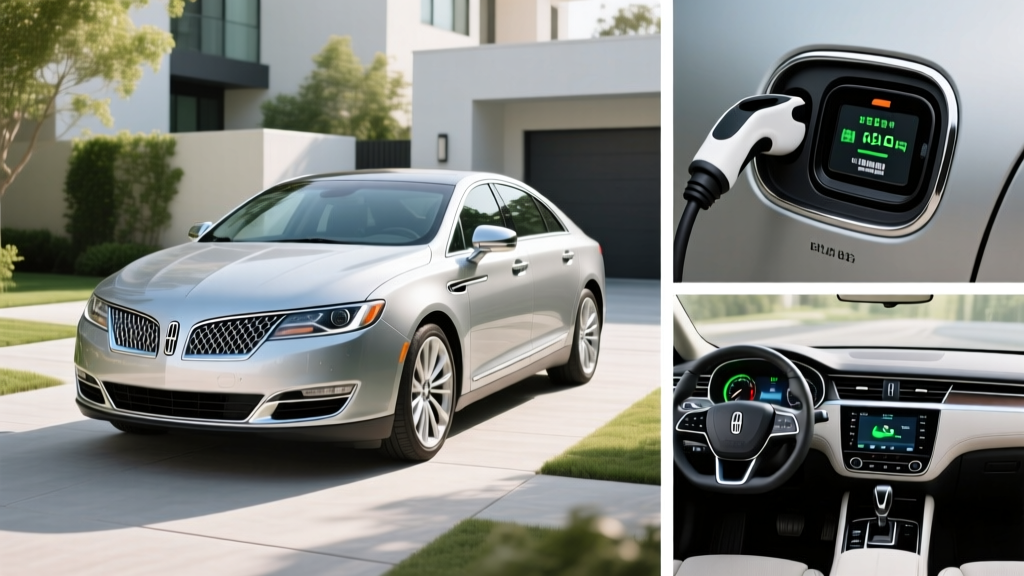
The 2012 Lincoln MKZ Hybrid was Ford's first luxury-branded full hybrid sedan, sharing its powertrain with the Ford Fusion Hybrid but wrapping it in Lincoln's premium interior. More than a decade later, it remains a compelling used-car buy for drivers who want hybrid fuel economy without the plug-in lifestyle change. With an EPA-rated 41 MPG combined, the MKZ Hybrid still outperforms most conventional sedans in city driving, and its proven NiMH battery pack has demonstrated strong longevity in real-world ownership.
This guide breaks down everything a 2026 used-car shopper needs to know: real-world MPG, battery health expectations, replacement costs, and whether this first-generation MKZ Hybrid still makes sense compared to modern hybrids, PHEVs, and full EVs.
HEV vs. PHEV: What the 2012 MKZ Hybrid Actually Is
The 2012 MKZ Hybrid is a conventional hybrid electric vehicle (HEV), not a plug-in hybrid. This distinction matters for ownership expectations:
| Feature | HEV (2012 MKZ Hybrid) | PHEV (e.g., modern Lincoln Corsair Grand Touring) |
|---|---|---|
| Plug-in charging | No — never plug in | Yes — 120V or 240V outlet |
| Electric-only range | ~1 mile at low speed | 20–30 miles typical |
| Battery size | 1.4 kWh (NiMH) | 14–19 kWh (Li-ion) |
| Charging infrastructure needed | None — gas station only | Home Level 2 recommended |
| Federal tax credit (new) | None | Up to $7,500 under §30D (if eligible) |
| Regenerative braking | Yes — recharges battery | Yes — recharges battery |
The MKZ Hybrid's 1.4 kWh nickel-metal hydride (NiMH) battery is recharged exclusively through regenerative braking and the gasoline engine. You never plug it in. The electric motor assists the gas engine during acceleration and can propel the car solo at very low speeds (typically under 25 mph for short distances), but this is not a vehicle designed for electric-only commuting.
Fuel Economy: EPA Ratings vs. Real-World MPG
The 2012 MKZ Hybrid carries one of the best EPA fuel economy ratings of any luxury sedan from its era. Here's the official breakdown from fueleconomy.gov:
| Driving Condition | EPA MPG |
|---|---|
| City | 41 MPG |
| Highway | 36 MPG |
| Combined | 39 MPG |
Real-world expectations: Like most conventional hybrids, the MKZ Hybrid tends to exceed its EPA city rating in stop-and-go traffic, where regenerative braking and electric-motor assist do the most work. Many owners report 42–45 MPG in urban driving. Highway driving is a different story: at sustained 70–75 mph speeds, expect 33–36 MPG, as the gasoline engine carries the full load and aerodynamic drag increases. Cold weather (below 35°F) can drop combined MPG by 3–5 MPG due to increased engine warm-up time and reduced battery efficiency.
With a 16.5-gallon fuel tank, real-world total range typically falls between 550 and 650 miles per fill-up depending on driving mix — competitive with modern hybrids like the Toyota Camry Hybrid.
Powertrain Specs: Engine, Motor, and Combined Output
The 2012 MKZ Hybrid uses Ford's second-generation hybrid synergy drive system, a well-proven architecture shared with the Ford Fusion Hybrid and Escape Hybrid of the same era.
| Specification | Detail |
|---|---|
| Gasoline engine | 2.5L Atkinson-cycle inline-4 |
| Engine horsepower | 156 HP @ 6,000 RPM |
| Engine torque | 136 lb-ft @ 2,250 RPM |
| Electric motor | Permanent-magnet AC synchronous |
| Motor horsepower | 105 HP (78 kW) |
| Combined net output | 191 HP |
| Transmission | eCVT (electronic continuously variable) |
| Battery type | NiMH (nickel-metal hydride) |
| Battery capacity | 1.4 kWh |
| 0–60 MPH | ~8.5 seconds |
| Drivetrain | Front-wheel drive |
| Curb weight | ~3,760 lbs |
The eCVT is not a belt-and-pulley CVT like those in some Nissan or Subaru models. It uses a planetary gearset that seamlessly blends engine and motor power — a design Toyota pioneered and Ford licensed. The result is smooth, drone-free acceleration with no fixed gear shifts and excellent reliability. The 191 combined HP is adequate for highway merging and passing, though the MKZ Hybrid is tuned for efficiency, not performance.
Battery Health, Warranty, and Replacement Costs
Original battery warranty: 8 years / 100,000 miles (10 years / 150,000 miles in CARB states including California, New York, Massachusetts, and others adopting California emissions standards).
2026 status: The original factory battery warranty has expired for all 2012 models. Battery health is now the used buyer's responsibility.
How long do these batteries actually last? The NiMH pack in the 2012 MKZ Hybrid has proven remarkably durable. Ford's hybrid system from this era has accumulated millions of fleet and taxi miles with original batteries exceeding 200,000 miles. NiMH chemistry degrades more gracefully than early lithium-ion — you'll see a gradual reduction in electric-assist frequency and a slight MPG drop (perhaps 2–4 MPG) rather than a sudden failure.
Battery replacement cost (2026 estimates):
- OEM new battery from Ford/Lincoln: $2,500–$3,500 (part) + $500–$800 labor = ~$3,000–$4,300 total
- Refurbished/remanufactured battery: $1,200–$2,000 installed from hybrid specialists like Green Bean Battery or Hybrid Battery Solutions
- Individual cell module replacement: $300–$600 if only one or two modules have failed (requires a shop with hybrid diagnostic capability)
Is this hybrid reliable? The 2012 MKZ Hybrid's powertrain is one of its strongest attributes. The 2.5L Atkinson-cycle engine is under-stressed and simple (no turbo, no direct injection complexity). The eCVT has no wear-prone clutches or belts. The main reliability concerns for used buyers are non-powertrain items: the SYNC infotainment system (known for freezing and rebooting), power steering (electric-assist pump issues on some Ford models of this era), and standard suspension wear. The hybrid system itself is a proven, low-maintenance design.
Does the 2012 MKZ Hybrid Qualify for Any Tax Credit?
No. The 2012 MKZ Hybrid is a conventional HEV, and federal tax credits under IRS §30D apply only to plug-in electric vehicles (BEVs and PHEVs) with sufficient battery capacity. Conventional hybrids have not qualified for the federal purchase credit since the original Toyota Prius and Honda Insight credits expired in the late 2000s.
For used buyers in 2026, the relevant credit is the Used Clean Vehicle Credit (IRS §25E), which offers up to $4,000 or 30% of the sale price (whichever is less) — but only for used BEVs and PHEVs. The MKZ Hybrid, as a non-plug-in HEV, does not qualify for this credit either.
Some states offer registration fee reductions or HOV lane access for hybrids, but these programs vary widely and many have sunset for older models. Check your state's DMV or energy office for current incentives.
Who Should Buy the 2012 MKZ Hybrid in 2026?
Pros
- 41 MPG EPA city — still excellent for a luxury sedan
- No plug-in required — zero lifestyle change from a gas car
- Proven, durable NiMH battery with low replacement cost
- Smooth eCVT with no traditional transmission maintenance
- Quiet, comfortable Lincoln interior with good ride quality
- Low used-car prices: typically $5,000–$9,000 depending on mileage
- Strong city MPG in real-world driving (often exceeds EPA)
Cons
- Outdated SYNC infotainment with no Apple CarPlay or Android Auto
- Highway MPG (36 EPA) trails some modern hybrids
- No electric-only commuting capability
- Modest 191 HP — adequate but not quick
- Original battery warranty expired — replacement is buyer's risk
- No federal or state purchase incentives
- Older safety tech — no automatic emergency braking or lane-keeping
MKZ Hybrid vs. PHEV vs. Full EV: Which Fits You?
Choosing between a conventional hybrid, a plug-in hybrid, and a full battery electric vehicle depends on your driving pattern, home charging access, and budget. Here's a practical decision framework:
Choose the 2012 MKZ Hybrid (HEV) if:
- You have no access to home or workplace charging
- Your budget is under $10,000 for a used vehicle
- You want maximum simplicity — just fill up at gas stations
- Your commute is mostly city driving where the hybrid system shines
- You drive fewer than 15,000 miles per year (fuel savings are moderate)
Choose a used PHEV (e.g., 2017–2020 Prius Prime, Fusion Energi) if:
- You can install a Level 2 home charger and your commute is under 25 miles
- You want electric-only daily driving but gas flexibility for road trips
- You want to reduce fuel costs significantly without full EV commitment
Choose a full EV (e.g., used Bolt EV, Model 3, Leaf) if:
- You have reliable home Level 2 charging
- Your daily driving is under 200 miles
- You want the lowest per-mile fuel cost (~$0.04–$0.06/mile on home electricity vs. $0.14–$0.18/mile for the MKZ Hybrid at 39 MPG and $3.50/gallon)
- You qualify for the used EV tax credit (§25E, up to $4,000)
Used-Buyer Checklist: What to Inspect Before Purchasing
If you're evaluating a 2012 MKZ Hybrid in 2026, focus your pre-purchase inspection on these hybrid-specific and model-specific items:
- Hybrid battery state of health (SoH): Ask a Ford dealer or hybrid specialist to run a battery diagnostic. Look for less than 15% capacity loss. A healthy pack should show consistent voltage across all modules.
- Regenerative braking feel: The brake pedal should transition smoothly between regen and friction braking. A jarring or inconsistent pedal feel may indicate a failing hybrid battery or brake actuator issue.
- EV mode functionality: At low speeds on a full charge, the car should enter EV mode (electric-only) briefly. If it never engages EV mode, the battery may be significantly degraded.
- SYNC system operation: Test Bluetooth pairing, navigation, and voice commands. Reboot loops are common and may require a module replacement ($200–$500).
- Maintenance records: The 2.5L engine uses a timing chain (no belt replacement needed), but coolant flushes on the hybrid inverter cooling system are important. Verify these were done.
- Rust inspection: Check undercarriage, wheel wells, and trunk lid edges — standard for any 13+ year-old vehicle.
Frequently Asked Questions
How many MPG does the 2012 MKZ Hybrid get?
The EPA rates the 2012 Lincoln MKZ Hybrid at 41 MPG city, 36 MPG highway, and 39 MPG combined. In real-world city driving, many owners report 42–45 MPG thanks to aggressive regenerative braking. Highway driving at 70+ MPH typically yields 33–36 MPG. Cold weather can reduce combined economy by 3–5 MPG.
Does the 2012 MKZ Hybrid need to be plugged in?
No. The 2012 MKZ Hybrid is a conventional HEV, not a plug-in hybrid. Its 1.4 kWh NiMH battery recharges through regenerative braking and the gasoline engine. You never plug it in — you only visit gas stations as you would with any conventional car.
How much does it cost to replace the hybrid battery?
A new OEM battery from Ford costs approximately $3,000–$4,300 installed. Refurbished batteries from hybrid specialists run $1,200–$2,000 installed. Individual module repairs can cost as little as $300–$600. The NiMH battery in this generation has proven highly durable, with many examples exceeding 150,000–200,000 miles on the original pack.
Is the 2012 MKZ Hybrid reliable?
The hybrid powertrain — 2.5L Atkinson-cycle engine, eCVT, and NiMH battery — is one of the most reliable setups Ford has ever produced. The engine is under-stressed, the eCVT has no wear-prone friction components, and the battery chemistry is proven over millions of fleet miles. Common non-powertrain issues include SYNC infotainment glitches and standard wear items. Overall, it's a strong reliability bet for a 13-year-old luxury sedan.
Does the 2012 MKZ Hybrid qualify for any tax credit?
No. As a conventional hybrid (HEV), the MKZ Hybrid does not qualify for the federal §30D new vehicle credit or the §25E used clean vehicle credit. Both programs require plug-in capability (BEV or PHEV). Check your state's energy office for any remaining hybrid-specific incentives, though most have expired for models of this age.
How does the 2012 MKZ Hybrid compare to a modern hybrid like the Toyota Camry Hybrid?
The current Toyota Camry Hybrid LE achieves an EPA 52 MPG combined — roughly 13 MPG better than the MKZ Hybrid. However, a used 2012 MKZ Hybrid costs $5,000–$9,000 versus $29,000+ for a new Camry Hybrid. If your budget is tight and your annual mileage is moderate (under 12,000 miles), the MKZ Hybrid's fuel savings over a gas-only sedan still pay for themselves, and the purchase price is a fraction of a new hybrid.
What is the electric-only range of the 2012 MKZ Hybrid?
Effectively zero for practical purposes. The MKZ Hybrid can creep along at under 25 MPH on electric power alone for roughly 0.5–1 mile on a fully charged battery, but the system is designed for electric assist, not electric-only driving. If electric-only commuting is your goal, you need a PHEV or a full BEV.
Sources: EPA fuel economy data via fueleconomy.gov; IRS clean vehicle credit rules via irs.gov; NHTSA vehicle safety data via nhtsa.gov.