Quick Verdict: A Luxury Hybrid That Prioritizes Comfort Over Thrills
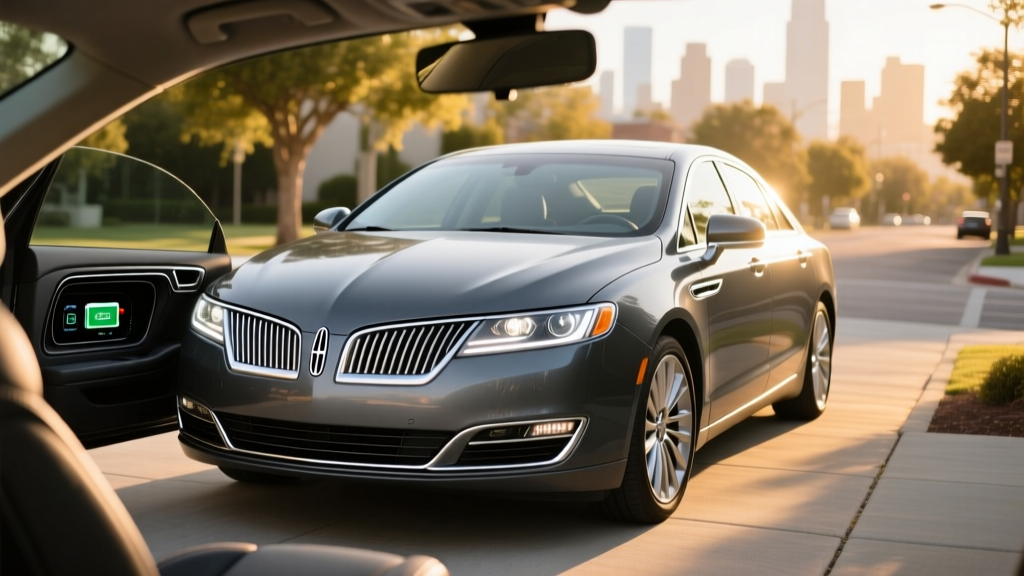
The 2012 Lincoln MKZ Hybrid was Ford's luxury-division answer to the Lexus HS 250h and the Toyota Camry Hybrid — a midsize premium sedan that traded sporting pretensions for whisper-quiet efficiency. Underneath the Lincoln badge sat the second-generation Ford Fusion Hybrid powertrain: a 2.5-liter Atkinson-cycle four-cylinder paired with an electric motor and a 1.4 kWh nickel-metal hydride (NiMH) battery pack. The result was an EPA-estimated 41 MPG combined, making it one of the most fuel-efficient luxury sedans of its era.
Now, well over a decade later, the 2012 MKZ Hybrid lives exclusively on the used market. For buyers considering one as a budget-friendly daily driver, the critical questions shift from sticker price to long-term ownership costs: How does real-world fuel economy hold up? What's the battery replacement cost? And does a 13-year-old hybrid still make financial sense versus a newer conventional car or a modern EV?
2012 Lincoln MKZ Hybrid: Full Specification Table
| Specification | 2012 Lincoln MKZ Hybrid |
|---|---|
| Powertrain Type | Conventional Hybrid (HEV) — no plug |
| Engine | 2.5L Atkinson-cycle inline-4 |
| Engine Horsepower | 156 hp @ 6,000 rpm |
| Electric Motor Output | 105 hp (combined system: 191 hp) |
| Transmission | eCVT (planetary gearset, no fixed gears) |
| Battery Chemistry | Nickel-Metal Hydride (NiMH) |
| Battery Capacity | 1.4 kWh (gross) |
| EPA MPG (City / Highway / Combined) | 41 / 36 / 41 |
| Fuel Tank Capacity | 16.5 gallons |
| Estimated Total Range | ~676 miles |
| 0–60 mph | ~8.7 seconds |
| Drivetrain | Front-wheel drive |
| Cargo Volume | 11.8 cu ft (reduced by battery) |
| Original MSRP (Base) | $35,455 |
| Current Used Price Range (2026) | $5,500 – $9,500 |
Fuel Economy: EPA vs. Real-World MPG
The EPA rates the 2012 MKZ Hybrid at 41 MPG city, 36 MPG highway, and 41 MPG combined — an unusual split where the city figure exceeds the highway number. This is characteristic of conventional hybrids: the electric motor handles low-speed driving where gasoline engines are least efficient, while highway cruising relies more heavily on the engine alone.
| Driving Scenario | EPA Estimate | Real-World Expectation |
|---|---|---|
| City (stop-and-go) | 41 MPG | 38–44 MPG |
| Highway (70+ mph) | 36 MPG | 33–37 MPG |
| Combined | 41 MPG | 36–42 MPG |
| Cold weather (below 30°F) | N/A | 32–37 MPG |
Why city MPG can exceed the EPA estimate: The 2012 MKZ Hybrid's regenerative braking system recovers kinetic energy during deceleration, and the electric motor can propel the car at low speeds (up to ~47 mph under light throttle) without engaging the gasoline engine. Drivers who anticipate stops and avoid hard acceleration routinely report 43–45 MPG in urban driving. On fueleconomy.gov, owner-reported averages cluster around 38–40 MPG combined — slightly below the EPA figure, largely because many owners do more highway driving than the EPA test cycle assumes.
Highway reality check: At sustained speeds above 70 mph, the MKZ Hybrid operates primarily on its gasoline engine. Aerodynamic drag and the relatively modest 191 combined horsepower mean you'll see 33–37 MPG on long interstate trips. This is still excellent for a 3,700-pound luxury sedan, but buyers expecting 41 MPG on the freeway will be disappointed.
Hybrid Powertrain Deep Dive: How It Works
The 2012 MKZ Hybrid uses Ford's second-generation full-hybrid system, which was co-developed with Aisin (a Toyota-affiliated supplier) and shares architectural DNA with Toyota's Hybrid Synergy Drive. Here's how the components break down:
- 2.5L Atkinson-cycle engine: Produces 156 hp and 136 lb-ft of torque. The Atkinson cycle delays intake valve closing, sacrificing low-end torque for greater thermal efficiency. This is why the engine feels underwhelming from a stop but sips fuel at cruise.
- Permanent-magnet electric motor: Adds 105 hp and serves as both a drive motor and a generator. It enables electric-only driving at low speeds and fills in torque gaps during acceleration.
- eCVT transmission: Not a belt-driven CVT like those in some Nissan or Subaru models. This is a planetary gearset that seamlessly blends engine and motor output. It's proven extremely reliable — there are no clutch packs or belts to wear out.
- 1.4 kWh NiMH battery: Mounted behind the rear seats (hence the reduced 11.8 cu-ft trunk). Nickel-metal hydride chemistry was the industry standard in 2012, before lithium-ion became dominant. NiMH is less energy-dense but thermally robust and tolerant of deep cycling.
The system can operate in three modes: EV mode (electric only, low speeds), hybrid mode (engine + motor blended), and regenerative braking mode (motor acts as generator to slow the car and recharge the battery). There is no plug — the battery maintains a roughly 40–60% state of charge at all times, managed by the vehicle's power control module.
Battery Lifespan, Warranty, and Replacement Cost
How long do these batteries actually last? The NiMH pack in the 2012 MKZ Hybrid has proven remarkably durable. Fleet data and owner forums (including FusionHybridForum and Lincoln MKZ owner groups) show that many original batteries are still functioning at 130,000–180,000+ miles with minimal capacity loss. NiMH chemistry degrades more gracefully than early lithium-ion — rather than a sudden cliff, you'll notice gradually reduced EV-mode driving time and slightly lower MPG as the pack ages.
Battery replacement cost in 2026:
- OEM new battery (Lincoln dealer): $3,000–$4,200 installed
- Refurbished/remanufactured battery: $1,500–$2,500 installed
- Used salvage battery: $800–$1,500 (risky — unknown remaining life)
- Individual cell replacement (specialist shops): $600–$1,200 if only a few cells are weak
For a used 2012 MKZ Hybrid valued at $5,500–$9,500, a full OEM battery replacement represents a significant percentage of the car's value. Most buyers should budget $1,500–$2,500 for a refurbished pack as a contingency if the original battery hasn't been replaced. Ask for a pre-purchase hybrid battery health check — many independent hybrid specialists can read the battery's state of health (SoH) through the OBD-II port.
Driving Experience and Ownership Practicalities
The 2012 MKZ Hybrid drives like what it fundamentally is: a well-insulated Ford Fusion Hybrid with Lincoln's premium touches. The ride is compliant and quiet, the seats are comfortable, and the cabin materials (soft-touch dash, available bridge-of-weald walnut trim, THX II audio) feel upscale for the price point. What it is not: a sports sedan. The 8.7-second 0–60 time is leisurely, the steering is numb, and the eCVT's drone under hard acceleration reminds you that efficiency is the priority.
Cargo compromise: The NiMH battery pack sits behind the rear seatback, reducing trunk volume to 11.8 cubic feet — down from 16.5 cu ft in the gasoline MKZ. The trunk pass-through is also narrow. If you regularly haul luggage or gear, this is a meaningful limitation.
Reliability beyond the battery: The 2.5L Atkinson-cycle engine is one of Ford's most reliable four-cylinder designs. There's no turbocharger, no direct injection (port injection only, so no carbon buildup issues), and the eCVT has no wear-prone friction components. Common non-hybrid complaints for this model year include:
- Power steering assist faults (electric power steering module)
- SYNC infotainment freezes (first-generation MyFord Touch was notoriously buggy)
- Interior trim rattles and door panel clips breaking with age
- Standard wear items: suspension bushings, brake calipers (though regenerative braking extends pad life significantly — 80,000+ miles on original pads is common)
Who Should Buy This Hybrid — And Who Shouldn't
- You drive 15,000+ miles/year, mostly in city/suburban traffic
- You want a quiet, comfortable sedan with low fuel costs
- You can't charge an EV at home (no plug needed)
- Your budget is $6,000–$9,000 and you want luxury touches
- You value proven, simple hybrid tech with wide mechanic support
- You want brisk acceleration or engaging handling
- You need a large trunk (11.8 cu ft is tight)
- You mostly drive highway miles (a modern diesel or efficient gas car may match the MPG)
- You want current safety tech (no automatic emergency braking, no lane-keeping assist)
- You want a federal tax credit (not available on used 2012 models)
Hybrid vs. PHEV vs. Full EV: Which Fits You?
If you're cross-shopping the 2012 MKZ Hybrid, you may also be considering a used PHEV or a budget EV. Here's the decision framework:
| Factor | 2012 MKZ Hybrid (HEV) | Used PHEV (e.g., 2017+ Lincoln MKZ PHEV) | Budget EV (e.g., 2018–2020 Leaf/Bolt) |
|---|---|---|---|
| Plug-in Required? | No | Yes (for EV miles) | Yes |
| Electric-Only Range | 0 miles (low-speed only) | ~21 miles (MKZ PHEV) | 150–259 miles |
| Home Charging Needed? | No | Recommended | Essential |
| Used Price Range (2026) | $5,500–$9,500 | $14,000–$22,000 | $10,000–$18,000 |
| Fuel/Energy Cost (per mile) | ~$0.09 (gas at $3.50/gal) | ~$0.04 electric / $0.09 gas | ~$0.04–$0.06 |
| Federal Tax Credit | None | None (used credit requires 2022+ model) | Used EV credit up to $4,000 (if eligible) |
Bottom line: The 2012 MKZ Hybrid makes sense if you want a simple, no-plug, low-maintenance daily driver and you prioritize low purchase price over cutting-edge tech. If you have home charging access and a higher budget, a used PHEV or EV will deliver lower per-mile energy costs and a smoother, quieter drive.
Tax Credits and Incentives: What's Available in 2026?
Here's the straightforward answer: the 2012 Lincoln MKZ Hybrid does not qualify for any federal tax credit.
The IRS §30D Clean Vehicle Credit applies only to new qualifying plug-in vehicles (EVs and PHEVs) with specific battery-sourcing and critical-mineral requirements. Conventional hybrids (HEVs) have never qualified for the federal credit. And even the Used Clean Vehicle Credit (up to $4,000 or 30% of sale price) applies only to used EVs and PHEVs — not conventional hybrids.
Some states may offer minimal incentives for hybrid vehicle registration or reduced registration fees, but these vary widely by jurisdiction. Check your state's energy office or DMV for current programs. For most buyers, the 2012 MKZ Hybrid's financial appeal comes entirely from its low used purchase price and strong fuel economy — not from government incentives.
Frequently Asked Questions
How many MPG does the 2012 Lincoln MKZ Hybrid actually get?
The EPA rates it at 41 city / 36 highway / 41 combined. In real-world driving, expect 36–42 MPG combined depending on your city-vs-highway mix. City drivers who use gentle acceleration and regenerative braking often exceed 41 MPG. Highway-heavy drivers at 75+ mph should expect 33–37 MPG. Cold weather reduces efficiency by roughly 10–15%.
Does the 2012 MKZ Hybrid plug in?
No. This is a conventional hybrid (HEV), not a plug-in hybrid (PHEV). The 1.4 kWh battery charges exclusively through regenerative braking and the gasoline engine. You never plug it in, and it has no meaningful electric-only driving range (the motor assists at low speeds but cannot sustain highway-speed driving on electricity alone).
Is the hybrid battery in a 2012 MKZ likely to need replacement?
At 13+ years old, battery health varies by vehicle. Many original NiMH packs are still functional at 150,000+ miles, but capacity degradation is expected. Budget $1,500–$2,500 for a refurbished replacement as a contingency. Get a pre-purchase hybrid battery health scan before buying. The eCVT transmission and 2.5L engine, by contrast, are extremely durable and rarely need major service.
What does a replacement hybrid battery cost?
A new OEM battery from a Lincoln dealer runs $3,000–$4,200 installed. A refurbished/remanufactured pack costs $1,500–$2,500 installed through a hybrid specialist. Individual cell replacement (if only a few cells are weak) can cost $600–$1,200. For a car worth $6,000–$9,000, a refurbished pack is usually the most economical choice.
How does the 2012 MKZ Hybrid compare to a Toyota Camry Hybrid of the same year?
The 2012 Camry Hybrid (43/39/41 EPA MPG) is slightly more efficient and has a larger trunk since Toyota packaged its battery more compactly. The MKZ Hybrid offers a quieter cabin, more premium materials, and Lincoln's standard features (THX audio, heated/cooled seats) that were optional on the Toyota. Reliability is comparable, though Toyota's hybrid system has a longer track record and wider independent mechanic support.
Is this hybrid reliable overall?
The powertrain (engine + eCVT + hybrid system) is one of the most reliable setups Ford has ever produced. The main risk areas are the aging NiMH battery, the first-generation SYNC/MyFord Touch infotainment system (prone to freezing), and standard 13-year-old wear items (suspension, steering components). With a healthy battery, annual maintenance costs are typically $400–$700 — lower than most gasoline-only luxury sedans of this age.