Quick Verdict: A Pioneering Hybrid Sedan Worth Considering on the Used Market
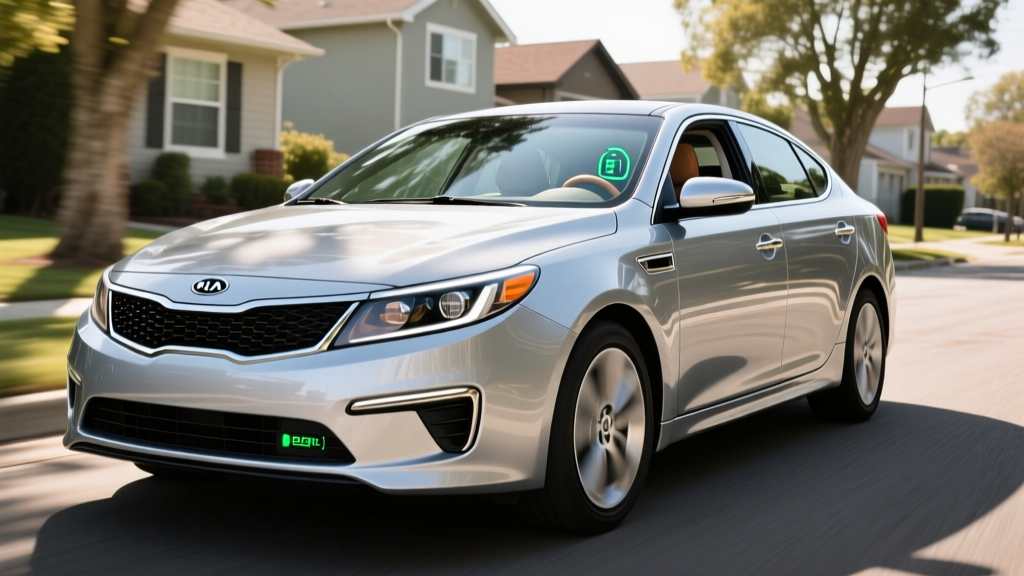
The 2012 Kia Optima EX Hybrid was Kia's first serious entry into the midsize hybrid sedan segment, competing directly with the Toyota Camry Hybrid and Hyundai Sonata Hybrid (its platform sibling). Built as a conventional hybrid electric vehicle (HEV) — not a plug-in — it requires no charging infrastructure and delivers an EPA-rated 35 MPG combined. For used-car shoppers in 2026 evaluating affordable hybrid sedans under $8,000, the Optima EX Hybrid offers solid fuel economy, a comfortable ride, and a straightforward powertrain. However, with the original 10-year/100,000-mile hybrid battery warranty now expired on every example, battery replacement risk is the central ownership question.
| Spec | Value |
|---|---|
| Powertrain Type | Conventional Hybrid (HEV) — no plug-in |
| Gas Engine | 2.4L inline-4 Atkinson cycle, 169 HP |
| Electric Motor | 35 kW (47 HP), permanent magnet |
| Combined System Output | 206 HP |
| Transmission | 6-speed automatic |
| Hybrid Battery | 1.4 kWh lithium-polymer (Li-Po) |
| EPA Fuel Economy | 35 MPG combined (34 city / 39 highway) |
| 0-60 MPH | ~8.5 seconds (estimated) |
| Original MSRP | $26,795 (EX Hybrid trim) |
| Typical 2026 Used Price | $5,000–$8,500 (depending on mileage/condition) |
EPA Fuel Economy vs. Real-World MPG: What Owners Actually Report
The EPA rated the 2012 Optima EX Hybrid at 34 MPG city, 39 MPG highway, and 35 MPG combined, per fueleconomy.gov. Notably, the highway figure exceeds the city figure — somewhat unusual for conventional hybrids, which typically shine in stop-and-go driving where regenerative braking recaptures the most energy.
| Driving Cycle | EPA Rating | Real-World Expectation |
|---|---|---|
| City | 34 MPG | 33–37 MPG (regen-heavy routes can exceed EPA) |
| Highway | 39 MPG | 35–38 MPG (sustained 70+ MPH reduces electric assist) |
| Combined | 35 MPG | 33–36 MPG (varies with driving style and climate) |
In real-world ownership, Fuelly data and owner forums show most drivers averaging between 32 and 37 MPG combined. City-dominant commutes with frequent stops tend to push the number toward the upper end of that range, while aggressive highway driving and cold-weather operation (which keeps the gas engine running longer for cabin heat) pull it toward the lower end. The Atkinson-cycle 2.4L engine is efficient but not class-leading — the contemporary Toyota Camry Hybrid achieved 41 MPG combined thanks to its more advanced synergy-drive system.
HEV vs. PHEV vs. EV: Understanding What the Optima Hybrid Is — and Isn't
A common source of confusion among used-car shoppers is whether this car needs to be plugged in. It does not. The 2012 Optima EX Hybrid is a conventional hybrid (HEV), meaning its small 1.4 kWh lithium-polymer battery is charged entirely through regenerative braking and the gasoline engine. You fuel it like any other car and never interact with a charging cable.
| Feature | HEV (e.g., Optima Hybrid) | PHEV (e.g., Toyota RAV4 Prime) | BEV (e.g., Tesla Model 3) |
|---|---|---|---|
| Plug-in Required? | No | Yes (for EV range) | Yes (always) |
| Electric-Only Range | ~1 mile at low speed | 25–42 miles typical | 250–350+ miles |
| Gas Engine? | Yes (primary) | Yes (backup) | No |
| Home Charging Needed? | No | Recommended | Essential |
| Federal Tax Credit (New) | None | Up to $7,500 (§30D) | Up to $7,500 (§30D) |
| Best For | No charging access, simple ownership | Short commute + road trips | Home charging + low running cost |
The Optima Hybrid's electric motor can propel the car at very low speeds (under ~25 MPH) for brief distances, but it cannot sustain electric-only driving in any meaningful way. If you want plug-in electric range, you'd need to look at a PHEV like the later Kia Optima Plug-In Hybrid (introduced for 2017, offering 27 miles of EV range) or a full BEV.
Powertrain Deep Dive: How the 206-HP Hybrid System Works
Kia paired a 2.4-liter Atkinson-cycle four-cylinder engine (169 HP, 156 lb-ft torque) with a 35 kW (47 HP) electric motor integrated into the transmission housing. Combined system output is rated at 206 HP. Unlike Toyota's planetary-gear hybrid synergy drive, Kia used a parallel-hybrid architecture with a conventional 6-speed automatic transmission — giving the Optima Hybrid a more traditional driving feel with perceptible gear shifts, rather than the CVT-like drone of a Prius or Camry Hybrid.
The 1.4 kWh lithium-polymer battery pack is mounted behind the rear seats, which reduces trunk capacity from 15.4 cubic feet (gas Optima) to 9.9 cubic feet. This is a meaningful trade-off for cargo-hauling needs and something buyers should measure against their lifestyle. The battery uses Li-Po chemistry, which was relatively advanced for 2012 and offers good energy density, but it's also a chemistry that's sensitive to deep discharge and extreme heat — relevant factors for a battery now 14 years old.
Hybrid Battery Health, Warranty Status, and Replacement Costs in 2026
This is the single most important section for any prospective buyer of a 2012 Optima Hybrid in 2026.
Original Hybrid Battery Warranty
Kia's original hybrid battery warranty covered 10 years or 100,000 miles (whichever came first) for the first owner. For subsequent owners, coverage dropped to 5 years or 60,000 miles. As of 2026, every 2012 Optima Hybrid is fully out of factory hybrid battery warranty, regardless of mileage or ownership history.
The lithium-polymer pack in this generation Optima has a mixed reliability record. While many examples have surpassed 150,000 miles without battery issues, the pack's age (14 years as of 2026) means degradation is a realistic concern. Signs of a failing hybrid battery include:
- Noticeable drop in fuel economy (5+ MPG below historical average)
- The gas engine running more frequently and at higher RPMs
- Dashboard warning lights (check engine or hybrid system warning)
- Reduced regenerative braking feel
Battery replacement cost: A new OEM hybrid battery pack from Kia runs approximately $2,500–$3,500 for the part, with labor adding $500–$1,000 depending on the shop. Refurbished or aftermarket packs are available for $1,500–$2,200 installed. Given that a clean 2012 Optima Hybrid trades for $5,000–$8,500 in 2026, a battery replacement can represent 25–50% of the car's value — a critical factor in the purchase decision.
Recommendation: Before purchasing, have the hybrid battery's state of health (SoH) checked using an OBD-II scanner with hybrid battery diagnostics (such as a ScanGauge or dealer-level tool). A pack showing more than 20% capacity loss is approaching replacement territory and should factor into price negotiations.
Reliability, Safety, and Ownership Costs
The 2012 Optima Hybrid received a 5-star overall safety rating from NHTSA and earned Top Safety Pick from the IIHS, giving it solid crash-test credentials for its era. In terms of mechanical reliability, the conventional powertrain (engine + 6-speed automatic) is well-understood and generally robust, with standard maintenance costs comparable to any midsize sedan.
Pros
- No plug-in charging required — works for apartment dwellers
- 35 MPG combined saves ~$600–$800/year vs. a 25 MPG gas sedan at 2026 fuel prices
- Comfortable ride quality and quiet cabin for the price
- Strong safety ratings (5-star NHTSA, IIHS Top Safety Pick)
- Conventional 6-speed auto avoids CVT drone
Cons
- Trunk space reduced to 9.9 cu ft by battery placement
- Hybrid battery out of warranty — replacement risk ($2,500–$4,500)
- Less refined hybrid system than Toyota's — more engine noise under load
- MPG trails Camry Hybrid (41 combined) and Sonata Hybrid (37 combined)
- Hybrid-specific parts availability declining as model ages
Tax Credits and Incentives: What Applies in 2026?
As a conventional hybrid (HEV), the 2012 Kia Optima EX Hybrid does not qualify for the federal §30D clean vehicle tax credit — that credit applies only to plug-in electric vehicles (PHEVs and BEVs) with sufficient battery capacity. There is also no federal used-EV credit (§25E) available for HEVs. Some states historically offered hybrid purchase rebates, but nearly all have sunset or redirected funds toward plug-in vehicles.
For used buyers, the financial equation is straightforward: you're paying market price ($5,000–$8,500) with no incentive offsets, and the fuel savings versus a comparable gas-only sedan will recoup the hybrid premium over roughly 2–4 years depending on annual mileage.
Who Should Buy This Hybrid — and Who Shouldn't
Choose the 2012 Optima EX Hybrid If:
- You lack home or workplace charging access and can't consider a PHEV or BEV
- Your budget is under $8,500 and you want a fuel-efficient midsize sedan
- Your commute is city-heavy with frequent stops (where regen braking shines)
- You accept the battery-replacement risk as a known cost of ownership
Look Elsewhere If:
- You need cargo space — the 9.9 cu ft trunk is limiting for families
- You want maximum MPG — the Camry Hybrid (41 combined) is more efficient
- You have charging access — a used BEV (e.g., 2018+ Leaf or Bolt) offers far lower per-mile fuel costs
- You plan to keep the car 5+ years — the aging battery is a looming expense
Frequently Asked Questions
How many MPG does the 2012 Kia Optima EX Hybrid get?
The EPA rates it at 34 MPG city, 39 MPG highway, and 35 MPG combined. Real-world owners typically see 32–37 MPG combined depending on driving style, route, and climate. City-heavy driving with frequent stops tends to yield the best results thanks to regenerative braking.
Does the 2012 Optima Hybrid need to be plugged in?
No. This is a conventional hybrid (HEV), not a plug-in hybrid (PHEV). The battery charges itself through regenerative braking and the gas engine. You never plug it in — just fill it with gasoline like a regular car.
Is the 2012 Optima Hybrid reliable, and what does battery replacement cost?
The gas engine and transmission are generally reliable. The main risk is the hybrid battery pack, which is now 14 years old and out of warranty. OEM replacement costs $3,000–$4,500 installed; refurbished packs run $1,500–$2,200. Have the battery's state of health checked before purchase.
Does the 2012 Kia Optima Hybrid qualify for any tax credit?
No. As a conventional hybrid (HEV), it does not qualify for the federal §30D new-vehicle credit or the §25E used-EV credit. Those incentives are reserved for plug-in vehicles (PHEVs and BEVs). Check IRS.gov for current eligibility rules.
Hybrid vs. PHEV vs. EV — which is right for me?
If you have no charging access, an HEV like the Optima Hybrid is your best electrified option. If you can charge at home and have a short commute, a PHEV gives you 25–40 miles of electric driving with a gas engine for longer trips. If you have reliable home charging and want the lowest running costs, a full BEV eliminates gasoline entirely. Each step up the electrification ladder requires more charging infrastructure but delivers greater per-mile savings.
How does the Optima Hybrid compare to the Toyota Camry Hybrid of the same era?
The 2012 Camry Hybrid achieved 41 MPG combined versus the Optima's 35 MPG — a meaningful gap over years of ownership. The Camry also uses Toyota's proven synergy-drive system with a longer reliability track record. However, the Optima offers a more traditional driving feel with its 6-speed automatic and typically trades for less on the used market.