Quick Verdict: The Sport-Hybrid That Was Ahead of Its Time
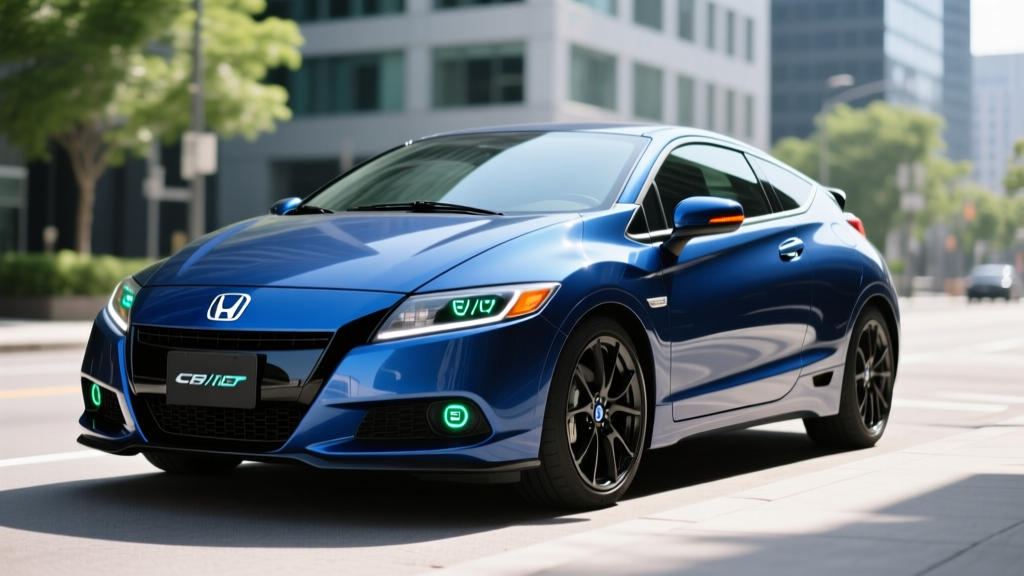
The 2012 Honda CR-Z hybrid occupies a strange space in Honda's electrification history. Marketed as a "sport hybrid," it paired a 1.5-liter four-cylinder engine with Honda's Integrated Motor Assist (IMA) system to deliver a combined 130 horsepower in a lightweight, two-seat coupe. It never aimed to be a Prius rival — instead, Honda targeted driving enthusiasts who wanted respectable fuel economy without sacrificing the engagement of a manual transmission. Over a decade later, the CR-Z remains one of the only hybrid vehicles ever offered with a six-speed manual gearbox, and its used-market appeal has only grown.
But buying a 12-year-old hybrid in 2026 raises legitimate questions: How well does the IMA battery hold up? What does replacement cost? And does the real-world MPG justify the trade-offs of a two-seat coupe with modest cargo space? This guide covers the exact numbers you need before signing on a used CR-Z.
HEV vs PHEV: Where the CR-Z Fits
The 2012 Honda CR-Z is a conventional hybrid (HEV). It does not plug in. The small nickel-metal hydride (NiMH) battery charges exclusively through regenerative braking and the gasoline engine. You cannot drive it on electric power alone for meaningful distances — the IMA system assists the engine during acceleration but cannot propel the car independently at any sustained speed.
This is fundamentally different from a plug-in hybrid (PHEV) like the Toyota RAV4 Prime or Chrysler Pacifica Hybrid, which carries a larger lithium-ion battery (typically 10–20 kWh), offers 20–45 miles of electric-only range, and recharges via a wall outlet or public charger. The CR-Z has no EV mode, no charging port, and no electric-only range.
If you're comparing the CR-Z against modern alternatives, here's the quick framework:
- HEV (like the CR-Z): No plug, no EV range, best for city driving where regen braking shines. Simpler ownership — just fill up with gas.
- PHEV: Plugs in, 20–45 mi EV range for daily commutes, gas engine for longer trips. Requires home or workplace charging access to maximize value.
- BEV (full EV): No gas engine, 200–400+ mi range, lowest running costs but requires reliable charging infrastructure.
Fuel Economy: EPA Ratings vs Real-World MPG
The 2012 CR-Z was offered with two transmissions, and the EPA ratings differ meaningfully between them. Here are the official figures from fueleconomy.gov:
| Transmission | City MPG | Highway MPG | Combined MPG |
|---|---|---|---|
| 6-Speed Manual | 31 | 39 | 34 |
| CVT (Automatic) | 35 | 39 | 37 |
The CVT-equipped CR-Z achieves 37 MPG combined — competitive with compact hybrids of its era, though it falls well short of the Toyota Prius's 50+ MPG combined. The manual version sacrifices 3 MPG combined, a trade-off most enthusiasts willingly accept.
Real-World MPG Expectations
Honda's IMA system is mild-hybrid architecture — the electric motor assists the engine rather than operating independently. This means the CR-Z doesn't see the dramatic city-MPG advantage that full-hybrid systems (like Toyota's Hybrid Synergy Drive) deliver. In practice:
- City driving: Expect 32–36 MPG (CVT). The IMA assist helps during stop-and-go, but the engine still does most of the work.
- Highway cruising: 38–42 MPG is achievable at 65–70 mph. The aerodynamic coupe shape helps here.
- Cold weather penalty: Expect a 5–10% drop in MPG during winter months, primarily from increased engine idling and reduced battery efficiency.
- Aggressive driving: Push the CR-Z hard and the 1.5L engine drinks fuel quickly — some owners report 26–28 MPG with spirited driving.
One advantage: the CR-Z's 10.6-gallon fuel tank yields roughly 350–390 miles of total range (CVT), meaning fewer fill-ups than a typical compact car despite the smaller tank.
Powertrain and Performance Specs
| Specification | Detail |
|---|---|
| Engine | 1.5L inline-4 i-VTEC |
| Engine HP | 110 hp @ 6,000 rpm |
| Electric Motor (IMA) | 15 kW (20 hp), 58 lb-ft torque |
| Combined System Output | 130 hp @ 6,000 rpm |
| Combined Torque | 140 lb-ft (MT) / 127 lb-ft (CVT) |
| Battery Type | Nickel-Metal Hydride (NiMH) |
| Battery Capacity | 0.5 kWh (nominal) |
| Transmission | 6-speed manual or CVT |
| 0–60 mph | ~9.2 seconds (estimated) |
| Curb Weight | 2,668–2,700 lbs |
| Drivetrain | Front-wheel drive |
The 0.5 kWh NiMH battery is tiny by modern standards — a 2026 PHEV typically carries 15–20 kWh. But the IMA system was never designed for electric-only propulsion. The motor fills torque gaps during acceleration, smooths out the auto-stop/start system, and recovers energy during braking. It's a fuel-economy assist, not a performance hybrid system.
The CR-Z's 3-mode drive system (Sport, Normal, Econ) alters throttle response, steering weight, and IMA assist levels. Sport mode sharpens the electric assist delivery and makes the car feel noticeably more responsive, though 130 hp in a 2,700-lb car was never going to set performance records.
Battery Lifespan, Warranty, and Replacement Cost
Original IMA Battery Warranty: Honda covered the CR-Z's IMA battery for 8 years / 80,000 miles (10 years / 150,000 miles in CARB states including California, New York, Massachusetts, and others). By 2026, all original factory warranties have expired unless an extended warranty was purchased.
How Long Does the CR-Z IMA Battery Last?
The NiMH battery in the CR-Z shares technology with the earlier Honda Insight and Civic Hybrid, both of which developed reputations for premature battery failures. However, the CR-Z's IMA system is a refined version, and owner reports suggest better longevity:
- Typical lifespan: 10–15 years or 120,000–180,000 miles before significant capacity loss.
- Failure pattern: NiMH batteries degrade gradually rather than failing catastrophically. You'll notice reduced IMA assist, more frequent engine cycling, and a 2–4 MPG drop before the battery triggers a warning light.
- Common failure trigger: Prolonged storage without driving (the NiMH pack self-discharges and can develop cell imbalance if left unused for weeks).
IMA Battery Replacement Cost
If you're buying a used 2012 CR-Z in 2026, budget for a potential battery replacement:
- OEM Honda replacement: $2,000–$3,000 (parts + dealer labor)
- Aftermarket/remanufactured pack: $1,200–$1,800 installed at an independent hybrid specialist
- Cell-level rebuild: $500–$900 if you find a shop that replaces individual NiMH cells within the pack
Before purchasing, request an IMA battery health check. Many Honda dealerships can read the battery's State of Health (SoH) through the OBD-II system. A pack showing above 70% capacity is generally acceptable for a used purchase.
Pricing and Tax Credit Eligibility
The 2012 Honda CR-Z is long out of production, so new-vehicle tax credits don't apply. Here's the current market picture:
Used Market Pricing (2026)
- 2012 CR-Z (base, manual, 100k–130k miles): $6,500–$9,000
- 2012 CR-Z (EX, CVT, under 80k miles): $9,000–$12,500
- Low-mileage examples (under 50k miles): $12,000–$16,000 — collector interest is growing
Tax Credits and Incentives
The 2012 CR-Z does not qualify for the federal §30D new clean vehicle credit (up to $7,500), which applies only to new vehicles. It also does not qualify for the Used Clean Vehicle Credit (up to $4,000 under §25E), because that credit requires the vehicle to be a qualified plug-in electric vehicle or fuel cell vehicle — and the CR-Z is a conventional HEV with no plug.
No federal or state incentives currently apply to conventional hybrid purchases, new or used. Your cost basis is the purchase price plus any registration fees, with no credit offset.
Who Should Buy the 2012 CR-Z — and Who Shouldn't
Pros
- Only hybrid ever sold with a 6-speed manual transmission
- Lightweight (2,668 lbs) and genuinely engaging to drive
- 37 MPG combined (CVT) with no plug-in requirement
- Distinctive design — aging well as a modern classic
- Low running costs: small engine, affordable tires, simple maintenance
- Growing enthusiast community and aftermarket support
Cons
- Only two seats — impractical for families or carpooling
- Modest cargo space (21.5 cu ft with seats folded)
- 130 hp feels underpowered on highway on-ramps
- NiMH battery replacement is a $1,500–$3,000 liability
- No electric-only mode, no plug, no modern PHEV convenience
- Rear visibility is poor due to the split rear window design
Choose the CR-Z If:
- You want a fun, lightweight coupe and don't need back seats
- You prefer a manual transmission and value driver engagement over straight-line speed
- You want hybrid fuel economy without the complexity of plug-in charging
- You're looking for a future-classic Honda at an accessible price point
Look Elsewhere If:
- You need practicality — a used Prius, Prius V, or Insight offers more space and better MPG
- You want electric-only commuting — consider a used PHEV like the Chevrolet Volt or Toyota Prius Prime
- You want the lowest possible fuel cost — a used BEV (Nissan Leaf, Chevy Bolt) eliminates gas entirely if you have home charging
- You're risk-averse about battery replacement — newer hybrids have more remaining factory warranty
Frequently Asked Questions
How many MPG does the 2012 Honda CR-Z hybrid get?
The EPA rates the CVT-equipped 2012 CR-Z at 35 city / 39 highway / 37 combined MPG. The manual transmission version is rated at 31 city / 39 highway / 34 combined. Real-world results typically fall within 2–3 MPG of these figures, with cold weather and aggressive driving reducing economy by 5–15%.
Is the 2012 Honda CR-Z a plug-in hybrid?
No. The CR-Z is a conventional hybrid (HEV). It has no charging port and no electric-only driving mode. The IMA battery recharges solely through regenerative braking and the gasoline engine. You fuel it like any other car — there is nothing to plug in.
How much does it cost to replace the CR-Z hybrid battery?
An OEM Honda IMA battery replacement runs $2,000–$3,000 at a dealership. Aftermarket or remanufactured packs cost $1,200–$1,800 installed. Individual cell rebuilds are available for $500–$900 at specialty shops. Most CR-Z batteries last 10–15 years, so a 2012 model in 2026 may already be approaching replacement territory.
Is the 2012 CR-Z reliable overall?
The CR-Z's 1.5L i-VTEC engine is proven and durable — it shares architecture with Honda's long-running L-series engines. The main reliability concern is the IMA NiMH battery pack, which can degrade after 120,000+ miles. The manual transmission is robust; the CVT has a solid track record but requires fluid changes per Honda's schedule. Overall, it's one of the more reliable hybrids of its era, provided the battery is healthy.
Does the 2012 CR-Z qualify for any tax credit?
No. The CR-Z is a conventional hybrid with no plug, so it does not qualify for the federal §30D new vehicle credit or the §25E used clean vehicle credit. Those credits require plug-in electric or fuel cell vehicles. No current federal incentives apply to conventional hybrid purchases.
Should I buy a used CR-Z or a newer hybrid?
It depends on priorities. The CR-Z offers a unique driving experience (manual transmission, lightweight coupe) that no current hybrid replicates. But if you prioritize fuel economy, a used 2017+ Prius delivers 52+ MPG combined with more cargo space. If you want electric-only commuting, a used PHEV or BEV makes more financial sense. Buy the CR-Z because you want the CR-Z — not because it's the most rational hybrid choice.