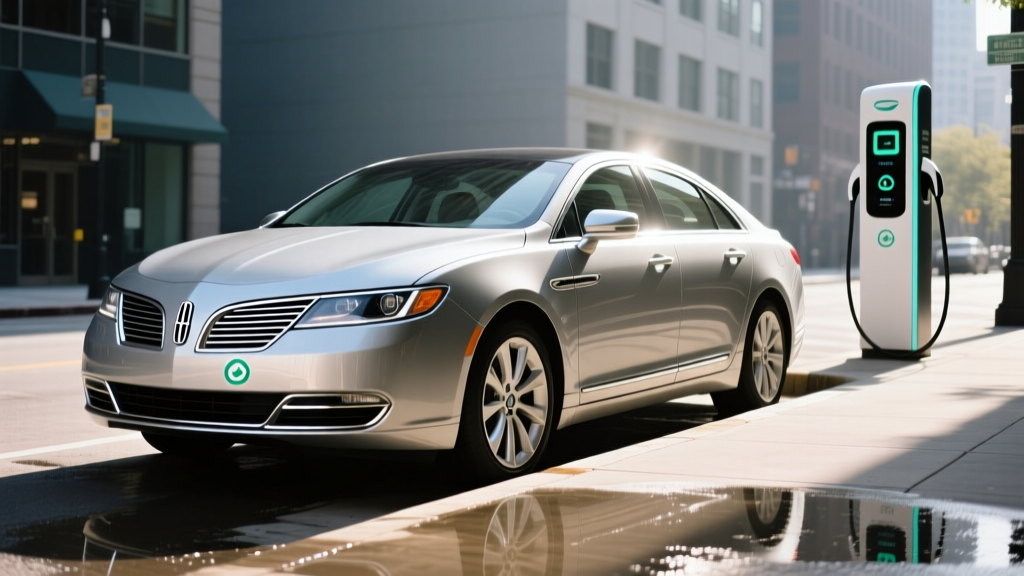
The 2011 Lincoln MKZ Hybrid was Lincoln's first hybrid sedan — a luxury-branded sibling to the second-generation Ford Fusion Hybrid, sharing its powertrain but wrapping it in a quieter cabin with more standard features. Over a decade later, it remains a common sight on the used market, and its fuel economy figures still hold up against modern non-plug-in hybrids. This guide breaks down what you need to know about real-world MPG, battery longevity, maintenance costs, and whether this aging HEV still makes financial sense in 2026.
2011 Lincoln MKZ Hybrid Powertrain and Specifications
The MKZ Hybrid pairs a 2.5-liter Atkinson-cycle four-cylinder engine with an electric motor integrated into a power-split continuously variable transmission (eCVT). This is the same proven Toyota-derived hybrid architecture Ford used across its hybrid lineup of the era.
| Specification | Value |
|---|---|
| Engine | 2.5L Atkinson-cycle I4 |
| Engine Power | 156 hp @ 6,000 rpm |
| Electric Motor | AC synchronous permanent-magnet |
| Combined System Output | 191 hp |
| Transmission | eCVT (power-split device) |
| Traction Battery | 1.4 kWh NiMH (nickel-metal hydride) |
| Drivetrain | Front-wheel drive |
| 0–60 mph | ~8.6 seconds |
| Curb Weight | ~3,752 lbs |
| Fuel Tank | 16.5 gallons |
| Total Driving Range | ~676 miles (EPA combined) |
The 1.4 kWh NiMH battery is small by modern standards — roughly 1/50th the capacity of a current long-range EV. It's not designed for sustained electric-only driving. The system uses it for stop-start assist, low-speed electric creep (under ~1 mph in certain conditions), and regenerative energy capture during braking. The engine shuts off at stops and during gentle deceleration, which is where the majority of fuel savings come from.
Fuel Economy: EPA Ratings vs. Real-World MPG
| Cycle | EPA Rating |
|---|---|
| City | 41 MPG |
| Highway | 36 MPG |
| Combined | 39 MPG |
Source: fueleconomy.gov — 2011 Lincoln MKZ Hybrid
How many MPG does the 2011 MKZ Hybrid get? The short answer: expect 37–42 MPG in typical mixed driving, which translates to roughly 610–690 miles per tank. For a luxury sedan from 2011, that remains genuinely impressive — it beats many 2026 non-hybrid compact cars.
HEV vs. PHEV vs. EV: Where the MKZ Hybrid Fits
If you're shopping for an electrified vehicle and considering this MKZ, it helps to understand what it does and doesn't offer compared to modern alternatives.
| Factor | HEV (this MKZ) | PHEV (e.g., 2026 RAV4 Prime) | BEV (e.g., 2026 Ioniq 5) |
|---|---|---|---|
| Plug required? | No | Yes (optional) | Yes (required) |
| Electric-only range | <1 mile | 35–42 miles | 250–320 miles |
| Gas needed? | Yes, always | Yes, for long trips | No |
| Federal tax credit | None | Up to $7,500 (§30D) | Up to $7,500 (§30D) |
| Home charging install | Not needed | Recommended (Level 2) | Required (Level 2) |
| Used purchase price (2026) | $6,000–$11,000 | $25,000–$40,000 | $18,000–$45,000 |
The 2011 MKZ Hybrid makes sense if you want maximum simplicity: no plug, no charging infrastructure dependency, no range planning, and a low purchase price on the used market. You sacrifice the ability to drive on electricity alone and any federal incentive eligibility, but you gain a vehicle that works exactly like a gas car — just one that sips fuel.
Hybrid Battery Longevity, Warranty, and Replacement Cost
This is the single biggest concern for any used hybrid buyer: what happens when the traction battery fails?
Battery Lifespan Data
The NiMH chemistry in this generation is well-understood. Nickel-metal hydride batteries are more tolerant of temperature extremes and deep cycling than early lithium-ion cells, but they do degrade with age and heat exposure. Based on fleet data and owner reports for the Ford/Lincoln hybrid system of this era:
- Typical lifespan: 150,000–200,000 miles or 12–18 years, whichever comes first
- Failure mode: Gradual capacity loss reducing MPG by 2–5 MPG over time, rather than sudden failure
- Cell-level repair: Some independent hybrid shops can replace individual failed modules within the pack for $500–$1,200, rather than replacing the entire assembly
- Full pack replacement (OEM): $2,500–$3,800 installed at a dealership
- Remanufactured pack: $1,500–$2,200 installed at independent hybrid specialists
Is the 2011 MKZ Hybrid reliable? The powertrain itself — the Atkinson-cycle engine and eCVT — is among the most durable drivetrain configurations ever mass-produced. The eCVT has no traditional belts, clutches, or torque converter; it's a planetary gearset with very few wear components. The main reliability risks are age-related: deteriorating rubber hoses, corroded electrical connectors, worn suspension components, and the 12V auxiliary battery (a standard lead-acid unit, not the traction battery). The hybrid system itself is remarkably robust.
What to Check Before Buying a Used 2011 MKZ Hybrid
- Traction battery health: Ask for a hybrid battery diagnostic report from a Ford/Lincoln dealer or a hybrid specialist. Look for voltage delta between modules — a spread greater than 0.3V under load suggests aging cells.
- Mileage vs. battery age: A 120,000-mile example that was mostly highway-driven may have a healthier battery than a 70,000-mile car that sat for months at a time. NiMH cells degrade from calendar age and deep discharge cycles, not just mileage.
- Brake wear: Regenerative braking reduces friction brake usage significantly. Original brake pads at 80,000+ miles are common. However, seized calipers from disuse are a known issue — check for uneven pad wear and rotor corrosion.
- Coolant system: The hybrid system has a separate inverter coolant loop. Verify it has been serviced; neglected inverter coolant can lead to expensive inverter failure ($1,500–$2,500).
- A/C compressor: The electric A/C compressor is unique to the hybrid and costly to replace ($800–$1,400). Confirm cold A/C output during a test drive.
Ownership Costs and Value Proposition in 2026
The 2011 MKZ Hybrid trades on a simple value proposition: luxury-car comfort at economy-car fuel consumption, with a used-market price that has fully depreciated.
| Cost Category | Estimated Annual Cost |
|---|---|
| Fuel (39 MPG avg, $3.40/gal regular) | ~$1,308 |
| Insurance (national avg, clean record) | $900–$1,400 |
| Maintenance (oil, filters, tires, brakes) | $600–$1,000 |
| Hybrid battery reserve (amortized) | $200–$400 |
| Total estimated annual | $3,008–$4,108 |
Compare this to a gas-only 2011 luxury sedan averaging 22 MPG combined: fuel alone would cost roughly $2,318/year — nearly $1,000 more annually just in gasoline. Over five years of ownership, the MKZ Hybrid saves approximately $4,500–$5,000 in fuel versus a comparable V6 sedan, which largely offsets any eventual battery replacement cost.
Tax Credit Eligibility
Does the 2011 Lincoln MKZ Hybrid qualify for any tax credit? No. Under current IRS §30D rules, the federal clean vehicle credit applies only to new plug-in electric vehicles (BEVs and PHEVs) meeting battery sourcing, MSRP cap, and buyer income requirements. Conventional hybrids like this MKZ do not qualify for the federal credit. Some states have offered hybrid incentives historically, but most have shifted their programs exclusively toward plug-in vehicles. Check your state's energy office or the AFDC state incentive database for any remaining local programs.
Driving Experience and What It's Like to Live With
The 2011 MKZ Hybrid drives like a well-insulated mid-size sedan with a strong emphasis on comfort. The eCVT produces no shift shock — acceleration is a smooth, continuous ramp. The transition between electric motor assist and engine power is nearly imperceptible in normal driving, though you will hear the 2.5L engine drone under hard acceleration (a characteristic of the Atkinson cycle and power-split device holding the engine at its optimal RPM regardless of vehicle speed).
Lincoln added active noise cancellation and extra sound deadening compared to the Fusion Hybrid, and it shows — this is a genuinely quiet car at cruise. The electric power steering is light and numb by modern standards, and the regenerative braking feel takes some adaptation: the brake pedal's initial travel engages regen before the friction brakes bite, creating a slightly nonlinear feel. Most drivers adapt within a few days.
Interior technology was competitive for 2011: SYNC infotainment, a 4.2-inch color LCD in the instrument cluster with hybrid-specific coaching displays (brake and acceleration efficiency gauges), and available THX-certified audio. By 2026 standards, the tech is dated — no Apple CarPlay, no Android Auto, no USB-C — but Bluetooth audio and hands-free calling still function.
Who Should Buy the 2011 MKZ Hybrid?
- You want a low-cost, fuel-efficient daily driver under $10,000
- You have no access to home or workplace charging (apartment, street parking)
- Your commute is city or suburban stop-and-go where hybrid efficiency shines
- You want luxury-car ride quality without luxury-car maintenance costs
- You plan to keep the car 3–5 years and can budget for a potential battery replacement
- You want electric-only driving or plug-in capability (consider a used PHEV like the Fusion Energi or Prius Prime)
- You mostly drive highway miles at 75+ mph (the hybrid advantage narrows significantly)
- You need modern ADAS features (no automatic emergency braking, no lane-keeping assist on this generation)
- You want federal or state EV incentive eligibility
Frequently Asked Questions
How many MPG does the 2011 Lincoln MKZ Hybrid get?
The EPA rates it at 41 city / 36 highway / 39 combined MPG. In real-world mixed driving, owners typically see 37–42 MPG combined. Highway-only driving at high speeds drops to 33–35 MPG, and cold weather can reduce figures by 5–10%.
How far can the 2011 MKZ Hybrid go on electric only?
Effectively zero meaningful distance. The 1.4 kWh NiMH battery provides brief electric-only creep at very low speeds (under ~1 mph) and assists during acceleration, but this is a conventional hybrid — it cannot sustain electric-only driving. The engine is always the primary power source.
Is the 2011 MKZ Hybrid reliable, and what does a battery replacement cost?
The hybrid powertrain (eCVT + Atkinson-cycle engine) is among the most reliable drivetrains produced in the 2000s–2010s. The main risk is age-related NiMH battery degradation. A full OEM battery replacement runs $2,500–$3,800 installed; remanufactured packs cost $1,500–$2,200. Independent cell-level repair is possible for $500–$1,200 in some cases.
Does the 2011 MKZ Hybrid qualify for any tax credit?
No. The federal §30D clean vehicle credit applies only to qualifying plug-in electric vehicles (BEVs and PHEVs). Conventional hybrids do not qualify. Most state incentive programs have also shifted to plug-in vehicles only.
What maintenance does the hybrid system require?
Beyond standard oil changes and fluid service, the hybrid-specific maintenance is minimal: the inverter coolant should be flushed per the maintenance schedule (typically every 100,000 miles), and the hybrid battery cooling fan filter (located behind the rear seat) should be cleaned or inspected periodically to prevent overheating. The eCVT fluid is generally considered lifetime but some specialists recommend a drain-and-fill at 120,000 miles.
How does the 2011 MKZ Hybrid compare to the Toyota Camry Hybrid of the same era?
The 2011 Camry Hybrid was rated at 31 city / 35 highway / 33 combined — notably lower than the MKZ's 41/36/39. The MKZ (and its Fusion Hybrid twin) used a more advanced full-hybrid system with a larger electric motor contribution. The trade-off: the MKZ had a higher purchase price when new and a slightly firmer ride. For used buyers today, the MKZ offers better fuel economy and a more refined interior at similar used-market prices.