Quick Verdict: A Luxury Hybrid Built to Last — With Caveats
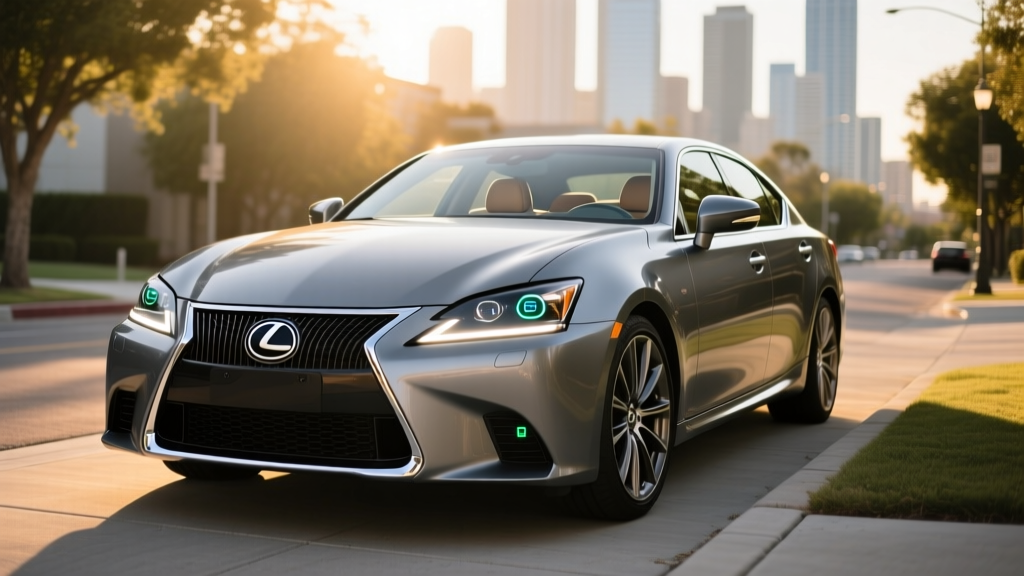
The 2011 Lexus GS 450h is a conventional hybrid (HEV) that pairs a 3.5-liter V6 with an electric motor system to deliver 339 combined horsepower and an EPA-estimated 31 MPG combined. Now well into its second decade on the road, this midsize luxury sedan remains relevant in the used market for buyers who want fuel-efficient luxury without the plug-in lifestyle. But at 14–15 years old, battery health, maintenance history, and the absence of modern safety tech are the real purchase considerations — not the sticker MPG.
This guide covers everything a used-car buyer needs to evaluate: real-world fuel economy, hybrid battery longevity, replacement costs, powertrain specs, and how the GS 450h stacks up against modern hybrids, PHEVs, and full EVs available in 2026.
Powertrain & Performance Specs
| Spec | Value |
|---|---|
| Hybrid Type | Conventional HEV (no plug) |
| Engine | 3.5L V6 (2GR-FSE) |
| Combined System Output | 339 HP |
| Electric Motor | Permanent-magnet AC synchronous |
| Transmission | CVT (electronically controlled) |
| Drivetrain | Rear-wheel drive |
| 0–60 mph | ~5.6 seconds |
| Hybrid Battery | Nickel-metal hydride (NiMH), ~1.8 kWh |
| Curb Weight | ~4,175 lbs |
The GS 450h uses Lexus's proven Hybrid Synergy Drive system. The gasoline V6 produces roughly 292 HP on its own, supplemented by the electric motor integrated into the transmission housing. Combined output is 339 HP — making this one of the quicker luxury sedans of its era. The CVT delivers smooth, linear acceleration, though enthusiasts may find it less engaging than a traditional automatic.
Unlike modern Lexus hybrids that have migrated to lithium-ion packs, the 2011 GS 450h relies on a nickel-metal hydride (NiMH) battery. NiMH chemistry is well-understood, thermally stable, and has a long cycle-life track record — but it's heavier and less energy-dense than modern lithium-ion cells.
Fuel Economy: EPA Ratings vs. Real-World MPG
| Cycle | EPA MPG | Real-World Expectation |
|---|---|---|
| City | 33 MPG | 30–34 MPG |
| Highway | 28 MPG | 26–30 MPG |
| Combined | 31 MPG | 28–32 MPG |
Source: EPA Fuel Economy Guide.
As with most conventional hybrids, the GS 450h performs best in stop-and-go city driving, where regenerative braking recaptures energy and the electric motor handles low-speed propulsion. Highway fuel economy drops because the gasoline engine does most of the work at sustained speeds, and the 4,175-lb curb weight works against efficiency.
Real-world factors that affect your MPG:
- Battery age: A degraded NiMH battery reduces the system's ability to assist the engine and recapture braking energy. Expect 1–3 MPG loss if the hybrid battery is significantly degraded.
- Driving style: Aggressive acceleration defeats the hybrid system's efficiency advantage. The CVT rewards smooth, gradual inputs.
- Climate: Cold weather reduces battery efficiency and increases engine idling for cabin heat. Expect 2–4 MPG loss in sub-40°F conditions.
- Tire choice: Replacement all-season or performance tires may reduce MPG vs. the original low-rolling-resistance rubber.
Hybrid Battery Life, Warranty & Replacement Cost
The NiMH battery in the GS 450h has a strong longevity track record. Many Toyota/Lexus hybrids from this era reach 150,000–200,000+ miles on the original pack. However, at 14–15 years old, age-related degradation is a real factor regardless of mileage. NiMH cells lose capacity over time even with low use.
Signs of hybrid battery degradation in a used GS 450h:
- Noticeable drop in fuel economy (3+ MPG below EPA combined)
- Engine running more frequently at stops or low speeds
- Reduced regenerative braking feel
- Hybrid system warning light on the dash
- SOC (state of charge) gauge fluctuating rapidly or never reaching full
Battery replacement cost (2026 estimates):
- OEM Lexus replacement: $3,500–$5,000+ (parts and labor at a dealer)
- Aftermarket/remanufactured pack: $1,800–$3,000 installed
- Individual cell replacement (specialist shops): $800–$1,500
Before purchasing any 2011 GS 450h, request a hybrid battery health check from a Lexus dealer or a qualified hybrid specialist. A scan tool can read individual module voltages and internal resistance — the best indicator of remaining battery life. Budget $2,000–$4,000 for eventual battery replacement if the pack hasn't been changed already.
HEV vs. PHEV vs. Full EV: Which Is Right for You?
| Factor | HEV (GS 450h) | PHEV | Full EV (BEV) |
|---|---|---|---|
| Plug-in charging? | No | Yes (optional) | Yes (required) |
| Electric-only range | ~0.5 mi (low speed) | 20–50 mi (modern) | 220–400+ mi |
| Home charging needed? | No | Recommended | Essential |
| Federal tax credit (new) | None | Up to $7,500* | Up to $7,500* |
| Fuel cost per mile | ~$0.11 | ~$0.04–$0.11 | ~$0.03–$0.06 |
| Maintenance burden | Moderate | Moderate | Low |
| Best for | No plug access | Home charging + short commutes | Home charging + max savings |
*Federal §30D tax credit applies to new vehicles only and is subject to MSRP caps, buyer income limits, and battery sourcing requirements per current IRS rules. A 2011 used vehicle does not qualify for any federal EV/PHEV credit.
Choose the GS 450h (HEV) if:
- You have no access to plug-in charging at home or work
- You want a proven, low-risk luxury sedan with strong reliability
- Your budget is $8,000–$14,000 (typical 2026 used-market range)
- You drive mostly city/suburban routes where hybrid efficiency shines
Look at a modern PHEV or BEV instead if:
- You can install a Level 2 home charger and want lower per-mile costs
- You want current safety technology (automatic emergency braking, lane-keeping, blind-spot monitoring)
- You want to qualify for federal or state electrification incentives
- You want a warranty — new EVs/PHEVs come with 8–10 year battery coverage
2011 GS 450h in the 2026 Used Market: Pricing & Value
As of early 2026, the 2011 Lexus GS 450h trades in the used market at approximately:
- Fair condition (high miles, needs work): $6,000–$8,500
- Good condition (100k–140k miles, maintained): $8,500–$12,000
- Excellent condition (under 90k miles, full records, battery tested): $12,000–$15,000
For context, a 2026 Toyota Camry Hybrid LE starts at ~$30,000 new and delivers an EPA 52 MPG combined — significantly more efficient, with a full warranty and modern ADAS. The GS 450h's value proposition is luxury build quality, V6 power, and Lexus reliability at a fraction of a new car's price.
No federal tax credit applies. The §30D new clean vehicle credit and the §25E used clean vehicle credit both require a battery capacity of at least 7 kWh for the used-vehicle credit. The GS 450h's ~1.8 kWh NiMH pack does not meet this threshold, and the credit applies only to qualified used EVs and PHEVs — not conventional hybrids. Check IRS §25E guidelines for current eligibility rules.
Reliability & Common Issues Beyond the Battery
Lexus's reputation for reliability extends to the GS 450h, but age introduces wear items that buyers should anticipate:
- Inverter coolant pump: Known failure point on Toyota/Lexus hybrids of this era. Replacement: $400–$800. Failure can overheat the hybrid inverter — a much costlier repair.
- Brake actuator assembly: The electrohydraulic brake system is complex and expensive to replace ($1,500–$2,500). Listen for unusual pump cycling or brake feel changes.
- CVT/transmission: Generally robust, but high-mileage examples may show shudder or whine. Fluid changes are critical and often neglected.
- Suspension components: Control arm bushings, stabilizer links, and shocks are wear items at this age. Budget $1,000–$2,000 for suspension refresh on a high-mile example.
- 12V auxiliary battery: Like any car, the standard 12V battery needs periodic replacement ($150–$300). A dead 12V can prevent the hybrid system from starting.
Check NHTSA recall records using the specific VIN to verify all open recalls have been addressed. The 2011 GS 450h had recalls related to fuel system and airbag components.
Pros & Cons at a Glance
✓ Pros
- 339 HP with smooth, linear hybrid acceleration
- 31 MPG combined is strong for a V6 luxury sedan
- Lexus build quality, quiet cabin, premium materials
- No plug-in charging required — works anywhere
- Strong NiMH battery longevity track record
- Low used-market entry price ($8k–$14k)
✗ Cons
- Original battery warranty expired — replacement is $2k–$5k
- No modern ADAS (no AEB, no lane-keeping, no blind-spot monitor on most)
- Highway MPG (28) is unremarkable vs. modern hybrids
- No federal or state tax credit eligibility
- Expensive brake actuator if it fails
- Outdated infotainment (no Apple CarPlay/Android Auto)
- Heavy curb weight reduces agility and tire life
Frequently Asked Questions
How many MPG does the 2011 Lexus GS 450h hybrid get?
The EPA rates the 2011 GS 450h at 33 MPG city, 28 MPG highway, and 31 MPG combined. Real-world results vary with battery health, driving style, and climate. In good condition with a healthy battery, owners typically report 28–32 MPG combined. City driving favors the hybrid system; sustained highway speeds reduce efficiency.
Does the 2011 GS 450h need to be plugged in?
No. The GS 450h is a conventional hybrid (HEV), not a plug-in hybrid (PHEV). It charges its small NiMH battery entirely through regenerative braking and the gasoline engine. There is no charging port and no electric-only driving range to speak of (the electric motor assists at low speeds but cannot propel the car alone for meaningful distances).
Is the 2011 Lexus GS 450h reliable, and what does a battery replacement cost?
The powertrain is generally reliable — the 2GR-FSE V6 and Hybrid Synergy Drive are well-proven. The main risk at this age is hybrid battery degradation. OEM battery replacement runs $3,500–$5,000 at a dealer; remanufactured packs are available for $1,800–$3,000 installed. Budget for this expense when purchasing unless the previous owner can document a recent replacement.
Does the 2011 GS 450h qualify for any tax credit?
No. Federal tax credits (§30D for new, §25E for used) apply only to plug-in electric vehicles (BEVs and PHEVs) with battery packs of at least 7 kWh for the used credit. The GS 450h is a conventional hybrid with a ~1.8 kWh NiMH battery and does not qualify for any federal electrification incentive. Some states historically offered hybrid rebates, but most have ended or shifted to plug-in vehicles only.
Should I buy a 2011 GS 450h or a newer hybrid?
If your budget is under $15,000 and you value Lexus luxury, V6 power, and no-plug convenience, the GS 450h is a reasonable choice — provided you get a pre-purchase hybrid battery inspection. However, a newer Toyota Camry Hybrid, Honda Accord Hybrid, or Toyota Prius will deliver better MPG, modern safety features, and remaining warranty coverage. If you can spend $25,000+, a modern PHEV like the Toyota RAV4 Prime or a used Tesla Model 3 offers dramatically lower operating costs.
How long will the GS 450h hybrid battery last?
NiMH hybrid batteries in Toyota/Lexus vehicles typically last 150,000–200,000 miles or 12–18 years, whichever comes first. Age is now the primary degradation factor for 2011 examples. A battery that's been well-maintained (regular driving, avoiding prolonged storage at low charge) may still have useful life, but plan for replacement within your ownership period.