Quick Verdict: The 2011 Civic Hybrid in 2026
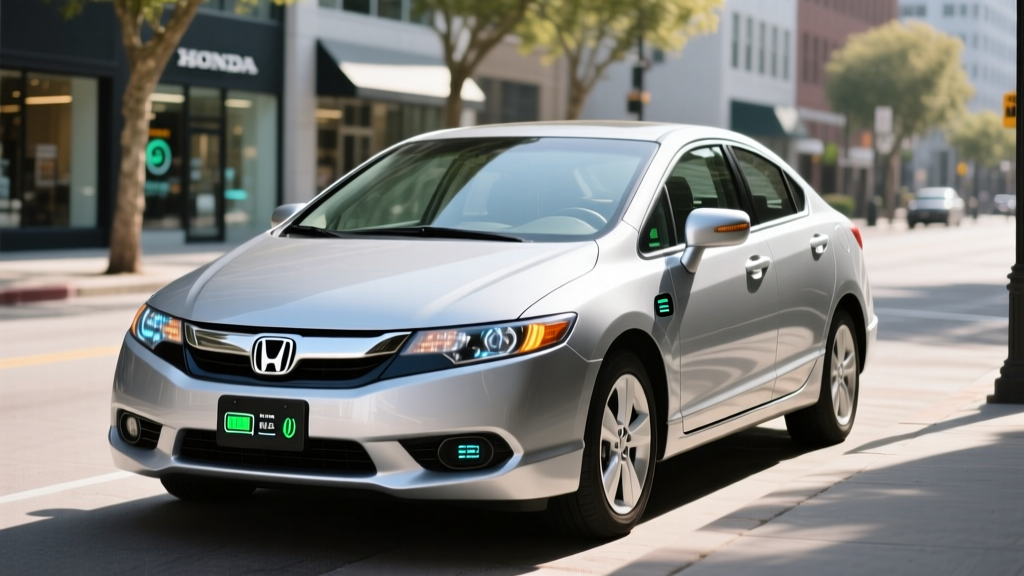
The 2011 Honda Civic Hybrid is a conventional hybrid electric vehicle (HEV) — meaning it recharges its small battery through regenerative braking and its gasoline engine. You never plug it in. For used-car shoppers hunting a budget-friendly, high-MPG commuter in 2026, the eighth-generation Civic Hybrid still delivers a compelling 40-42 MPG combined, but its aging Integrated Motor Assist (IMA) battery is the single biggest ownership wildcard. This guide covers the real numbers every prospective buyer needs before signing the title.
| Spec | Value |
|---|---|
| Powertrain | 1.3L i-VTEC 4-cyl + IMA electric motor |
| Combined Horsepower | 110 hp @ 6,000 rpm |
| Combined Torque | 123 lb-ft @ 1,000-2,500 rpm |
| Transmission | CVT (continuously variable) |
| Battery Type | Nickel-Metal Hydride (NiMH), ~0.5 kWh |
| EPA MPG (City / Hwy / Combined) | 40 / 43 / 42 |
| Fuel Tank | 12.3 gallons |
| Total Driving Range | ~516 miles |
| 0-60 mph | ~10.8 seconds |
| Plug-In Capable? | No — conventional HEV only |
How Many MPG Does the 2011 Civic Hybrid Actually Get?
The EPA rates the 2011 Honda Civic Hybrid at 40 city / 43 highway / 42 combined MPG. That was among the best figures in its class when new, rivaling the Toyota Prius of the same era. But how does that translate to real-world driving 15 years later?
| Driving Scenario | EPA Estimate | Real-World Expectation |
|---|---|---|
| City (stop-and-go) | 40 MPG | 38-44 MPG (regen braking excels here) |
| Highway (65-75 mph) | 43 MPG | 37-41 MPG (aero drag, less motor assist) |
| Combined (mixed) | 42 MPG | 37-42 MPG |
| Cold weather (below 32°F) | — | 33-37 MPG (engine runs more for heat) |
Honda's IMA system uses the electric motor primarily as a torque-fill assist during acceleration and captures energy during braking. Unlike Toyota's Hybrid Synergy Drive, the 2011 Civic Hybrid cannot drive on electric power alone for meaningful distances — the motor is sandwiched between the engine and transmission and always works in tandem with the gas engine. In city driving, owners frequently report matching or slightly exceeding the EPA city number because regenerative braking is most effective at lower speeds. Highway driving tells a different story: sustained high speeds reduce the motor's contribution, and real-world highway MPG often drops into the upper 30s.
According to fueleconomy.gov, owner-reported averages cluster around 39-41 MPG combined, which is consistent with our expectations for a well-maintained example.
HEV vs PHEV vs EV: Where Does the 2011 Civic Hybrid Fit?
Understanding the distinction between hybrid types is essential before you buy. The 2011 Civic Hybrid is an HEV — a conventional, self-charging hybrid.
| Feature | HEV (e.g., 2011 Civic Hybrid) | PHEV (e.g., 2026 RAV4 Prime) | BEV (e.g., 2026 Tesla Model 3) |
|---|---|---|---|
| Plug in to charge? | No | Yes | Yes |
| Electric-only range | None (motor assist only) | 25-45 miles typical | 250-360+ miles |
| Gas engine? | Yes — primary power | Yes — backup + highway | No |
| Battery size | ~0.5 kWh (NiMH) | 13-20 kWh (Li-ion) | 50-100 kWh (Li-ion/LFP) |
| Federal tax credit | No | Up to $7,500 (§30D) | Up to $7,500 (§30D) |
| Used EV credit (§25E) | No | Up to $4,000 | Up to $4,000 |
| Tailpipe emissions | Yes | Yes (when engine runs) | None |
Choose the 2011 Civic Hybrid (HEV) if: You want a low-cost commuter with no charging infrastructure needs, you lack home charging access, and your budget is under $7,000.
Choose a PHEV if: You have home Level 2 charging, want 30-40 miles of daily electric commuting, but need gas-engine range for road trips.
Choose a full EV if: You have reliable home charging, want zero tailpipe emissions, and can absorb a higher upfront price offset by lower per-mile fuel costs.
IMA Battery Lifespan, Reliability, and Replacement Cost
The 2011 Civic Hybrid uses a nickel-metal hydride (NiMH) IMA battery pack rated at roughly 0.5 kWh. This is a tiny battery by modern standards — it exists to provide torque assist and capture regenerative braking energy, not to store meaningful electric-only range.
Battery Warranty & Lifespan
Original warranty: Honda warranted the IMA battery for 8 years / 80,000 miles (10 years / 150,000 miles in CARB states including California, New York, Massachusetts, and others that adopted California emissions standards).
Current status in 2026: Every 2011 Civic Hybrid is now well beyond its original battery warranty. Any remaining battery health is a bonus, not a guarantee.
Expected lifespan: NiMH IMA batteries typically last 100,000-150,000 miles before significant capacity loss. Many 2011 examples have already required at least one battery replacement.
How Much Does an IMA Battery Replacement Cost?
This is the question that dominates Civic Hybrid ownership forums, and the answer varies significantly:
- Dealer OEM replacement: $2,000-$3,500 (installed) — often uneconomical for a car worth $4,000-$6,500
- Aftermarket/remanufactured pack: $1,200-$2,000 (installed at an independent hybrid specialist)
- DIY refurbished cells: $400-$800 for individual NiMH D-cell sticks, but requires technical skill and carries safety risk
- Used IMA pack from salvage yard: $300-$700 — cheapest option but unknown remaining lifespan
When evaluating a used 2011 Civic Hybrid, ask for documentation of any IMA battery replacement. A car with a recently replaced battery (with receipts) is significantly more valuable than one running on its original 15-year-old pack. Watch for the IMA warning light on the dashboard and reduced fuel economy as early signs of battery degradation.
Overall Reliability
Beyond the IMA battery, the 2011 Civic Hybrid's 1.3L engine and CVT transmission are generally robust. The CVT in this generation is simpler than modern multi-clutch units, and with regular fluid changes, failures are uncommon. Common non-hybrid issues include standard suspension wear, A/C compressor aging, and paint clear-coat peeling on certain colors. Per NHTSA records, the 2011 Civic Hybrid has relatively few safety recalls — check any specific VIN at nhtsa.gov/recalls before purchasing.
Pricing in 2026: What Should You Pay?
The 2011 Honda Civic Hybrid originally carried an MSRP of approximately $24,200 (base) to $26,800 (with navigation). In the 2026 used market, expect the following pricing ranges depending on mileage and condition:
| Condition | Mileage | Typical Price Range |
|---|---|---|
| Excellent (new IMA battery, low miles) | 80,000-110,000 | $5,500-$7,000 |
| Good (original or replaced IMA, maintained) | 110,000-150,000 | $4,000-$5,500 |
| Fair (high miles, IMA may need service) | 150,000-200,000+ | $2,500-$4,000 |
Does the 2011 Civic Hybrid Qualify for Any Tax Credits?
No. The 2011 Civic Hybrid does not qualify for any current federal tax credits. Here's why:
- §30D New Clean Vehicle Credit: Only applies to new vehicles. The Civic Hybrid's original $2,150 credit expired years ago, and Honda's credit allocation was exhausted under the old per-manufacturer cap.
- §25E Used Clean Vehicle Credit: This credit (up to $4,000 or 30% of sale price) applies only to used plug-in EVs and PHEVs with at least 7 kWh of battery capacity. The Civic Hybrid's ~0.5 kWh NiMH pack does not qualify. See IRS §25E guidelines for eligibility details.
- State incentives: Some states offer registration fee reductions or HOV lane access for hybrids, but these vary by jurisdiction. Check your state's DMV or energy office.
Who Should Buy the 2011 Civic Hybrid — and Who Shouldn't?
Pros
- 40-42 MPG combined — still competitive with newer hybrids
- No plug-in charging required — works with any gas station
- Low purchase price ($3,000-$7,000 used)
- Honda reliability for engine and transmission
- Lightweight and easy to park (2,600 lbs)
- Standard Civic parts availability keeps maintenance affordable
Cons
- IMA battery likely at end-of-life; replacement costs $1,200-$3,500
- No electric-only driving mode — always burns gas
- Sluggish acceleration (10.8 sec 0-60) — struggles on highway merges
- Outdated infotainment — no Apple CarPlay, Android Auto, or Bluetooth audio streaming on base trims
- No modern ADAS features (no automatic emergency braking, no lane-keeping)
- Zero federal or state EV tax credit eligibility
- NiMH battery chemistry degrades faster in hot climates
The Ideal Buyer
You're a strong candidate for the 2011 Civic Hybrid if you need a cheap, high-MPG daily commuter, you live in a mild climate (NiMH batteries degrade faster above 90°F), you lack access to home or workplace charging (ruling out PHEVs and BEVs), and you can budget $1,500-$2,000 for a potential IMA battery replacement within the first year of ownership.
Look Elsewhere If
If you have a Level 2 home charger or can install one, a used PHEV like the 2017+ Chrysler Pacifica Hybrid or a 2018+ Toyota Prius Prime offers electric-only commuting plus gas backup — and may qualify for the $4,000 used clean vehicle credit under §25E. If you want zero gas costs and have charging access, a used Nissan Leaf (2018+, 40 kWh) or Chevrolet Bolt EV delivers dramatically lower per-mile fueling costs.
Buying Checklist: 7 Things to Verify Before You Buy
- IMA battery health: Request a battery state-of-health readout from a Honda dealer or hybrid specialist. Look for recalibration history in service records.
- IMA warning light: Turn the key to ON (don't start) and verify the IMA light illuminates then turns off. If it stays on, the battery has a stored fault code.
- CVT fluid history: Confirm the CVT fluid was changed at or before 60,000-mile intervals using Honda HMMF or equivalent.
- VIN recall check: Run the VIN at nhtsa.gov/recalls to confirm all open recalls (including potential airbag inflator recalls) were completed.
- Regen braking feel: During a test drive, lift off the accelerator at 30-40 mph. You should feel noticeable deceleration as regen engages. Weak or absent regen suggests battery issues.
- Cold-start behavior: Start the car cold and note whether the engine runs continuously for the first several minutes (normal) or whether the IMA system engages smoothly once warm.
- 12V battery age: The standard 12V lead-acill battery powers electronics and starts the hybrid system controller. If it's over 4 years old, budget for replacement ($150-$200).
Frequently Asked Questions
Is the 2011 Honda Civic Hybrid a plug-in hybrid?
No. The 2011 Civic Hybrid is a conventional HEV. It charges its small NiMH battery exclusively through regenerative braking and the gasoline engine. There is no charging port and no electric-only driving mode. Honda did not offer a plug-in Civic until the 2026 model year in certain markets.
How far can the 2011 Civic Hybrid drive on electric power alone?
Effectively zero miles. The IMA electric motor (approximately 20 hp / 15 kW) cannot propel the car independently at meaningful speeds. It functions only as an assist to the 1.3L gasoline engine during acceleration and as a generator during deceleration.
What happens if the IMA battery dies completely?
The car will still drive on the gasoline engine alone, but you'll lose all hybrid assist, regenerative braking, and auto-stop/start functionality. Fuel economy drops to roughly 28-32 MPG — comparable to a non-hybrid Civic of the same era. The IMA warning light will illuminate, and some states will fail emissions inspections with an active hybrid system fault code.
Is the 2011 Civic Hybrid better than a 2011 Toyota Prius?
It depends on priorities. The 2011 Prius gets 50 MPG combined (vs. 42 for the Civic Hybrid), offers more cargo space (hatchback), and has a more sophisticated full-hybrid system with brief electric-only capability. However, the Civic Hybrid typically costs $1,000-$2,500 less on the used market and has a more conventional driving feel. The Prius's larger Li-ion battery also tends to age more gracefully than the Civic's NiMH pack.
Can I convert the 2011 Civic Hybrid to a plug-in hybrid?
Technically, aftermarket PHEV conversion kits exist, but they are not recommended. They void all remaining drivetrain warranties, require custom fabrication, may violate emissions regulations, and typically cost $5,000-$10,000 — more than the car's total value. You're better off purchasing a factory PHEV if plug-in capability matters to you.
Does the 2011 Civic Hybrid qualify for the $4,000 used EV tax credit?
No. The IRS §25E used clean vehicle credit requires the vehicle to be a plug-in EV or PHEV with a battery capacity of at least 7 kWh. The Civic Hybrid's ~0.5 kWh NiMH battery falls far short of this threshold. See IRS.gov for the full eligibility checklist.