The 2011 Ford Escape Hybrid: A Used-HEV Benchmark
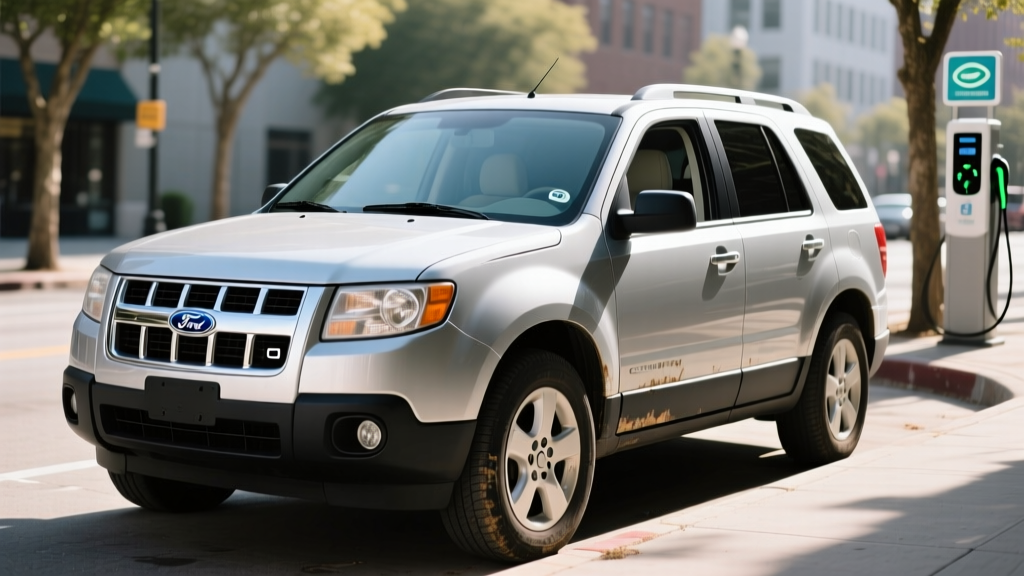
If you've been searching for a ford hybrid escape 2011 on the used market, you're looking at one of the most proven early mainstream hybrid SUVs ever sold in the United States. The second-generation Escape Hybrid (2008–2012) paired a 2.5-liter Atkinson-cycle four-cylinder with Ford's planetary-gear eCVT — the same power-split architecture Toyota pioneered with the Prius. Fifteen years later, these vehicles are still on the road in meaningful numbers, and the powertrain has aged surprisingly well.
This guide breaks down everything a 2026 used-car buyer needs to know: EPA and real-world MPG, the hybrid battery's expected lifespan and replacement cost, how the Escape Hybrid stacks up against modern HEVs, PHEVs, and full EVs, and whether any tax incentives still apply to a 2011 model.
HEV vs PHEV vs EV: Where the 2011 Escape Fits
The 2011 Ford Escape Hybrid is a conventional hybrid electric vehicle (HEV). It has no plug, no electric-only driving range to speak of, and no external charging capability. The small nickel-metal-hydride (NiMH) battery recharges exclusively through regenerative braking and the gasoline engine.
| Feature | 2011 Escape Hybrid (HEV) | Modern PHEV (e.g., 2026 RAV4 Prime) | Modern BEV (e.g., 2026 Ioniq 5) |
|---|---|---|---|
| Plug-in charging | No | Yes (Level 1/2) | Yes (Level 1/2/DC) |
| Electric-only range | ~0 mi (low-speed creep only) | 35–42 mi | 250–310 mi |
| Battery capacity | ~1.3 kWh (NiMH) | ~18.1 kWh (Li-ion) | ~77.4 kWh (NMC) |
| DC fast charging | No | No (most PHEVs) | Yes (up to 240 kW) |
| Gas engine | 2.5L I4 Atkinson | 2.5L I4 + motors | None |
| Combined MPG / MPGe | 34 MPG (FWD) | 38 MPG + 94 MPGe | 114 MPGe |
| Federal tax credit (new) | Expired long ago | Up to $7,500 (§30D) | Up to $7,500 (§30D) |
The distinction matters because buyers sometimes confuse the Escape Hybrid with a plug-in vehicle. It is not. You fuel it with gasoline, and the hybrid system simply makes that gasoline go further — especially in stop-and-go city driving where regenerative braking recovers energy that a conventional car wastes as heat.
Fuel Economy: EPA Ratings and Real-World MPG
The EPA rated the 2011 Ford Escape Hybrid at 34 MPG city / 31 MPG highway / 34 MPG combined for the front-wheel-drive (FWD) model. The all-wheel-drive (AWD) version drops slightly to 31 city / 29 highway / 30 combined.
| Drivetrain | City MPG | Highway MPG | Combined MPG |
|---|---|---|---|
| FWD | 34 | 31 | 34 |
| AWD (4WD) | 31 | 29 | 30 |
Notice the unusual pattern: city MPG equals or exceeds highway MPG. This is a hallmark of conventional hybrids. At low speeds, the electric motor handles more of the workload, regenerative braking recaptures energy at every stoplight, and the engine shuts off at idle. On the highway, the gasoline engine does most of the work and aerodynamic drag dominates — the hybrid advantage shrinks.
Real-World MPG: What Owners Actually Report
Fuelly and owner forums consistently show 2011 Escape Hybrid drivers averaging 29–33 MPG combined in mixed driving, with city-heavy commuters occasionally hitting 35–36 MPG. Highway-only road trips at 75+ mph typically return 27–29 MPG. Cold weather (below 30°F) can drop city MPG by 10–15% because the engine runs more often to provide cabin heat and because the NiMH battery is less efficient at low temperatures.
Compared to the non-hybrid 2011 Escape with the 2.5L engine (23 city / 28 highway / 25 combined), the hybrid delivers roughly 30–35% better fuel economy in real-world mixed driving. Over 15,000 miles per year at $3.40/gallon, that translates to approximately $600–$750 in annual fuel savings.
Powertrain Specs: Engine, Motor, and Combined Output
| Specification | 2011 Ford Escape Hybrid |
|---|---|
| Engine | 2.5L Atkinson-cycle I4 |
| Engine horsepower | 156 HP @ 6,000 rpm |
| Electric motor | Permanent-magnet AC synchronous |
| Combined net horsepower | 177 HP |
| Transmission | eCVT (planetary power-split) |
| 0–60 mph | ~10.5 seconds |
| Drivetrain | FWD or AWD (eCVT-based) |
| Battery type | NiMH (nickel-metal hydride) |
| Battery capacity | ~1.3 kWh (usable ~0.6 kWh) |
| Curb weight | ~3,813 lbs (FWD) |
| Towing capacity | 1,000 lbs |
The 177 combined HP is adequate for merging and passing but not quick. The eCVT delivers smooth, gearless acceleration with none of the rubber-band feel of traditional belt-driven CVTs — the planetary gearset directly couples the engine and motor. The AWD system is noteworthy: instead of a mechanical driveshaft, the rear axle is powered by a separate electric motor, engaging only when slip is detected.
Hybrid Battery Lifespan, Warranty, and Replacement Cost
The single biggest concern for any used hybrid buyer is the traction battery. Here's what the data shows for the 2011 Escape Hybrid's NiMH pack:
Original Battery Warranty
Ford warranted the hybrid battery for 8 years / 100,000 miles (10 years / 150,000 miles in California and states that adopted CARB emissions standards). As of 2026, all original warranties have expired — even in CARB states, the latest coverage ended at the 2021 model-year mark for a 2011 vehicle.
Expected Battery Lifespan
NiMH batteries in the Escape Hybrid have proven remarkably durable. Many owners report 150,000–200,000+ miles on the original pack. The battery is relatively small (~1.3 kWh gross), and Ford's battery management system keeps the state of charge in a conservative window (roughly 40–60% SoC), which minimizes stress on the cells. Unlike early lithium-ion packs, NiMH chemistry degrades gradually rather than failing suddenly.
That said, any 2011 Escape Hybrid you find today is 15 years old. Age degrades NiMH cells even if mileage is low. Expect 70–85% of original capacity on a high-mileage original battery. If the battery has already been replaced, ask for documentation — the replacement's age and source matter more than the vehicle's odometer reading.
Battery Replacement Cost
- OEM new battery from Ford: ~$3,500–$5,000 installed (parts availability is increasingly limited)
- Remanufactured battery: ~$1,800–$2,800 installed (from suppliers like Green Bean Battery or similar)
- Used/salvage battery: ~$500–$1,200 (risky — age unknown)
For a vehicle with a typical 2026 resale value of $4,000–$7,500 depending on condition and mileage, a $2,000–$3,000 remanufactured battery replacement is economically justifiable if the rest of the vehicle is solid. A $5,000 OEM replacement likely exceeds the vehicle's value.
How the 2011 Escape Hybrid Stacks Up Against Modern Alternatives
If you're weighing a used 2011 Escape Hybrid against newer options, here's the practical decision framework:
Reasons to Buy the 2011 Escape Hybrid
- Low purchase price: $4,000–$7,500 in 2026 used market
- Proven, simple powertrain with massive owner-community knowledge base
- No plug required — ideal for apartment dwellers or those without garage access
- 34 MPG combined still beats most non-hybrid compact SUVs sold today
- SUV cargo space and ride height at hybrid fuel costs
Reasons to Look at Alternatives
- Outdated safety tech: no automatic emergency braking, lane-keep, or blind-spot monitoring
- No federal or state tax credits available (used EV credit under §25E applies only to EVs and PHEVs, not HEVs)
- Aging NiMH battery is a known future expense
- 10.5-second 0–60 time feels sluggish by modern standards
- Interior materials and infotainment are firmly 2011-era
2011 Escape Hybrid vs. Modern Compact Hybrid SUVs
A 2026 Toyota RAV4 Hybrid achieves 39–41 MPG combined EPA and starts around $33,000 MSRP. A 2026 Honda CR-V Hybrid returns 37–40 MPG combined at roughly $35,000. Both offer modern ADAS suites, better acceleration, and full factory warranties. The 2011 Escape Hybrid's only advantage is its dramatically lower purchase price — roughly 80% less than a new compact hybrid SUV.
Tax Credits and Incentives: What Applies in 2026?
The short answer: no federal tax credits apply to the 2011 Ford Escape Hybrid in 2026.
Here's why:
- §30D New Clean Vehicle Credit: Only applies to new vehicles. The Escape Hybrid is long discontinued, and even when new, it qualified for a modest credit that was phased out years ago.
- §25E Used Clean Vehicle Credit: This credit (up to $4,000 or 30% of sale price, whichever is lower) applies only to used electric vehicles and plug-in hybrids with a battery capacity of at least 7 kWh. The 2011 Escape Hybrid's 1.3 kWh NiMH battery and conventional HEV architecture disqualify it entirely.
- State incentives: Most state-level rebates and HOV-lane access programs target PHEVs and BEVs. A conventional hybrid like the Escape is unlikely to qualify for any current state incentive. Check your state's energy office for specifics, as rules vary by jurisdiction.
If tax credits are a priority, consider a used PHEV like the 2018–2021 Toyota Prius Prime or a used BEV like a 2019–2021 Nissan Leaf — both can qualify for the §25E used clean vehicle credit if purchased through a licensed dealer for $25,000 or less, subject to buyer income caps.
Who Should Choose the 2011 Ford Escape Hybrid?
The 2011 Escape Hybrid occupies a specific niche in the 2026 used-car market:
Choose this hybrid if:
- Your budget is under $8,000 and you need an SUV
- You drive primarily in city or suburban stop-and-go traffic (where the hybrid advantage is largest)
- You cannot charge at home (no garage, apartment living, street parking)
- You want proven hybrid reliability without the complexity of a plug-in system
- You're comfortable budgeting $2,000–$3,000 for a potential battery replacement within your ownership window
Look elsewhere if:
- Safety technology (AEB, lane-keeping, adaptive cruise) is a priority — consider a 2019+ RAV4 Hybrid
- You want electric-only commuting — a PHEV like the RAV4 Prime or a used BEV is the answer
- You drive mostly highway miles — the hybrid advantage narrows significantly, and a modern turbocharged gas SUV may match its real-world highway MPG
- You plan to keep the vehicle 5+ years and want warranty coverage
Frequently Asked Questions
How many MPG does the 2011 Ford Escape Hybrid get?
The EPA rates the FWD model at 34 city / 31 highway / 34 combined MPG. The AWD model is rated at 31 city / 29 highway / 30 combined. Real-world owners typically report 29–33 MPG combined, with city-heavy drivers sometimes exceeding the EPA city estimate and highway-only drivers falling below the highway number.
Does the 2011 Escape Hybrid need to be plugged in?
No. The 2011 Escape Hybrid is a conventional hybrid (HEV), not a plug-in hybrid (PHEV). It has no charging port. The battery recharges through regenerative braking and the gasoline engine. You simply fill it with gas like any other vehicle.
Is the 2011 Ford Escape Hybrid reliable?
The powertrain — particularly the eCVT and hybrid system — has proven very reliable, with many examples exceeding 200,000 miles. The NiMH battery is the primary wear item; expect 150,000–200,000 miles from an original pack, though 15-year-old batteries may show age-related degradation regardless of mileage. Non-hybrid components (suspension, brakes, electronics) follow typical Ford Escape durability patterns for the era.
What does it cost to replace the hybrid battery?
A remanufactured NiMH battery typically costs $1,800–$2,800 installed. An OEM new battery from Ford runs $3,500–$5,000, though new parts availability is declining. Used/salvage batteries are available for $500–$1,200 but carry unknown remaining lifespan.
Does the 2011 Escape Hybrid qualify for any tax credit?
No. The §30D new-vehicle credit no longer applies, and the §25E used clean vehicle credit requires a plug-in vehicle (PHEV or BEV) with at least 7 kWh of battery capacity. The Escape Hybrid's 1.3 kWh NiMH battery and conventional hybrid architecture make it ineligible for any current federal incentive.
Hybrid vs PHEV vs EV — which should I choose?
A conventional hybrid (HEV) like the 2011 Escape is best if you cannot charge at home and want better fuel economy with zero behavior change. A plug-in hybrid (PHEV) is ideal if you can charge at home and want 25–40 miles of electric-only commuting with a gas engine for longer trips. A full EV (BEV) makes sense if you have reliable home charging, want the lowest operating costs, and your daily driving stays within 200–300 miles.
How does the 2011 Escape Hybrid compare to a Toyota Prius of the same era?
The 2011 Prius achieves 50 MPG combined EPA — significantly more efficient — but offers less cargo space and a car-like ride height. The Escape Hybrid trades roughly 16 MPG for SUV utility, higher seating position, and available AWD. If fuel economy is the top priority, the Prius wins. If you need SUV space and ground clearance, the Escape Hybrid fills a niche the Prius cannot.