Quick Verdict: A Discontinued Hybrid That Still Delivers
The 2010 Mercury Milan Hybrid is a conventional hybrid (HEV) — not a plug-in — built on Ford's Fusion Hybrid platform during a brief era when Mercury still existed as a brand. Ford discontinued Mercury after the 2011 model year, making the Milan Hybrid a one-generation curiosity. Yet its powertrain, shared with the second-generation Ford Fusion Hybrid, was genuinely competitive: an EPA-rated 41 city / 36 highway / 39 combined MPG from a 2.5-liter Atkinson-cycle four-cylinder paired with an electric motor and a nickel-metal hydride (NiMH) battery pack.
In 2026, the Milan Hybrid exists exclusively on the used market. There are no federal tax credits available for used conventional hybrids — the IRS §30D credit applies only to new plug-in EVs and PHEVs, and the §25E used-EV credit covers only battery-electric and plug-in hybrid vehicles. The Milan Hybrid qualifies for neither. What it does offer is proven fuel economy, low running costs, and a comfortable midsize sedan experience for buyers who want hybrid efficiency without plug-in complexity.
HEV vs PHEV: What the Milan Hybrid Actually Is
Before diving into specs, it's critical to understand what you're looking at. The 2010 Mercury Milan Hybrid is a conventional hybrid (HEV). It does not plug in. It has no electric-only driving range to speak of (roughly 1–2 miles at very low speeds under ideal conditions). The battery recharges exclusively through regenerative braking and the gasoline engine.
| Feature | HEV (Milan Hybrid) | PHEV | BEV (Full EV) |
|---|---|---|---|
| Plugs in? | No | Yes | Yes |
| Electric-only range | ~1–2 mi (low speed) | 20–50 mi typical | 200–400+ mi |
| Gas engine | Yes (primary) | Yes (backup) | None |
| Fuel type | Gasoline + regen | Electricity + gasoline | Electricity only |
| Federal tax credit (2026) | None | Up to $7,500 (new, §30D) | Up to $7,500 (new, §30D) |
| Home charging needed | No | Recommended (Level 2) | Essential (Level 2) |
If you're considering the Milan Hybrid, you're choosing it for simplicity: no charging infrastructure, no range planning, just fill up with gas and drive. If you want electric-only commuting, you'd need a PHEV like the Toyota RAV4 Prime or a full BEV.
EPA Fuel Economy and Real-World MPG
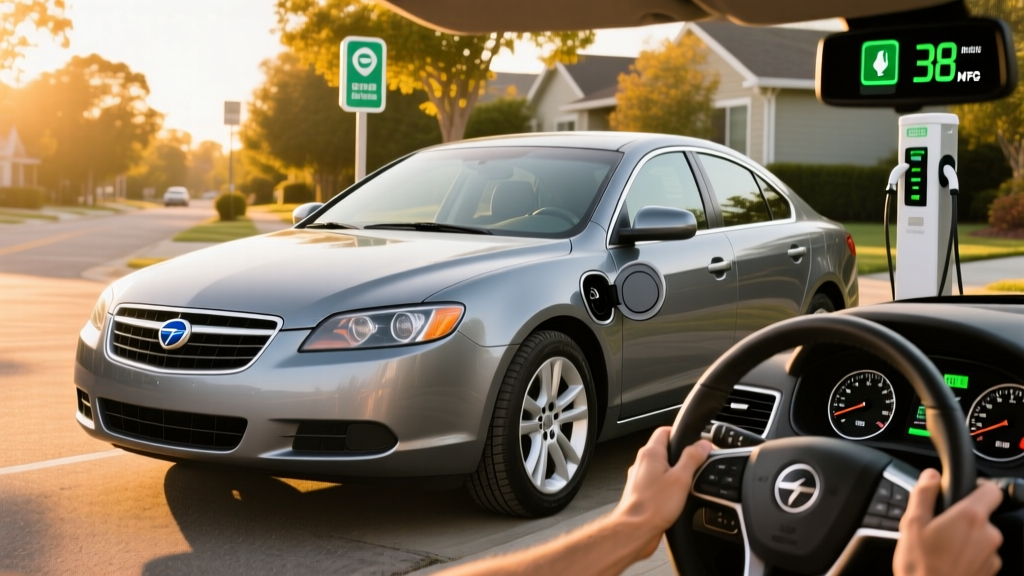
The EPA rated the 2010 Mercury Milan Hybrid at 41 MPG city, 36 MPG highway, and 39 MPG combined. These numbers were class-leading for a midsize sedan in 2010 and remain respectable today.
| Driving Condition | EPA MPG | Real-World Expectation |
|---|---|---|
| City | 41 MPG | 38–44 MPG (hybrids often exceed EPA city) |
| Highway | 36 MPG | 33–38 MPG (less regen benefit at steady speed) |
| Combined | 39 MPG | 36–41 MPG |
Real-world note: Conventional hybrids like the Milan tend to beat their EPA city estimates because stop-and-go traffic maximizes regenerative braking and electric-motor assist. Highway driving is where hybrids lose their advantage — the gasoline engine does most of the work at sustained 70+ MPH speeds. In mixed driving with moderate temperatures, owners commonly report 37–42 MPG combined. Cold weather (below 30°F) can reduce efficiency by 5–10% as the engine runs more frequently to maintain cabin heat and battery temperature.
For comparison, the 2010 Toyota Camry Hybrid was rated at 33/34/33 MPG city/highway/combined — the Milan Hybrid had a meaningful 6 MPG combined advantage, largely thanks to Ford's more advanced full-hybrid system that allowed electric-only operation at speeds up to about 47 MPH under light loads.
Powertrain, Battery, and Performance Specs
| Powertrain type | Conventional hybrid (HEV), full parallel hybrid |
| Gas engine | 2.5L Atkinson-cycle inline-4, 156 HP combined (engine + motor) |
| Engine output | 156 HP @ 6,000 RPM (gas), 106 HP electric motor |
| Combined system output | 191 HP net |
| Transmission | eCVT (electronically controlled continuously variable) |
| Battery chemistry | Nickel-metal hydride (NiMH) |
| Battery capacity | ~1.4 kWh (not usable for EV range; assists acceleration) |
| Drivetrain | Front-wheel drive |
| 0–60 MPH | ~8.5 seconds |
| Curb weight | ~3,750 lbs |
| Fuel tank | 16.5 gallons |
| Total range (est.) | ~600–650 miles per tank |
| EPA combined MPG | 39 MPG |
The Milan Hybrid uses Ford's second-generation full-hybrid system, which was co-developed with Aisin and closely mirrors the Toyota Hybrid Synergy Drive in architecture. The eCVT is not a belt-and-pulley CVT — it's a planetary gearset that blends engine and motor power seamlessly, which contributes to its durability. There are no traditional transmission friction bands or clutches to wear out.
The 1.4 kWh NiMH battery pack is small by modern standards (a 2026 PHEV typically carries 15–25 kWh), but it's purpose-built for charge-sustaining hybrid duty, not electric-only range. It provides torque fill during acceleration and captures energy during braking.
Battery Warranty and Replacement Cost
Original warranty: Ford covered the hybrid battery for 8 years / 100,000 miles (10 years / 150,000 miles in CARB states including California, New York, Massachusetts, and others). For a 2010 model, this factory warranty has expired as of 2020 at the latest.
Battery lifespan: NiMH hybrid batteries in Ford's system have proven durable, commonly lasting 150,000–200,000+ miles before significant capacity loss. Unlike the larger lithium-ion packs in EVs, NiMH packs degrade more gracefully — you'll notice reduced fuel economy rather than sudden failure.
Replacement cost (2026): A refurbished NiMH hybrid battery for the Milan Hybrid runs approximately $1,500–$2,500 installed at an independent hybrid specialist. A new OEM battery from Ford (if still available for this discontinued model) can cost $3,000–$4,000. Several aftermarket suppliers offer reconditioned units with 3–5 year warranties.
Used Market Pricing and Tax Credit Eligibility
The 2010 Mercury Milan Hybrid originally carried an MSRP of approximately $32,455. In 2026, used examples typically sell for $4,500–$8,500 depending on mileage, condition, and location, based on Kelley Blue Book and private-sale data.
Tax credit eligibility: None. The 2010 Milan Hybrid does not qualify for any current federal incentive:
- IRS §30D (New Clean Vehicle Credit): Applies only to new plug-in EVs and PHEVs. The Milan Hybrid is a conventional HEV and is not a new vehicle. Not eligible.
- IRS §25E (Used Clean Vehicle Credit): Covers up to $4,000 or 30% of sale price for qualifying used BEVs and PHEVs priced under $25,000. Conventional hybrids are excluded. Not eligible.
- State incentives: Some states offer registration fee reductions or HOV lane access for hybrids, but most of these programs have ended or apply only to new purchases. Check your state's DMV for current rules.
For the full rules on federal EV and PHEV tax credits, consult the IRS Clean Vehicle Credits page.
Reliability, Safety, and Ownership Costs
The 2010 Milan Hybrid shares its platform and powertrain with the Ford Fusion Hybrid, which earned strong reliability marks. The hybrid system itself — the eCVT, electric motor, and NiMH battery — has proven to be one of the most durable powertrain configurations Ford has ever built. Common non-hybrid issues on this generation include:
- Electric power steering (EPS) module failures ($800–$1,500 repair)
- A/C compressor wear at high mileage
- Standard suspension component wear (struts, bushings)
- 12V battery drain if the vehicle sits unused for extended periods
The NHTSA gave the 2010 Milan a 5-star overall crash rating in its testing protocol at the time. The IIHS rated the related Ford Fusion as a Top Safety Pick for 2010.
| Expense | Annual Estimate |
|---|---|
| Fuel (12,000 mi/yr @ 39 MPG, $3.40/gal) | ~$1,045 |
| Insurance (national avg, used sedan) | ~$1,100–$1,400 |
| Maintenance (oil, brakes, tires) | ~$400–$600 |
| Total annual operating cost | ~$2,545–$3,045 |
Brake wear is notably low on the Milan Hybrid thanks to aggressive regenerative braking — many owners report original brake pads lasting 80,000+ miles. Oil change intervals are the standard 7,500 miles with synthetic blend.
Who Should Buy the 2010 Milan Hybrid vs a PHEV or Full EV
Pros
- 39 MPG combined without any plug-in requirement
- Proven, durable eCVT hybrid powertrain
- Comfortable midsize sedan with quiet cabin
- Low used-car entry price ($4,500–$8,500)
- Strong city MPG that can exceed EPA estimates
- No charging infrastructure needed
Cons
- Mercury brand discontinued — limited dealer support
- NiMH battery out of warranty; replacement is $1,500–$4,000
- No electric-only range; gasoline required for all driving
- No federal or state tax credits available
- Aging infotainment and safety tech by 2026 standards
- Parts availability may narrow as the model ages further
Decision Framework
Choose the 2010 Milan Hybrid if: You want a budget-friendly used sedan with excellent fuel economy, have no access to home charging, drive mostly in city/suburban conditions, and are comfortable with a discontinued brand.
Choose a used PHEV (e.g., Toyota Prius Prime, Ford Fusion Energi) if: You have home charging access, want 20–40 miles of electric-only commuting, and still want a gas engine for longer trips.
Choose a used BEV (e.g., Chevrolet Bolt EV, Nissan Leaf) if: You have reliable home Level 2 charging, drive under 200 miles daily, want the lowest per-mile fuel cost, and can take advantage of the §25E used-EV tax credit (up to $4,000).
Frequently Asked Questions
How many MPG does the 2010 Mercury Milan Hybrid get?
The EPA rates it at 41 MPG city, 36 MPG highway, and 39 MPG combined. In real-world driving, owners typically see 37–42 MPG combined, with city driving often exceeding the EPA estimate thanks to regenerative braking.
Does the 2010 Milan Hybrid plug in?
No. The Milan Hybrid is a conventional hybrid (HEV). It charges its small NiMH battery through regenerative braking and the gasoline engine. There is no plug, no charging port, and no meaningful electric-only range.
How far can it go on electric only?
Under very light load at low speeds (under ~47 MPH), the Milan Hybrid can operate on electric power alone for roughly 1–2 miles. This is not practical EV range — it's torque assist during low-speed maneuvers. For genuine electric-only driving, you need a PHEV or BEV.
Is the 2010 Milan Hybrid reliable and what does battery replacement cost?
The hybrid powertrain is among Ford's most reliable systems. The eCVT has no wear-prone friction components, and the NiMH battery commonly lasts 150,000–200,000+ miles. If replacement is needed, expect $1,500–$2,500 for a refurbished unit or $3,000–$4,000 for a new OEM battery. The original 8-year/100,000-mile hybrid warranty has expired on all 2010 models.
Does the 2010 Mercury Milan Hybrid qualify for any tax credit?
No. The IRS §30D new-vehicle credit and the §25E used-vehicle credit both require plug-in capability (BEV or PHEV). As a conventional hybrid, the Milan Hybrid is ineligible for any federal tax credit. Some states may offer minor registration benefits — check your local DMV.
Can I still get parts for a Mercury Milan Hybrid?
Mechanical and hybrid-system parts are widely available because the Milan Hybrid shares its platform and powertrain with the Ford Fusion Hybrid, which continued through 2020. Body panels and Mercury-specific trim pieces are harder to source but available through salvage yards and online parts networks. Any Ford dealer can service the hybrid system.
How does it compare to the Toyota Camry Hybrid of the same year?
The 2010 Milan Hybrid rated 39 MPG combined versus the 2010 Camry Hybrid's 33 MPG combined — a significant 6 MPG advantage. The Milan also offered electric-only operation up to 47 MPH versus the Camry's more limited EV assist. However, Toyota's brand longevity and parts network are stronger in 2026, while Mercury's discontinuation means less dealer support for the Milan.