The 2010 Lexus Hybrid Lineup at a Glance
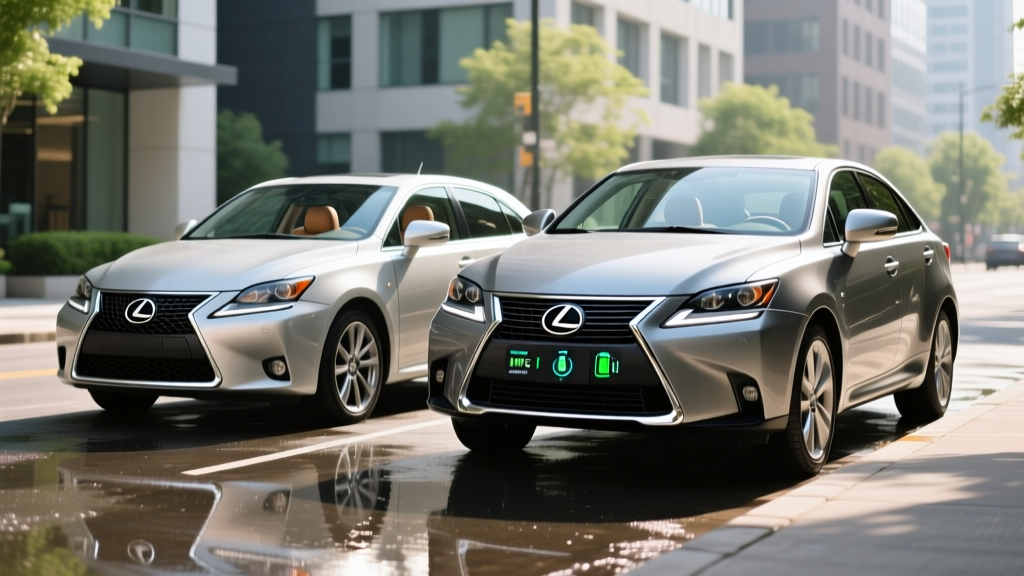
If you're researching a 2010 Lexus hybrid in the used market, you're looking at two very different vehicles that share Toyota's proven Hybrid Synergy Drive architecture: the compact Lexus HS 250h sedan and the midsize Lexus RX 450h SUV. Neither is a plug-in hybrid (PHEV) — both are conventional self-charging hybrids (HEVs) that require no plug, no home charger, and no behavior change from a standard gas car. You simply fuel up and drive, while regenerative braking and an integrated electric motor supplement the gasoline engine to cut fuel consumption.
In 2010, Lexus did not offer any plug-in hybrid models. The brand's first PHEV (the NX 450h+) wouldn't arrive until the 2022 model year. So when you see "2010 Lexus hybrid," you're exclusively dealing with HEVs. That distinction matters for your expectations: there is no electric-only driving range to speak of (maybe half a mile at parking-lot speeds), no kWh battery to charge overnight, and no federal §30D tax credit eligibility on a 15-year-old used vehicle.
What you do get is exceptional reliability, strong city MPG, and a luxury badge at a used-car price that has depreciated heavily. Let's break down both models with exact EPA data, real-world expectations, battery longevity, and what ownership actually looks like in 2026.
2010 Lexus HS 250h: Specs, MPG, and Powertrain
The HS 250h was Lexus's dedicated hybrid sedan, built on the Toyota Avensis platform (sold primarily in Japan and Europe) and sharing its hybrid powertrain architecture with the third-generation Toyota Prius. It was a one-year-only model in the US for 2010 before being discontinued, which makes it a niche used find today.
| Attribute | Value |
|---|---|
| Powertrain | 2.4L inline-4 Atkinson-cycle + electric motor (HEV) |
| Combined Horsepower | 187 hp (net system output) |
| Transmission | eCVT (planetary gearset, no fixed gears) |
| EPA City MPG | 35 MPG |
| EPA Highway MPG | 34 MPG |
| EPA Combined MPG | 35 MPG |
| Fuel Tank | 14.5 gallons |
| Total Range | ~507 miles |
| 0–60 mph | ~8.4 seconds |
| Drivetrain | Front-wheel drive |
| Hybrid Battery | 1.6 kWh NiMH (nickel-metal hydride) |
| Cargo Volume | 11.3 cu ft |
Source: EPA / fueleconomy.gov — 2010 Lexus HS 250h
Real-World MPG vs. EPA Sticker
The HS 250h's 35 MPG combined EPA rating holds up reasonably well in real-world use — a hallmark of Toyota's hybrid system. Because the Atkinson-cycle engine is optimized for efficiency over raw power, and because regenerative braking recaptures energy in stop-and-go traffic, city MPG often matches or slightly exceeds the highway figure. Owners on Fuelly and similar tracking platforms consistently report 32–37 MPG in mixed driving, with city-heavy commuters occasionally touching 38 MPG.
Highway-only driving at 75+ mph will drop efficiency to the low 30s, as the electric motor contributes less at sustained high speeds and aerodynamic drag increases. In cold weather (below freezing), expect a 5–10% MPG reduction due to the engine running longer to warm the cabin and the battery operating at reduced efficiency.
2010 Lexus RX 450h: Specs, MPG, and Powertrain
The RX 450h was far more popular than the HS 250h and remains a common sight on the used market. As a luxury midsize SUV with available all-wheel drive (the "E-Four" system uses a rear electric motor with no mechanical connection to the front axle), it offered practicality the sedan couldn't match.
| Attribute | Value |
|---|---|
| Powertrain | 3.5L V6 Atkinson-cycle + electric motor(s) (HEV) |
| Combined Horsepower | 295 hp (net system output) |
| Transmission | eCVT (planetary gearset) |
| EPA City MPG (FWD) | 32 MPG |
| EPA Highway MPG (FWD) | 28 MPG |
| EPA Combined MPG (FWD) | 30 MPG |
| EPA City MPG (AWD) | 30 MPG |
| EPA Highway MPG (AWD) | 28 MPG |
| EPA Combined MPG (AWD) | 29 MPG |
| Fuel Tank | 17.2 gallons |
| Total Range (FWD) | ~516 miles |
| 0–60 mph | ~7.4 seconds |
| Drivetrain | FWD or AWD (E-Four electric rear axle) |
| Hybrid Battery | ~1.9 kWh NiMH |
| Cargo Volume | 32.6 cu ft (rear seats up) / 80.3 cu ft (folded) |
| Towing Capacity | 3,500 lbs |
Source: EPA / fueleconomy.gov — 2010 Lexus RX 450h
Real-World MPG vs. EPA Sticker
The RX 450h's 30 MPG combined (FWD) is impressive for a 4,600-pound luxury SUV with a V6. In real-world ownership, 28–32 MPG mixed is typical. City driving leverages the hybrid system's strengths — the electric motor handles low-speed launches, and the engine shuts off at stops. Highway cruising at 70 mph yields roughly 27–29 MPG. AWD models lose about 1 MPG across the board due to the rear motor's parasitic drag and added weight.
Towing will cut MPG dramatically — expect 18–22 MPG when pulling a trailer near the 3,500-lb limit. This is a limitation of all hybrids under heavy load, not specific to Lexus.
HEV vs. PHEV vs. EV: Which Fits You?
The 2010 Lexus hybrid models are HEVs — conventional hybrids. Understanding the difference between the three electrified powertrain types is essential before you buy:
| Feature | HEV (e.g., 2010 RX 450h) | PHEV (e.g., 2026 Lexus NX 450h+) | BEV (e.g., 2026 Tesla Model Y) |
|---|---|---|---|
| Plugs in? | No — self-charging via regen + engine | Yes — has a charge port | Yes — charge port only |
| Electric-only range | ~0.5 mi at low speed | 37 miles (EPA) | 280–330 miles (EPA) |
| Gas engine? | Yes — primary power source | Yes — kicks in after battery depletes | No |
| Home charging needed? | No | Recommended for max savings | Required |
| Best for | No charger access, simple ownership | Home charging + longer trips | Full electric lifestyle |
| Federal tax credit (used) | None | Up to $4,000 (used §25E, if eligible) | Up to $4,000 (used §25E, if eligible) |
If you can't install a home charger (apartment living, no garage), the HEV architecture of the 2010 Lexus hybrid lineup is genuinely the right call. You get 30–35 MPG without any infrastructure investment. But if you have access to Level 2 charging and want electric-only commuting, a newer PHEV or BEV will save more on fuel costs over time — at a higher purchase price.
Hybrid Battery Longevity and Replacement Cost
This is the single biggest concern for anyone buying a 15-year-old hybrid. Let's address it directly with data.
Original Battery Warranty
When new, the 2010 Lexus HS 250h and RX 450h hybrid batteries were covered under Lexus's Hybrid System Warranty: 8 years / 100,000 miles (10 years / 150,000 miles in California and states that adopted CARB emissions standards). That warranty has expired on all 2010 models by now. You are buying these vehicles with zero remaining factory hybrid battery coverage unless a previous owner purchased an extended warranty that transferred.
How Long Do These NiMH Batteries Actually Last?
Toyota/Lexus NiMH hybrid batteries from this generation have an outstanding longevity track record. The 2010 HS 250h and RX 450h use nickel-metal hydride (NiMH) chemistry — older and heavier than modern lithium-ion, but extremely tolerant of heat and overcharge. Real-world data from Prius taxis and high-mileage Lexus owners shows these packs commonly lasting 150,000–200,000 miles before significant degradation, and many exceed 200,000 miles with gradual capacity loss rather than sudden failure.
The key failure mode is individual cell imbalance rather than total pack death. A hybrid battery diagnostic scan (available at any Toyota/Lexus dealer or independent hybrid specialist) can identify weak modules. In many cases, a single-module reconditioning or replacement ($200–$500) restores the pack rather than requiring a full swap.
Battery Replacement Cost (2026 Pricing)
| Option | Estimated Cost | Notes |
|---|---|---|
| New OEM pack (Lexus dealer) | $3,500–$5,000 | Full new NiMH pack; best longevity; labor included |
| Remanufactured pack (independent shop) | $1,500–$2,800 | Rebalanced used cells; 1–3 year warranty typical |
| Used/salvage pack | $500–$1,200 | From a wrecked low-mileage donor; riskier, short or no warranty |
| Individual module replacement | $200–$600 | If only 1–2 cells are weak; requires diagnostic scan first |
For a vehicle that might cost $6,000–$12,000 on the used market, a $2,000–$3,000 remanufactured battery is a reasonable contingency. Factor it into your purchase budget if the vehicle has over 140,000 miles and no documented battery service history.
Pricing, Tax Credits, and Total Cost of Ownership
Neither the 2010 HS 250h nor the 2010 RX 450h qualifies for any federal EV tax credit. The IRS §30D Clean Vehicle Credit applies only to new plug-in vehicles (BEVs and PHEVs) meeting battery-sourcing and MSRP requirements. The used-vehicle credit (§25E, up to $4,000) also requires the vehicle to be a plug-in electric vehicle or fuel-cell vehicle — conventional HEVs are excluded.
Some states offer modest incentives for used hybrids, but these vary widely and change frequently. Check your state's energy office or department of revenue for current programs.
Used Market Pricing (Early 2026)
| Model | Mileage Range | Typical Price |
|---|---|---|
| HS 250h | 100k–140k miles | $6,000–$9,000 |
| HS 250h | 140k–180k miles | $4,000–$6,500 |
| RX 450h (FWD) | 100k–140k miles | $9,000–$13,000 |
| RX 450h (AWD) | 100k–140k miles | $10,500–$15,000 |
| RX 450h (AWD) | 140k–180k miles | $7,000–$10,000 |
5-Year Ownership Cost Estimate
Assuming 12,000 miles/year, $3.30/gallon regular unleaded, and no major battery replacement needed:
| Model | Annual Fuel Cost | 5-Year Fuel Cost |
|---|---|---|
| 2010 HS 250h (35 MPG) | ~$1,131 | ~$5,657 |
| 2010 RX 450h FWD (30 MPG) | ~$1,320 | ~$6,600 |
| Comparable 2010 gas-only midsize SUV (20 MPG) | ~$1,980 | ~$9,900 |
The hybrid saves roughly $3,000–$4,300 in fuel over five years compared to a gas-only equivalent. That savings helps offset the potential battery replacement cost if one becomes necessary.
Reliability and What to Watch For
The 2010 Lexus hybrid powertrain is among the most reliable in the automotive industry. The eCVT transmission has no clutch packs, bands, or torque converter to wear out — it's a simple planetary gearset that is essentially bulletproof. The electric motor-generators (MG1 and MG2) have no brushes or wearable components. The gasoline engines (2.4L I4 in the HS, 3.5L V6 in the RX) are proven Toyota designs with timing chains rather than belts.
Common non-hybrid issues to inspect on a used 2010 model:
- Inverter coolant pump: Toyota issued a recall for the inverter coolant pump on some hybrid models of this era. Verify the recall was performed (free at any Lexus dealer, even on a used car).
- Brake actuator: The regenerative braking system uses an electro-hydraulic actuator that can develop issues past 120,000 miles. Listen for unusual brake pedal feel or a buzzing noise from the engine bay when pressing the brake.
- 12V auxiliary battery: Like any car, the 12V battery dies every 4–6 years. In the HS 250h, it's in the trunk; in the RX 450h, it's under the rear cargo area. A dead 12V battery can prevent the hybrid system from starting — this is not a hybrid battery failure.
- Suspension and bushings: At 150,000+ miles, control arm bushings and struts will need attention. Standard wear items, not hybrid-specific.
Source: NHTSA recall database — search by VIN for open recalls.
Who Should Buy a 2010 Lexus Hybrid?
Choose the 2010 HS 250h If:
- You want a fuel-efficient luxury commuter sedan under $8,000
- City driving dominates your commute (where hybrid MPG peaks)
- You don't need much cargo space (11.3 cu ft trunk is tight)
- You value Toyota hybrid reliability in a Lexus wrapper
- You have no home charging access and don't want to deal with plugs
Choose the 2010 RX 450h If:
- You need SUV practicality (80 cu ft cargo, 3,500-lb towing) with decent MPG
- AWD is important for snow/rain climates (the E-Four system is effective)
- You want a family vehicle that costs $1,300/year in fuel, not $2,000+
- You're willing to budget $2,000–$3,000 for a potential battery refresh
- You prefer proven, simple technology over the latest infotainment
The Bottom Line
Buy a 2010 Lexus hybrid if: You want reliable, no-plug-needed fuel efficiency in a luxury badge at a budget price, and you're willing to set aside a battery replacement fund. The RX 450h is the stronger overall pick — more practical, more available, and better supported by the aftermarket.
Look at a newer PHEV or BEV if: You have home charging access, want electric-only commuting, need modern safety tech (automatic emergency braking, lane-keeping — not available on 2010 models), or want to qualify for a used-EV tax credit under §25E.
Frequently Asked Questions
How many MPG does the 2010 Lexus hybrid get?
The 2010 Lexus HS 250h is EPA-rated at 35 MPG city / 34 highway / 35 combined. The 2010 RX 450h (FWD) is rated at 32 city / 28 highway / 30 combined. AWD models drop to 30 city / 28 highway / 29 combined. Real-world figures generally track within 1–3 MPG of these ratings, with city driving often exceeding the EPA number thanks to regenerative braking.
Do I need to plug in a 2010 Lexus hybrid?
No. Both the HS 250h and RX 450h are conventional hybrids (HEVs), not plug-in hybrids. The battery charges through regenerative braking and the gasoline engine. There is no charge port. You fuel it like any regular car.
How far can the 2010 Lexus hybrid drive on electric only?
Effectively zero miles for practical purposes. The NiMH battery is very small (1.6–1.9 kWh) and the electric motor assists the gas engine rather than driving the car independently. You may move at parking-lot speeds (under 10 mph) on electric power for a few hundred yards, but the engine will start almost immediately. If you want meaningful electric-only range, you need a PHEV or BEV.
Is the 2010 Lexus hybrid reliable?
Yes — the Toyota/Lexus Hybrid Synergy Drive from this generation is widely considered one of the most reliable powertrains ever produced. The eCVT has no wearable transmission components, the electric motors are brushless, and the NiMH battery chemistry is extremely durable. The primary risk on a 15-year-old example is hybrid battery degradation, which is a known-cost item ($1,500–$3,000 for a remanufactured replacement) rather than a catastrophic unknown.
What does it cost to replace the hybrid battery?
A new OEM battery from a Lexus dealer runs $3,500–$5,000 installed. Remanufactured packs from independent hybrid specialists cost $1,500–$2,800 with a 1–3 year warranty. Used salvage packs are $500–$1,200 but carry more risk. Individual cell module replacement (if only one or two cells are weak) can be done for $200–$600.
Does the 2010 Lexus hybrid qualify for any tax credit?
No. Federal tax credits (§30D for new vehicles, §25E for used) apply only to plug-in electric vehicles (BEVs and PHEVs) and fuel-cell vehicles. Conventional hybrids like the HS 250h and RX 450h have never qualified. Check your state's incentive programs — a few states offer small rebates for used hybrids, but most do not.
What should I check before buying a used 2010 Lexus hybrid?
Have a hybrid-qualified mechanic perform a battery health scan (State of Health / SoH reading) to check individual module voltages. Verify the inverter coolant pump recall was completed (check via NHTSA VIN lookup). Inspect the brake actuator for unusual pedal feel. Check maintenance records for regular engine oil changes, inverter coolant flushes, and transaxle fluid service. Budget $1,500–$3,000 for a potential battery replacement if the vehicle has over 140,000 miles and no documented battery work.